Category
page 1Coenzymes

vitamin C
nutrient found in citrus fruits and other foods
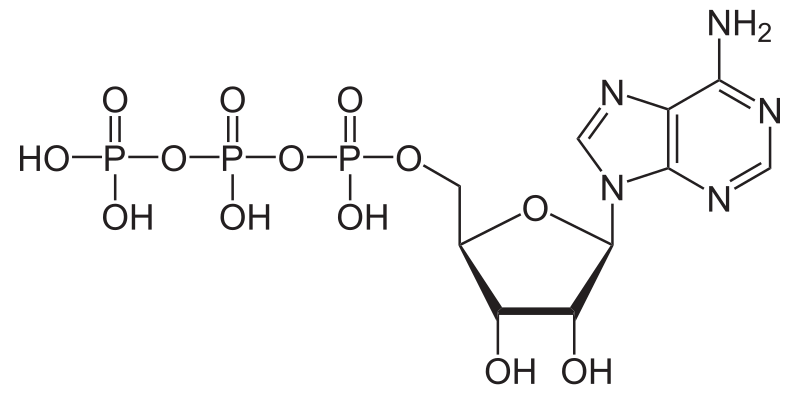
adenosine triphosphate
the energy-carrying molecule in living cells

riboflavin
Riboflavin, also known as vitamin B2, is a vitamin found in food and sold as a dietary supplement. It is essential to the formation of two major coenzymes, flavin mononucleotide and flavin adenine dinucleotide. These coenzymes are involved in energy metabolism, cellular respiration, and antibody production, as well as normal growth and development. The coenzymes are also required for the metabolism of niacin, vitamin B6, and folate. Riboflavin is prescribed to treat corneal thinning, and taken orally, may reduce the incidence of migraine headaches in adults.

thiamine(1+) ion
Thiamine, also known as thiamin and vitamin B1, is a vitamin – an essential micronutrient for humans and animals. It is found in food and commercially synthesized to be a dietary supplement or medication. Phosphorylated forms of thiamine are required for some metabolic reactions, including the breakdown of glucose and amino acids.

nicotinamide adenine dinucleotide
coenzyme NAD in any of its oxidation states
nicotinamide adenine dinucleotide phosphate
coenzyme acting as an electron carrier in biochemical redox reactions (oxidation state unspecified), any of NADP+, NADPH, or NADP zwitterion
coenzyme A
coenzyme, notable for its role in the synthesis and oxidation of fatty acids, and the oxidation of pyruvate in the citric acid cycle
ubidecarenone
chemical compound
DL-ascorbic acid
group of chemical compounds
S-adenosylmethionine
chemical compound found in all domains of life with largely unexplored effects
uridine diphosphate glucose
chemical compound
sapropterin
Tetrahydrobiopterin (BH4, THB), also known as sapropterin (INN), is a cofactor of the three aromatic amino acid hydroxylase enzymes, used in the metabolism of amino acid phenylalanine and in the biosynthesis of the neurotransmitters serotonin (5-hydroxytryptamine, 5-HT), melatonin, dopamine, norepinephrine (noradrenaline), epinephrine (adrenaline), and is a cofactor for the production of nitric oxide (NO) by the nitric oxide synthases. Chemically, its structure is that of a (dihydropteridine reductase) reduced pteridine derivative (quinonoid dihydrobiopterin).
coenzyme M(1-)
chemical compound
levomefolic acid
chemical compound

folitixorin
5,10-Methylenetetrahydrofolate (N5,N10-Methylenetetrahydrofolate; 5,10-CH2-THF) is cofactor in several biochemical reactions. It exists in nature as the diastereoisomer [6R]-5,10-methylene-THF.
coenzyme B
chemical compound
UDP-α-D-galactose
chemical compound
guanosine diphosphate mannose
chemical compound
3'-phosphoadenosine 5'-phosphosulfate
3′-Phosphoadenosine-5′-phosphosulfate (PAPS) is a derivative of adenosine monophosphate (AMP) that is phosphorylated at the 3′ position and has a sulfate group attached to the 5′ phosphate. It is the most common coenzyme in sulfotransferase reactions and hence part of sulfation pathways. It is endogenously synthesized by organisms via the phosphorylation of adenosine 5′-phosphosulfate (APS), an intermediary metabolite. In humans such reaction is performed by bifunctional 3′-phosphoadenosine 5′-phosphosulfate synthases (PAPSS1 and PAPSS2) using ATP as the phosphate donor.
coenzyme F420
chemical compound
L-erythro biopterin
Biopterins are pterin derivatives which function as endogenous enzyme cofactors in many species of animals and in some bacteria and fungi. The prototypical compound of the class is biopterin (6-(1,2-dihydroxypropyl)-pterin), as shown in the infobox. Biopterins act as cofactors for aromatic amino acid hydroxylases (AAAH), which are involved in synthesizing a number of neurotransmitters including dopamine, norepinephrine, epinepherine, and serotonin, along with several trace amines. Nitric oxide synthesis also uses biopterin derivatives as cofactors. In humans, tetrahydrobiopterin (BH4) is the e
UDP N-acetyl-alpha-D-glucosamine
chemical compound
5,6,7,8-tetrahydromethanopterin
Tetrahydromethanopterin (THMPT, '''''') is a coenzyme in methanogenesis. It is the carrier of the C1 group as it is reduced to the methyl level, before transferring to the coenzyme M.
methanofuran
thumb|300px|Structure of the methanofurans
uridine diphosphate glucuronic acid
chemical compound
(2S,6S)-5,6,7,8-tetrahydrofolic acid
chemical compound
5-formimidoyltetrahydrofolic acid
5-Formiminotetrahydrofolate is an intermediate in the catabolism of histidine. It is produced by glutamate formimidoyltransferase and then converted into 5,10-methenyltetrahydrofolate by formiminotransferase cyclodeaminase.
nucleotide sugar
5,10-methenyltetrahydrofolate
5,10-Methenyltetrahydrofolate (5,10-CH=THF) is a form of tetrahydrofolate that is an intermediate in metabolism. 5,10-CH=THF is a coenzyme that accepts and donates methenyl (CH=) groups.
(2S)-10-formyltetrahydropteroyl-ξ-glutamic acid
10-Formyltetrahydrofolate (10-CHO-THF) is a form of tetrahydrofolate that acts as a donor of formyl groups in anabolism. In these reactions 10-CHO-THF is used as a substrate in formyltransferase reactions.