Category
page 1Concepts in aesthetics

art
thumb|upright=1.5|Visual artworks: (clockwise from upper left) an 1887 [[self-portrait by Vincent van Gogh; a female ancestor figure by a Chokwe artist; detail from The Birth of Venus (–1486) by Sandro Botticelli; and an Okinawan Shisa lion]]
Art is a diverse range of cultural activity centered around works utilizing creative or imaginative talents, which are expected to evoke a worthwhile experience, generally through an expression of emotional power, conceptual ideas, technical proficiency, or beauty.

time
Time is the continuous progression of existence that occurs in an apparently irreversible succession from the past, through the present, and into the future. Time dictates all forms of action, age, and causality, being a component quantity of various measurements used to sequence events, to compare the duration of events (or the intervals between them), and to quantify rates of change of quantities in material reality or in the conscious experience. Time is often referred to as a fourth dimension, along with three spatial dimensions.

beauty
thumb|260x260px|A Rayonnant style [[rose window in Notre-Dame de Paris. In Gothic architecture, light was considered "the source and actual essence of all that is beautiful".]]
Beauty is commonly described as a feature of objects that makes them pleasurable to perceive. Such objects include landscapes, sunsets, humans and works of art. Beauty, art and taste are the main subjects of aesthetics, one of the fields of study within philosophy. As a positive aesthetic value, it is contrasted with ugliness as its negative counterpart.

fashion
Fashion is a term used interchangeably to describe the creation of clothing, footwear, accessories, cosmetics, and jewellery of different cultural aesthetics and their mix and match into outfits that depict distinctive ways of dressing (styles and trends) as signifiers of social status, self-expression, and group belonging. As a multifaceted term, fashion describes an industry, designs, aesthetics, and trends.

entertainment
thumb|upright=1.35|Banqueters playing Kottabos (game)|Kottabos and a girl playing the [[aulos, Greece (). Banqueting and music have continued to be two important entertainments since ancient times.]]

artist
thumb|A collage of artists from different time periods and locations
.svg)
symmetry
thumb|upright=1.25|Symmetry (left) and asymmetry (right)
thumb|upright=0.8|A spherical symmetry group with [[octahedral symmetry. The yellow region shows the fundamental domain.]]
thumb|upright=0.8|A fractal-like shape that has [[reflectional symmetry, rotational symmetry and self-similarity, three forms of symmetry. This shape is obtained by a finite subdivision rule.]]
.jpg)
design
thumb|Braun (company)|Braun ABW30 wall clock designed by [[Dieter Rams and (early 1980s)]]
thumb|Victorinox Swiss Army knife
thumb|Brionvega radiogram designed by Achille and [[Pier Giacomo Castiglioni]]
thumb|alt=An image of cutlery designed by Zaha Hadid|Cutlery designed by architect and designer [[Zaha Hadid (2007). The slightly oblique end part of the fork and the spoons, as well as the knife handle, are examples of designing for both aesthetic form and practical function.]]
thumb|Early concept design sketches by the architect Erling Viksjø, exploring the relationships between existing and

creativity
thumb|upright=0.7|alt=graphic of a lightbulb|A picture of an incandescent light bulb, a symbol associated with the formation of an [[idea, an example of creativity]]

boredom
thumb|right|262px|A souvenir seller in [[Moscow appears bored as she waits for customers.]]

avant-garde
thumb|right|300px|Avant-garde cinema, The Love of Zero (1928), a short film directed by the artist Robert Florey

harmony
thumb|right|upright=1.35|Barbershop quartets, such as this US Navy Band ensemble, sing four-part pieces, made up of a [[melody line (normally the lead) and three harmony parts. ]]
In music, harmony is the concept of combining different sounds in order to create new, distinct musical ideas. Theories of harmony seek to describe or explain the effects created by distinct pitches or tones coinciding with one another; harmonic objects such as chords, textures and tonalities are identified, defined, and categorized in the development of these theories. Harmony is broadly understood to involve both a

disgust
thumb|upright=1.3 |Oscar Gustave Rejlander portraying disgust in plates from Charles Darwin's [[The Expression of the Emotions in Man and Animals]]

fine art
art developed primarily for aesthetics

work of art
aesthetic item or artistic creation

progress
thumb|Woman's Progress, May 1895|200px

kitsch
alt=|thumb|A Friend in Need, a 1903 Dogs Playing Poker painting by [[Cassius Marcellus Coolidge, is a common example of kitsch.]]
thumb|Puppy by Jeff Koons (2010) is a self-aware display of kitsch, specifically as a combination of opulence and cuteness.

craft
thumb|Craft fair in Sonargaon, [[Bangladesh]]
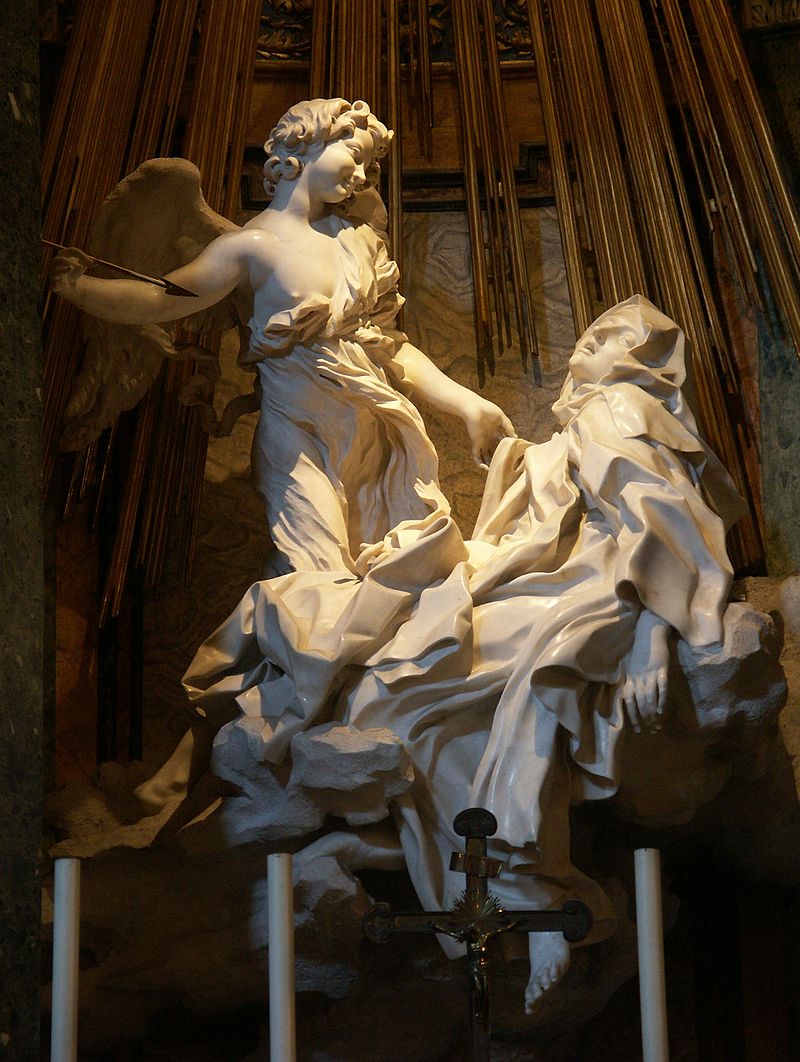
ecstasy
advanced emotion, subjective experience of total involvement of the subject, with an object of their awareness

conceptual art
contemporary art movement
Übermensch
The '''' ( , ; ) is a concept in the philosophy of Friedrich Nietzsche. In his 1883 book, Thus Spoke Zarathustra'' (), Nietzsche has his character Zarathustra posit the as a goal for humanity to set for itself. The represents a shift from otherworldly Christian values and manifests the grounded human ideal. Zarathustra proclaims the will of the to give meaning to life on planet Earth, and admonishes his audience to ignore those who promise other-worldly fulfillment.
transcendence
concept designating the extra-categorical attributes of beings

theatre of the absurd
theatrical genre
%2001.jpg)
poetics
thumb|Leonardo Bruni's translation of Aristotle's Poetics
Poetics is the study or theory of poetry, specifically the study or theory of device, structure, form, type, and effect with regards to poetry, though usage of the term can also refer to literature broadly. Poetics is distinguished from hermeneutics by its focus on the synthesis of non-semantic elements in a text rather than its semantic interpretation. Most literary criticism combines poetics and hermeneutics in a single analysis; however, one or the other may predominate given the text and the aims of the one doing the reading.

perfection
thumb|upright|A black (color)|perfectly black body; and a perfect circle
Perfection is a state, variously, of completeness, flawlessness, or supreme excellence.

ugliness
thumb|upright|The Ugly Duchess (painting by [[Quentin Matsys, 1513)]]

sublime
quality of greatness

eroticism
thumb|Erotic Kama statues at the Khajuraho Temple, India; the image portrays in the centre a female and male entwined in [[maithuna, whilst at each side a gazing male and female masturbate.]]Eroticism () is a quality that causes sexual feelings, as well as a philosophical contemplation concerning the aesthetics of sexual desire, sensuality, and romantic love. That quality may be found in any form of artwork, including painting, sculpture, photography, drama, film, music, or literature. It may also be found in advertising. The term may also refer to a state of sexual arousal or anticipation of

uncanny valley
hypothesis that human replicas which appear almost like real human beings elicit revulsion
.svg)
judgment
thumb|Illustration of a judge evaluating evidence in court to make a judgement

cultural appropriation
adoption of elements of a minority culture by members of the dominant culture
art for art's sake
art without any didactic, moral, or utilitarian function

taste
personal and cultural pattern of choice and preference
Sentimentalism
literary movement
golden hour
first and last hour of sunlight during the day
metafiction
Metafiction is a form of fiction that emphasizes its own narrative structure in a way that inherently reminds the audience that they are reading or viewing a fictional work. Metafiction is self-conscious about language, literary form, and storytelling, and works of metafiction directly or indirectly draw attention to their status as artifacts. Metafiction is frequently used as a form of parody or a tool to undermine literary conventions and explore the relationship between literature and reality, life and art.
quality
distinguishing feature
camp
ostentatious style

Gesamtkunstwerk
thumb|upright=1.35|Stairway of the Hôtel Tassel, an early example of Gesamtkunstwerk
A Gesamtkunstwerk (, 'total work of art', 'ideal work of art', 'universal artwork', 'synthesis of the arts', 'comprehensive artwork', or 'all-embracing art form') is a work of art that makes use of all or many art forms or strives to do so. The term is a German loanword accepted in English as a term in aesthetics.
film theory
academic discipline studying film's relationship to reality, the arts, viewers & society
erotic art
artistic work that deals substantively with erotically stimulating or sexually arousing subject matter

elegance
thumb|Elegance of the Epoque by Frédéric Soulacroix
200px|right|thumb|An example of "beauty in method"—a simple and elegant proof of the Pythagorean theorem.

cuteness
Cuteness is a type of attractiveness commonly associated with youth and appearance, as well as a scientific concept and analytical model in ethology, first introduced by Austrian ethologist Konrad Lorenz. Lorenz proposed the concept of baby schema (Kindchenschema), a set of facial and body features that make a creature appear "cute" and activate ("release") in others the motivation to care for it. Cuteness may be ascribed to people as well as things that are regarded as attractive or charming.

limerence
right|240px|thumb|''Psyche Revived by Cupid's Kiss'', by [[Antonio Canova, first version 1787–1793]]
musica universalis
ancient philosophical concept that regards proportions in the movements of celestial bodies as a form of music

auteur
An (; , ) is an artist with a distinctive approach, usually a film director whose filmmaking control is so unbounded and personal that the director is likened to the "author" of the film, thus manifesting the director's unique style or thematic focus. As an unnamed value, auteurism originated in French film criticism of the late 1940s, and derives from the critical approach of André Bazin and Alexandre Astruc, whereas American critic Andrew Sarris in 1962 called it auteur theory.

diegesis
Diegesis (; , ) is a style of fiction storytelling in which a participating narrator offers an on-site, often interior, view of the scene to the reader, viewer, or listener by subjectively describing the actions and, in some cases, thoughts, of one or more characters. Diegetic events are those experienced by both the characters within a piece and the audience, while non-diegetic elements of a story make up the "fourth wall" separating the characters from the audience. Diegesis in music describes a character's ability to hear the music presented for the audience, in the context of musical theat
Apollonian and Dionysian
terms representing a dichotomy/dialectic between rationality and emotion
art style
classification of artwork, based on how it is perceived by the audience, specific to an artist, or shared with other works of the same movement or school
Bildung
'''''' (, "education", "formation", etc.) refers to the German tradition of self-cultivation, the development and formation of the human mind through education and cultural maturation. This maturation is a harmonization of the individual's mind and heart and in a unification of selfhood and identity within the broader society, as evidenced with the literary tradition of Bildungsroman.
culture industry
expression suggesting that popular culture is used to manipulate mass society into passivity
Form follows function
design philosophy of 19–20th centuries
lyrical abstraction
art movement
authenticity
concept in existential psychology and philosophy

gaze
thumb|right|300px|The Conjurer (painting)|The Conjurer, by [[Hieronymus Bosch, shows the bending figure looking forward, steadily, intently, and with fixed attention, while the other figures in the painting look in various directions, some outside the painting.]]
value judgment
judgment of the rightness or wrongness of something or someone, or of the usefulness of something or someone, based on a comparison or other relativity
critique
Critique is a method of disciplined, systematic study of a written or oral discourse. Although critique is frequently understood as fault finding and negative judgment, it can also involve merit recognition, and in the philosophical tradition it also means a methodical practice of doubt. The contemporary sense of critique has been largely influenced by the Enlightenment critique of prejudice and authority, which championed the emancipation and autonomy from religious and political authorities.

uncanny
thumb|right|Actroid|Repliee Q2 is a lifelike robot developed at [[Osaka University, often named as an example of the uncanny valley due to its similarity to humans, even replicating functions like blinking, breathing and speaking.]]
The uncanny is the psychological experience of an event or thing that is unsettling in a way that feels oddly familiar, rather than simply mysterious. This phenomenon is used to describe incidents where a familiar entity is encountered in a frightening, eerie, or taboo context.
cute aggression
human behaviour trait
classic
A classic is an outstanding example of a particular style; something of lasting worth or with a timeless quality; of the first or highest quality, class, or rank – something that exemplifies its class. The word can be an adjective (a classic car) or a noun (a classic of English literature). It denotes a particular quality in art, architecture, literature, design, technology, or other cultural artifacts. In commerce, products are named 'classic' to denote a long-standing popular version or model, to distinguish it from a newer variety. Classic is used to describe many major, long-standing