Category
page 1Concepts in metaphysics

time
Time is the continuous progression of existence that occurs in an apparently irreversible succession from the past, through the present, and into the future. Time dictates all forms of action, age, and causality, being a component quantity of various measurements used to sequence events, to compare the duration of events (or the intervals between them), and to quantify rates of change of quantities in material reality or in the conscious experience. Time is often referred to as a fourth dimension, along with three spatial dimensions.

truth
Truth is conformity to reality or fact. It contrasts with falsity or misrepresentation that fails to align with the world. Truth is typically treated as a property of truthbearers, such as sentences, propositions, or beliefs that describe things as they are. It is closely related to truthfulness, a virtue associated with honesty, and to truthlikeness, a characteristic of theories that approximate the truth.

soul
thumb|Depiction of the soul leaving the body at the moment of death: The Grave (poem)|The Grave, illustrated by [[William Blake, engraved by Luigi Schiavonetti, 1808]]
.jpg)
thought
thumb|The Thinker by [[Auguste Rodin (1840–1917) in the garden of the Musée Rodin, Paris]]
In their most common sense, thought and thinking refer to cognitive processes that occur independently of direct sensory stimulation. Core forms include judging, reasoning, concept formation, problem solving, and deliberation. Other processes, such as entertaining an idea, memory, or imagination, are also frequently considered types of thought. Unlike perception, these activities can occur without immediate input from the sensory organs. In a broader sense, any mental event—including perception and uncon

mind
thumb|alt=Diagram of a head with symbols for different mental capacities inside it|The mind is responsible for phenomena like perception, [[thought, feeling, and action.]]

information
Information is an abstract concept that refers to something which has the power to inform. At the most fundamental level, it pertains to the interpretation (perhaps formally) of that which may be sensed, or their abstractions. Any natural process that is not completely random and any observable pattern in any medium can be said to convey some amount of information. Whereas digital signals and other data use discrete signs to convey information, other phenomena and artifacts such as analogue signals, poems, pictures, music or other sounds, and currents convey information in a more continuous fo

reality
Reality is the state of everything that exists, not how they might be imagined. Different cultures and academic disciplines conceptualize it in various ways.

free will
ability of agents to be the ultimate source or originator of their choices, free from external determination

space
thumb|right|A right-handed three-dimensional Cartesian coordinate system used to indicate positions in space|class=skin-invert-image

idea
right|thumb|250px|Plato, one of the first philosophers to discuss ideas in detail. Aristotle claims that many of Plato's views were Pythagorean in origin.
In philosophy and in common usage, an idea (from the Greek word: ἰδέα (idea), meaning 'a form, or a pattern') is the result of thought. Also in philosophy, ideas can also be mental representational images of some object. Many philosophers have considered ideas to be a fundamental ontological category of being. The capacity to create and understand the meaning of ideas is considered to be an essential and defining feature of human beings.

evil
thumb|In many Abrahamic religions, demons are considered to be evil beings and are contrasted with angels, who are their good contemporaries.|354x354px
Evil, as a concept, is usually defined as profoundly immoral behavior, and it is related to acts that cause unnecessary pain and suffering to others.

system
thumb|upright=1.2|Systems can be isolated, closed, or open.

paradox
A paradox is a logically self-contradictory statement or a statement that runs contrary to one's expectation. It is a statement that, despite apparently valid reasoning from true or apparently true premises, leads to a seemingly self-contradictory or a logically unacceptable conclusion. A paradox usually involves contradictory-yet-interrelated elements that exist simultaneously and persist over time. They result in "persistent contradiction between interdependent elements" leading to a lasting "unity of opposites".

phenomenon
thumb|The combustion of a match is an observable occurrence, or event, and therefore a phenomenon.

good
457x457px|thumb|In many Abrahamic religions, [[angels are considered to be good beings and are contrasted with demons, who are their evil counterparts.]]
In most contexts, the concept of good denotes the conduct that should be preferred when posed with a choice between possible actions. Good is generally considered to be the opposite of evil. The specific meaning and etymology of the term and its associated translations among ancient and contemporary languages show substantial variation in its inflection and meaning, depending on circumstances of place and history, or of philosophical or relig

fact
A fact is a true datum about one or more aspects of a circumstance, or an occurrence in the real world. Standard reference works are often used to check facts. Scientific facts are verified by careful, repeatable observation or measurement by experiments or other means. Generally speaking, facts are independent of belief, knowledge and opinion.
Facts are different from inferences, theories, values, and objects.

abstraction
Abstraction is the process of generalizing rules and concepts from specific examples, literal (real or concrete) signifiers, first principles, or other methods. The result of the process, an abstraction, is a concept that acts as a common noun for all subordinate concepts and connects any related concepts as a group, field, or category.

will
faculty of the mind which intentionally selects the strongest desire from among the various desires present
%202.jpg)
empathy
alt=A small child hugs an older, injured child|thumb|Hugging is a common display of empathy

value
personal value, basis for ethical action

nothing
thumb|

being
REDIRECT Existence
inductive reasoning
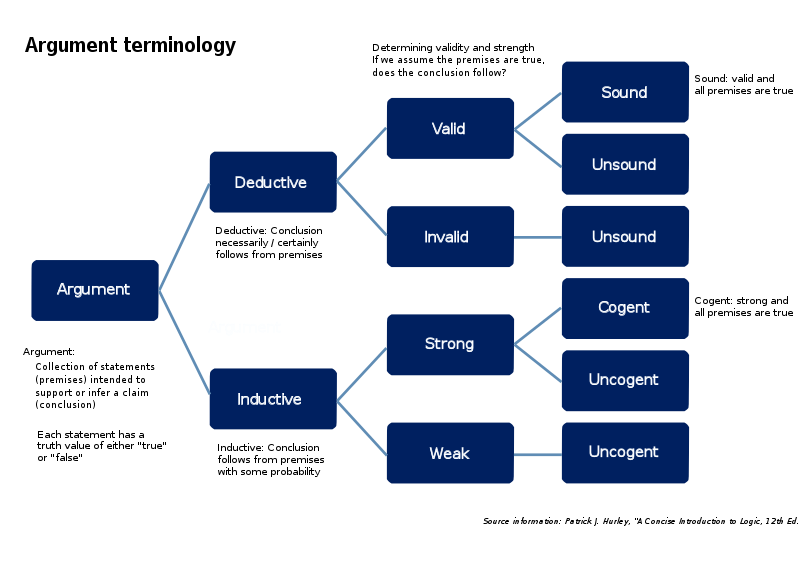
method of reasoning in which a body of observations is synthesized to hypothesize a general principle

physical object
singular aggregation of tangible substance(s) such as matter or radiation, with overall properties

progress
thumb|Woman's Progress, May 1895|200px

principle
thumb|170px|The Blind justice (concept)|concept of blind justice is a moral principle.

Allegory of the Cave
allegory by Plato
inference
Inferences are steps in logical reasoning, moving from premises to logical consequences; etymologically, the word infer means to "carry forward". Inference is theoretically traditionally divided into deduction and induction, a distinction that dates at least to Aristotle (300s BC). Deduction is inference deriving logical conclusions from premises known or assumed to be true, with the laws of valid inference being studied in logic. Induction is inference from particular evidence to a universal conclusion. A third type of inference is sometimes distinguished, notably by Charles Sanders Peirce, c
ecstasy
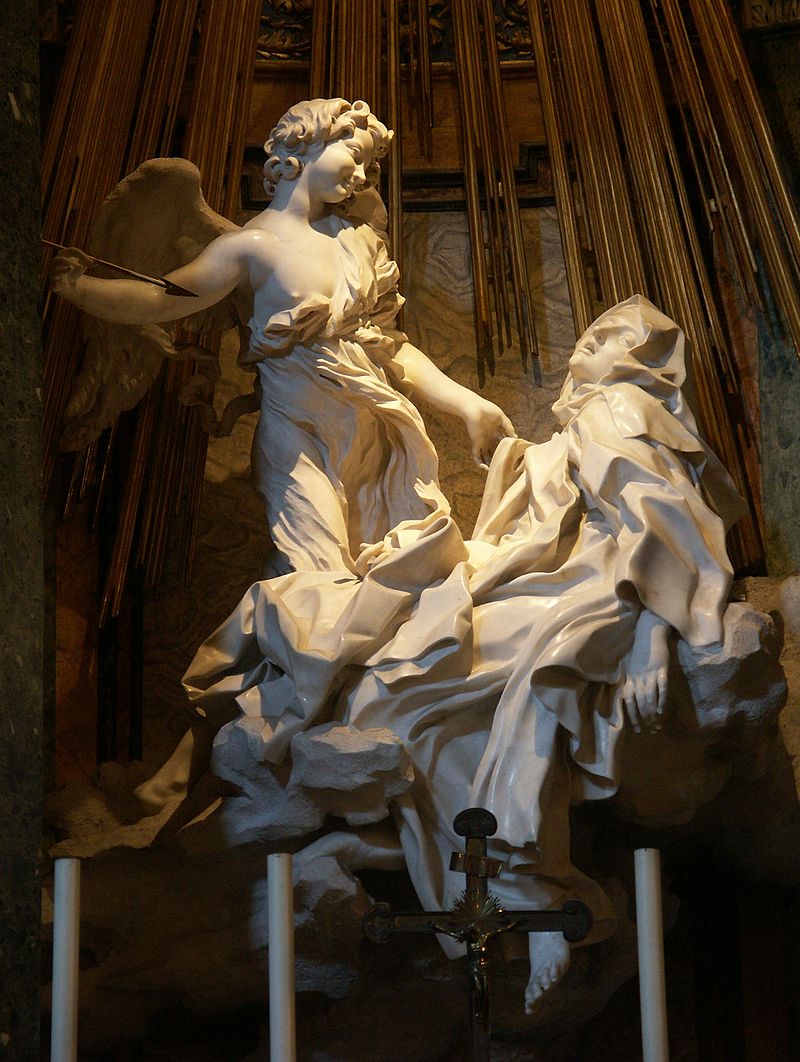
advanced emotion, subjective experience of total involvement of the subject, with an object of their awareness

Tao
thumb|200px|Symbol of Tao (the Way)
thumb|200px|Uncreated Eight Trigrams, representing the uncreated state of a being before it incarnates into the material world.
thumb|200px|Post-created Eight Trigrams, representing the state of a being after it is born into the material world.
entity
An entity is something that exists as itself. It does not need to be of material existence. In particular, abstractions and legal fictions are usually regarded as entities. In general, there is also no presumption that an entity is animate, or present. The verb tense of this form is to 'entitize' - meaning to convert into an entity; to perceive as tangible or alive.

self
In philosophy, the self is an individual's own being, knowledge, and values, and the relationship between these attributes.

theatre of the absurd
theatrical genre
introspection
Introspection is the examination of one's own conscious thoughts and feelings. In psychology, the process of introspection relies on the observation of one's mental state, while in a spiritual context it may refer to the examination of one's soul. Introspection is closely related to human self-reflection and self-discovery and is contrasted with external observation.

self-awareness
thumb|The Painter and The Buyer|The Painter and the Buyer (1565). In this drawing by [[Pieter Brueghel the Elder, the painter is thought to be a self-portrait.]]
absolute
reality where no doubt exists
intention
An intention is a mental state in which a person commits themselves to a course of action. Having the plan to visit the zoo tomorrow is an example of an intention. The action plan is the content of the intention while the commitment is the attitude towards this content. Other mental states can have action plans as their content, as when one admires a plan, but differ from intentions since they do not involve a practical commitment to realizing this plan. Successful intentions bring about the intended course of action while unsuccessful intentions fail to do so. Intentions, like many other ment

pratītyasamutpāda
thumb|upright=1.5|Brick inscribed with the Sutra on Dependent Origination. Found in Gopalpur, Gorakhpur District, Uttar Pradesh. Dated , Gupta Empire|Gupta period. [[Ashmolean Museum.]]
uncanny valley
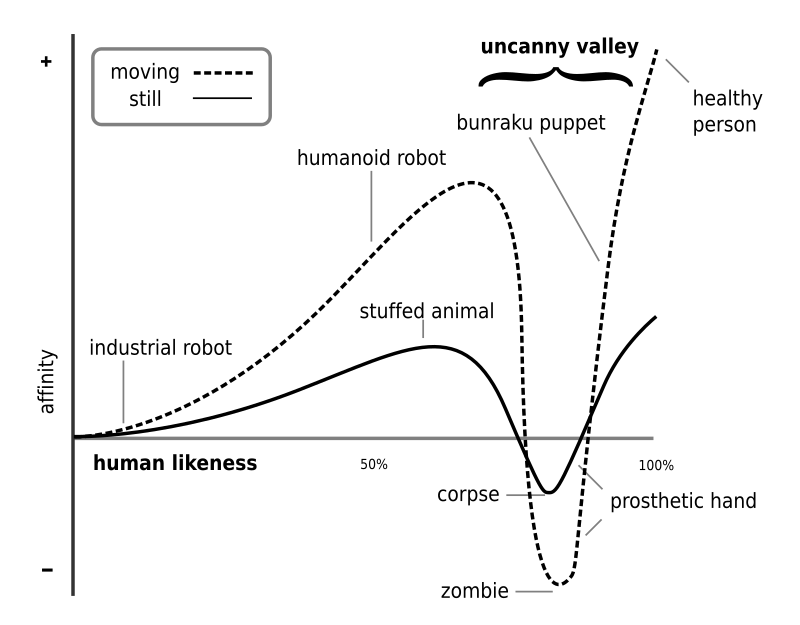
hypothesis that human replicas which appear almost like real human beings elicit revulsion

emergence
thumb|The formation of complex symmetrical and fractal patterns in [[snowflakes exemplifies emergence in a physical system.]]
thumb|A termite "cathedral" mound produced by a termites|termite colony offers a classic example of emergence in nature.
category of being
philosophical concept

qualia
upright=0.65|thumb|The "redness" of red is an example of a quale.
noosphere
The noosphere (alternate spelling noösphere) is a philosophical concept developed and popularized by the biogeochemist Vladimir Vernadsky and philosopher and Jesuit priest Pierre Teilhard de Chardin. Vernadsky defined the noosphere as the new state of the biosphere, and described it as the planetary "sphere of reason". The noosphere represents the highest stage of biospheric development, that of humankind's rational activities.
noumenon
In philosophy, a noumenon (, ; from ; : noumena) is knowledge posited as an object that exists independently of human sense. The term noumenon is generally used in contrast with, or in relation to, the term phenomenon, which refers to any object of the senses. Immanuel Kant first developed the notion of the noumenon as part of his transcendental idealism, suggesting that while we know the noumenal world to exist because human sensibility is merely receptive, it is not itself sensible and must therefore remain otherwise unknowable to us. In Kantian philosophy, the noumenon is often associated w
matter in philosophy
philosophical
monad
philosophical concept
problem of universals
philosophical question of whether properties exist, and if so, what they are
theory of mind
ability to attribute mental states
mind–body dualism
philosophical theory that mental phenomena are non-physical and that matter exists independently of mind
other
philosophical, psychological and anthropological concept that refers to the opposite of one's own identity

coincidence
alt=An image of a total solar eclipse at Orin Junction, Wyoming in 2017. A total solar eclipse happens when the Moon completely blocks the face of the Sun. It is the result of a cosmic coincidence. Even though the Sun is about 400 times bigger than the Moon, it is also about 400 times farther away. This makes the Sun and the Moon appear almost exactly the same size in our sky. |thumb|Solar eclipse of August 21, 2017|A total solar eclipse at Orin Junction, Wyoming in 2017. A total solar eclipse happens when the [[Moon completely blocks the face of the Sun. It is the result of a cosmic coinciden
eternal return
philosophical concept regarding infinite continuance of the universe
absolute time and space
theoretical foundation of Newtonian mechanics
cosmological argument
argument that God's existence is required to explain the existence or nature of the universe
thing-in-itself
In Kantian philosophy, the thing-in-itself () is the status of objects as they are, independent of representation and observation. The concept of the thing-in-itself was introduced by the German philosopher Immanuel Kant, and over the following centuries was met with controversy among later philosophers. It is closely related to Kant's concept of noumena or the objects of inquiry, as opposed to phenomena, its manifestations.
simulation hypothesis
hypothesis that reality could be a computer simulation
is–ought problem
philosophical problem articulated by David Hume in 1739 about how one can deduce prescriptive statements (what ought to be) from descriptive statements (what is)
mono no aware
Japanese term for the awareness of impermanence or transience of things, and both a transient gentle sadness or wistfulness at their passing as well as a longer, deeper gentle sadness about this state being the reality of life
will to power
philosophical concept proposed by Friedrich Nietzsche

Sephirot
Sefirot (, plural of סְפִירָה) meaning emanations, are the 10 attributes/emanations in Kabbalah, through which Ein Sof ("infinite space") reveals itself and continuously creates both the physical realm and the seder hishtalshelut (the chained descent of the metaphysical Four Worlds). The term is alternatively transliterated into English as sephirot/sephiroth, singular sefira/sephirah.