Category
page 1Constructed languages

Esperanto
Esperanto () is the world's most widely spoken constructed auxiliary language. Created by L. L. Zamenhof in 1887 as "the International Language" (), it is intended to be a universal second language for international communication. He described the language in ''Dr. Esperanto's International Language'' (known as , the "first book"), which he published under the pseudonym . Early adopters of the language liked the name and soon used it to describe his language. The word translates into English as "one who hopes".

Interlingue
Interlingue (; ISO 639 ie, ile), originally Occidental (), is an international auxiliary language created in 1922 and renamed in 1949. Its creator, Edgar de Wahl, sought to achieve maximal grammatical regularity and natural character. The vocabulary is based on pre-existing words from various languages and a derivational system which uses recognized prefixes and suffixes.
Interlingua
Interlingua (, ) is an international auxiliary language (IAL) developed between 1937 and 1951 by the American International Auxiliary Language Association (IALA). It is a constructed language of the "naturalistic" variety, whose vocabulary, grammar, and other characteristics are derived from natural languages. Interlingua literature maintains that (written) Interlingua is comprehensible to the billions of people who speak Romance languages, though it is actively spoken by only a few hundred.

Ido
Ido () is a constructed language derived from a reformed version of Esperanto, and designed similarly with the goal of being an international auxiliary language (or universal second language) for people of diverse languages. To function as an effective international auxiliary language, Ido was designed specifically to be grammatically, orthographically, and lexicographically regular (and, above all, easy to learn and use). It is the most successful of the many Esperanto derivatives, known as Esperantidoj.

constructed language
human language whose phonology, grammar, and vocabulary have been consciously devised for human or human-like communication

Volapük
Volapük (; , 'Language of the World', or ) is a constructed language created in 1879 and 1880 by Johann Martin Schleyer, a Roman Catholic priest in Baden, Germany. Notable as the first major constructed international auxiliary language, it primarily drew from Germanic languages. Its grammar is inspired largely by German, although it was heavily regularized by Schleyer, while its lexicon is rooted mostly in English, with additional influence from German, the Romance languages, and Russian. Despite some roots remaining recognizable, many words were altered beyond recognition, as Schleyer sought

Toki Pona
minimalist language created by Sonja Lang

Interslavic
Interslavic ( / ) is a pan-Slavic auxiliary language. Its purpose is to facilitate communication between speakers of various Slavic languages, as well as to allow people who do not speak a Slavic language to communicate with Slavic speakers by being mutually intelligible with most, if not all, Slavic languages. For Slavs and non-Slavs, it can be used for educational purposes as well. Its use spans a broad range of fields, including tourism and education.

Novial
Novial is an international auxiliary language (IAL) created by Danish linguist Otto Jespersen in 1928. It was designed to facilitate communication between speakers of different native languages. The name of the language is a blend of the Novial word novi (meaning 'new") and IAL.

Glosa
Glosa is a constructed international auxiliary language based on Interglossa (a previous draft of an auxiliary published in 1943). The first Glosa dictionary was published 1978. The name of the language comes from the Greek root glossa meaning tongue or language.
Lojban
Lojban (pronounced ) is a logical, constructed human language created by the Logical Language Group, which aims to be syntactically unambiguous. It succeeds the Loglan project.

Quenya
Quenya () is a constructed language, one of those devised by J. R. R. Tolkien for the Elves in his Middle-earth fiction.
international auxiliary language
language meant for communication between people from different nations who do not share a common first language

Solresol
Solresol (Solfège: Sol-Re-Sol), originally called (lit. 'Universal language') and then ('Universal musical language'), is a musical constructed language devised by French music teacher and composer Jean-François Sudre (1787–1862), beginning in 1817. His book defining it, , was published posthumously in 1866, though he had already been publicizing it for some years. Solresol enjoyed a brief spell of popularity in the latter half of the century and was sponsored by such figures as Victor Hugo, Alphonse de Lamartine, Alexander von Humboldt and Napoleon III, culminating with Boleslas Gajewski's pu

solfège
In music, solfège ( or ; ) or solfeggio (; ), also called sol-fa, solfa, solfeo, among many names, is a mnemonic used in teaching aural skills, pitch and sight-reading of Western music. Solfège is a form of solmization, though the two terms are sometimes used interchangeably.

Kotava
Kotava (sometimes also spelled Kodava) is an international auxiliary language (IAL) created by Staren Fetcey in 1978 that focuses on the principle of cultural neutrality. The name means "the language of one and all", and the Kotava community has adopted the slogan "a project humanistic and universal, utopian and realistic". The language is mainly known in French-speaking countries and most learning materials for it are in French.
glossolalia
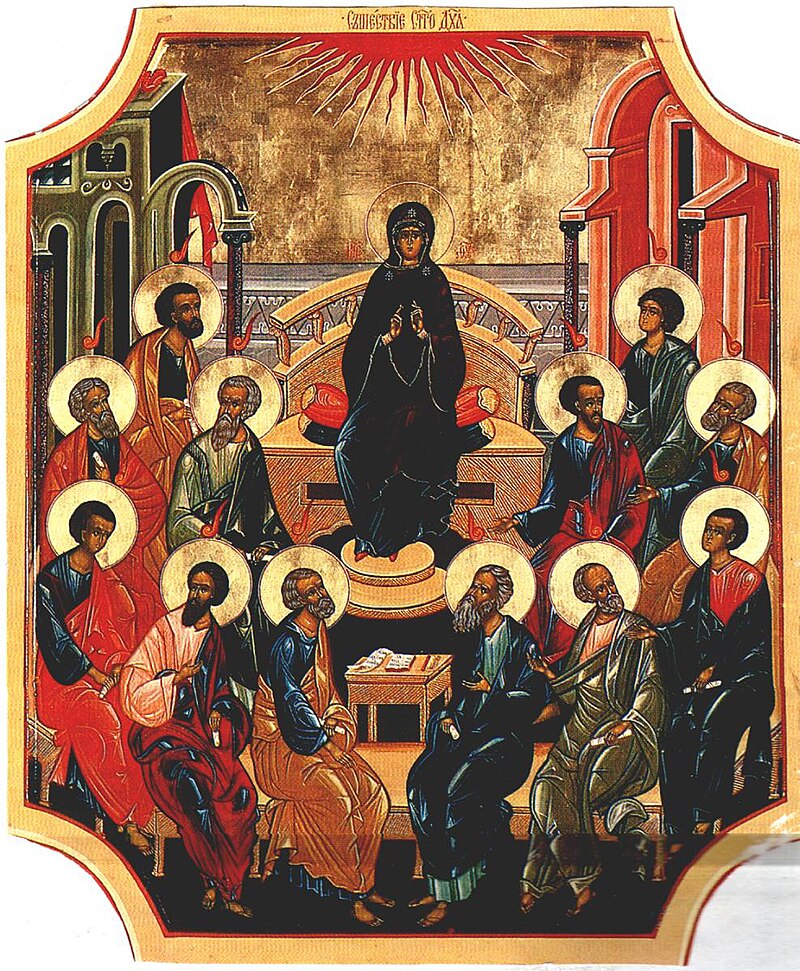
phenomenon in which people speak in languages unknown to them

Sindarin
Sindarin is one of the constructed languages devised by J. R. R. Tolkien for use in his fantasy stories set in Arda, primarily in Middle-earth. Sindarin is one of the many languages spoken by the Elves.

Dothraki
fictional language in "Game of Thrones"

Ithkuil
Ithkuil is an experimental constructed language created by John Quijada. It is designed to express more profound levels of human cognition briefly yet overtly and clearly, particularly about human categorization. It is a cross between an a priori philosophical and a logical language. It tries to minimize the vagueness and semantic ambiguity in natural human languages. Ithkuil is notable for its grammatical complexity and extensive phoneme inventory, the latter being simplified in an upcoming redesign. The name "Ithkuil" is an anglicized form of Iţkuîl, which in the original form roughly meant
Loglan
Loglan is a logical constructed language originally designed for linguistic research, particularly for investigating the Sapir–Whorf hypothesis. The language was developed beginning in 1955 by Dr. James Cooke Brown with the goal of making a language so different from natural languages that people learning it would think in a different way if the hypothesis were true. In 1960, Scientific American published an article introducing the language. Loglan is the first among, and the main inspiration for, the languages known as logical languages, which also includes Lojban.
Interlingue literature
literature in a constructed language
Black Speech
fictional language in the fantasy works of J. R. R. Tolkien
Modern Hebrew
standard form of the Hebrew language spoken today mainly in Israel
High Icelandic
constructed version of Icelandic to be devoid of "foreign" influences
Valyrian
fictional language family
Venedic
naturalistic constructed language

Persian Lessons
2020 film by Vadim Perelman
Brithenig
Brithenig, or also known as Comroig, is an invented language, or constructed language ("conlang"). It was created as a hobby in 1996 by Andrew Smith from New Zealand, who also invented the alternate history of Ill Bethisad to "explain" it. Officially according to the Ill Bethisad Wiki, Brithenig is classified as a Britanno-Romance language, along with other Romance languages that displaced Celtic.
Idiom Neutral
international auxiliary language, published by the International Academy of the Universal Language in 1902 under the leadership of W. Rosenberger; a heavy revision of Volapük
International Sign
sign language, used particularly at international meetings
Adûnaic
Adûnaic (or Númenórean) ("language of the West") is one of the fictional languages devised by J. R. R. Tolkien for his fantasy works.
Lingua Ignota
mystical language created by St. Hildegard of Bingen

Blissymbols
Blissymbols or Blissymbolics is a constructed language conceived as an ideographic writing system called Semantography consisting of several hundred basic symbols, each representing a concept, which can be composed together to generate new symbols that represent new concepts.
list of constructed languages
Wikimedia list article
Esperantido
An Esperantido (plural Esperantidoj) is a constructed language derived from Esperanto. Esperantido originally referred to the language which is now known as Ido. The word Esperantido contains the affix (-ido), which means a "child (born to a parent), young (of an animal) or offspring". Hence, Esperantido literally means an 'offspring or descendant of Esperanto'. The term was coined by Claus Killing-Günkel.
Afrihili
Afrihili (Ni Afrihili Oluga 'the Afrihili language') is a constructed language designed in 1970 by Ghanaian historian K. A. Kumi Attobrah (Kumi Atɔbra) to be used as a lingua franca in all of Africa. The name of the language is a combination of Africa and Swahili. The author, a native of Akrokerri (Akrokɛri) in Ghana, originally conceived of the idea in 1967 while on a sea voyage from Dover to Calais. His intention was that "it would promote unity and understanding among the different peoples of the continent, reduce costs in printing due to translations and promote trade". It is meant to be e
Europanto
Europanto is a macaronic language concept with a fluid vocabulary from European languages of the user's choice or need. It was conceived in 1996 by Diego Marani (a journalist, author and translator for the European Council of Ministers in Brussels) based on the common practice of word-borrowing usage of many European languages. Marani used it in response to the perceived dominance of the English language; it is an emulation of the effect that non-native speakers struggling to learn a language typically add words and phrases from their native language to express their meanings clearly.
Lingwa de Planeta
constructed language based on the most widely spoken languages
Neo
international auxiliary language created by Arturo Alfandari
Ro
a priori constructed language
language reform
update fundamentals of the language system
Talossan
constructed language created by Robert Ben Madison in 1980
Talossa
Talossa, also known as the Kingdom of Talossa ( ), is one of the earliest micronationsfounded in 1979 by then-14-year-old Robert Ben Madison of Milwaukee and at first confined to his bedroom; he adopted the name after discovering that the word means "inside the house" in Finnish. Among the first such projects still maintained, it has kept up a web presence since 1995. Its internet and media exposure since the late 1990s contributed to the appearance of other subsequent internet micronations.
Lincos
constructed language

Khuzdûl
Khuzdul () is a fictional language created by J. R. R. Tolkien, one of the languages of Middle-earth, specifically the secret and private language of the Dwarves. He based its structure and phonology on Semitic languages, primarily Hebrew, with triconsonantal roots of words. Very little of its grammar is defined.

Enochian
Enochian ( ) is an occult constructed language—said by its originators to have been received from angels—recorded in the private journals of John Dee and his colleague Edward Kelley in late 16th-century England. Kelley was a scryer who worked with Dee in his magical investigations. The language is integral to the practice of Enochian magic.
Guosa
Guosa is a constructed interlanguage originally created by Alex Igbineweka in 1965. It was designed to be a combination of the indigenous languages of Nigeria and to serve as a lingua franca to West Africa.
De Wahl's rule
rules for inflection in certain auxlangs, based on sound laws

Youth Without Youth
2007 film by Francis Ford Coppola
Yerkish
Yerkish is an artificial language developed for use by non-human primates. It employs a keyboard whose keys contain lexigrams, symbols corresponding to objects or ideas.
Neolatino Romance
codified pan-Romance language project
Arcaicam Esperantom
constructed language based on Esperanto, aimed at a deliberately medieval feel as a hypothetical earlier stage of Esperanto
AUI
constructed language
George Psalmanazar
French writer (1679–1763)
Sona
constructed language
pivot language
artificial or natural language used as an intermediary language for translation
Balaibalan
Balaibalan () is the oldest known constructed language.
constructed writing system
writing system specifically created by an individual or group
Sambahsa
Sambahsa () or Sambahsa-Mundialect is an international auxiliary language (IAL) and worldlang devised by French linguist Olivier Simon. It is based on the Proto-Indo-European language (PIE) and has a complex grammar.
The language was first released on the Internet in July 2007; prior to that, the creator claims to have worked on it for eight years. According to a study addressing recent auxiliary languages, "Sambahsa has an extensive vocabulary and a large amount of learning and reference material".