Category
page 1Crustacean genera

Argulus
Argulus is a genus of fish lice in the family Argulidae. There are about 140 accepted species in the genus Argulus. They occur in marine, brackish, and freshwater environments. They sit tightly against the host body, this minimises risk of detachment. As juveniles, these species feed on mucous and skin cells of their host. With age they become blood feeders because the parasite moves from feeding on the fins to feeding on the body of the fish, causing the feeding change. At least some species can have severe impacts on their host populations.
thumb|Argulus japonicus
Euphausia
Euphausia is the largest genus of krill, and is placed in the family Euphausiidae. There are 31 species known in this genus, including Antarctic krill (Euphausia superba) and ice krill (Euphausia crystallorophias) from the Southern Ocean, and North Pacific krill (Euphausia pacifica) in the Pacific Ocean.

Penaeus
Penaeus is a genus of prawns, including the giant tiger prawn (P. monodon), the most important species of farmed crustacean worldwide.
==Taxonomy==
The genus has been reorganised following a proposition of Pérez Farfante and Kensley based on morphological differences, in particular the genital characteristics of these animals, although this revision has not been universally accepted. Following the revision, many species formerly in the genus Penaeus (members of which are listed to the right) have been reassigned to new genera in the family Penaeidae: Farfantepenaeus, Fenneropenaeus, Litopenae

Sacculina
thumb|Sacculina

Procambarus
Procambarus is a genus of crayfish in the family Cambaridae, all native to North and Central America. It includes a number of troglobitic species, and the marbled crayfish (marmorkrebs), which is parthenogenetic. Originally described as a subgenus for four species, it now contains around 161 species.
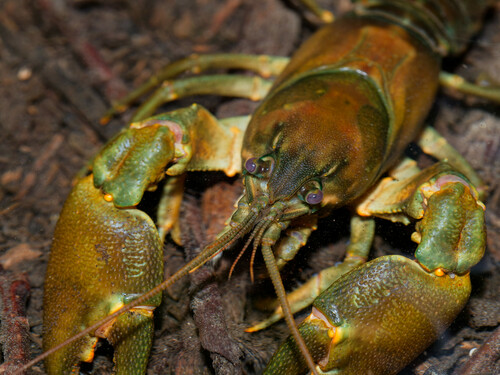
Pacifastacus
Pacifastacus is a genus of crayfish native to western North America (USA and Canada), containing six species, two of which are extinct:
†Pacifastacus chenoderma (fossil: Miocene – Pliocene)
Pacifastacus connectens
Pacifastacus fortis – Shasta crayfish
Pacifastacus gambelii
Pacifastacus leniusculus – signal crayfish
†Pacifastacus nigrescens – Sooty crayfish

Thysanoessa
Thysanoessa is a genus of the krill that play critical roles in the marine food web. They're abundant in Arctic and Antarctic areas, feeding on zooplankton and detritus to obtain energy. Thysanoessa are responsible for the transportation of carbon and nutrients from surface waters to deeper trophic levels. This genus serves as prey for various fish and provide energy to marine ecosystems as they are at a low trophic level. Most travel through vertical migration, meaning they travel up and down in the water column, providing food for predators at the surface during the night, and at deeper leve

Lybia
Lybia is a genus comprising eight species of small marine crabs from the family Xanthidae. Commonly known as boxer crabs and pom-pom crabs, these crabs are famous for their symbiosis with small aquatic invertebrates, particularly sea anemones, which they hold in their specialized claws for defense, and in some cases, feeding. The genus has a diverse distribution, ranging across the Indo-Pacific and existing as early as the Middle Miocene.

Nematobrachion
Nematobrachion is a genus of krill, containing the following three species:
Nematobrachion boopis (Calman, 1896)
Nematobrachion flexipes (Ortmann, 1893)
Nematobrachion sexspinosum Hansen, 1911
Metapenaeus
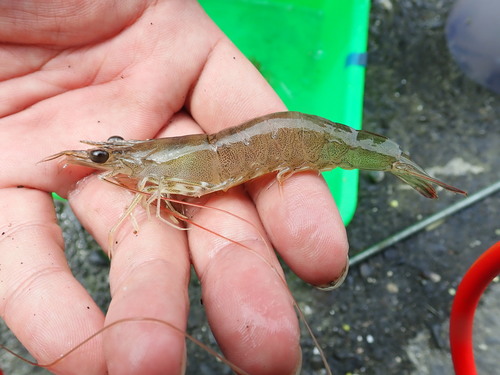
Metapenaeus is a genus of prawns, containing the following species:
Nyctiphanes
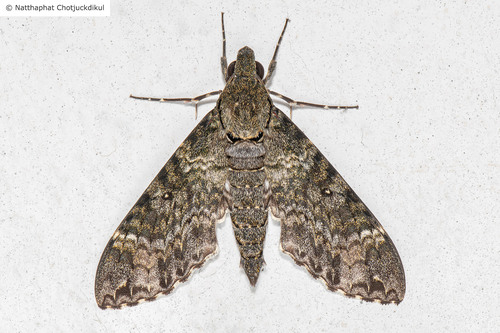
Nyctiphanes is a genus of krill, comprising four species with an anti-tropical distribution. Based on molecular phylogenetic analyses of the cytochrome oxidase gene and 16S ribosomal DNA, Nyctiphanes is believed to have evolved during the Miocene.

Thysanopoda
Thysanopoda is a genus of krill, containing the following species:
Thysanopoda acutifrons Holt & Tattersall, 1905
Thysanopoda aequalis Hansen, 1905
Thysanopoda astylata Brinton, 1975
Thysanopoda cornuta Illig, 1905
Thysanopoda cristata G. O. Sars, 1883
Thysanopoda egregia Hansen, 1905
Thysanopoda microphthalma G. O. Sars, 1885
Thysanopoda minyops Brinton, 1987
Thysanopoda monacantha Ortmann, 1893
Thysanopoda obtusifrons G. O. Sars, 1883
Thysanopoda orientalis Hansen, 1910
Thysanopoda pectinata Ortmann, 1893
Thysanopoda spinicaudata Brinton, 1953
Thysanopoda tricuspidata Milne-Edwards, 1837
Stylocheiron
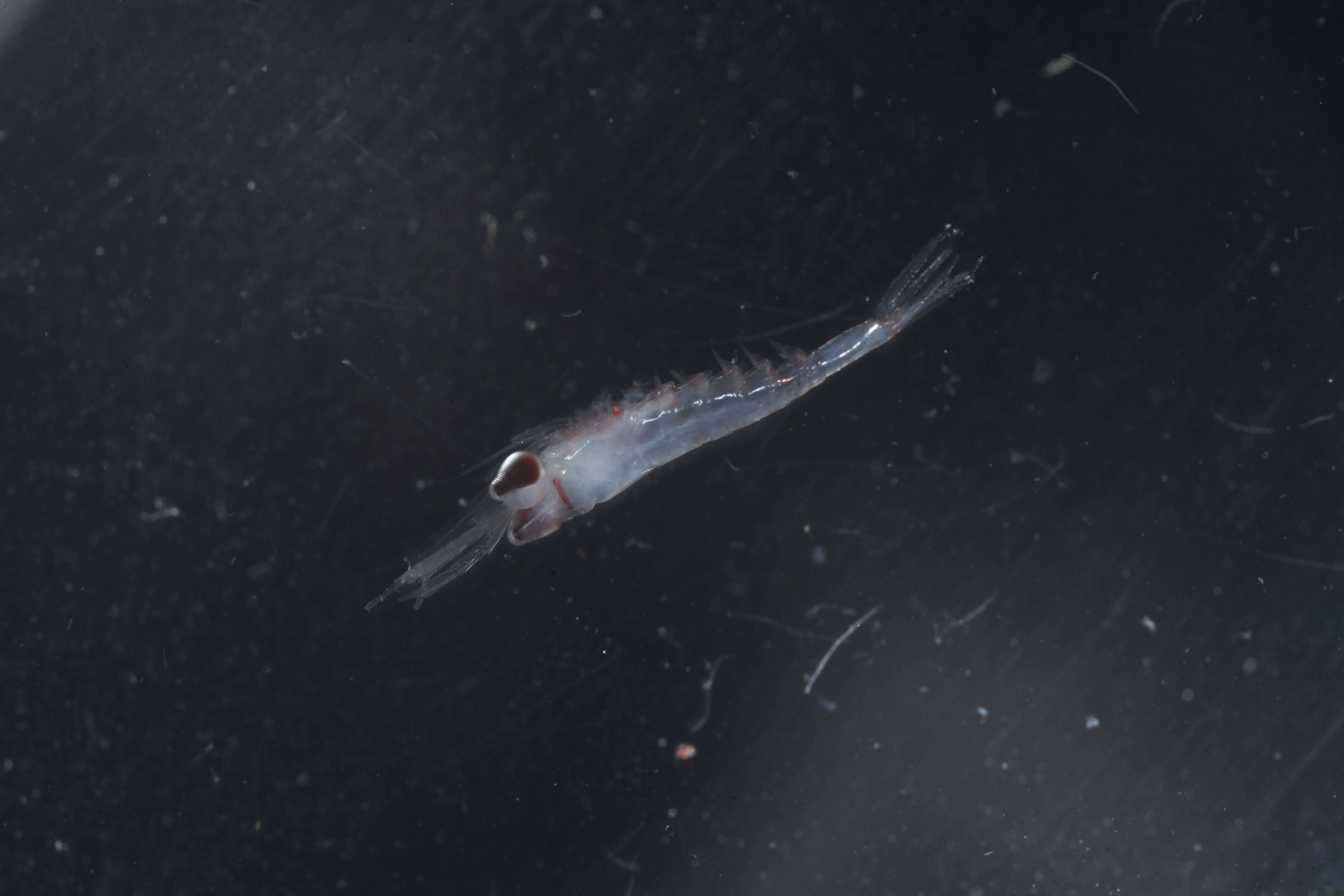
Stylocheiron is a genus of krill, containing the following species:
Stylocheiron abbreviatum G. O. Sars, 1883
Stylocheiron affine Hansen, 1910
Stylocheiron armatum Colosi, 1917
Stylocheiron carinatum G. O. Sars, 1883
Stylocheiron elongatum G. O. Sars, 1883
Stylocheiron indicum Silas & Mathew, 1967
Stylocheiron insulare Hansen, 1910
Stylocheiron longicorne G. O. Sars, 1883
Stylocheiron maximum Hansen, 1908
Stylocheiron microphthalma Hansen, 1910
Stylocheiron robustum Brinton, 1962
Stylocheiron suhmi G. O. Sars, 1883
%20(Mammoth%20Cave%2C%20Kentucky%2C%20USA).jpg)
Orconectes
Orconectes is a genus of cave dwelling freshwater crayfish, endemic to suitable habitats in the eastern United States. Surface dwelling species, formerly categorised here, were moved to Faxonius in 2017.
Sacculinidae
The Sacculinidae are a family of barnacles belonging to the parasitic and highly apomorphic infraclass Rhizocephala. The Sacculinidae is one of the two larger families of Rhizocephala, containing six genera:
Drepanorchis Boschma, 1927
Heterosaccus Smith, 1906
Loxothylacus Boschma, 1928
Ptychascus Boschma, 1933
Sacculina Thompson, 1836
Sesarmaxenos Annandale, 1911
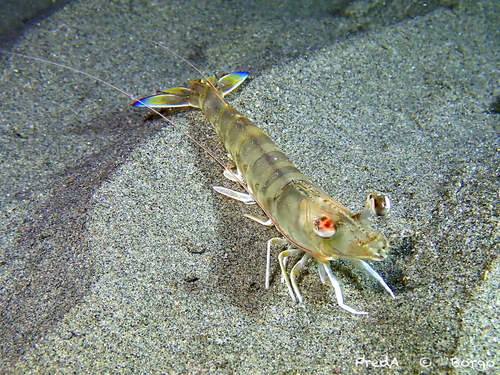
Melicertus
Melicertus is a genus of "king" prawns, comprising eight species which were previously classified as members of the genus Penaeus:
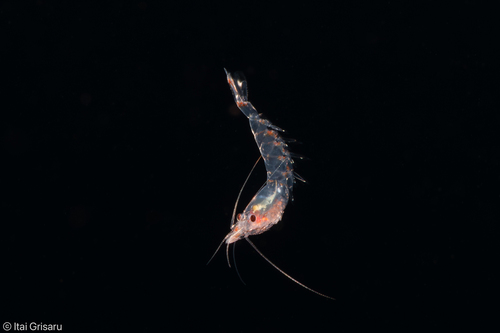
Pseudeuphausia
thumb | right | Euphausia latifrons, from the surface of the sea. (After Sars.)
Pseudeuphausia is a genus of krill (small marine crustaceans) comprising two species:
Pseudeuphausia latifrons (G. O. Sars, 1883)
Pseudeuphausia sinica Wang & Chen, 1963

Mysidopsis
Mysidopsis is a genus of mysid shrimps in the family Mysidae. The sensitivity of these shrimps to water quality makes them suitable for bioassays. Mysidopsis bahia and Mysidopsis almyra, which are used frequently to test for pesticides and other toxic substances, are now classified as Americamysis bahia and Americamysis almyra.

Mesochra
Mesochra is a genus of copepods belonging to the family Canthocamptidae.

Anisomysis
Anisomysis is a genus of mysids, first described in 1910 by Hans Jacob Hansen.
==Species==
Species and subgenera accepted by WoRMS are:
Louisea
Louisea is a genus of freshwater crab in the family Potamonautidae, containing two species, Louisea balssi and Louisea edeaensis. Both species are endemic to Cameroon and listed as endangered species on the IUCN Red List.

Haptosquilla
Haptosquilla is a genus of crustaceans belonging to the family Protosquillidae. The genus was first described in 1969 by Raymond Manning.
Bathylasma
Bathylasma is a genus of barnacles.
Heterosaccus
Heterosaccus is a genus of barnacles in infraclass Rhizocephala. Like other taxa in this group, they parasitize crabs. Geoffroy Smith circumscribed the genus in 1906; he initially only included H. hians. Smith circumscribed a genus distinct from Sacculina due to a difference of the mesentery; in Heterosaccus, the mesentery does not stretch down to the mantle opening but rather only is present on the ring of attachment.

Oxynaspis
Oxynaspis is a genus of goose barnacles in the order Lepadiformes.

Nematocarcinus
Nematocarcinus, sometimes known as spider shrimp, is a genus of caridean shrimp, the nominotype of Nematocarcinidae. Similar to the other members of their family, Nematocarcinus inhabit the deep sea, walking on the seabed with their specialized, extremely elongate legs (the pereiopods). Despite continuing fisheries experiments, they are currently not commercially fished, but often appear as bycatch.
Achtheres
Achtheres is a genus of arthropods belonging to the family Lernaeopodidae.

Thompsonia
genus of crustaceans
Nesochthamalus
The barnacle genus Nesochthamalus was erected by Foster & Newman, 1987, to include sole species Chthamalus intertextus originally named by Darwin in 1854. It is widespread on islands in Western Pacific Ocean, including Hawaii, and presents combinations of unusual features which make easily recognizable for field workers. These include dirty white shell exterior with deep purple colored interior, operculars colored purple. Opercular plates on each side calcify together in all but youngest individuals, and cannot be separated or easily distinguished from each other. This feature is shared only b
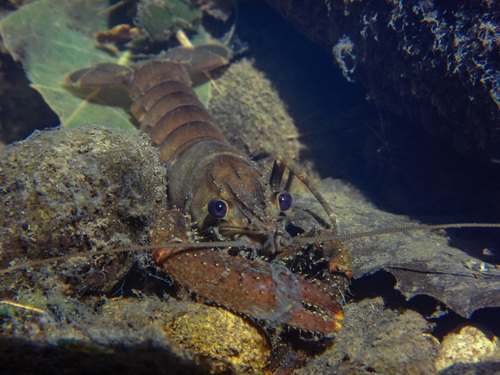
Paranephrops
Paranephrops is a genus of freshwater crayfish found only in New Zealand. They are known by the English common name freshwater crayfish and the Māori (also written as koura in case lacking macrons).
Linguatula
Linguatula is a genus of crustaceans belonging to the family Linguatulidae. The genus has a cosmopolitan distribution.
Scillaelepas
Scillaelepas is a genus of barnacle. Most of the species in the genus are androdioecious and the genus dates back to the Upper Jurassic period.