Category
page 1Culture of Turkey
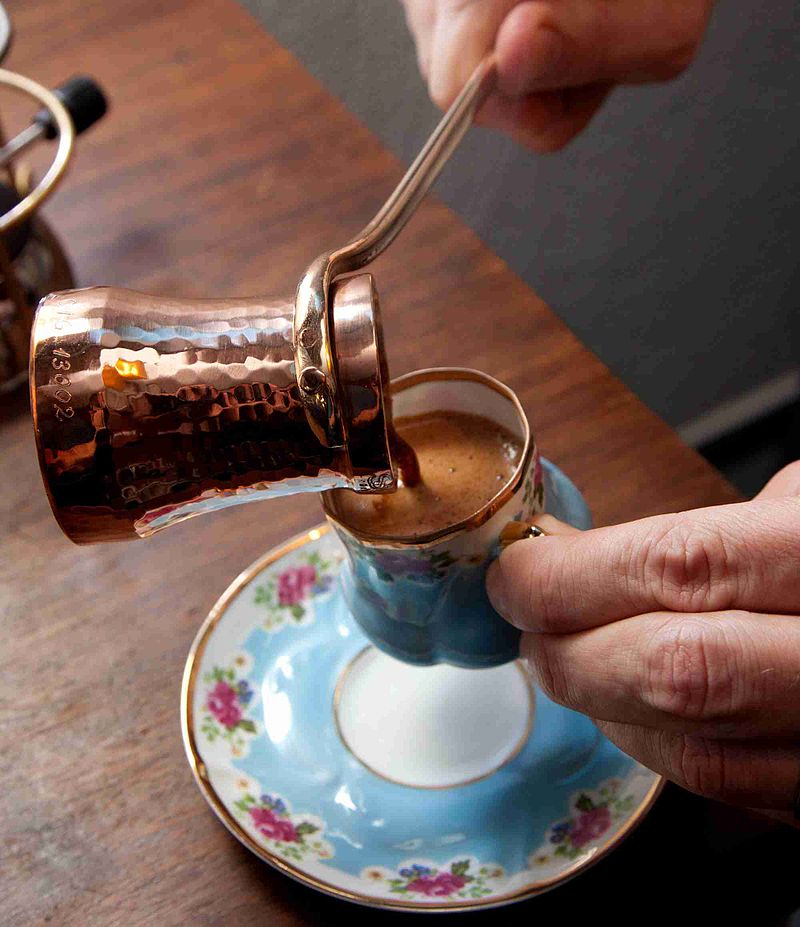
Turkish coffee
coffee brewing method originating from Turkey

samovar
282x282px|thumb|Samovar in Tula, Russia|Tula, Russia|alt=
Turkish literature
genre of literature
nazar
eye-shaped amulet believed to protect against the evil eye
tea in Turkey
tea culture of Turkey based on the local produce from the Black Sea Region
culture of Turkey
pattern of human activity and symbolism associated with Turkey and its people

Hıdırellez
Hıdırellez or Hıdrellez (; ; ; ) is a folk holiday celebrated as the day on which the prophets Al-Khidr (Hızır) and Elijah (İlyas) met on Earth. Hıdırellez starts on the night of May 5 and ends on May 6 in the Gregorian calendar, and April 23 (St. George's day for the Christians) in the Julian calendar. It is observed in Turkey, Crimea, Gagauzia, Syria, Iraq, the Caucasus, and the Balkans and celebrates the arrival of spring.
İznik pottery
type of decorated ceramic
Anatolian rug
type of rug or carpet from the Anatolia region of Turkey

Aksakallı
right|200px|thumb|An aqsaqal from Khinalug
Turkic mythology
mythology
Greek Muslims
ethnic group

gecekondu
thumb|right|A gecekondu region in Sincan, Ankara|Ankara before demolishing.
'''''', meaning 'put up overnight' (plural ''''''), is a Turkish word meaning a house put up quickly without proper permissions, a squatter's house, and by extension, a shanty or shack. '''''' is a neighborhood made of those gecekondular. neighborhoods offer an affordable alternative for shelter for many low-income households who can not afford to purchase or rent formal housing.
Camel wrestling
sport in which two male Tülü camels wrestle
arabesque
genre of Turkish music
New Year tree
decorated tree similar to a Christmas tree that is displayed to celebrate the New Year
Surname Law
Turkish law and reform
list of geographical name changes in Turkey
Wikimedia list article

Cemevi
thumb|Interior of the historical Şahkulu Sultan Dergahi Cemevi in [[Kadıköy, Istanbul.]]
Ömer Asan
Turkish photographer and writer (born 1961)
namus
Nāmūs is an Arabic word describing an ethical category in Middle Eastern patriarchal character. Often literally translated as "virtue", it is now more popularly used in a strong gender-specific context of relations within a family described in terms of honor, attention, respect/respectability, and modesty.

meyhane
thumb|right|upright=1.3|People dancing in a Bulgarian mehana
mahya
special lighting in mosque exteriors, especially during Ramazan
Turkish art
overview of art in the Republic of Turkey
Mustafa Kemal Atatürk's cult of personality
the cult of personality around Kemal Atatürk
Atatürk's Address To Turkish Youth
speech by Kemal Atatürk
Lake Van Monster
lake monster said to live in eastern Turkey
Traditional Sohbet meetings
Turkish social practice of community conversations
Dedes
Alevitic religious leader
peshtamal
thumb|A hammam towel
A peshtemal (also spelled peshtamal, pestamal, pestmal, or pestema ; from Persian~ Fa puştmāl back towel § Fa puşt back + Fa māl cleaning) is a traditional towel used in baths. A staple of Persia, with a strong influence on Ottoman culture, dating back hundreds of years, the pestemal was originally designed to help individual bathers maintain their privacy. In addition to being highly absorbent, pestemals dry faster than thicker towels.
Mangala
traditional Turkish mancala game
Süleymaniye Hamam
public baths in Fatih, İstanbul–Europe, Turkey
Assyrian culture
pattern of human activity and symbolism associated with the Assyrian people
Ishikism
Ishikism ('), also known as Çinarism ('), is a new syncretic religious movement among Alevis who have developed an alternative understanding of Alevism and its history. These alternative interpretations and beliefs were inspired by Turkish writer Erdoğan Çınar with the publication of his book Aleviliğin Gizli Tarihi (The Secret History of Alevism) in 2004.
Jem
Alevi worship service
Kilim motif
design element found in kilim woven rugs
DOBAG Carpet Initiative
Turkish carpet weaving project
Baba
Alevi religious leader
oya
type of needle-knotted lace edging variously made with a needle, shuttle, or crochet hook
polygamy in Turkey