Category
page 2Cygnus (constellation)
list of stars in Cygnus
Wikimedia list article
Cygnus A
radio galaxy
HD 188753
star in the constellation Cygnus
Chi Cygni
star in the constellation Cygnus
Gliese 777
binary star in the constellation Cygnus
V404 Cygni
binary star

Q11488440
Kepler-69 (KOI-172, 2MASS J19330262+4452080, KIC 8692861) is a G-type main-sequence star similar to the Sun in the constellation Cygnus, located about from Earth. On April 18, 2013 it was announced that the star has two planets. Although initial estimates indicated that the terrestrial planet Kepler-69c might be within the star's habitable zone, further analysis showed that the planet very likely is interior to the habitable zone and is far more analogous to Venus than to Earth and thus completely inhospitable.

Q2299623
<!--This is now a page in its own right, not merely a translation of other languages' pages, but I'm leaving the translation material here so the material from the Chinese and French pages can be incorporated into this page by persons who know that language.
Sadr Region
H II region in the constellation Cygnus

HAT-P-7 b
HAT-P-7b (or Kepler-2b) is an extrasolar planet discovered in 2008. It orbits very close to its host star and is larger than Jupiter. Due to the extreme heat that it receives from its star, the dayside temperature is predicted to be , while nightside temperatures are . HAT-P-7b is also one of the darkest planets ever observed, with an albedo of less than 0.03—meaning it absorbs more than 97% of the visible light that strikes it.
G 208-44/208-45
triple star system in the constellation Cygnus

Kepler-16
Kepler-16 is an eclipsing binary star system in the constellation of Cygnus that was targeted by the Kepler spacecraft. Both stars are smaller than the Sun; the primary, Kepler-16A, is a K-type main-sequence star and the secondary, Kepler-16B, is an M-type red dwarf. They are separated by 0.23 AU, and complete an orbit around a common center of mass every 41 days.
The system is host to one known extrasolar planet in circumbinary orbit: the Saturn-sized Kepler-16b.

Kepler-6
Kepler-6 is a G-type star situated in the constellation Cygnus. The star lies within the field of view of the Kepler Mission, which discovered it as part of a NASA-led mission to discover Earth-like planets. The star, which is slightly larger, more metal-rich, slightly cooler, and more massive than the Sun, is orbited by at least one extrasolar planet, a Jupiter-sized planet named Kepler-6b that orbits closely to its star.
thumb|Kepler-6
Kepler-32
Kepler-32 is an M-type main sequence star located about 1053 light years from Earth, in the constellation of Cygnus. Discovered in January 2012 by the Kepler spacecraft, it shows a 0.58 ± 0.05 solar mass (), a 0.53 ± 0.04 solar radius (), and temperature of 3900.0 K, making it half the mass and radius of the Sun, two-thirds its temperature and 5% its luminosity.
V1500 Cygni
bright nova occurring in 1975 in the constellation Cygnus

Kepler-78 b
Kepler-78b (formerly known as KIC 8435766 b) is an exoplanet orbiting around the star Kepler-78. At the time of its discovery, it was the exoplanet most similar to Earth in terms of mass, radius, and mean density.

Kepler-5 b
__NOTOC__
Q28146986
Contact binary star system

Kepler-47
Kepler-47 is a binary star system in the constellation Cygnus located about away from Earth. The stars have three exoplanets, all of which orbit both stars at the same time, making this a circumbinary system. The first two planets announced are designated Kepler-47b and Kepler-47c, and the third, later discovery is Kepler-47d. Kepler-47 is the first circumbinary multi-planet system discovered by the Kepler mission. The outermost of the planets is a gas giant orbiting within the habitable zone of the stars. Because most larger stars (the size of the sun or greater) are binary, the discovery tha
Zeta Cygni
star in the constellation Cygnus
16 Cygni Bb
extrasolar planet
Kepler-1625 b
Kepler-1625b is a super-Jupiter exoplanet orbiting the Sun-like star Kepler-1625 about away in the constellation of Cygnus. The large gas giant is approximately the same radius as Jupiter, and orbits its star every 287.4 days. In 2017, hints of a Neptune-sized exomoon in orbit of the planet were found using photometric observations collected by the Kepler Mission. Further evidence for a Neptunian moon was found the following year using the Hubble Space Telescope, where two independent lines of evidence constrained the mass and radius to be Neptune-like. The mass-signature has been independentl
Tau Cygni
variable star in the constellation Cygnus

PH1
PH1b (standing for "Planet Hunters 1"), or by its NASA designation Kepler-64b, is an extrasolar planet found in a circumbinary orbit in the quadruple star system Kepler-64. The planet was discovered by two amateur astronomers from the Planet Hunters project of amateur astronomers using data from the Kepler space telescope with assistance of a Yale University team of international astronomers. The discovery was announced on 15 October 2012. It is the first known transiting planet in a quadruple star system, first known circumbinary planet in a quadruple star system, and the first planet in a qu
Eta Cygni
star in the constellation Cygnus
Q2634622
Kepler-33 is a star about in the constellation of Cygnus, with a system of five known planets. Having just begun to evolve off from the main sequence, its radius and mass are difficult to ascertain, although data available in 2020 shows its best-fit mass of 1.3 and radius of 1.6 are compatible with a model of a subgiant star.
SS Cygni
variable star in the constellation Cygnus
Kepler-1625

Kepler-5
Kepler-5 is a star located in the constellation Cygnus in the field of view of the Kepler Mission, a NASA project aimed at detecting planets in transit of, or passing in front of, their host stars as seen from Earth. One closely-orbiting, Jupiter-like planet, named Kepler-5b, has been detected around Kepler-5. Kepler-5's planet was one of the first five planets to be discovered by the Kepler spacecraft; its discovery was announced on January 4, 2010 at the 215th meeting of the American Astronomical Society after being verified by a variety of observatories. Kepler-5 is larger and more massive
Pi1 Cygni
star in the constellation Cygnus

Kepler-56
Kepler-56 is a red giant in the constellation Cygnus. It is located roughly away from the solar system and has slightly more mass than the Sun.

Kepler-11 b
Kepler-11b is an exoplanet discovered around the star Kepler-11 by the Kepler space telescope, a NASA-led mission to discover Earth-like planets. Kepler-11b is less than about three times as massive and twice as large as Earth, but it has a lower density (≤ 3 g/cm3), and is thus most likely not of Earth-like composition. Kepler-11b is the hottest of the six planets in the Kepler-11 system, and orbits more closely to Kepler-11 than the other planets in the system. Kepler-11b, along with its five counterparts, form the first discovered planetary system with more than three transiting planets—the
Cygnus X-3
binary star
Kappa Cygnids
meteor shower
V1974 Cygni
nova in the constellation Cygnus
Kepler-11 c
Kepler-11c is an exoplanet discovered in the orbit of the Sun-like star Kepler-11 by the Kepler space telescope, a NASA telescope aiming to discover Earth-like planets. It is the second planet from its star, and is most likely a water planet with a thin hydrogen–helium atmosphere. Kepler-11c orbits Kepler-11 every 10 days, and has an estimated density twice that of pure water. It is estimated to have a mass thirteen times that of Earth and a radius three times that of Earth. Kepler-11c and its five sister planets form the first discovered system with more than three transiting planets. The Kep
HAT-P-7
HAT-P-7 is a triple star system located about 1,088 light-years away in the constellation Cygnus. The apparent magnitude of this star is 10.5, which means it is not visible to the naked eye but can be seen with a small telescope on a clear dark night.
Rho Cygni
star in the constellation Cygnus
Kepler-80
Kepler-80, also known as KOI-500, is a red dwarf star of the spectral type M0V. This stellar classification places Kepler-80 among the very common, cool, class M stars that are still within their main evolutionary stage, known as the main sequence. Kepler-80, like other red dwarf stars, is smaller than the Sun, and it has both radius, mass, temperatures, and luminosity lower than that of our own star. Kepler-80 is found approximately 1,223 light years from the Solar System, in the stellar constellation Cygnus, also known as the Swan.
V476 Cygni
star in the constellation Cygnus
Cygnus Loop
supernova remnant in the constellation Cygnus
Cygnus OB2
OB association in the constellation Cygnus
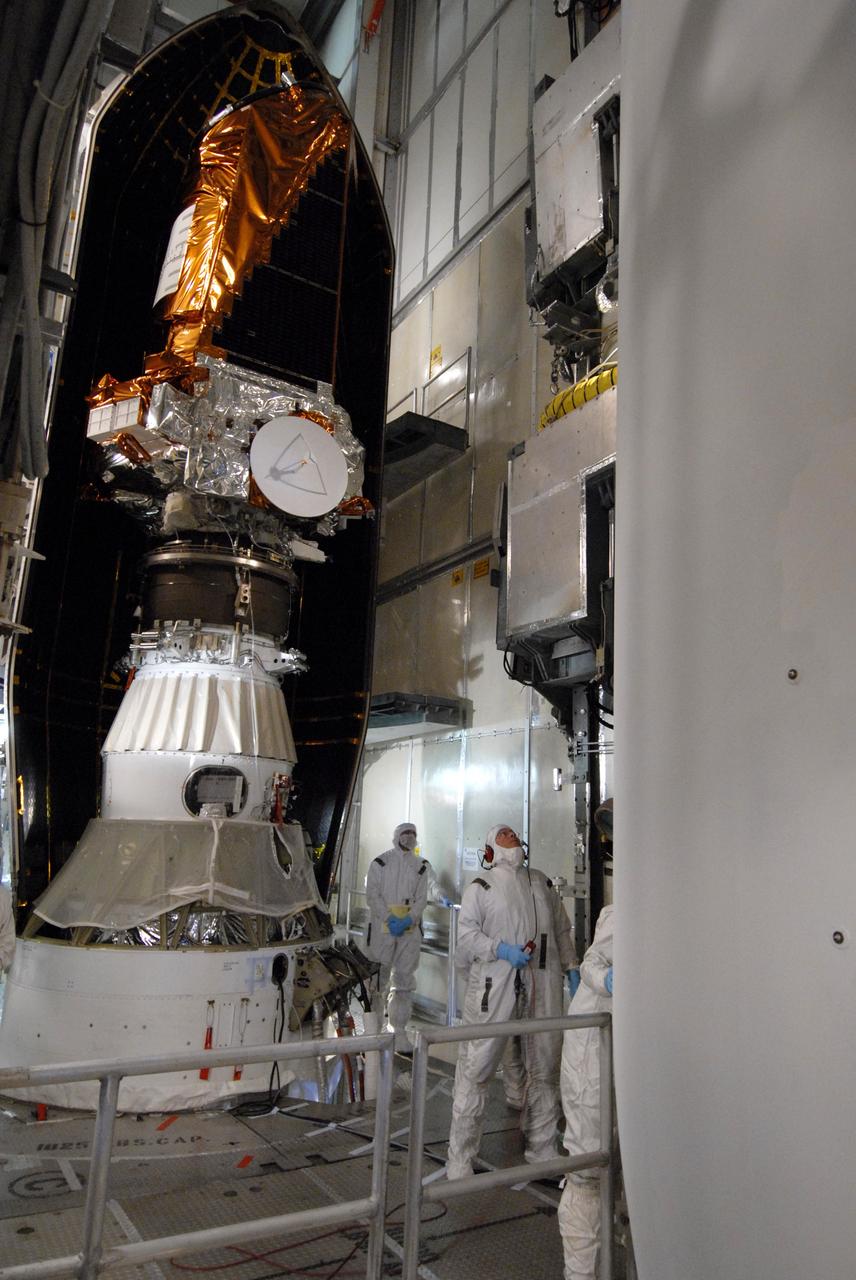
Kepler-6 b
Kepler-6b is an extrasolar planet in the orbit of the unusually metal-rich Kepler-6, a star in the field of view of the NASA-operated Kepler spacecraft, which searches for planets that cross directly in front of, or transit, their host stars. It was the third planet to be discovered by Kepler. Kepler-6 orbits its host star every three days from a distance of .046 AU. Its proximity to Kepler-6 inflated the planet, about two-thirds the mass of Jupiter, to slightly larger than Jupiter's size and greatly heated its atmosphere.

Kepler-51
Kepler-51 is a Sun-like star that is about 500 million years old. It is orbited by four planets—Kepler-51b, c, d and e—first three of which are super-puffs and have the lowest known densities of any known exoplanet. The transiting planets in the system (b, c and d) are similar in radius to gas giants like Jupiter, but have unusually small masses for their size, only a few times greater than Earth's.
Kepler-70
Kepler-70, also known as KIC 5807616 and KOI-55, is a star about away in the constellation Cygnus, with an apparent visual magnitude of 14.87. This is too faint to be seen with the naked eye; viewing it requires a telescope with an aperture of or more.

Kepler-18
thumb | right | Comparative sizes of Earth, Kepler-18 b and [[Jupiter]]
Kepler-18 is a star with almost the same mass as the Sun in the Cygnus constellation.

Q3814721
Kepler-35 is a binary star system in the constellation of Cygnus. These stars, called Kepler-35A and Kepler-35B have masses of 89% and 81% solar masses respectively, and both are assumed to be of spectral class G. They are separated by 0.176 AU, and complete an eccentric orbit around a common center of mass every 20.73 days.

Kepler-34
Kepler-34 is an eclipsing binary star system in the constellation of Cygnus. Both stars have roughly the same mass as the Sun and, like the Sun, both are spectral class G. They are separated by 0.22 AU, and complete an eccentric (e=0.5) orbit around a common center of mass every 27 days.
Q24049348
| eccentricity = ~0
| period = 86.829 d
| inclination = ~89.5
| star = Kepler-1229 (KOI-2418)
| mean_radius =
| mass = ~2.7
| single_temperature =
V1770 Cygni
star in the constellation Cygnus
Tulip Nebula
H II region in the constellation Cygnus
Kepler-34b
Kepler-34b (formally Kepler-34(AB)b) is a circumbinary planet announced with Kepler-35b. It is a small gas giant that orbits every ~288 days around two stars. Despite the planet's relatively long orbital period, its existence could be confirmed quickly due to transiting both of its host stars.
Kepler-223
Kepler-223 (KOI-730, KIC 10227020) is a G8 star with an extrasolar planetary system discovered by the Kepler mission. Studies indicate that the Kepler-223 star system consists of 4 planets orbiting the star.
Kepler-283 c
extrasolar planet

Kepler-15
thumb|alt=Comparative sizes of Sun and Kepler-15|Comparative sizes of Sun and Kepler-15
Kepler-15 (also known as KOI-128 or KIC 11359879 is a G-type subgiant with a mass of 1.018 solar masses and a radius of 1.253 solar radius.
Cygnus-X
star formation region in the constellation of Cygnus
Kepler-107
Kepler-107 is a star about away in the constellation Cygnus. No stellar companions were found as of 2016.

Kepler-17
Kepler-17 is a main-sequence yellow dwarf star that is much more active than the Sun with starspots covering roughly 6% of its surface. Starspots are long-lived, with at least one persisting for 1400 days.
==Planetary system==
The Kepler-17 is known to host one superjovian exoplanet, Kepler-17b, in orbit around it. It was discovered by the transit method in 2011.
Omega2 Cygni
star in the constellation Cygnus
HD 187123
star in the constellation Cygnus