Category
page 3Cygnus (constellation)

Kepler-15
thumb|alt=Comparative sizes of Sun and Kepler-15|Comparative sizes of Sun and Kepler-15
Kepler-15 (also known as KOI-128 or KIC 11359879 is a G-type subgiant with a mass of 1.018 solar masses and a radius of 1.253 solar radius.
Celestial Snow Angel
astronomical object
Gliese 777 c
extrasolar planet in the constellation Cygnus

Kepler-36
Kepler-36 is a star in the constellation of Cygnus with two known planets. It has an anomalously large radius, meaning that it is a subgiant.
HD 187123 b
extrasolar planet

Kepler-69 b
REDIRECT Kepler-69#Planetary system

Q89870165
Kepler-1649 is a red dwarf star of spectral type M5V with a radius , a mass , and a metallicity of -0.15 [Fe/H].

Kepler-1647 b
Kepler-1647b (sometimes named Kepler-1647(AB)b to distinguish it from the secondary component) is a circumbinary exoplanet that orbits the binary star system Kepler-1647, located from Earth in the constellation Cygnus. It was announced on June 13, 2016, in San Diego at a meeting of the American Astronomical Society. It was detected using the transit method, when it caused the dimming of the primary star, and then again of the secondary star blended with the primary star eclipse.
The first transit of the planet was identified in 2012, but at the time the single event was not enough to rule out
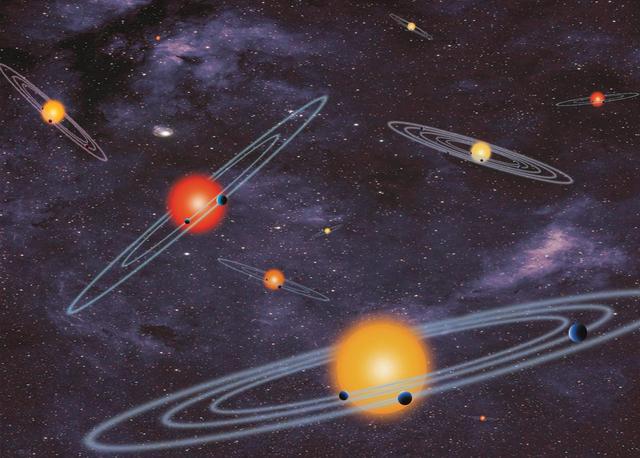
Kepler-413b
Kepler-413b (also known as Kepler-413(AB)b) is a circumbinary planet orbiting stars Kepler-413 A and Kepler-413 B, which respectively are K and M dwarfs. These host stars orbit each other with orbital period of 10.1 days.
Omega2 Cygni
star in the constellation Cygnus
52 Cygni
binary star system in the constellation Cygnus
Q16426750
Kepler-186b (also known as KOI-571.03) is an exoplanet located around 582 light-years away from Earth. Kepler-186b orbits a red dwarf known as Kepler-186, named after the space telescope that found it.

Kepler-17
Kepler-17 is a main-sequence yellow dwarf star that is much more active than the Sun with starspots covering roughly 6% of its surface. Starspots are long-lived, with at least one persisting for 1400 days.
==Planetary system==
The Kepler-17 is known to host one superjovian exoplanet, Kepler-17b, in orbit around it. It was discovered by the transit method in 2011.
Kepler-107
Kepler-107 is a star about away in the constellation Cygnus. No stellar companions were found as of 2016.
Cygnus-X
star formation region in the constellation of Cygnus
HD 187123
star in the constellation Cygnus

Kepler-11 f
Kepler-11f is an exoplanet (extrasolar planet) discovered in the orbit of the Sun-like star Kepler-11 by NASA's Kepler space telescope, which searches for planets that transit (cross in front of) their host stars. Kepler-11f is the fifth planet from its star, orbiting one quarter of the distance (.25 AU) of the Earth from the Sun every 47 days. It is the furthest of the first five planets in the system. Kepler-11f is the least massive of Kepler-11's six planets, at nearly twice the mass of Earth; it is about 2.6 times the radius of Earth. Along with planets d and e and unlike the two inner pla
29 Cygni
star in the constellation Cygnus
V1668 Cygni
star in the constellation Cygnus
Kepler-11 e
Kepler-11e is an exoplanet (extrasolar planet) discovered in the orbit of the sunlike star Kepler-11. It is the fourth of six planets around Kepler-11 discovered by NASA's Kepler space telescope. Kepler-11e was found by using the transit method, in which the dimming effect that a planet causes as it crosses in front of its star is measured. Kepler-11e is most likely a gas giant like Neptune, having a density that is less than that of Saturn, the least dense planet in the Solar System. Its low density can probably be attributed to a large hydrogen and helium atmosphere. Kepler-11e has a mass ei
Kappa Cygni
star in the constellation Cygnus

M1-92

Q15114380
Kepler-61b (also known by its Kepler Object of Interest designation KOI-1361.01) is a super-Earth exoplanet orbiting within parts of the habitable zone of the K-type main-sequence star Kepler-61. It is located about 1,100 light-years (338 parsecs) from Earth in the constellation of Cygnus. It was discovered in 2013 using the transit method, in which the dimming effect that a planet causes as it crosses in front of its star is measured, by NASA's Kepler spacecraft.
Northern Cross
astronomical asterism in the northern hemisphere celestial sphere
Omicron2 Cygni
Star in the constellation Cygnus
Wolf 1069
star
BC Cygni
star in the constellation Cygnus
Omicron1 Cygni
binary star in the constellation Cygnus
17 Cygni
star system in the constellation Cygnus
RW Cygni
star in the constellation Cygnus
Kepler-78
Kepler-78 (formerly known as KIC 8435766) is a 12th magnitude star away in the constellation Cygnus. Initially classified as an eclipsing binary with orbital period 0.710015 days, it was later re-classified as a single star with significant interaction between star magnetosphere and close-in planet. The radius of the star is of about 74% of the Sun, and the effective temperature is about .
Kepler-76b
Kepler-76b is a gas giant with mass about two times that of Jupiter.
HD 197036
star in the constellation Cygnus
2 Cygni
star in the constellation Cygnus
Gliese 777 b
extrasolar planet in the constellation Cygnus

KIC 12557548
Kepler-1520 (initially published as KIC 12557548) is a K-type main-sequence star located in the constellation Cygnus. The star is particularly important, as measurements taken by the Kepler spacecraft indicate that the variations in the star's light curve cover a range from about 0.2% to 1.3% of the star's light being blocked. This indicates that there may be a rapidly disintegrating planet, a prediction not yet conclusively confirmed, in orbit around the star, losing mass at a rate of 1 Earth mass every billion years. The planet itself is about 0.1 Earth masses, or just twice the mass of Merc
Soap bubble nebula
astronomical object
HD 187123 c
extrasolar planet

Kepler-28
Kepler-28 is an M-type main-sequence star about away in the northern constellation of Cygnus. With an apparent visual magnitude of 15.036, this star is too faint to be seen with the naked eye. It is orbited by two exoplanets.
Theta Cygni
star system in the constellation Cygnus
Sigma Cygni
star in the constellation Cygnus
Kepler-47 c
Kepler-47c (also known as Kepler-47(AB)-c and by its Kepler Object of Interest designation KOI-3154.02) is an exoplanet orbiting the binary star system Kepler-47, the outermost of three such planets discovered by NASA's Kepler spacecraft. The system, also involving two other exoplanets, is located about 3,400 light-years (1,060 parsecs) away.
Kepler-68
Kepler-68 is a Sun-like main sequence star located away in the constellation Cygnus. It is known to have at least four planets orbiting around it. The third planet has a mass similar to Jupiter but orbits within the habitable zone.
30 Cygni
star in the constellation Cygnus
Omega1 Cygni
star in the constellation Cygnus
Q16427059
Kepler-186e (also known by its Kepler Object of Interest designation KOI-571.04) is a confirmed exoplanet orbiting the red dwarf star Kepler-186, approximately 582 light years away from Earth in the constellation of Cygnus. It is near the optimistic habitable zone but probably not in it, possibly making it have a runaway greenhouse effect, like Venus. The exoplanet was found by using the transit method, in which the dimming effect that a planet causes as it crosses in front of its star is measured. Four additional planets orbiting the star (all modestly larger than Earth) were also discovered.

N6946-BH1
Q6869466
star in the constellation Cygnus
KOI-94
Kepler-89 is a star with four confirmed planets. Kepler-89 is a possible wide binary star.
Kepler-61
Kepler-61 is a K-type main-sequence star approximately 1,100 light years from Earth in the constellation Cygnus. It is located within the field of vision of the Kepler spacecraft, the satellite that NASA's Kepler Mission used to detect planets that may be transiting their stars. On April 24, 2013 it was announced that the star has an extrasolar planet (a super-Earth) orbiting in the inner edge of the habitable zone, named Kepler-61b.
Lambda Cygni
star system in the constellation Cygnus
X Cygni
variable star in the constellation Cygnus
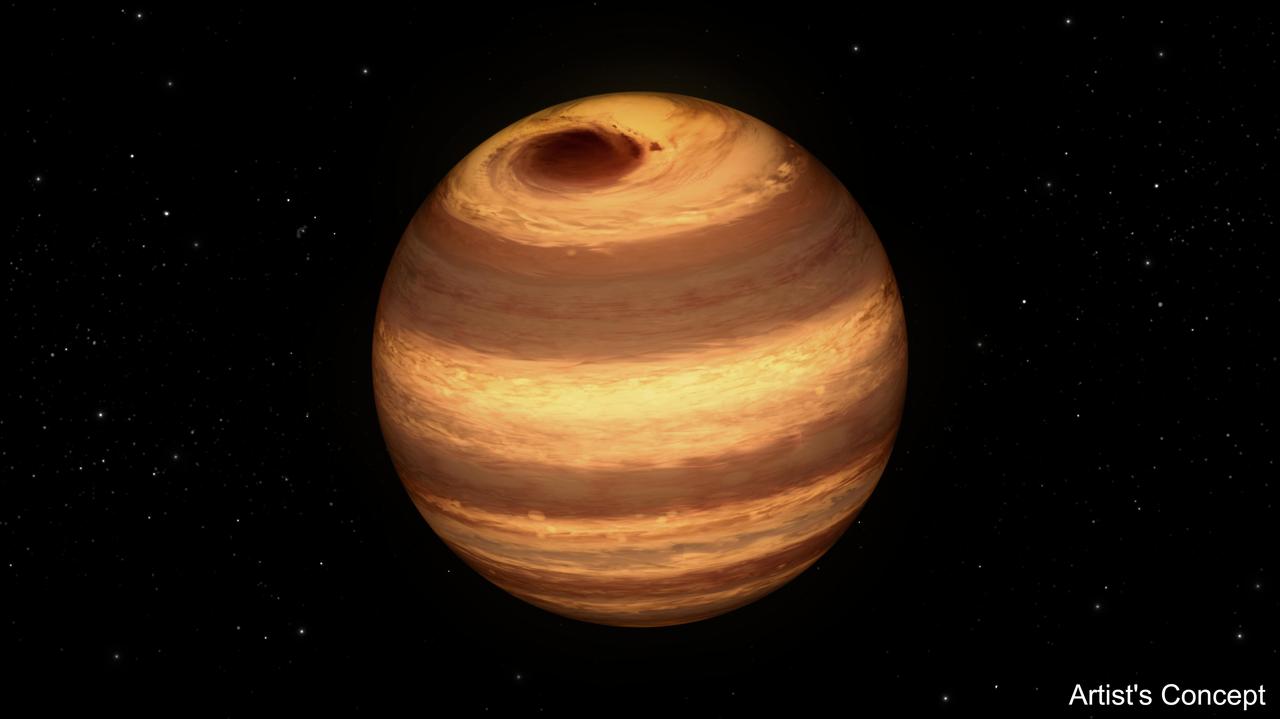
Kepler-40
Kepler-40, formerly known as KOI-428, is an F-type star in the constellation Cygnus. Kepler-40 is known to host at least one planet, Kepler-40b. The star is approximately 1.5 times more massive than the Sun, and is over two times its size; it was, at upon its discovery, the largest yet discovered with a transiting planet in its orbit. Kepler-40 was first noted as home to a possible transiting object by the Kepler spacecraft; the data on the system was released to the public. A team of French and Swiss scientists used follow-up data to determine the existence of the Hot Jupiter planet Kepler-40
W75N(B)-VLA2
thumb|260px|W75N(B)-VLA2 in 1996 (top) and in 2014
Q27926169
Kepler-419c (also known by its Kepler Object of Interest designation KOI-1474.02) is a super-Jupiter exoplanet orbiting within the habitable zone of the star Kepler-419, the outermost of two such planets discovered by NASA's Kepler spacecraft. It is located about 3,400 light-years (1040 parsecs )from Earth in the constellation Cygnus. The exoplanet was found by using the transit timing variation method, in which the variations of transit data from an exoplanet are studied to reveal a more distant companion.

Kepler-41
Kepler-41 or KOI-196 is a star in the constellation Cygnus. It is a G-type main-sequence star, like the Sun, and it is located about 3,510 light-years (1,080 parsecs) away. It is fairly similar to the Sun, with 115% of its mass, a radius of 129% times that of the Sun, and a surface temperature of 5,750 K. Search for stellar companions to Kepler-41 in 2013-2014 has yielded inconclusive results, compatible with Kepler-41 being the single star.
Kepler-45
thumb|Kepler-45
Kepler-45, formerly known as KOI-254, is a star in the northern constellation of Cygnus. It is located at the celestial coordinates: right ascension , declination . With an apparent visual magnitude of 16.88, this star is too faint to be seen with the naked eye.
WR 142
star in the constellation Cygnus
BI Cygni
star in the constellation Cygnus
Kepler-27
Kepler-27 is a star in the northern constellation of Cygnus, the swan. It is located at the celestial coordinates: Right Ascension , Declination . With an apparent visual magnitude of 15.855, this star is too faint to be seen with the naked eye. In 2024, Kepler-27 was discovered to be a binary star with a red dwarf companion 1.975 arcseconds away.