Category
page 1Damnatio memoriae

Akhenaten
Akhenaten (pronounced ), also spelled Akhenaton, Echnaton, and Khuenaten ( ʾŪḫə-nə-yātəy, , meaning 'Effective for the Aten'), was an ancient Egyptian pharaoh reigning or 1351–1334 BC, the tenth ruler of the Eighteenth Dynasty. Originally named Amenhotep IV (, meaning "Amun is satisfied", Hellenized as Amenophis IV), in the fifth year of his reign he adopted the name "Akhenaten".

John Wycliffe
English theologian and early dissident in the Roman Catholic Church
.jpg)
Herostratus
thumb||alt=Herostratus portrait

Ay
Egyptian pharaoh of the late 18th Dynasty (14th century BCE)
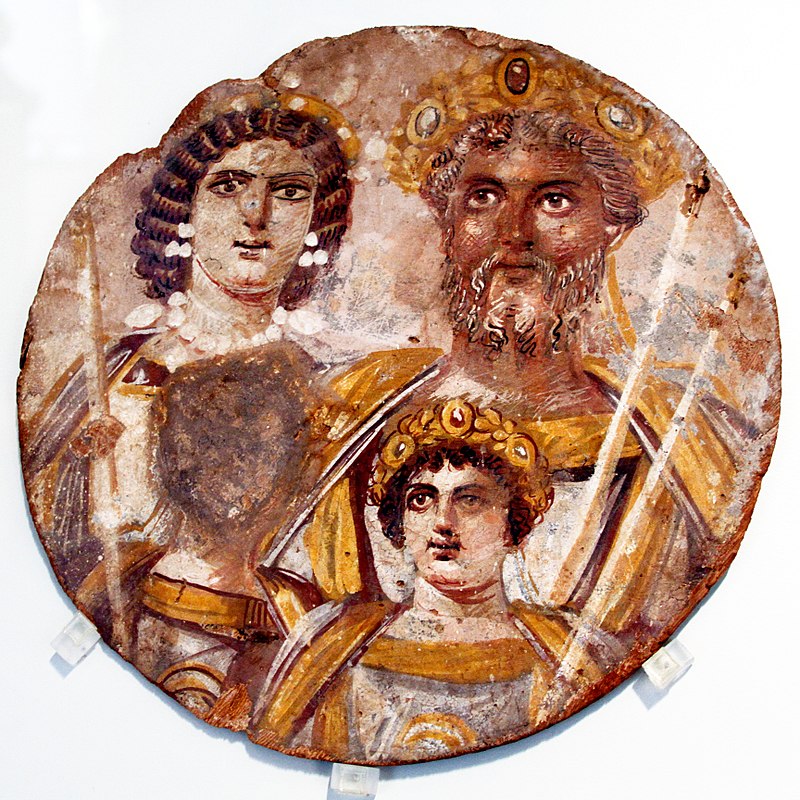
damnatio memoriae
ancient Roman punishment by removing a person's name, depictions, and reference to them from official records, up to rewritings of histories

Magnentius
Magnus Magnentius ( 303 – 10 August 353) was a Roman general and usurper against Constantius II. Of Germanic descent, Magnentius served with distinction in Gaul, where the army chose him as a replacement for the unpopular emperor Constans. Acclaimed Augustus on 18 January 350, Magnentius quickly killed Constans and gained control over most of the Western Empire. The Eastern emperor Constantius II, brother of Constans, refused to acknowledge Magnentius's legitimacy, leading to three years of civil war. Decisively defeated at the Battle of Mons Seleucus, Magnentius killed himself on 10 August 35

Flavia Maxima Fausta
Roman empress and second wife of Constantine I
.png)
Crispus
Flavius Julius Crispus (; 300 – 326) was the eldest son of the Roman emperor Constantine I, as well as his junior colleague (caesar) from March 317 until his execution by his father in 326. The grandson of the augustus Constantius I, Crispus was the elder half-brother of the future augustus Constantine II and became co-caesar with him and with his cousin Licinius II at Serdica, part of the settlement ending the Cibalensean War between Constantine and his father's rival Licinius I. Crispus ruled from Augusta Treverorum (Trier) in Roman Gaul between 318 and 323 and defeated the navy of Licinius

Livilla
Claudia Livia (Classical Latin: CLAVDIA•LIVIA; – AD 31) was the only daughter of Nero Claudius Drusus and Antonia Minor and sister to Roman Emperor Claudius and general Germanicus, and thus paternal aunt of emperor Caligula and maternal great-aunt of emperor Nero, as well as the niece and daughter-in-law of Tiberius. She was named after her grandmother, Augustus' wife Livia Drusilla, and commonly known by her family nickname Livilla ("little Livia"). She was born after Germanicus and before Claudius.
Marino Faliero
Doge of Venice
Isabella de' Medici
daughter of Cosimo I. de’ Medici and Eleonora of Toledo (1542-1576)
Gaius Julius Verus Maximus
son of Roman Emperor Maximinus Thrax
Eutolmius Tatianus
politician
Adandozan
Adandozan was a king of the Kingdom of Dahomey, in present-day Benin, from 1797 until 1818. His rule ended with a coup by his brother Ghezo who then erased Adandozan from the official history resulting in high uncertainty about many aspects of his life. Adandozan took over from his father Agonglo in 1797 but was quite young at the time and so there was a regent in charge of the kingdom until 1804. Dealing with the economic depression that had defined the administrations of his father Agonglo and grandfather Kpengla, Adandozan tried to reduce slavery to decrease European trade, and when these f
Bajamonte Tiepolo
yimakh shemo
curse placed after the name of particular enemies of the Jewish people