File:Portrait_of_family_of_Septimius_Severus_-_Altes_Museum_-_Berlin_-_Germany_2017.jpg · Wikimedia Commons · See Wikimedia Commons
damnatio memoriae
Sign in to saveancient Roman punishment by removing a person's name, depictions, and reference to them from official records, up to rewritings of histories
Wikidata facts
- Subclass of
- punishment
- Country
- Ancient Rome
- Image
- Römermuseum Osterburken (DerHexer) 2012-09-30 008.jpg
Show 5 more facts
- topic's main category
- Category:Damnatio memoriae
- described by source
- Pauly–Wissowa
- Commons category
- Damnatio memoriae
- time period
- Roman Empire
- opposite of
- apotheosis
Sources (2)
via Wikidata · CC0
~28 min read
Encyclopedic overview
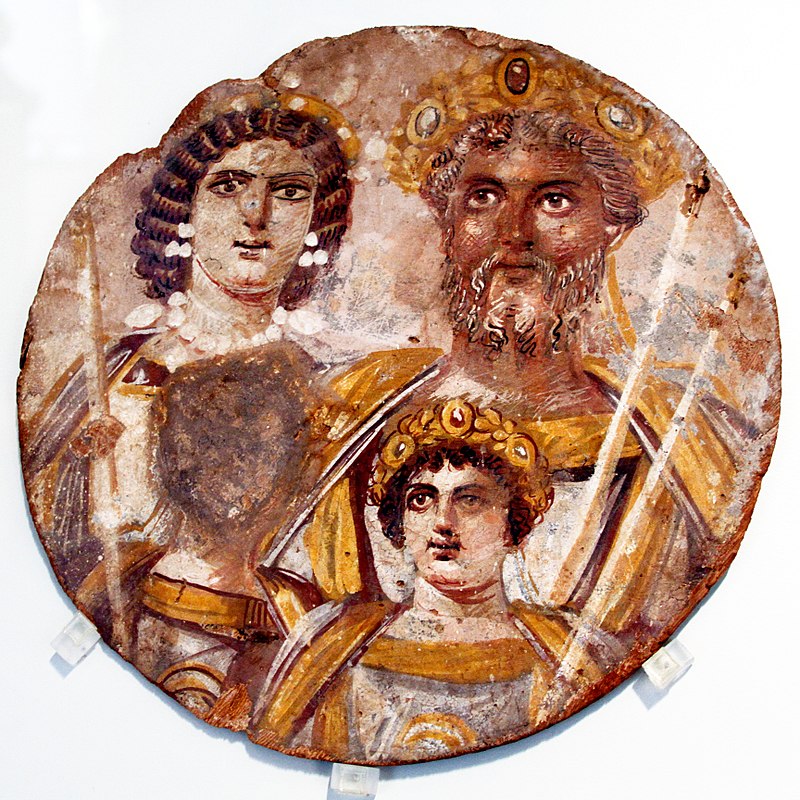
The Severan Tondo, c. 199 AD tondo of the Severan family, with portraits of Septimius Severus, Julia Domna, and their sons Caracalla and Geta. The face of one of Severus' and Julia's sons has been erased; it may be Geta's, as a result of the damnatio memoriae ordered by his brother Caracalla after Geta's death.
Damnatio memoriae ( Classical Latin pronunciation: [damˈnaːti.oː mɛˈmɔri.ae̯]) is a modern Latin phrase meaning "condemnation of memory" or "damnation of memory", indicating that a person is to be excluded from official accounts, or remembered after death in a way contrary to what that person may have desired. There are and have been many routes to damnatio memoriae including the destruction of depictions, the removal of names from inscriptions and documents, and even large-scale rewritings of history. In the United Kingdom and Japan, instances of damnatio memoriae-esque policy instituted without governmental decree have surrounded Jimmy Savile and Johnny Kitagawa due to the revelations of their prolific sexual abuse crimes.
Excerpted from Wikipedia’s “damnatio memoriae” article, available under the CC BY-SA 4.0 licence.