Category
page 1Danian first appearances

penguin
Penguins are a group of flightless semi-aquatic sea birds which live almost exclusively in the Southern Hemisphere. Only one species, the Galapagos penguin, lives at, and slightly north of, the equator. Highly adapted for life in the ocean water, penguins have countershaded dark and white plumage and flippers for swimming. Most penguins feed on krill, fish, squid and other forms of sea life which they catch with their bills and swallow whole while swimming. A penguin has a spiny tongue and powerful jaws to grip slippery prey.

Anguillidae
The Anguillidae are a family of ray-finned fish that contains the freshwater eels. All the extant species and six subspecies in this family are in the genus Anguilla, and are elongated fish of snake-like bodies, with long dorsal, caudal and anal fins forming a continuous fringe. They are catadromous, spending their adult lives in freshwater, but migrating to the ocean to spawn.
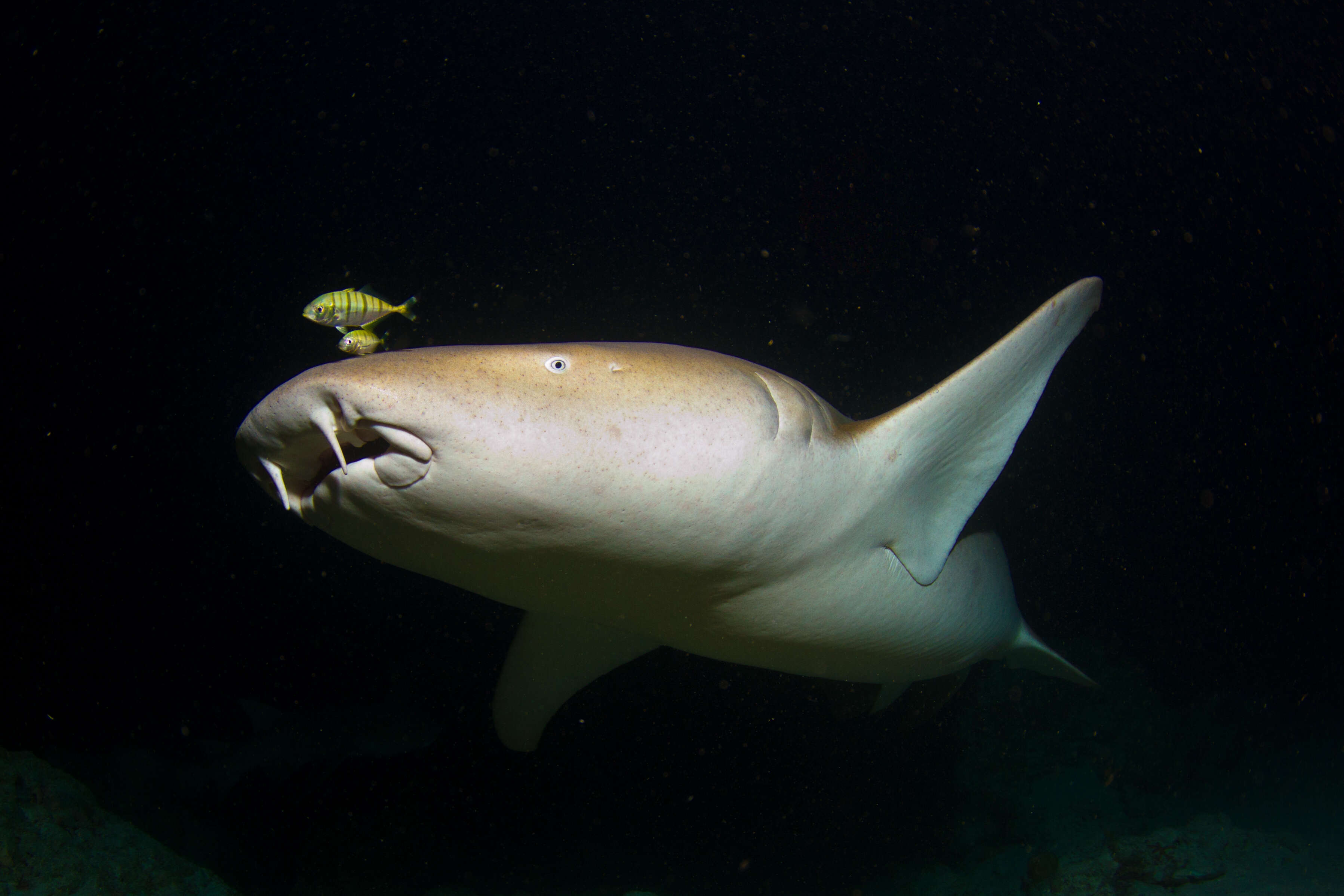
tawny nurse shark
a species of shark
Danian
The Danian is the oldest age or lowest stage of the Paleocene Epoch or Series, of the Paleogene Period or System, and of the Cenozoic Era or Erathem. The beginning of the Danian (and the end of the preceding Maastrichtian) is at the Cretaceous–Paleogene extinction event . The age ended , being followed by the Selandian.

Podocnemididae
Podocnemididae is a family of pleurodire (side-necked) turtles, once widely distributed. Most of its 41 genera and 57 species are now extinct. Seven of its eight surviving species are native to South America: the genus Peltocephalus, with two species, only one of which is extant (P. dumerilianus, the Big-headed Amazon River turtle); and the genus Podocnemis, with six living species of South American side-necked river turtles and four extinct. There is also one genus native to Madagascar: Erymnochelys, the Madagascan big-headed turtle, whose single species E. madagascariensis.
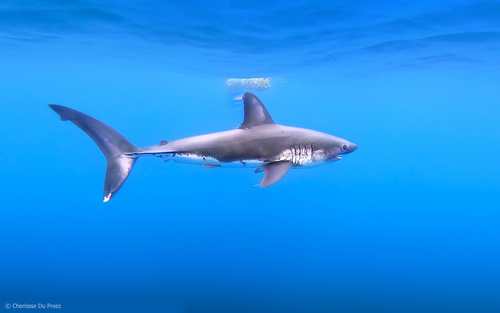
Lamna
Lamna is a genus of mackerel sharks in the family Lamnidae, containing two extant species: the porbeagle (L. nasus) of the North Atlantic and Southern Hemisphere, and the salmon shark (L. ditropis) of the North Pacific.
%20(14749571352).jpg)
Litopterna
Litopterna (from "smooth heel") is an extinct order of South American native ungulates that lived from the Paleocene to the Pleistocene-Holocene around 62.5 million to 12,000 years ago (or possibly as late as 3,500 years ago), and were also present in West Antarctica during the Eocene. They represent the second most diverse group of South American ungulates after Notoungulata. It is divided into nine families, with Proterotheriidae and Macraucheniidae being the most diverse and last surviving families.
%20above%20the%20plate%20of%20mussels%20it%20was%20found%20in.jpg)
Pinnotheridae
thumb|A pea crab (exact genus and species unknown) above the plate of mussels it was found in
thumb|A yellow pea crab (exact genus and species unknown) has fallen out of the clam this sea otter is eating, and has landed on the sea otter's neck (in [[Moss Landing, California)]]

Pelagornithidae
The Pelagornithidae, commonly called pelagornithids, pseudodontorns, bony-toothed birds, false-toothed birds or pseudotooth birds, are a prehistoric family of large seabirds. Their fossil remains have been found all over the world in rocks dating between the Early Paleocene and the Pliocene-Pleistocene boundary.

Gnathophis
Gnathophis is a genus of marine congrid eels.

Hyopsodontidae
Hyopsodontidae is an extinct family of primitive mammals, initially assigned to the order Condylarthra, living from the Paleocene to the Eocene in North America and Eurasia. Condylarthra is now thought to be a wastebasket taxon; hyopsodontids have occasionally been speculated to be related to Afrotheria, but the most recent consensus is that they are related to Perissodactyla. Analysis of the inner ear shows shared characteristics with the Equoidea (horses and paleotheres); they may be a basal ungulate group near to perissodactyls.
Polydolopimorphia
Polydolopimorphia is an extinct order of metatherians, closely related to extant marsupials. Known from the Paleocene-Pliocene of South America and the Eocene of Antarctica, they were a diverse group during the Paleogene, filling many niches, before declining and becoming extinct at the end of the Neogene. It is divided into two suborders, Bonapartheriiformes, and Polydolopiformes Most members are only known from jaw fragments, which have their characteristically generally bunodont teeth. The morphology of their teeth has led to proposals that polydolopimorphians may be crown group marsupials,
Dissacus
Dissacus is a genus of extinct carnivorous jackal to coyote-sized mammals within the family Mesonychidae, an early group of hoofed mammals that evolved into hunters and omnivores. Their fossils in Paleocene to Early Eocene aged strata in France, Asia and southwest North America, from 66 to 50.3 mya, existed for approximately .
Plastomenus
Plastomenus is an extinct genus of turtle that inhabited western North America during the early Paleogene period.
Nebrius
Nebrius is a genus of carpet sharks in the family Ginglymostomatidae.