Category
page 1Decorative arts
%20edited.jpg)
Baroque
The Baroque ( , , ) is a Western style of architecture, music, dance, painting, sculpture, poetry, and other arts that flourished from the early 17th century until the 1750s. It followed Renaissance art and Mannerism and preceded the Rococo (in the past often referred to as "late Baroque") and Neoclassical styles. It was encouraged by the Catholic Church as a means to counter the simplicity and austerity of Protestant architecture, art, and music, though Lutheran Baroque art developed in parts of Europe as well.

furniture
Furniture refers to objects intended to support various human activities such as seating (e.g., stools, chairs, and sofas), eating (tables), storing items, working, and sleeping (e.g., beds and hammocks). Furniture is also used to hold objects at a convenient height for work (as horizontal surfaces above the ground, such as tables and desks), or to store things (e.g., cupboards, shelves, and drawers). Furniture can be a product of design and can be considered a form of decorative art. In addition to furniture's functional role, it can serve a symbolic or religious purpose. It can be made from

Art Nouveau
international philosophy and style of art, architecture and applied art

mosaic
A mosaic () is a pattern or image made of small regular or irregular pieces of colored stone, glass or ceramic, held in place by plaster/mortar, and covering a surface. Mosaics are often used as floor and wall decoration, and were particularly popular in the Ancient Roman world.

Rococo
Rococo, less commonly Roccoco ( , ; or ), also known as Late Baroque, is an exceptionally ornamental and dramatic style of architecture, art, and decoration which combines asymmetry, scrolling curves, gilding, white and pastel colours, sculpted moulding, and ''trompe-l'œil'' frescoes to create surprise and the illusion of motion and drama. It is often described as the final expression of the Baroque movement.

handicraft
thumb|upright|Batik craftswomen in [[Java, Indonesia]]
thumb|Savisiipi handicrafts store in Pori, Finland
right|thumb|A handicraft Selling-Factory shop, Isfahan, Iran
thumb|Artesanato Mineiro
.jpg)
Neoclassicism
Neoclassicism, also spelled Neo-classicism, emerged as a Western cultural movement in the decorative and visual arts, literature, theatre, music, and architecture that drew inspiration from the art and culture of classical antiquity. Neoclassicism was born in Rome, largely due to the writings of Johann Joachim Winckelmann during the rediscovery of Pompeii and Herculaneum. Its popularity expanded throughout Europe as a generation of European art students finished their Grand Tour and returned from Italy to their home countries with newly rediscovered Greco-Roman ideals. The main Neoclassical mo
_LACMA_AC1994.131.1.jpg)
embroidery
thumb|Traditional Nakshi Kantha of Bangladesh
alt=Embroidery sampler by Alice Maywood, 1826|thumb|Embroidery Sampler (needlework)|sampler by Alice Maywood, 1826
thumb|upright|Laid threads, a surface technique in wool on [[linen. The Bayeux Tapestry, 11th century]]
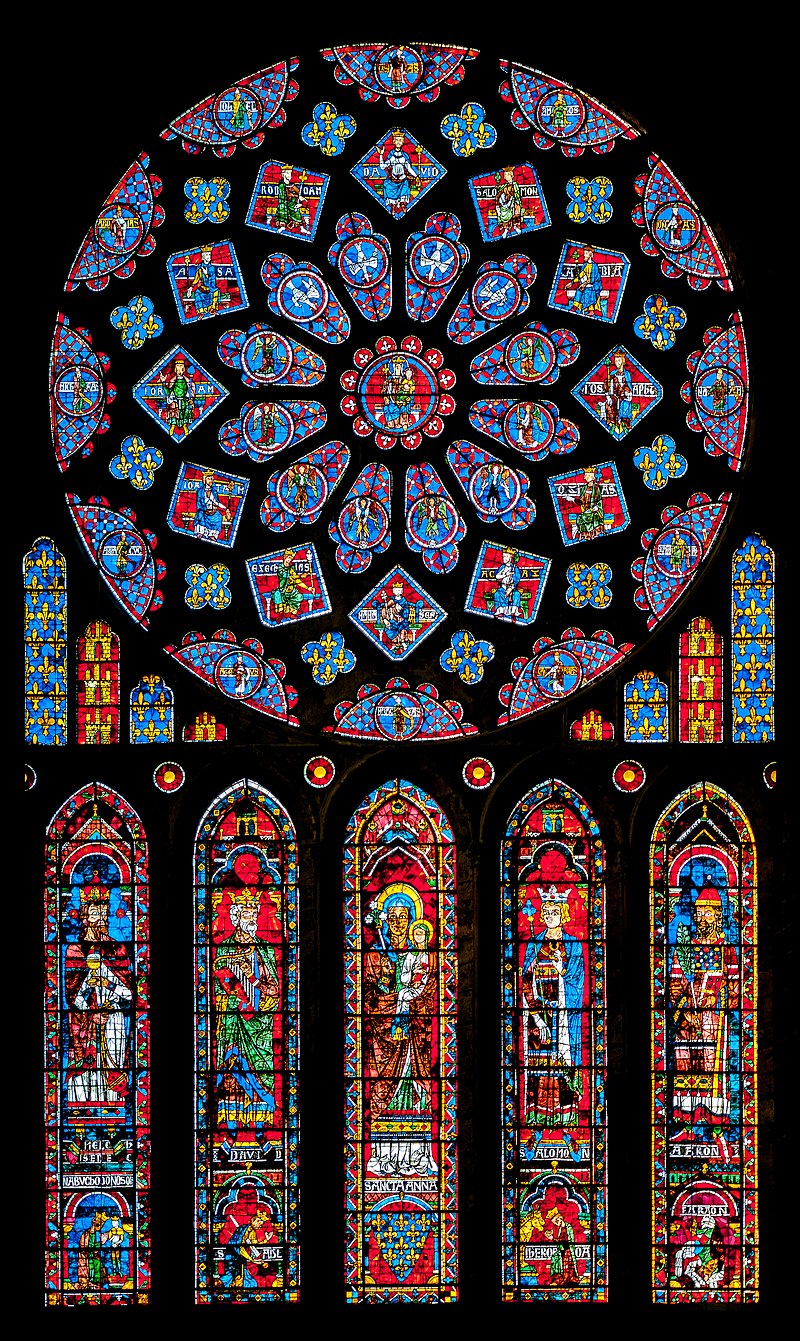
stained glass
colored glass used as an art material

Art Deco
influential visual arts design style which first appeared in France during the 1920s

collaging
thumb|right|300px|Kurt Schwitters, Das Undbild, 1919, [[Staatsgalerie Stuttgart]]
Collage (, from the , "to glue" or "to stick together") is a technique of art creation, primarily used in the visual arts, by which art results from an assembly of different forms, thus creating a new whole. Collage may refer to the technique as a whole, or more specifically to a two-dimensional work, assembled from flat pieces on a flat substrate, whereas assemblage typically refers to a three-dimensional equivalent.

tile
Tiles are usually thin, square or rectangular coverings manufactured from hard-wearing material such as ceramic, stone, metal, baked clay, or even glass. They are generally fixed in place in an array to cover roofs, floors, walls, edges, or other objects such as tabletops. Alternatively, tile can sometimes refer to similar units made from lightweight materials such as perlite, wood, and mineral wool, typically used for wall and ceiling applications. In another sense, a tile is a construction tile or similar object, such as rectangular counters used in playing games (see tile-based game). The w

ikebana
thumb| arrangement by the 40th headmaster Ikenobō Senjō, drawing from the by the [[Shijō school, 1820]]
thumb| flower arrangement in a (alcove), in front of a (hanging scroll)

vase
thumb|Neoclassicism|Neoclassical vase; circa 1790; jasper; height: 25.4 cm, width: 18.7 cm; [[Victoria and Albert Museum (London)]]
thumb|The David Vases; 1351 (the [[Yuan Dynasty); porcelain, cobalt blue decor under glaze; height: 63.8 cm; British Museum (London)]]
A vase (, , or ) is an open container. It can be made from a number of materials, such as ceramics, glass, or non-rusting metals, such as aluminium, brass, bronze, or stainless steel. Even wood has been used to make vases, either by using tree species that naturally resist rot, such as teak, or by applying a protective coating to c
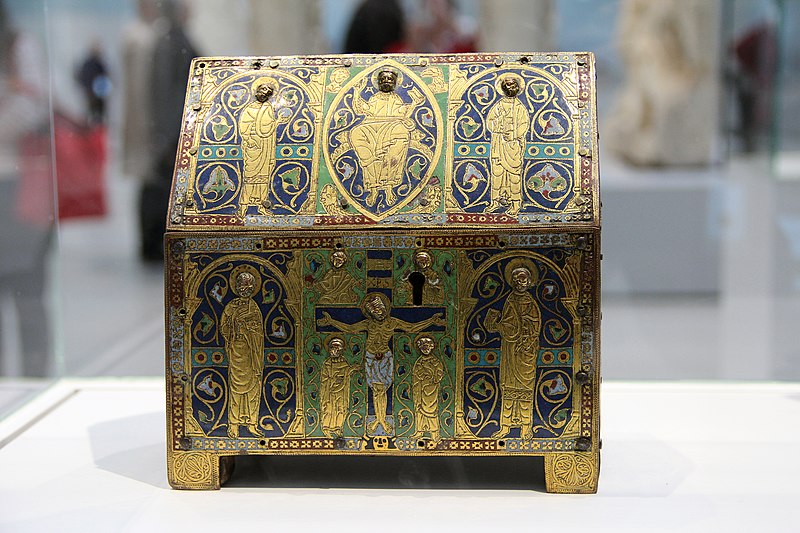
vitreous enamel
material made by fusing powdered glass to a substrate by firing

applied arts
arts that apply design and decoration to everyday objects

Empire style
19th-century art movement and style of architecture and interior design

interior design
design of the interiors, sometimes including the exterior, of a space or building, to achieve a better environment

Fabergé egg
Jeweled Easter egg mostly commissioned by the Czar of Russia
%20-%20Montreal%20Museum%20of%20Fine%20Arts%20-%20Montreal%2C%20Canada%20-%20DSC09349.jpg)
Biedermeier
thumb|Austrian Biedermeier sofa, c. 1815–1825, mahogany, upholstery (not original), Montreal Museum of Fine Arts ([[Montreal, Canada)]]

Arts and Crafts movement
international design movement

stencil
thumb|320px|right|Parts of a stencil
thumb|320px|Stenciled warning sign in Singapore
thumb|Stencilled Gaelic type
thumb|320px|Japanese Ise-katagami stencil for printing textiles
Stencilling produces an image or pattern on a surface by applying pigment to a surface through an intermediate object, with designed holes in the intermediate object. The holes allow the pigment to reach only some parts of the surface creating the design. The stencil is both the resulting image or pattern and the intermediate object; the context in which stencil is used makes clear which meaning is intended. In practic

trompe-l'œil
upright=1.3|thumb|Ceiling of the Treasure Room of the National Archaeological Museum of Ferrara |Archaeological Museum of Ferrara, [[Italy, painted in 1503–1506]]
%20MET%20DP704215.jpg)
lacquer
thumb|upright=1.2|Lacquerware|Lacquer dish with Chinese character for longevity, mid 16th century
thumb|Maki-e [[sake bottle with Tokugawa clan's mon (emblem), Japan, Edo period]]
thumb|Lacquer plate, Nam Định province, Vietnam, Nguyễn dynasty

decorative art
arts or crafts concerned with the design and manufacture of functional, beautiful objects

inkwell
thumb|right|An English silver and glass inkwell, hallmark date 1910

fluting
architectural practice of cutting grooves through an otherwise plain surface

grisaille
thumb|270px|Christ and the Woman Taken in Adultery (Bruegel)|Christ and the Woman Taken in Adultery, [[Pieter Bruegel the Elder, 1565, ]]
thumb|270px|Battesimo della gente, one of Andrea del Sarto's gray and brown grisaille [[frescoes in the Chiostro dello Scalzo, Florence (1511-26)]]
Grisaille ( or ; , from gris 'grey') is a painting executed entirely in shades of black and grey or of another neutral greyish colour. It is particularly used in large decorative schemes in imitation of sculpture. Many grisailles include a slightly wider colour range.
folk art
art produced by artisans trained in a relevant skill working within a local client economy

patina
thumb|Copper roof on the Minneapolis City Hall, coated with patina
thumb|upright|The Dresden Frauenkirche. The church was destroyed during the [[bombing of Dresden in 1945 and rebuilt from 1993 to 2005 with new material; the stones with the black patina are the parts that survived the firebombing from the original 18th-century church.]]
thumb|Pre-colonial copper coin formerly used in the Copper Belt ([[Democratic Republic of the Congo and Zambia). The external layer has been weathered by moisture and rain, leading to the oxidation of copper.]]
polishing
Polishing is the process of creating a smooth and shiny surface by rubbing it or by applying a chemical treatment, leaving a clean surface with a significant specular reflection (still limited by the index of refraction of the material according to the Fresnel equations). In some materials (such as metals, glasses, black or transparent stones), polishing is also able to reduce diffuse reflection to minimal values.

terrazzo
thumb|Terrazzo entryway on Beverley Street in Staunton, Virginia, U.S.
thumb|upright|One of the most well known examples of terrazzo flooring is the Hollywood Walk of Fame.
Terrazzo is a composite material, poured in place or precast, which is used for floor and wall treatments. It consists of chips of marble, quartz, granite, glass, or other suitable material, poured with a cementitious binder (for chemical binding), polymeric (for physical binding), or a combination of both. Metal strips often divide sections, or changes in color or material in a pattern. Additional chips may be sprinkled at
folding screen
furniture consisting of flat, hinged panels for dividing a room, sometimes with artistic decoration

cloisonné
thumb|Pectoral of Senusret II, from his daughter's grave, using shaped stones rather than enamel. Cloisonné inlays on gold of [[carnelian, feldspar, garnet, turquoise, lapis lazuli, 1880s BC]]
thumb|right|Chinese Ming dynasty|Ming Dynasty cloisonné enamel bowl, using nine colours of enamel
Petrykivka painting
traditional Ukrainian decorative painting style
hardstone carving
art of carving and engraving of stones or gems
assemblage
art form and technique
cartouche
frame for a painted or engraved design

chinoiserie
thumb|350px|The Yellow Drawing Room at [[Buckingham Palace is rife with chinoiserie designs. King George IV was a keen patron of chinoiserie, and had many other rooms created in this style such as the Centre Room, also located in the East Wing.]]
thumb|A Vienna porcelain jug, 1799, decorated to imitate another rare Chinese product, [[lacquerware]]
glaze
transparent or semi-transparent coating

inlay
280px|thumb|Example of Boulle work inlay using [[tortoiseshell in mottled red, brass and pewter]]
280px|thumb|Boulle work showing the use of [[pewter (center) and the 'depth' given by tortoiseshell in the background. Brass inlay is on the right and left.]]
Inlay covers a range of techniques in sculpture and the decorative arts for inserting pieces of contrasting, often colored materials into depressions in a base object to form ornament or pictures that normally are flush with the matrix. A great range of materials have been used both for the base or matrix and for the inlays inserted into it
%20of%20Sultan%20Husayn%20Mirza%20(LACMA%20M.73.5.599a-b).jpg)
decoupage
thumb|Page from the Diwan (poetry)|Diwan of Sultan Husayn Mirza with calligraphy made by découpage. [[Herat, c. 1490. Los Angeles County Museum of Art]]
thumb|A lion attacking a deer, stencilled scene of découpage paper shapes. Ottoman Empire|Ottoman, c. 1501-1550. [[British Museum]]
Decoupage or découpage (; ) is the art of decorating an object by gluing colored paper cutouts onto it in combination with special paint effects, gold leaf, and other decorative elements. Commonly, an object like a small box or an item of furniture is covered by cutouts from magazines or from purpose-manufactured
woodblock printing
early printing technique
motif
in the visual arts, individual design element, alone or combined to produce a pattern
%2C%200-50%20dc%20ca..JPG)
urn
thumb|Ancient Roman urn made of [[alabaster]]
rosette
round, stylized flower design
muffle furnace
furnace in which the subject material is isolated from the fuel and products of combustion

Fileteado
thumb|A self-referencing example of the art form.
Fileteado () is a type of artistic drawing and lettering, with stylised lines and flowered, climbing plants, typically used in Buenos Aires, Argentina.
It is used to adorn all kinds of beloved objects: signs, taxis, trucks, and even old colectivos, Buenos Aires's buses.

beading
thumb|upright=1.3|Beadwork on the ceremonial dress of a Datooga woman
Beadwork is the art or craft of attaching beads to one another by stringing them onto a thread or thin wire with a sewing or beading needle or sewing them to cloth. Beads are produced in a diverse range of materials, shapes, and sizes, and vary by the kind of art produced. Most often, beadwork is a form of personal adornment (e.g. jewelry), but it also commonly makes up other artworks.

penjing
Penjing, also known as penzai, is the ancient Chinese art of depicting artistically formed trees, other plants, and landscapes in miniature.
Wiener Werkstätte
production community of artists in Vienna

marquetry
thumb|Casket, early 18th century, attributed to André-Charles Boulle, oak carcass veneered with [[tortoiseshell, gilt copper, pewter and ebony, in the Art Institute of Chicago]]
pietra dura
artwork technique of creating works in which pieces of hard, polished stone of varying shapes are set into marble or another hard surface to form a pattern
Louis XVI style
neoclassical style within architecture and design

Rocaille
thumb|right|250px|Commode decoration by Charles Cressent (1745–1749), Metropolitan Museum
Rocaille ( , ) was a French style of elaborate design that appeared in furniture and interior decoration during the early reign of Louis XV. A reaction against the heaviness and formality of the Louis XIV style, it featured an abundance of curves, counter-curves, undulations, and elements modeled on nature. Beginning around 1710, it reached its peak in the 1730s, and came to an end in the late 1750s when it was replaced by Neoclassicism. It marked the beginning of the French Baroque movement in furniture
École nationale supérieure des arts décoratifs
French art school
refrigerator magnet
magnet, which is used to post items
Louis Quinze
architectural and decorative style
Louis XIV style
style of Louis XIV period; baroque style with classical elements
Kosiv painted ceramics
Traditional national Hutsul handicrafts, one of the varieties of Ukrainian ceramics