Category
page 2Dethroned monarchs
%2C%20King%20of%20Judah%20and%20the%20Babylonian%20captivity.%20From%20Babylon%2C%20Iraq.%20C.%20580%20BCE.%20Vorderasiatisches%20Museum%2C%20Berlin.jpg)
Jeconiah
Jeconiah ( meaning "Yahweh has established"; ; ), also known as Coniah and as Jehoiachin ( Yəhōyāḵin ; ), was the nineteenth and penultimate king of Judah who was dethroned by the King of Babylon, Nebuchadnezzar II in the 6th century BCE and was taken into captivity. He was the son and successor of King Jehoiakim, and the grandson of King Josiah. Most of what is known about Jeconiah is found in the Hebrew Bible. Records of Jeconiah's existence have been found in Iraq, such as the Jehoiachin's Rations Tablets. These tablets were excavated near the Ishtar Gate in Babylon and dated to c. 592 BCE.

Amon
King of Judah noted in 2 Kings 21:18

Ish-bosheth
Ish-bosheth (, "man of shame"), also called Eshbaal (, ; alternatively spelled Ishbaal, "man of Baal") was, according to the Hebrew Bible, the son of Saul who, after his father's death, ascended to the throne and reigned for two years.

Jehoahaz
King of Judah

Otto, King of Bavaria
King of Bavaria (1848-1916)

Ranavalona III
last sovereign of the Kingdom of Madagascar (1861-1917)

Olof Skötkonung
King of Sweden from c.995 to 1022

Francis II of the Two Sicilies
King of the Two Sicilies (1836-1894) and Servant of God

Conradin
Conrad III (25 March 1252 – 29 October 1268), called the Younger or the Boy, but usually known by the diminutive Conradin (, ), was the last direct heir of the House of Hohenstaufen. He was Duke of Swabia (1254–1268) and nominal King of Jerusalem (1254–1268) and Sicily (1254–1258). After his attempt to reclaim the Kingdom of Sicily for the Hohenstaufen dynasty failed, he was captured and beheaded.

Psamtik III
Egyptian pharaoh from 526 BC to 525 BC

Nadab of Israel
second King of Israel, son of Jeroboam I

Joanna I of Naples
Queen of Naples (1326-1382)

Hoshea
Hoshea (; ''A'úsiʾ [a-ú-si-ʾ'']; ) was the nineteenth and last king of the northern Kingdom of Israel (or a puppet king) and son of Elah (not the Israelite king Elah). William F. Albright dated his reign to , while Edwin R. Thiele offered the dates 732–723 BCE.
Elah
Fourth King of Israel (1 Kings 16)
Melisende
Queen of Jerusalem (1105-1161)
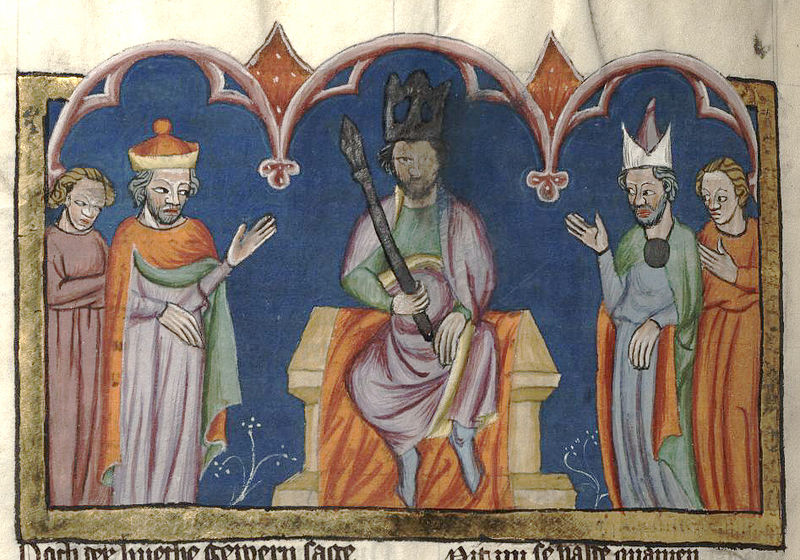
Zimri
king of Israel, with a reign of seven days; chariot commander who murdered king Elah, and succeeded him, but was overthrown by the army

Sunjong of the Korean Empire
The 2nd emperor of the Korean Empire. (1874–1926)

Pekah
Pekah (, Peqaḥ; Paqaḫa [pa-qa-ḫa]; ) was the eighteenth and penultimate king of Israel. He was a captain in the army of king Pekahiah of Israel, whom he killed to become king. Pekah was the son of Remaliah.

Jehoram
King of Ancient Israel
Huascar
Huáscar () (, ) also Guazcar (before 15271532) was Sapa Inca of the Inca Empire from 1527 to 1532. He succeeded his father, Huayna Capac and his brother Ninan Cuyochi, both of whom died of smallpox during the same year while campaigning near Quito. From 1529 to 1532, Huáscar fought the Inca civil war against his half-brother Atahualpa, who prevailed and captured Huáscar. Shortly thereafter, Atahualpa was captured by the Spanish conquistador Francisco Pizarro and had Huáscar killed.

Pekahiah
Pekahiah (; Pəqaḥyā; "YHWH has opened the eyes"; ) was the seventeenth and third-from-last king of Israel and the son of Menahem, whom he succeeded, and the second and last king of Israel from the House of Gadi. He ruled from the capital of Samaria.

Amel-Marduk
Amel-Marduk (, meaning "man of Marduk"), also known as Awil-Marduk, or in the biblical rendition of his name, Evil-Merodach (), was the third emperor of the Neo-Babylonian Empire, ruling from 562 BCE until his overthrow and murder in 560 BCE. He was the successor of Nebuchadnezzar II (605–562 BCE). On account of the small number of surviving cuneiform sources, little is known of Amel-Marduk's reign and actions as king.

Al-Qahir
'''Abū al-Manṣūr Muḥammad ibn Aḥmad ibn Ṭalḥa ibn Jaʿfar ibn Muḥammad ibn Hārūn al-Qāhir bi'Llāh (), usually known simply by his regnal title al-Qahir bi'Llah''' (), was the nineteenth caliph of the Abbasid Caliphate from 932 to 934. He was born 286 AH (899 C.E.) and died 339 AH (950 C.E.).

Jingtai Emperor
emperor of the Ming Dynasty

Albert, King of Sweden
King of Sweden, Duke of Mecklenburg-Schwerin

Ashur-uballit II
Assyrian Last King
Shallum
King of Israel, biblical figure
Yōzei
Emperor of Japan

Zechariah of Israel
king of the Kingdom of Israel; son of Jeroboam II

Charles Edward, Duke of Saxe-Coburg and Gotha
last Duke of Saxe-Coburg and Gotha from 1900 to 1918, British prince and royal duke, Nazi politician (1884–1954)

Yeonsangun of Joseon
Yeonsangun or Prince Yeonsan, personal name Yi Yung, was the 10th monarch of the Joseon dynasty of Korea. Often considered the worst tyrant in Joseon's history and perhaps all Korean history, he is notorious for launching two bloody purges, seizing hundreds of women from all over the peninsula to serve as palace entertainers, and appropriating Sungkyunkwan as a personal pleasure ground. Yeonsangun's despotic rule provided a stark contrast to the liberal era of his father, and as a much-despised overthrown monarch, he did not receive a temple name.

Gwanghaegun of Joseon
15th King of Joseon Dynasty in Korean history (1575-1641)

Al-Mustakfi
Abu al-Qasim Abd Allah ibn Ali (11 November 908 – September/October 949), commonly known by his regnal name al-Mustakfi, was the Abbasid caliph in Baghdad from 944 to 946.
Mohammed Alim Khan
The last Amir of Emirate of Bukhara (1911–1920)
Kōbun
Emperor of Japan
Al-Rashid
Abbasid caliph in Baghdad (r. 1135–1136)

At-Ta'i
Abu Bakr ʿAbd al-Karīm ibn al-Faḍl (; 932 – 3 August 1003), better known by his regnal name al-Ṭāʾiʿ liʾllāh/biʾllāh (), was the Abbasid caliph of Baghdad from 974 to his deposition in 991. He was in office during the domination of Iraq by the Shi'a Buyid dynasty, and as a result is generally considered a powerless figurehead under the thumb of the Buyid emirs. His tenure was also marked by strife between rival Buyid rulers and the frequent change of hands of Baghdad: al-Ta'i' himself was raised to the throne by a rebel Turkic general, Sabuktakin, who deposed al-Ta'i's father, al-Muti'. During
Junnin
Emperor of Japan

Moshoeshoe II of Lesotho
King of Lesotho (1938-1996)
William III of Sicily
King of Sicily
García II of Galicia
King of Galicia
Labashi-Marduk
Labashi-Marduk ( or , meaning "O Marduk, may I not come to shame") was the fifth and penultimate king of the Neo-Babylonian Empire, ruling in 556 BC. He was the son and successor of Neriglissar. Though classical authors such as Berossus wrote that Labashi-Marduk was just a child when he became king, Babylonian documents indicate that he had been in charge of his own affairs before his rise to the throne, suggesting he was an adult, though possibly still relatively young.
Jamshid bin Abdullah Al Busaidi
Sultan of Zanzibar (1929–2024)
Stephen Tomašević of Bosnia
King of Bosnia
Hari Singh I of Kashmir
Last King of Kashmir (1925-1952)

Treniota
Treniota (also spelled Troniata; ; – 1264) was Grand Duke of Lithuania from 1263 to 1264.
Prince of Hongnong
Emperor of the Han dynasty in 189
Thành Thái
Vietnamese emperor (1879–1954)
Muhammad al-Badr
King and Imam (1926/1929-1996)
Prince of Changyi
Emperor of the Han dynasty (92–59 BC)
Muhammad VIII al-Amin
Bey of Tunis (1943-1957)
Muhammad III of Granada
ruler of the Emirate of Granada from 1302 to 1309
Gongyang of Goryeo
Final ruler of the Korea Goryeo dynasty
Burgred of Mercia
9th-century king of Mercia
Sun Liang
Eastern Wu emperor from 252 to 258
Tvrtko II of Bosnia
reigned as King of Bosnia from 1404 to 1409 and again from 1421 to his death
Alfonso Fróilaz
king of Galicia from 925 to 926 CE
Helen of Bosnia
Queen Consort and Queen Regnant of Bosnia (1345-1399)
Karl II, Duke of Brunswick
Duke of Brunswick (1804-1873)
Tibni
Tibni ( Tīḇnī) was a claimant to the throne of Israel and the son of Ginath. Albright has dated his reign to 876–871 BC, while Thiele offers the dates 885–880 BC.