Category
page 1Dielectrics

glass
thumb|300px|A glass building facade|alt=Refer to caption

plastic
thumb|upright=1.35|Household items made of various types of plastics
Plastics are a wide range of synthetic or semisynthetic materials composed primarily of polymers. Their defining characteristic, plasticity, allows them to be molded, extruded, or pressed into a diverse range of solid forms. This adaptability, combined with a wide range of other properties such as low weight, durability, flexibility, chemical resistance, low toxicity, and low-cost production, has led to their widespread use around the world. While most plastics are produced from natural gas and petroleum, a growing minority a

quartz
Quartz is a hard mineral composed of silica (silicon dioxide). Its atoms are linked in a continuous framework of SiO4 silicon–oxygen tetrahedra, with each oxygen atom being shared between two tetrahedra, giving an overall chemical formula of SiO2. Therefore, quartz is classified structurally as a framework silicate mineral and compositionally as an oxide mineral. Quartz is the second most common mineral or mineral group in Earth's lithosphere, comprising about 12% by mass.

sapphire
thumb|upright=1.25|Main sapphire-producing countries

porcelain
thumb|Chinese Ru ware celadon-glazed bottle vase, [[Northern Song, 11th–12th century]]

mica
thumb|Sheets of mica
thumb|Optical mineralogy|Photomicrographs of a thin section containing phlogopite. In cross-polarized light on the left, plane-polarized light on the right.
thumb|Dark mica from eastern Ontario
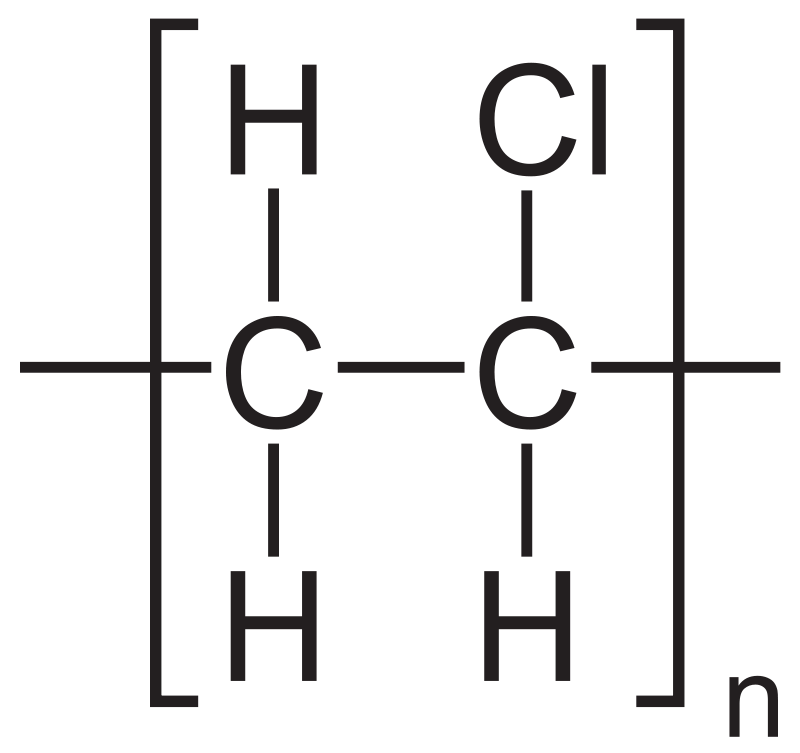
polyvinyl chloride
synthetic plastic polymer - A thermoplastic resin produced by the polymerization of vinyl chloride gas.

nylon
{|style="border: 1px solid; float: right; width: 250px;"
!colspan="2" style="text-align: center;"| Nylon 6 class=skin-invert|320px|Nylon Nylon 6,6
|-
|Density
|1.15 g/cm3
|- style="background:#eee;"
|Electrical conductivity (σ)
|10−12 S/m
|-
|Thermal conductivity
|0.25 W/(m·K)
|- style="background:#eee;"
|Melting point
|463–624 K 190–350 °C 374–663 °F
|}

polyethylene
thumb|140px|The repeating unit within polyethylene in the most stable staggered conformation

dielectric
thumb|A polarised dielectric material (orange), between two metal plates

polytetrafluoroethylene
Polytetrafluoroethylene (PTFE) is a synthetic fluoropolymer of tetrafluoroethylene, and has numerous applications because it is chemically inert. The commonly known brand name of PTFE-based composition is Teflon by Chemours, a spin-off from DuPont, which originally invented the compound in 1938.

polyester
thumb|Ester group (blue) which defines polyesters. This diagram shows just one ester linkage per repeat unit.
Polyester is a category of polymers that contain one or two ester linkages in every repeat unit of their main chain. As a specific material, it most commonly refers to a type called polyethylene terephthalate (PET). Polyesters include some naturally occurring chemicals, such as those found in plants and insects. Natural polyesters and a few synthetic ones are biodegradable, but most synthetic polyesters are not. Synthetic polyesters are used extensively in clothing.

polypropylene
Polypropylene (PP), also known as polypropene, is a thermoplastic polymer used in a wide variety of applications. It is produced via chain-growth polymerization from the monomer propylene.

slate
Slate is a fine-grained, foliated, homogeneous, metamorphic rock derived from an original shale-type sedimentary rock composed of clay or volcanic ash through low-grade, regional metamorphism. It is the finest-grained foliated metamorphic rock. Foliation may not correspond to the original sedimentary layering, but instead is in planes perpendicular to the direction of metamorphic compression.
Bakelite
Bakelite ( ), formally '''''', is a thermosetting phenol formaldehyde resin, formed from a condensation reaction of phenol with formaldehyde. The first plastic made from synthetic components, it was developed by Belgian chemist Leo Baekeland in Yonkers, New York, in 1907, and patented on December 7, 1909.

Leyden jar
antique electrical device which stores a high-voltage electric charge

poly(methyl methacrylate)
transparent thermoplastic, commonly called acrylic

polycarbonate

polyamide
A polyamide is a polymer with repeating units linked by amide bonds.

neoprene
Neoprene (also polychloroprene) is a family of synthetic rubbers that are produced by polymerization of chloroprene. Neoprene exhibits good chemical stability and maintains flexibility over a wide temperature range. Neoprene is sold either as solid rubber or in latex form and is used in a wide variety of commercial applications, such as laptop sleeves, orthopaedic braces (wrist, knee, etc.), electrical insulation, medical gloves, liquid and sheet-applied elastomeric membranes or flashings, and automotive fan belts.
%20-%20several%20colored%20samples.jpg)
soapstone
upright=1.35|thumb|Samples of soapstone
electret
An electret (formed as a portmanteau of electr- from "electricity" and -et from "magnet") is a dielectric material that has a quasi-permanent electrical polarisation. An electret has internal and external electric fields, and is the electrostatic equivalent of a permanent magnet.
Lichtenberg figure
A branching electric discharge that sometimes appears on the surface or in the interior of insulating materials
electrical tape
adhesive electrical insulation
%20V1.png)
polyimide
thumb|right|Chemical structure of Kapton, a polyimide.
Polyimide (sometimes abbreviated PI) is a polymer containing imide groups belonging to the class of high-performance plastics. With their high heat-resistance, polyimides enjoy diverse applications in roles demanding rugged organic materials, such as high temperature fuel cells, displays, and various military roles. A classic polyimide is Kapton, which is produced by condensation of pyromellitic dianhydride and 4,4'-oxydianiline.

Kapton
thumb|Structure of poly-oxydiphenylene-pyromellitimide
thumb|Kapton insulating pads for mounting electronic parts on a heat sink
Polymethylpentene
Polymethylpentene (PMP), also known as poly(4-methyl-1-pentene). It is used for gas-permeable packaging, autoclavable medical and laboratory equipment, microwave components, and cookware. It is commonly called TPX, which is a trademark of Mitsui Chemicals.
titanium oxide
class of chemical substances
rutilated quartz
quartz variety, rock crystal with rutile inclusions
electrical treeing
electrical pre-breakdown phenomenon in solid insulation
BoPET
thumb|right|Metallised film|Metallized boPET film, 32 layers of ~14 μm thickness each
Yogo sapphire
blue gemstone
Gate dielectric
field-effect transistor
corona ring
component of the electrical power system
superinsulator
A superinsulator is a material that at low but finite temperatures does not conduct electricity, i.e. has an infinite resistance so that no electric current passes through it. The phenomenon of superinsulation can be regarded as an exact dual to superconductivity.
electrical insulation paper
paper types that are used as electrical insulation in many applications due to pure cellulose having outstanding electrical properties