Category
page 1Ecosystems

forest
thumb|upright=1.4|The Amazon rainforest alongside the [[Solimões River, a tropical rainforest. These forests are the most biodiverse and productive ecosystems in the world.]]
thumb|upright=1.4|Proportion and distribution of global forest area by climatic domain, 2020

desert
thumb|upright=1.5|Sand dunes in the [[Rub' al Khali ("Empty quarter") of Arabia]]
thumb|upright=1.5|alt=A human with a group of camels in a desert|A camel shepherd near Marrakesh

photosynthesis
thumb|upright=1.5|Schematic of photosynthesis in plants. The carbohydrates produced are stored in or used by the plant.
upright=1.5|thumb|right|Composite image showing the global distribution of photosynthesis, including both oceanic phytoplankton and terrestrial [[vegetation. Dark red and blue-green indicate regions of high photosynthetic activity in the ocean and on land, respectively.]]

ecosystem
An ecosystem (or ecological system) is a system formed by organisms in interaction with their environment. The biotic and abiotic components are linked together through nutrient cycles and energy flows.

savanna
thumb|A tree savanna at Tarangire National Park in [[Tanzania in East Africa]]
thumb|A grass savanna at Kruger National Park in [[South Africa]]
A savanna or savannah is a mixed woodland-grassland (i.e. grassy woodland) biome and ecosystem characterised by the trees being sufficiently widely spaced so that the canopy does not close. The open canopy allows sufficient light to reach the ground to support an unbroken herbaceous layer consisting primarily of grasses. Four savanna forms exist; savanna woodland, where trees and shrubs form a light canopy; tree savanna, with scattered trees and shrub
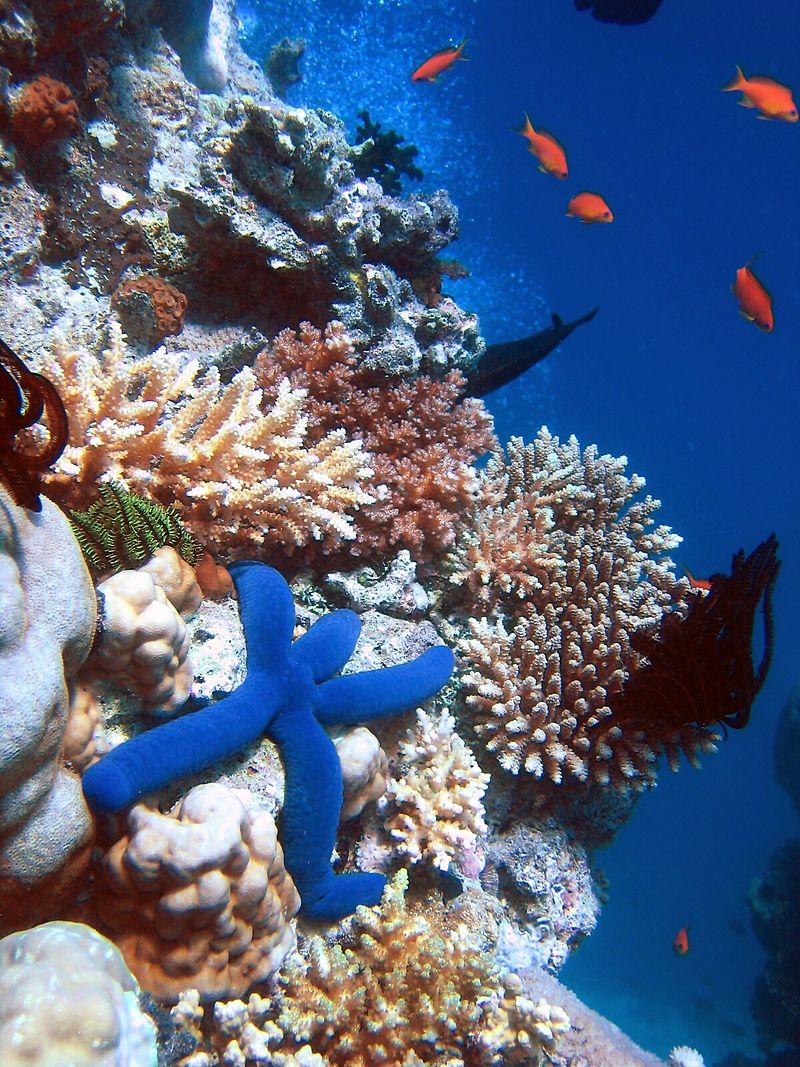
coral reef
ridge of rock in the sea formed by the growth and deposit of coral
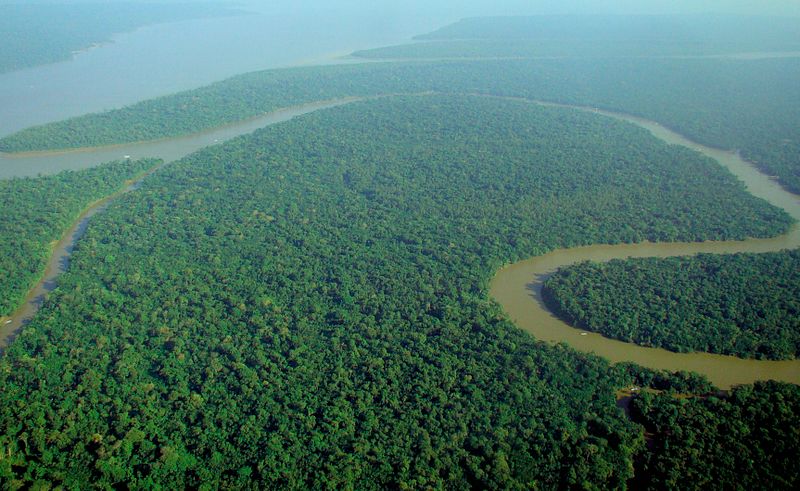
tropical forest
specific ecosystem

biotope
thumb|Amazon rainforest biotope
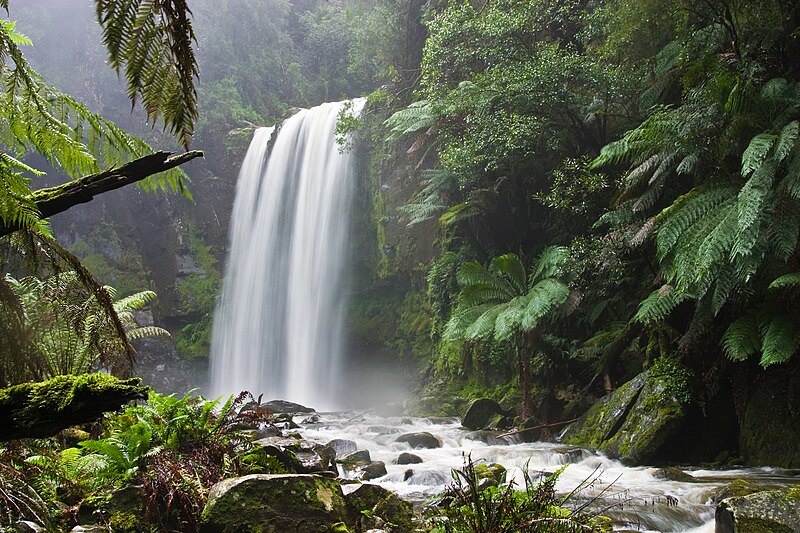
environment
surrounding of an organism or population

terraforming
thumb|An artist's conception shows a terraformed Mars in four stages of development.

chemosynthesis
right|thumb|Venenivibrio stagnispumantis gains energy by oxidizing hydrogen gas.

tropical forest
generic forest in the tropics
raised bog
bog exclusively fed by precipitation and poor in mineral salts
grove
small group of trees
marine ecosystem
among the largest of Earth's aquatic ecosystems
biomass
total mass of living organisms in a given area (all species or selected species)
aquatic ecosystem
ecosystem in a body of water
terrestrial ecosystem
ecosystem found only on landforms

agroecosystem
thumb|Agroecosystem in Croton-on-Hudson, New York (state)|New York in [[Westchester County. Intercropped tomatoes, basil, peppers and eggplants.]]
Agroecosystems are the ecosystems supporting the food production systems in farms and gardens. As the name implies, at the core of an agroecosystem lies the human activity of agriculture. As such they are the basic unit of study in Agroecology, and Regenerative Agriculture using ecological approaches.
montane ecosystem
ecosystem found in mountainous region
Movile Cave
cave in Romania
primary producer
organism in an ecosystem that produces biomass from inorganic compounds
barren vegetation
area of land where plant growth may be limited

forest-tundra
thumb|Forest tundra in Russia
In physical geography, a forest-tundra is a type of terrestrial ecosystem (biome) which is transitional zone (ecotone) between tundra and forest.
nature-based solutions
sustainable management and use of nature for tackling socio-environmental challenges
Kinburn Spit
sandspit in Ochakiv Raion of Mykolaiv Oblast at the Black Sea in Ukraine
freshwater ecosystem
subset of Earth's aquatic ecosystems

ecotope
thumb | right
Ecotopes are the smallest ecologically distinct landscape features in a landscape mapping and classification system. As such, they represent relatively homogeneous, spatially explicit landscape functional units that are useful for stratifying landscapes into ecologically distinct features for the measurement and mapping of landscape structure, function and change.
temperate forest
type of deciduous broadleave forest
Cross Cave
cave in Slovenia
closed ecological system
ecosystem that does not exchange matter with the exterior
blue carbon
carbon captured by the world's coastal ocean ecosystems
river ecosystem
type of aquatic ecosystem with flowing freshwater
lake ecosystem
type of ecosystem
scrub encroachment
causes, impact and responses to bush encroachment in different geographical regions
woodland edge
transition zone from an area of woodland or forest to fields or other open spaces
ecosystem ecology
study of living and non-living components of ecosystems and their interactions

Fog desert
type of desert

desert greening
process of man-made reclamation of deserts

Boreal ecosystem
terrestrial ecozone
ecosphere
planetary closed ecological system
tiger bush
topographic lines of vegetation arising from differential absorption of rainfall
Ecosystem collapse
Loss of all biotic/abiotic features in an ecosystem
regeneration
ability of an ecosystem to recover from damage
human ecosystem
Human-dominated ecosystems of the anthropocene era
Marine coastal ecosystem
wildland-ocean interface
Intraguild predation
killing and sometimes eating of potential competitors
lagg
wet zone on perimeter of peatland or bog
Urban ecosystem
structure of civilization
Tiny Forest
small, dense urban forest
bofedal
thumb|Quepiaco in the Atacama Desert in Chile|alt=A green wetland in the foreground with sandy dry peaks in the background on a blue sky
ecological classification
Ecotron
thumb|right|Ecotron Île-de-France main entrance at [[Saint-Pierre-lès-Nemours]]
An Ecotron is an experimental instrument in ecology consisting of a controlled environment which makes it possible to simultaneously condition the environment of natural, simplified, or completely artificial ecosystems and measure the processes generated by living beings present in these ecosystems, in particular the flow of matter and energy.
wildlife of Nigeria
The wildlife of Nigeria consists of the flora and fauna of this country in West Africa. Nigeria has a wide variety of habitats, ranging from mangrove swamps and tropical rainforest to savanna with scattered clumps of trees.
novel ecosystem
human-built, modified, or engineered niches of the Anthropocene
ecosystem management
conservation paradigm factoring in natural and human use of resources and ecosystem services
recruitment
in biology, when juvenile organisms survive to be added to a population
socio-ecological system
bio-geo-physical unit and associated social actors