Category
page 1Electromagnetic radiation
.jpg)
light
thumb|upright=1.3|A triangular dispersive prism|prism dispersing a beam of white light. The longer wavelengths (red) and the shorter wavelengths (green-blue) are separated.

optics
thumb|A researcher working on an optical system|300x300px

ultraviolet radiation
Ultraviolet radiation (UV; sometimes called ultraviolet light) is electromagnetic radiation of wavelengths of 100–400 nanometers, shorter than that of visible light, but longer than X-rays. Wavelengths between 10 and 100 nanometers are called extreme ultraviolet and share some properties with soft X-rays. UV radiation is present in sunlight and constitutes about 10% of the total electromagnetic radiation output from the Sun. It is also produced by electric arcs, Cherenkov radiation, and specialized lights, such as mercury-vapor lamps, tanning lamps, and black lights.
electromagnetic radiation
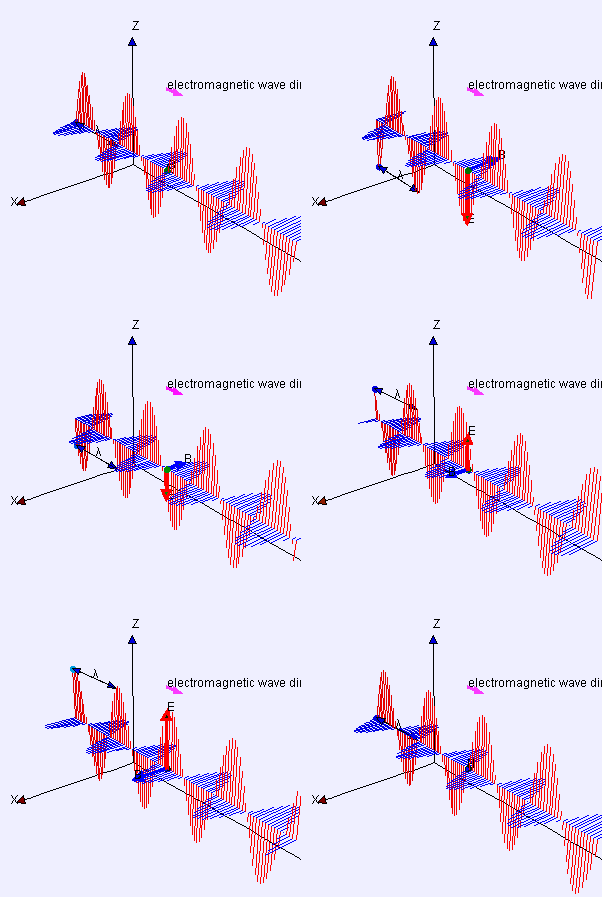
form of energy emitted and absorbed by particles which are charged which shows wave-like behavior as it travels through space

albedo
thumb|Albedo change in Greenland: The map shows the difference between the amount of sunlight [[Greenland reflected in the summer of 2011 versus the amount it reflected between 2000 and 2006. Some areas reflect close to 20 percent less light than a decade ago.]]
Albedo ( ; ) is the fraction of sunlight that is diffusely reflected by a body. It is measured on a scale from 0 (corresponding to a black body that absorbs all incident radiation) to 1 (corresponding to a body that reflects all incident radiation). Surface albedo is defined as the ratio of radiosity Je to the irradiance Ee (flux per u

black body
idealized physical body that absorbs all incident electromagnetic radiation

thermal radiation
electromagnetic radiation generated by the thermal motion of charged particles in matter
polarization
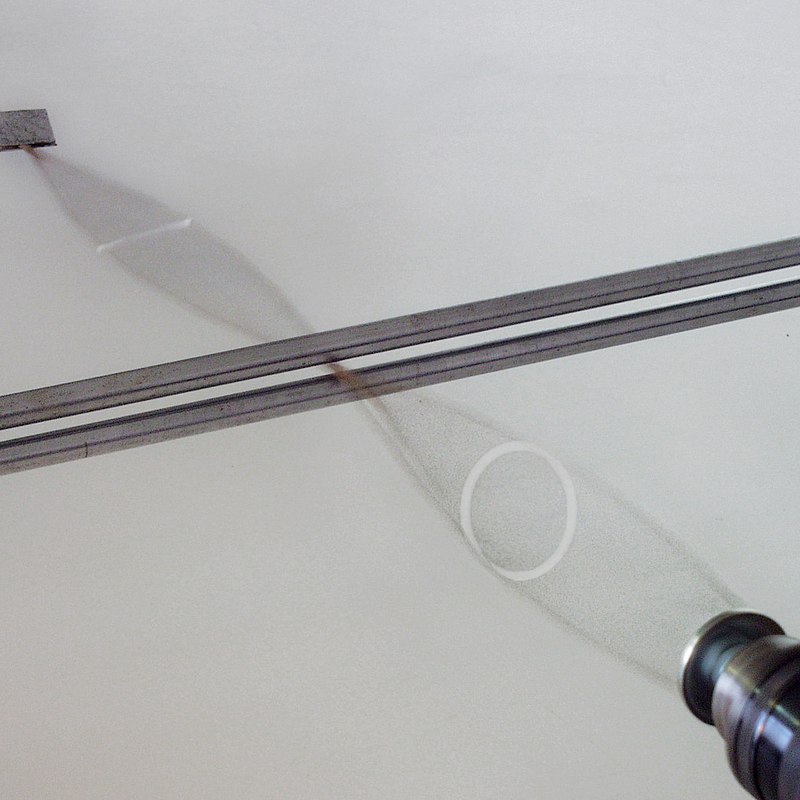
property of waves that can oscillate with more than one orientation

emission spectrum
frequencies of light emitted by atoms or chemical compounds

synchrotron radiation
electromagnetic radiation emitted when charged particles are accelerated radially
optical aberration
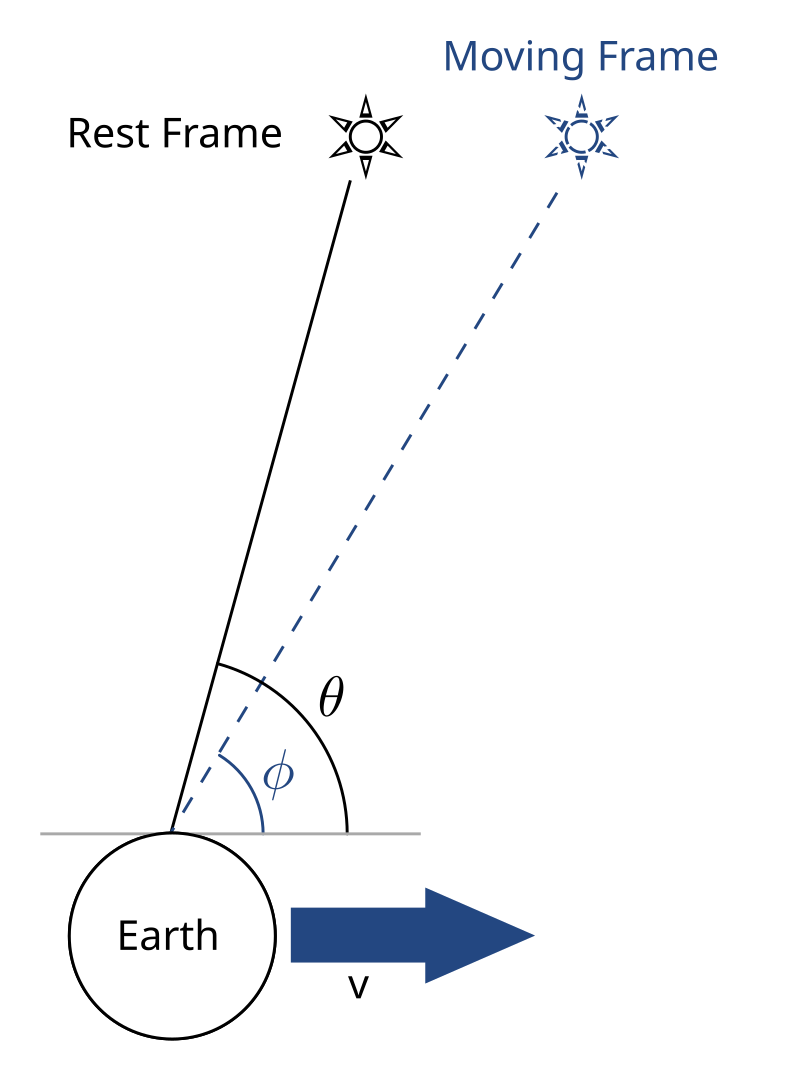
phenomenon in astronomy

electromagnetic pulse
burst of electromagnetic energy

photometry
the determination of light intensities of astronomical bodies, including stars

effective temperature
estimated temperature of an astronomical body
Beer–Lambert law
physical law describing absorption of light

black-body radiation
thermal electromagnetic radiation

Poynting vector
measure of directional energy flux

absorption
way in which the energy of a photon is taken up by matter; physical process of absorbing light, while absorbance does not always measure absorption: it measures attenuation (of transmitted radiant power)

radiometry
thumb|upright=1.5|Comparison of photometric and radiometric quantities
Radiometry is a set of techniques for measuring electromagnetic radiation, including visible light. Radiometric techniques in optics characterize the distribution of the radiation's power in space, as opposed to photometric techniques, which characterize the light's interaction with the human eye.
stimulated emission
process by which an incoming photon of a specific frequency can interact with an excited atomic electron (or other excited molecular state), causing it to drop to a lower energy level
spontaneous emission
quantum mechanical state change
Kirchhoff's law of thermal radiation
law of wavelength-specific emission and absorption

opacity
thumb|250px|right|Comparisons of 1. opacity, 2. translucency, and 3. transparency; behind each panel is a star.
Opacity is the measure of impenetrability to electromagnetic or other kinds of radiation, especially visible light. In radiative transfer, it describes the absorption and scattering of radiation in a medium, such as a plasma, dielectric, shielding material, glass, etc. An opaque object is neither transparent nor translucent. When light strikes an interface between two substances, in general, some may be reflected, some absorbed, some scattered, and the rest transmitted (also see refr
radiant energy
energy carried by waves or particles

waveguide
thumb|An example of a waveguide: A section of flexible rectangular waveguide used for radar that has a flange.
Schumann resonances
peaks in the Earth's electromagnetic field spectrum, named for Winifred Otto Schumann
directed-energy weapon
type of weapon that fires a concentrated beam of energy at its target

triboluminescence
thumb|right|Triboluminescence of nicotine -salicylate
Triboluminescence is a phenomenon in which light is generated when a material is mechanically pulled apart, ripped, scratched, crushed, or rubbed (see tribology). The phenomenon is not fully understood but appears in most cases to be caused by the separation and reunification of static electric charges, see also triboelectric effect. The term comes from the Greek τρίβειν ("to rub"; see tribology) and the Latin lumen (light). Triboluminescence can be observed when breaking sugar crystals and peeling adhesive tapes.
microwave transmission
technology of transmitting information or energy by the use of microwaves
anechoic chamber
technical room for sound recording or research
transmission medium
conduit for signal propagation
absorption spectroscopy
spectroscopic techniques that measure the absorption of radiation
non-ionizing radiation
electromagnetic radiation that does not carry enough energy per quantum to ionize atoms or molecules
Gaussian beam
field of radiation (e.g. electromagnetic wave) whose amplitude is described by the Gaussian function
Electromagnetic wave equation
partial differential equation used in physics
magnetic core
in electricity and electronics, ferromagnetic material around which wires are wound
Bond albedo
albedo subtype
Wien approximation
physical law approximating the spectrum of thermal radiation
electromagnetic shielding
using conductive or magnetic materials to reduce electromagnetic field intensity
radiative transfer
energy transfer through a medium through emission and absorption of electromagnetic radiation
Larmor formula
formula used to calculate the total power radiated by a non relativistic point charge as it accelerates
cyclotron radiation
radiation emitted by charged particles deflected by magnetic field
Liénard–Wiechert potential
electromagnetic effect of point charges
variable speed of light
non-mainstream theory in physics remaining to be validated
pit organ
sensory organ in snakes for heat sensing
nuclear electromagnetic pulse
burst of electromagnetic radiation created by a nuclear explosion
ferrite bead
passive component (choke) that suppresses high frequency noise in electronic circuits
finite-difference time-domain method
numerical methods for solving partial differential equations
Transverse mode
electromagnetic wave with oscillations perpendicular to the direction of travel

propagation coefficient
complex measure of the attenuation (real part) and phase angle (imaginary part) along the path travelled by a plane wave
Abraham–Lorentz force
recoil force on an accelerating charged particle caused by the particle emitting electromagnetic radiation
cloak of invisibility
fictional theme and a device under some scientific inquiry. In folklore, mythology and fairy tales, a cloak of invisibility appears either as a magical item used by duplicitous characters or an item worn by a hero to fulfill a quest
velocity factor
ratio of the speed at which a wavefront passes through the medium to the speed of light in a vacuum
cosmic background radiation
type of spectrum apart from the Big Bang, whichever shows the universe
coherence length
distance over which a propagating wave maintains a certain degree of coherence
Draper point
Temperature above which almost all solids visibly glow
Operation Fishbowl
U.S. high-altitude nuclear tests
coherence time
the time over which a propagating wave (especially a laser or maser beam) may be considered coherent
actinism
Actinism is the property of solar radiation that leads to the production of photochemical and photobiological effects. It is important in chemical photography and x-ray imaging, and causes sunburn and photodegradation of materials. Actinic chemicals include silver salts used in photography and other light-sensitive chemicals.
electromagnetic forming
Metal forming process