Category
page 1Enterobacteriaceae
Enterobacteriaceae
Enterobacteriaceae is a large family of Gram-negative bacteria. It includes over 30 genera and more than 100 species. Its classification above the level of family is still a subject of debate, but one classification places it in the order Enterobacterales of the class Gammaproteobacteria in the phylum Pseudomonadota. In 2016, the description and members of this family were emended based on comparative genomic analyses by Adeolu et al.

Shigella
Shigella is a genus of bacteria that is Gram negative, facultatively anaerobic, non–spore-forming, nonmotile, rod shaped, and is genetically nested within Escherichia coli. The genus is named after Japanese physician Kiyoshi Shiga, who discovered it in 1897.
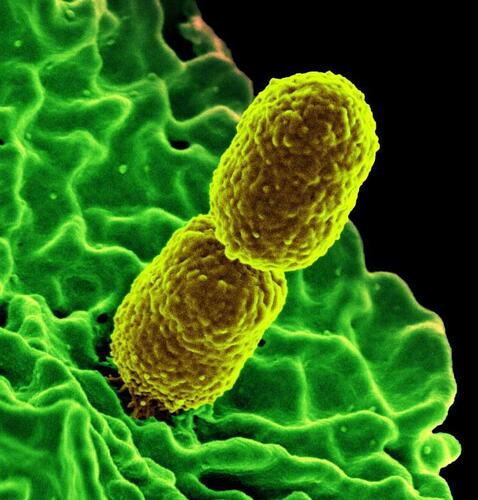
Klebsiella pneumoniae
species of bacterium
Klebsiella
Klebsiella is a genus of Gram-negative, oxidase-negative, rod-shaped bacteria with a prominent polysaccharide-based capsule.
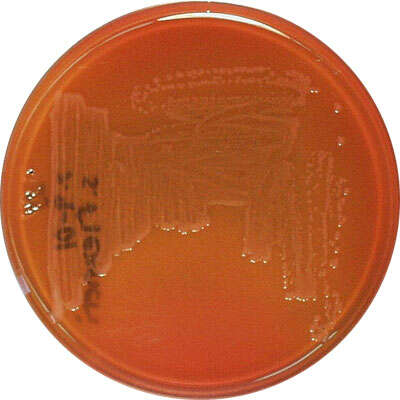
Shigella dysenteriae
species of bacterium
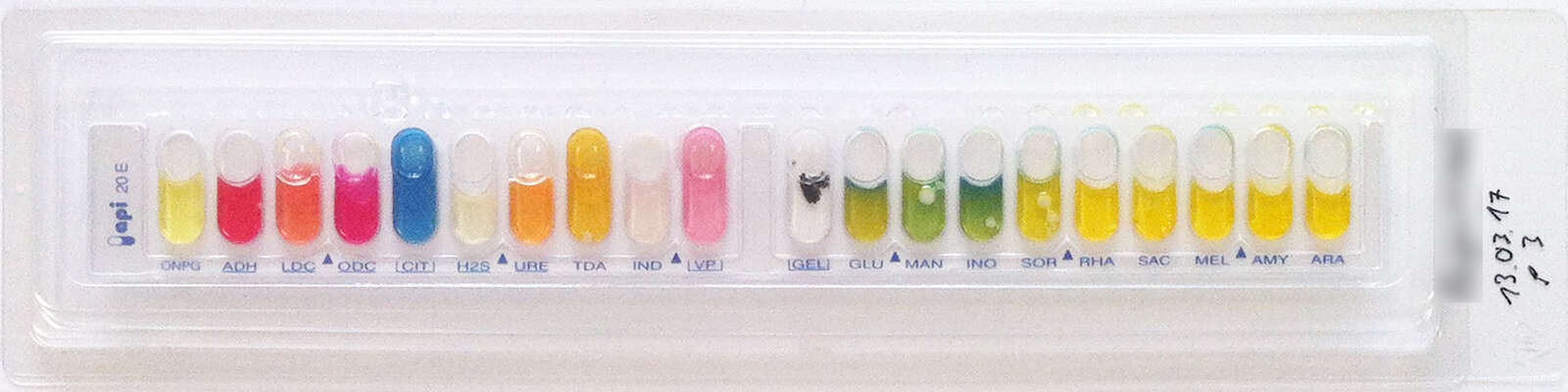
Enterobacter
Enterobacter is a genus of Gram-negative, facultatively anaerobic, rod-shaped, non-spore-forming bacteria in the family Enterobacteriaceae. Enterobacter spp. are found in soil, water, sewage, feces and gut environments. It is the type genus of the order Enterobacterales. Several strains of these bacteria are pathogenic and cause opportunistic infections in immunocompromised (usually hospitalized) hosts and in those who are on mechanical ventilation. The urinary and respiratory tracts are the most common sites of infection. The genus Enterobacter is a member of the coliform group of bacteria. I
Enterobacter cloacae
a species of clinically significant Gram-negative, facultatively-anaerobic, rod-shaped bacterium
Shigella flexneri
species of bacterium
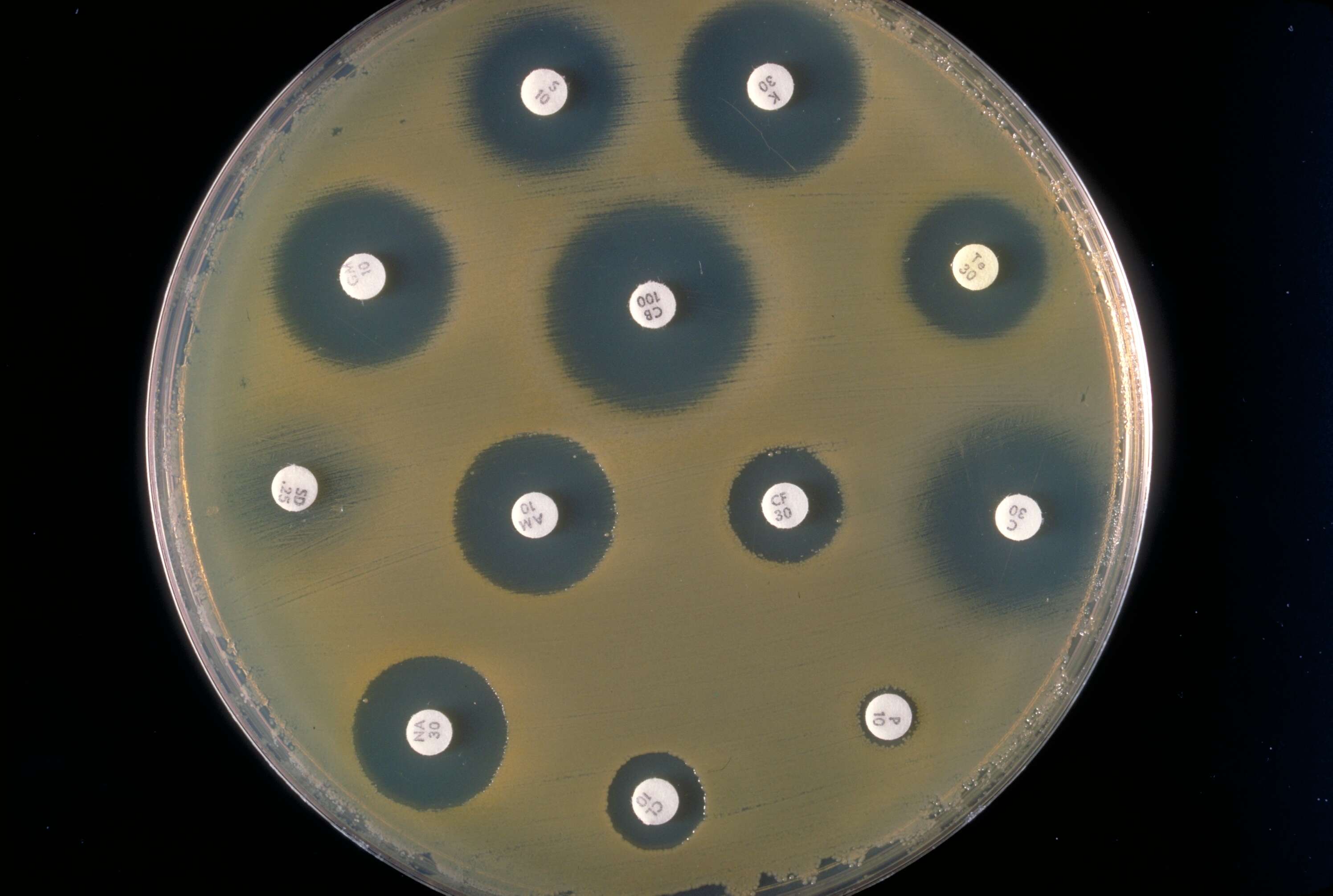
Cronobacter
Cronobacter is a genus of Gram-negative, facultatively anaerobic, oxidase-negative, catalase-positive, rod-shaped bacteria of the family Enterobacteriaceae.
Several Cronobacter species are desiccation resistant and persistent in dry products such as powdered infant formula. They are generally motile, reduce nitrate, use citrate, hydrolyze esculin and arginine, and are positive for L-ornithine decarboxylation. Acid is produced from D-glucose, D-sucrose, D-raffinose, D-melibiose, D-cellobiose, D-mannitol, D-mannose, L-rhamnose, L-arabinose, D-trehalose, galacturonate and D-maltose.
Cronobacter
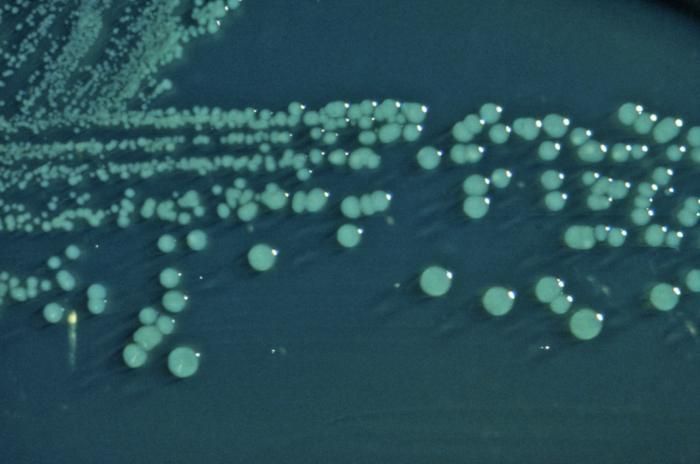
Shigella boydii
species of bacterium
Klebsiella granulomatis
species of bacterium

Shigella sonnei
species of bacterium
Klebsiella aerogenes
species of bacterium
Cronobacter sakazakii
species of Gammaproteobacteria
Klebsiella oxytoca
species of bacterium
Raoultella
The genus Raoultella is composed of Gram-negative, oxidase-negative, aerobic, nonmotile, capsulated, facultatively anaerobic rods (formerly designated Klebsiella) in the family Enterobacteriaceae. It is named after the French bacteriologist Didier Raoult. Further research has suggested that the members of the genus Raoultella should be placed back into Klebsiella.
Raoultella planticola
species of bacterium
Buttiauxella
Buttiauxella is a Gram-negative, aerobic, facultative anaerobic and motile genus of bacteria within the family Enterobacteriaceae.
Kosakonia
Kosakonia is a genus of Gram-negative bacteria in the family Enterobacteriaceae. Members of this genus are rod-shaped, motile, and typically associated with plants. They are often isolated as endophytes or rhizosphere bacteria and have shown potential for plant growth promotion and nitrogen fixation.
Carbapenem resistant enterobacteriaceae
antibiotic-resistant strains of bacteria
Kluyvera
Kluyvera is a Gram negative, facultatively anaerobic bacterial and motile genus from the family of Enterobacteriaceae which have peritrichous flagella. Kluyvera occur in water, soil and sewage. Kluyvera bacteria can cause opportunistic infections in immunocompromised patients.
Cedecea
Cedecea is a genus of extremely rare bacteria of the family Enterobacteriaceae. The name of this genus was derived from CDC, the abbreviation for the Centers for Disease Control where the initial members of this genus were discovered. This genus resembles no other group of Enterobacteriaceae. Cedecea bacteria are Gram-negative, bacillus in shape, motile, nonencapsulated, and non-spore-forming. The strains of Cedecea appear to be similar to those of Serratia. Both Cedecea and Serratia are lipase positive and resistant to colistin and cephalothin; however, Cedecea is unable to hydrolyze gelatin
Blochmannia
thumb|Like other species of the ant genus Camponotus (carpenter ants), the wood-nesting C. pennsylvanicus (shown here) possesses the obligate bacterial endosymbiont Blochmannia.
Blochmannia is a genus of symbiotic bacteria found in carpenter ants (genus Camponotus) and their allies in the tribe Camponotini. As of 2014, Blochmannia has been discovered in the guts of over 60 species across 6 genera within the Camponotini, and is predicted to be pervasive throughout the tribe. Blochmannia was first discovered by zoologist Friedrich Blochmann in 1887, who described "bacteria-like structures" in th
Yokenella
Yokenella is a genus of bacteria of the family Enterobacteriaceae. Yokenella are Gram-negative, motile, rod-shaped bacteria. Strains of bacteria forming this genus were originally isolated from clinical samples, from the boxelder bug, and from alligators.
Mangrovibacter
Mangrovibacter is a genus in the order Enterobacterales. Members of the genus are Gram-stain-negative, facultatively anaerobic, nitrogen-fixing, and rod shaped. The name Mangrovibacter derives from:Neo-Latin noun mangrovum, mangrove; Neo-Latin masculine gender noun, a rod; bacter, nominally meaning "a rod", but in effect meaning a bacterium, rod; Neo-Latin masculine gender noun Mangrovibacter, mangrove rod.