Category
page 1Epistemology of science

Occam's razor
philosophical principle used to judge credibility of statements

observation
thumbnail|Observing the air traffic in Rõuge, [[Estonia]]

paradigm
In science and philosophy, a paradigm ( ) is a distinct set of concepts or thought patterns, including theories, research methods, postulates, and standards for what constitute legitimate contributions to a field. The word paradigm is Greek in origin, meaning "pattern". It is closely related to the discussion of theory-ladenness in the philosophy of science.
inductive reasoning
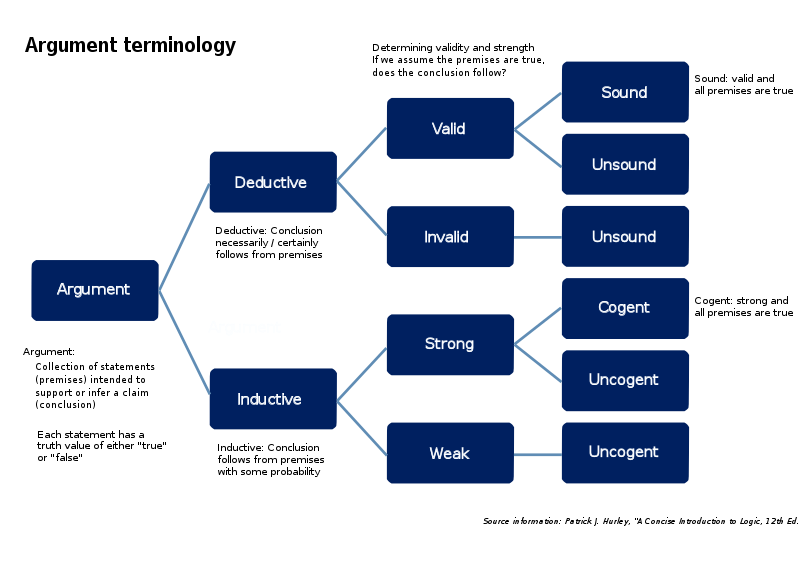
method of reasoning in which a body of observations is synthesized to hypothesize a general principle

progress
thumb|Woman's Progress, May 1895|200px

logical positivism
assertion that only statements verifiable through empirical observation are meaningful

scientific theory
explanation of some aspect of the natural world which can be tested and corroborated
introspection
Introspection is the examination of one's own conscious thoughts and feelings. In psychology, the process of introspection relies on the observation of one's mental state, while in a spiritual context it may refer to the examination of one's soul. Introspection is closely related to human self-reflection and self-discovery and is contrasted with external observation.

Vienna Circle
former group of philosophers and scientists

reductionism
thumb|René Descartes, in De homine (1662), claimed that non-human animals could be explained reductively as automata; meaning essentially as more mechanically complex versions of this [[Digesting Duck.]]

falsifiability
thumb|upright=1.3|alt=Pair of black swans swimming|Here are two black swans, but even with no black swans, "All swans are white" would still be shown falsifiable by "Here is a black swan"—it would still be a valid observation statement in the empirical language, even if empirically false.
explanation
An explanation is a set of statements usually constructed to describe a set of facts that clarifies the causes, context, and consequences of those facts. It may establish rules or laws, and clarifies the existing rules or laws in relation to any objects or phenomena examined.

uniformitarianism
thumb|Hutton's Unconformity at [[Jedburgh.Above: John Clerk of Eldin's 1787 illustration.Below: 2003 photograph.]]
Uniformitarianism, also known as the Doctrine of Uniformity or the Uniformitarian Principle, is the assumption that the same natural laws and processes that operate in our present-day scientific observations have always operated in the universe in the past and apply everywhere in the universe. It refers to invariance in the metaphysical principles underpinning science, such as the constancy of cause and effect throughout space-time, but has also been used to describe spatiotempora

decision theory
branch of applied probability theory
instrumentalism
In philosophy of science and in epistemology, instrumentalism is a methodological view that ideas are useful instruments, and that the worth of an idea is based on how effective it is in explaining and predicting natural phenomena.
According to instrumentalists, a successful scientific theory reveals nothing known either true or false about nature's unobservable objects, properties or processes.*Anjan Chakravartty, , §4 "Antirealism: Foils for scientific realism: §4.1: "Empiricism", in Edward N. Zalta, ed, The Stanford Encyclopedia of Philosophy, Summer 2013 edn: "Traditionally, instrumentalis
paradigm shift
fundamental change in the basic concepts and experimental practices of a scientific discipline.
scientific modeling
scientific activity
empirical research
research using empirical evidence
critical rationalism
epistemological philosophy advanced by Karl Popper

self-concept
In the psychology of self, one's self-concept (also called self-construction, self-identity, self-perspective or self-structure) is a collection of beliefs about oneself. Generally, self-concept embodies the answer to the question "Who am I?".

operationalization
thumb|right|300px|An example of operationally defining personal space
In research design, especially in psychology, social sciences, life sciences and physics, operationalization (or operationalisation) is a process of defining the measurement of a phenomenon which is not directly measurable, though its existence is inferred from other phenomena. Operationalization thus defines a fuzzy concept so as to make it clearly distinguishable, measurable, and understandable by empirical observation. In a broader sense, it defines the extension of a concept—describing what is and is not an instance of t
social constructivism
sociological theory of knowledge according to which human development is socially situated, and knowledge is constructed through interaction with others; states that people work together to actively construct artifacts
interpretation of quantum mechanics
set of statements which attempt to explain how quantum mechanics informs our understanding of nature
ignoramus et ignorabimus
"we do not & will not know" — maxim refering to the limits of scientific knowledge
Cartesian doubt
form of methodological skepticism associated with the writings and methodology of René Descartes
constructivist epistemology
branch in philosophy of science
metascience
Metascience (also known as meta-research) is the use of scientific methodology to study science itself. Metascience seeks to increase the quality of scientific research and enhance its efficiency. It is also known as "research on research" and "the science of science", as it uses research methods to study how research is done and find where improvements can be made. Metascience concerns itself with all fields of research and has been described as "a bird's eye view of science". In the words of John Ioannidis, "Science is the best thing that has happened to human beings... but we can do it bett
idealization
process by which scientific models assume facts about the phenomenon being modeled
ad hoc hypothesis
hypothesis added to a theory in order to save it from being falsified
anti-realism
In analytic philosophy, anti-realism is the position that the truth of a statement rests on its demonstrability through internal logic mechanisms, such as the context principle or intuitionistic logic, in direct opposition to the realist notion that the truth of a statement rests on its correspondence to an external, independent reality. In anti-realism, this external reality is hypothetical and is not assumed.
Hypotheses non fingo
famous phrase used by Isaac Newton in one of his essays
verisimilitude
In philosophy, verisimilitude (or truthlikeness) is the notion that some propositions are closer to being true than other propositions. The problem of verisimilitude is the problem of articulating what it takes for one false theory to be closer to the truth than another false theory.
Nobel disease
embracing of strange or scientifically unsound ideas by some Nobel Prize winners, usually later in life
sense data
theory in the philosophy of perception
feminist philosophy of science
means of interpreting scientific evidence through a feminist lens
Planck's principle
principle that scientific change is generational
epistemological rupture
knowledge
enactivism
Enactivism is a position in cognitive science that argues that cognition arises through interaction between an acting organism and its environment. It claims that the environment of an organism is brought about, or enacted, by the active exercise of that organism's sensorimotor processes. "The key point, then, is that the species brings forth and specifies its own domain of problems ...this domain does not exist "out there" in an environment that acts as a landing pad for organisms that somehow drop or parachute into the world. Instead, living beings and their environments stand in relation to
empirical relationship
phenomenology inferred from observation
confirmation holism
philosophical view that no individual statement can be confirmed or disconfirmed by an empirical test, but only a set of statements (a whole theory)