Category
page 1Equatorial constellations

Orion
constellation straddling the celestial equator

Leo
zodiac constellation passing through the celestial equator
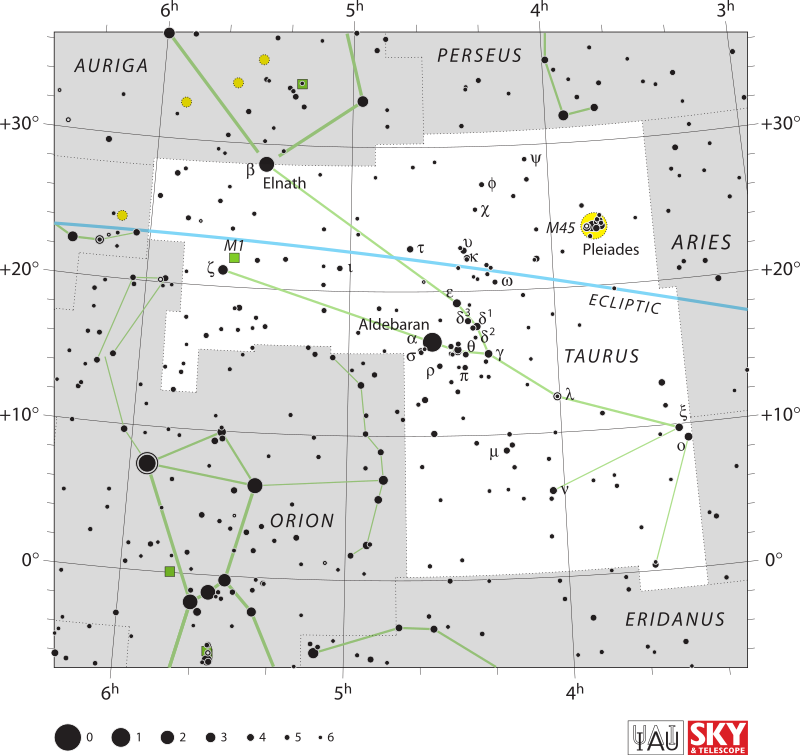
Taurus
zodiac constellation straddling the celestial equator

Virgo
zodiac constellation passing through the celestial equator

Pisces
zodiac constellation straddling the celestial equator

Aquarius
zodiac constellation straddling the celestial equator

Ophiuchus
Ophiuchus () is a large constellation straddling the celestial equator. Its name comes from the Ancient Greek (), meaning "serpent-bearer", and it is commonly represented as a man grasping a snake. The serpent is represented by the constellation Serpens. Ophiuchus was one of the 48 constellations listed by the 2nd-century astronomer Ptolemy, and it remains one of the 88 modern constellations. An old alternative name for the constellation was Serpentarius.

Aquila
constellation on the celestial equator

Eridanus
constellation in the southern hemisphere

Canis Minor
constellation in the northern celestial hemisphere
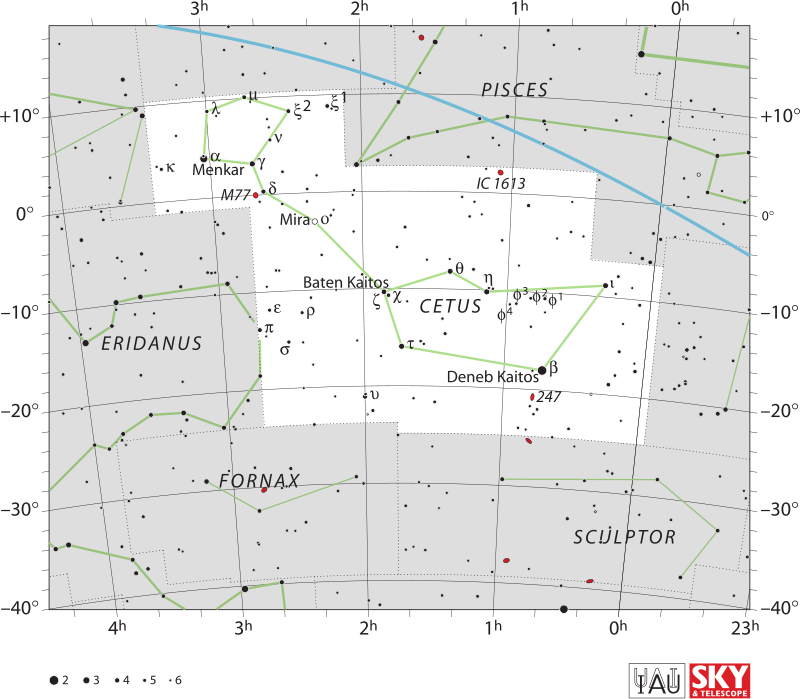
Cetus
constellation straddling the celestial equator
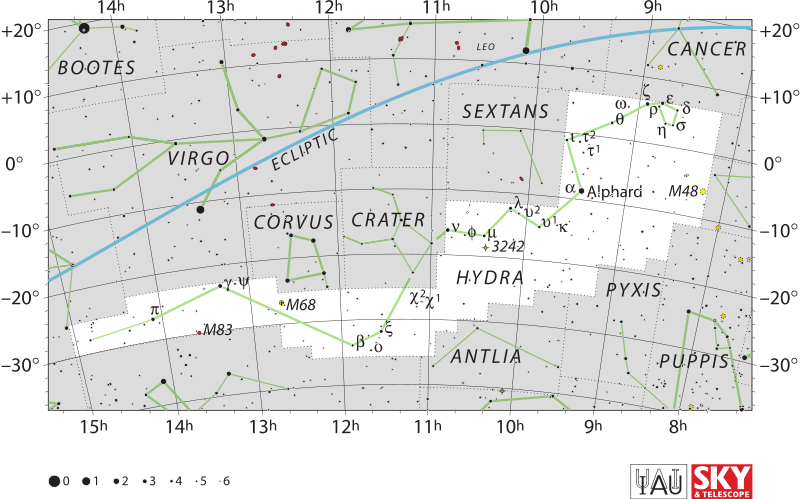
Hydra
constellation straddling the celestial equator

Monoceros
Monoceros (Greek: , "unicorn") is a faint constellation on the celestial equator. Its definition is attributed to the 17th-century cartographer Petrus Plancius. It is bordered by Orion to the west, Gemini to the north, Canis Major to the south, and Hydra to the east. Other bordering constellations include Canis Minor, Lepus, and Puppis.

Serpens
Serpens () is a constellation in the northern celestial hemisphere. One of the 48 constellations listed by the 2nd-century astronomer Ptolemy, it remains one of the 88 modern constellations designated by the International Astronomical Union. It is unique among the modern constellations in being split into two non-contiguous parts, Serpens Caput (Serpent Head) to the west and Serpens Cauda (Serpent Tail) to the east. Between these two halves lies the constellation of Ophiuchus, the "Serpent-Bearer". In figurative representations, the body of the serpent is represented as passing behind Ophiuchu

Sextans
Sextans is a faint, minor constellation on the celestial equator which was introduced in 1687 by Polish astronomer Johannes Hevelius. Its name is Latin for the astronomical sextant, an instrument that Hevelius made frequent use of in his observations.