Category
page 1Equilibrium chemistry

pH
upright=1|thumb|right|Test tubes containing solutions of pH 1–10 colored with Universal indicator|an indicator

sulfuric acid
chemical compound

hemoglobin
Hemoglobin (haemoglobin, Hb or Hgb) is a protein containing iron that facilitates the transportation of oxygen in red blood cells. Almost all vertebrates contain hemoglobin, with the sole exception of the fish family Channichthyidae. Hemoglobin in the blood carries oxygen from the respiratory organs (lungs or gills) to the other tissues of the body, where it releases the oxygen to enable aerobic respiration which powers an animal's metabolism. A healthy human has 12to 20grams of hemoglobin in every 100mL of blood. Hemoglobin is a metalloprotein, a chromoprotein, and a globulin.

hydrolysis
thumb|upright=1.7|Generic hydrolysis reaction. (The 2-way yield symbol indicates a chemical equilibrium in which hydrolysis and condensation are reversible.)
Hydrolysis (; ) is any chemical reaction in which a molecule of water breaks one or more chemical bonds. The term is used broadly for substitution and elimination reactions in which water is the nucleophile.

chemical equilibrium
state in which both reactants and products are present in concentrations which have no further tendency to change with time.There are no net changes in the concentrations of the reactant(s) and product(s). Such a state is known as dynamic equilibrium
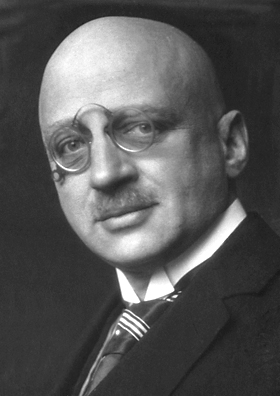
Haber-Bosch process
artificial nitrogen fixation process which is the main industrial procedure for the production of ammonia nowadays

acid–base reaction
chemical reaction
buffer solution
aqueous solution consisting of a mixture of a weak acid and its conjugate base, which resists (to a limited degree) pH change when a strong acid or base is added

phase diagram
chart used to show conditions at which physical phases of a substance occur
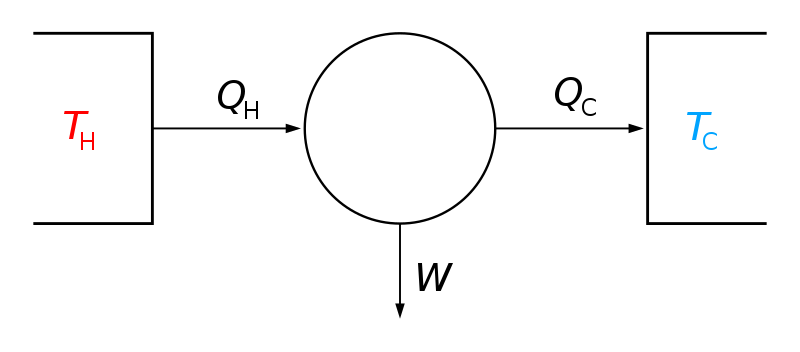
thermodynamic equilibrium
state of thermodynamic system(s) where no net macroscopic flow of matter or energy occurs

thermodynamic system
precisely specified macroscopic region of the universe, defined by boundaries

partial pressure
hypothetical pressure of gas if it alone occupied the volume of the mixture at the same temperature

Le Chatelier's principle
principle to predict effects of a change in conditions on a chemical equilibrium
acid dissociation constant
equilibrium constant as a measure of acid strength in solution

dissociation
general process in which molecules (or ionic compounds such as salts, or complexes) separate or split into smaller particles such as atoms, ions or radicals, usually in a reversible manner

Raoult's law
law of thermodynamics
thermodynamic cycle
linked sequence of thermodynamic processes that involve transfer of heat and work into and out of the system,while varying pressure, temperature, and other state variables within the system, and that eventually returns the system to its initial state
Henry's law
a gas law that states that the amount of dissolved gas is proportional to its partial pressure in the gas phase
thermodynamic process
energetic development of a thermodynamic system proceeding from an initial state to a final state
pH indicator
halochromic chemical compound added in small amounts to a solution so the pH of the solution can be determined visually
Brønsted–Lowry acid–base theory
chemical theory defining acids and bases by transfer of protons (hydrons)
reversible reaction
chemical reaction where the reactants form products, which react together to give the reactants back

chelation
Chelation () is a type of bonding and sequestration of metal atoms. It involves two or more separate dative covalent bonds between a ligand and a single metal atom, thereby forming a ring structure. The ligand is called a chelant, chelator, chelating agent, or sequestering agent. It is usually an organic compound, but this is not a requirement.
law of mass action
scientific law
solubility equilibrium
thermodynamic equilibrium between a solid and a saturated solution of the same compound
equilibrium constant
chemical property
dissociation constant
chemical property
Henderson–Hasselbalch equation
equation used to estimate the pH of a weak acid or base solution
self-ionization of water
autoprotolysis or exchange of a proton between two water molecules
acid–base homeostasis
homeostatic regulation of the pH of the body's extracellular fluid (ECF)
Gibbs' phase rule
general principle in thermodynamics regarding pVT systems in equilibrium
ionic strength
quantification of the electrical interactions between ions in solution
dynamic equilibrium
statein which a reversible reaction ceases to change its ratio of reactants/products and substances move between the chemicals at an equal rate
partition coefficient
ration of concentrations in a mixture at equilibrium
Van 't Hoff equation
Relation between temperature and the equilibrium constant of a chemical reaction
autoprotolysis
type of molecular autoionization in which a hydron is transferred

oxyanion
An oxyanion, or oxoanion, is an ion with the generic formula (where 'A' represents a chemical element and 'O' represents an oxygen atom). Oxyanions are formed by a large majority of the chemical elements. The corresponding oxyacid of an oxyanion is the compound . The structures of condensed oxyanions can be rationalized in terms of AO polyhedral units with sharing of corners or edges between polyhedra. The oxyanions (specifically, phosphate and polyphosphate esters) adenosine monophosphate (AMP), adenosine diphosphate (ADP) and adenosine triphosphate (ATP) are important in biology.
activity coefficient
value accounting for thermodynamic non-ideality of mixtures
Vapor–liquid equilibrium
ratio of vapor concentration to liquid concentration at equilibrium
Host-guest chemistry
supramolecular structures held together other than by covalent bonds
acid–base imbalance
medical condition
acid-base extraction
separation of a desired substance from other substances in the sample

PCO2
thumb|Carbon dioxide molecule.
'''pCO2, pCO2', or P_\ce{CO2} is the partial pressure of carbon dioxide (CO2), often used in reference to blood but also used in meteorology, climate science, oceanography, and limnology to describe the fractional pressure of CO2 as a function of its concentration in gas or dissolved phases. The units of p''CO2 are mmHg, atm, torr, Pa, or any other standard unit of atmospheric pressure.
reaction quotient
function of the activities or concentrations of the chemical species involved in a chemical reaction
common-ion effect
phenomenon in reactions with electrolytes
Debye–Hückel theory
Model describing the departures from ideality in solutions of electrolytes and plasmas
aminopolycarboxylic acid
organic acid containing one or more amino groups and multiple carboxyl groups
Binding selectivity
concept in biochemistry
Stability constants of complexes
constants in chemistry
binding constant
chemical property
Phase separation
Distribution law
generalisation describing the distribution of a solute between two non miscible solvents.
ICE table
Mass balance consistency check for a chemical reaction
Irving-Williams series
Series in chemistry
equilibrium chemistry
subdiscipline of chemistry concerned with chemical equilibrium
Hand boiler
glass sculpture sometimes used as a collector's item to measure love