Category
page 1Ethnic groups in China
.jpg)
Uzbeks
The Uzbeks () are a Turkic ethnic group native to Central Asia, being the largest Turkic ethnic group in the area. They comprise the majority population of Uzbekistan, next to Tajiks and Karakalpak minorities, and also form minority groups in Afghanistan, Tajikistan, Kyrgyzstan, Kazakhstan, Turkmenistan, Russia, and China. Uzbek diaspora communities also exist in Turkey, Saudi Arabia, United States, Ukraine, Pakistan, and other countries.
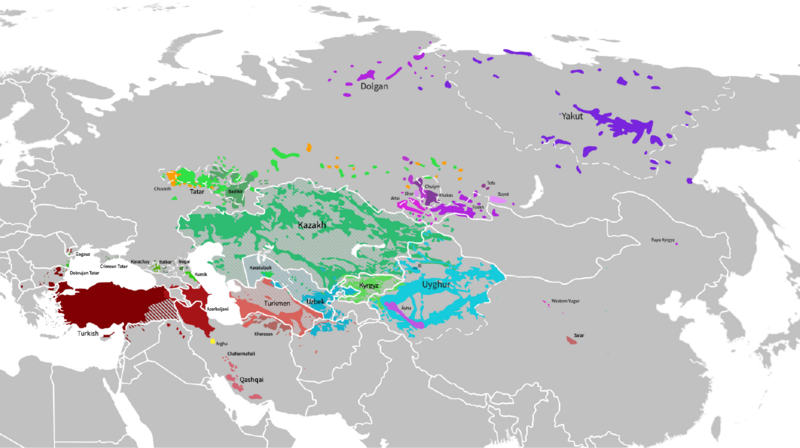
Turkic peoples
family of ethnic groups of Eurasia

Kyrgyz people
Turkic ethnic group native to Central Asia, primarily Kyrgyzstan

Buryats
The Buryats are a Mongolic ethnic group native to southeastern Siberia who speak the Buryat language. They are one of the two largest indigenous groups in Siberia, the other being the Yakuts. The majority of the Buryats today live in their titular homeland, the Republic of Buryatia, a federal subject of Russia which sprawls along the southern border and partially straddles Lake Baikal. Smaller groups of Buryats also inhabit Ust-Orda Buryat Okrug (Irkutsk Oblast) and the Agin-Buryat Okrug (Zabaykalsky Krai) which are to the west and east of Buryatia respectively as well as northeastern Mongolia
%20of%20Dast-i%20Qipchaq%22.%20Tabriz%20or%20Qavin%2C%20circa%201550.%20British%20Museum%2C%201948-10-9-056.jpg)
Kipchaks
thumb|A Safavid Iran|Safavid depiction of the [[Padishah (Emperor) of Dast-i Qipchaq ("Steppe of the Kipchaks"). Tabriz or Qavin, circa 1550. British Museum, Padishah (Emperor) of Dast-i Qipchaq, (1550). Possible portrait of Kazakh khan]]
thumb|The Cumania in Eurasia, 1200|alt=The Desht-i Kipchak in Eurasia, 1200

Hmong people
ethnic group in Southwest China and Southeast Asia
Oirats
Oirats (; ) or Oirds ( ; ), formerly known as Eluts and Eleuths ( or ; , Èlǔtè) are the westernmost group of Mongols, whose ancestral home is in the Altai region of Siberia, Xinjiang and western Mongolia.
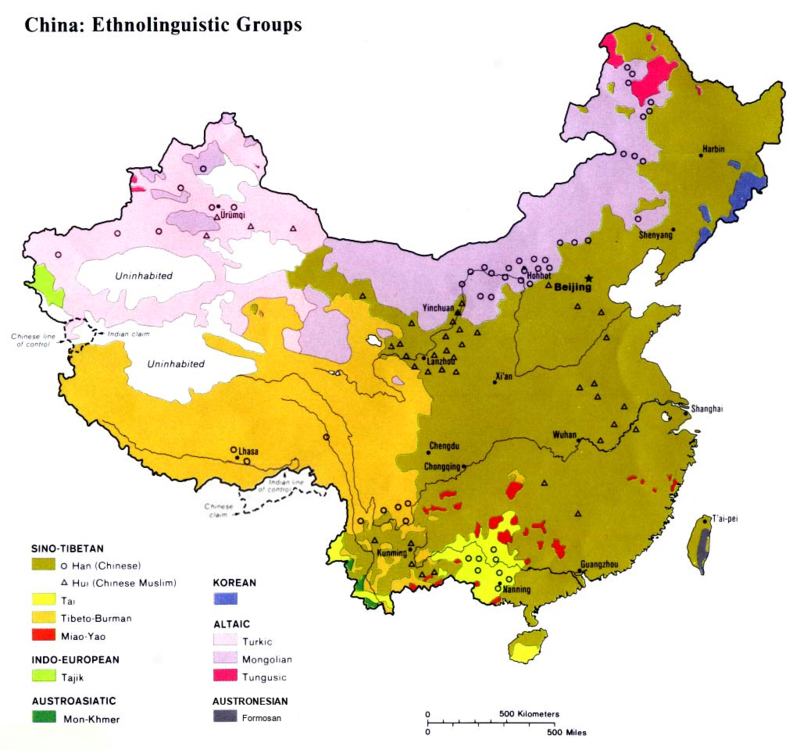
nationalities of China
Wikimedia list article
Shan people
Southeast Asian ethnic group

Dungans
ethnic group
Tungusic peoples
ethnolinguistic family

Pamiri people
The Pamiris, also known as Badakhshanis are an Eastern Iranian ethnic group, native to Central Asia, living primarily in Tajikistan (Gorno-Badakhshan), Afghanistan (Badakhshan), Siachen, Pakistan (Gilgit-Baltistan, Chitral) and China (Taxkorgan Tajik Autonomous County). They speak a variety of different languages, amongst which languages of the Eastern Iranian Pamir language group stand out. The languages of the Shughni-Rushani group, alongside Wakhi, are the most widely spoken Pamiri languages.
Wakhi people
ethnic group
Akha
ethnic group in Southeast Asia
Khmu
one of the largest ethnic groups based in northern Laos
Zhonghua minzu
political term in modern Chinese nationalism
Tanka people
ethnic group
Khamti people
tribe
Lu people
Ethnic group
.jpg)
Albazinians
thumb|Symeon Du|Simeon Runchen Du, Albazinian Orthodox bishop of Shanghai (1956–1965)
The Albazinians (; ) are one of several Chinese ethnic groups of Russian descent. There are approximately 250 Albazinians in China who are descendants of about fifty Russian Cossacks who fought at the Siege of Albazin on the Amur River that were resettled by the Kangxi Emperor in the northeastern periphery of Beijing in 1685. Albazin was a Russian fort on the Amur River, founded by Yerofey Khabarov in 1651. It was stormed by Qing troops in 1685. The majority of its inhabitants agreed to evacuate their familie

Changpa
thumbnail|right|Changpa nomad
thumbnail|right|Changpa shepherd girl
thumb|Changpa nomadic family, Tibet
Mishmi people
ethnic group
ethnic minorities in China
55 ethnic minorities recognised by the People's Republic of China
Tusi
'''''' (; 'headmen, chieftains') were hereditary tribal leaders recognized as imperial officials by the Yuan, Ming, and Qing dynasties of China, and the Later Lê and Nguyễn dynasties of Vietnam. They ruled certain ethnic minorities in central China, western China, southwestern China, and the Indochinese peninsula nominally on behalf of the central government. As succession to the Tusi position was hereditary, these regimes effectively formed numerous autonomous petty dynasties under the suzerainty of the central court. This arrangement is known as the Tusi System or the Native Chieftain System
Utsul
The Utsuls ([]; ) are a Chamic-speaking ethnic group which lives on the island of Hainan and are considered one of the People's Republic of China's unrecognized ethnic groups. They are found on the southernmost tip of Hainan, in the two villages of Huihui (回辉) and Huixin (回新) of Tianya, Sanya.
unrecognized ethnic groups in China
ethnic groups of the People's Republic of China not officially recognized
Barga Mongols
ethnic group
Middle jüz
one of the three Kazakh jüz
Argyn
The Argyn () is a Turkic tribe (or clan) that constituents of the Kazakh ethnicity. The Argyn are a component of the Orta jüz (Орта жүз; "Middle Horde"). The most numerous tribe of the Middle Zhuz, which migrated from the Golden Horde to the Timurid Empire during the reign of Abu Sa'id Mirza, the great-grandson of Timur. The Argyns were one of the four most powerful bey clans (karachi-beks) of the Crimean Khanate, who had the authority to confirm the khans on the throne and were members of the Divan (Crimean Khanate state council) of the khanate, significantly influencing the foreign policy of
Basmyl
The Basmyls (Basmyl; Basmals, Basmils, , , Middle Chinese ZS: *bˠɛt̚-siɪt̚-miɪt̚/mˠiɪt̚/miᴇ; or as 弊剌 Bìlà, MC *bjiejH-lat) were a 7th- to 8th-century Turkic nomadic tribe who mostly inhabited the Dzungaria region in the northwest of modern-day China.

Tai Dam people
ethnic group in Asia
Tai Nua people
ethnic group

Semu
thumb|Ma Hajji, a Song Dynasty official in Yunnan (a descendant of Sayyid Ajjal Shams al-Din Omar), and his young son Ma He, future admiral [[Zheng He, as imagined by a modern Kunyang sculptor.]]
The Semu () were the name of a political class in Imperial China, made up of foreign experts who came to serve the political systems of Imperial China. The Semu were not a self-defined ethnic group unto themselves; rather, "Semu" was initially an exonym for various Central and East Asian peoples under the Yuan Dynasty. The Semu were one of the four "castes" which Yuan society was divided into, along w
Mang people
ethnic group
National Ethnic Affairs Commission
organization of the People's Republic of China
Duchers
thumb|The lands of the Daur people|Dauri, Ducheri, and Goguli in the mid-17th century, according to [[Ernst Georg Ravenstein]]
White Tai
ethnic group
Hui'an maidens
ethnic gender group
Northern Liao
dynastic regime of China (1122-1123)
hill tribe
various ethnic minorities mostly living in the Thai highlands
Solon people
subgroup of the Evenks living in Northeastern China
Fuyü Gïrgïs people
ethnic group
Harbin Russians
several generations of Russians who lived in Harbin, Heilongjiang, China
Zhelaizhai
Zhelaizhai () is a village on the edge of the Gobi desert in Gansu province, China. The area was renamed after Liqian, an ancient county, and is located in Jiaojiazhuang township, Yongchang County. Some of the modern-day residents of Zhelaizhai, now known as Liqian village, have been suspected to be descendants of a group of Roman soldiers that were never accounted for after being captured in the Battle of Carrhae. Although this story has been seized upon by some area residents, recent authorities have shown that the notion has serious shortcomings.
Bayirku
Bayirku (In Chinese chronicles (Ba-yegu / Ba-yegu), in runic inscriptions bajarqu, and in the chronicle collection ''Jami' al-tawarikh'' by Rashid al-Din as barqut (Bargut) is the historical name of an ethnic community repeatedly mentioned in various medieval sources.
Yunnan Ethnic Village
ethnographic village in Yunnan, China
Template:Tungusic peoples
Wikimedia template
Khatso people
thumb|The main square of Xingmeng Mongol Ethnic Township in Tonghai County
The Khatso people (), commonly known as the Yunnan Mongols (), is a Mongolic ethnic group, mainly distributed in Tonghai County in the Yunnan province of southwestern China. The Khatso people are descendants of the army personnel of the Yuan dynasty.