Category
page 1Euteleostei families

Salmonidae
Salmonidae (, ) is a family of ray-finned fish, the only extant member of the suborder Salmonoidei, consisting of 11 extant genera and over 200 species collectively known as "salmonids" or "salmonoids". The family includes salmon (both Atlantic and Pacific species), trout (both ocean-going and landlocked), char, graylings, freshwater whitefishes, taimens and lenoks, all coldwater mid-level predatory fish that inhabit the subarctic and cool temperate waters of the Northern Hemisphere. The Atlantic salmon (Salmo salar), whose Latin name became that of its genus Salmo, is also the eponym of the f

Gadidae
The Gadidae are a family of marine fish, included in the order Gadiformes, known as the cods, codfishes, or true cods. It contains several commercially important fishes, including the cod, haddock, whiting, and pollock.
Holocentridae
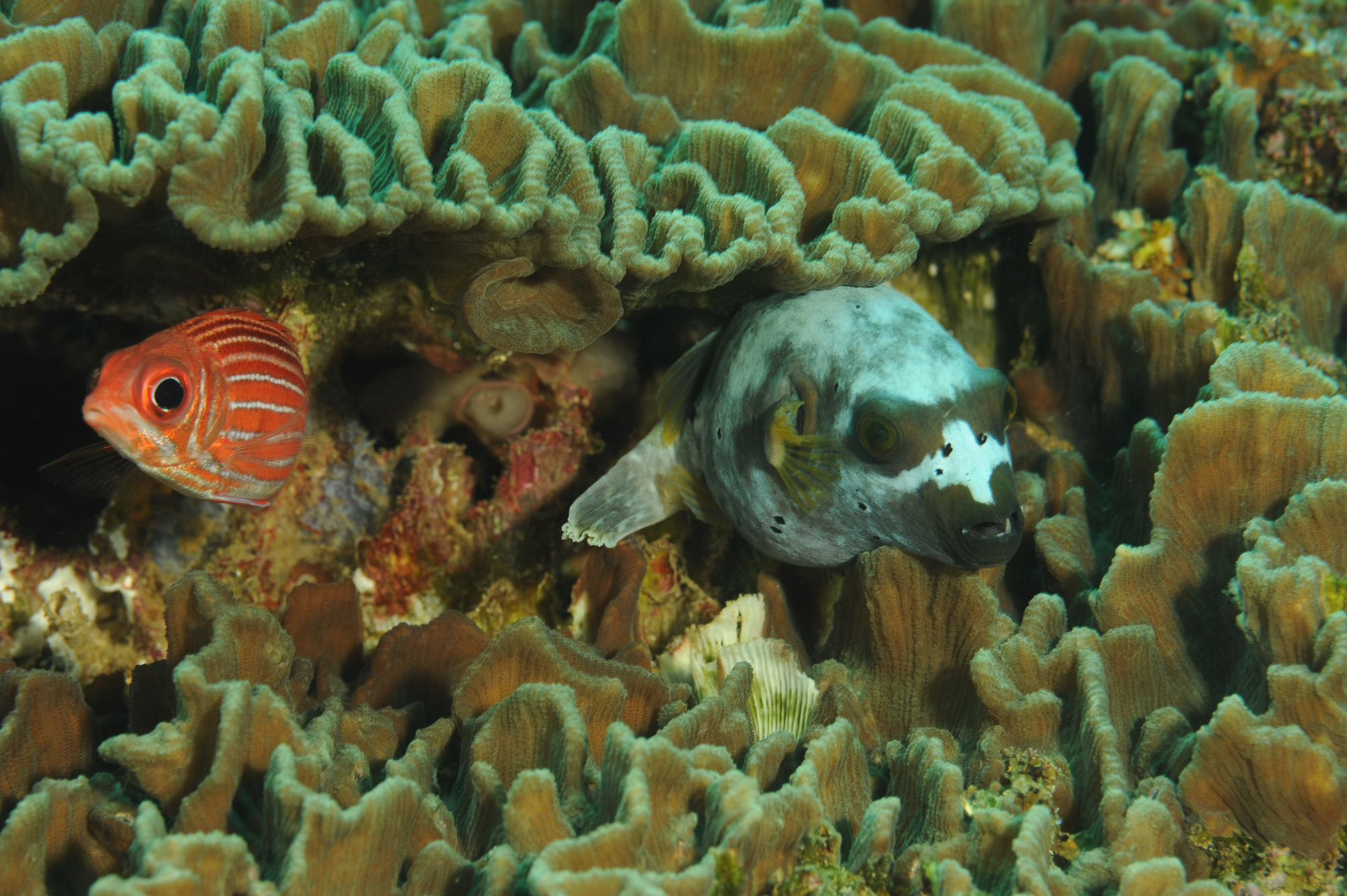
Holocentridae is a family of beryciform ray-finned fish, the only family of the suborder Holocentroidei. The members of the subfamily Holocentrinae are typically known as squirrelfish, while the members of Myripristinae typically are known as soldierfish. In Hawaii, they are known by the Japanese name or the Hawaiian .
Merlucciidae
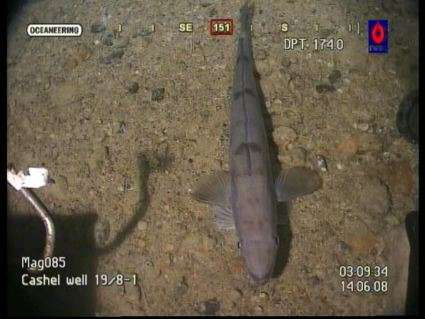
The Merlucciidae, commonly called merluccid hakes , are a family of cod-like fish, containing two genera. They are the only member of the suborder Merlucciodei.
They are native to cold water in the Atlantic and Pacific oceans, and typically are found at depths greater than in subtropical, temperate, sub-Arctic or sub-Antarctic regions.

Lotidae
The Lotidae are a family of cod-like fishes commonly known as hakes or burbots. They are found in the Arctic and Atlantic Oceans, and some freshwater habitats throughout the temperate Northern Hemisphere. All species are marine, except for the burbot, Lota lota, found in rivers and lakes in northern Europe, Siberia, and North America. They are important commercial and game fish species.

Gonostomatidae
The Gonostomatidae are a family of mesopelagic marine fish, commonly named bristlemouths or anglemouths. Their common name, bristlemouth, comes from their odd, equally sized, and bristle-like teeth. It is a relatively small family, containing only eight known genera and 32 species. However, bristlemouths make up for their lack of diversity with relative abundance, numbering in the hundreds of trillions to quadrillions. The genus Cyclothone (with 14 species) is thought to be one of the most abundant vertebrate genera in the world.
%20de%20M%C3%A9diterran%C3%A9e%20(Ifremer%2000676-78846%20-%2031645).jpg)
Stomiidae
Stomiidae is a family of deep-sea ray-finned fish, including the barbeled dragonfishes, that live in all oceans in a wide range of depths. They are quite small, ranging around long, and they exhibit a strong sexual dimorphism. These fish are apex predators and have enormous jaws filled with fang-like teeth; their specially adapted neurocranium and upper-jaw system allows them to open their jaws to more than 100 degrees. This ability allows them to consume extremely large prey, often 50% greater than their standard length.

Moridae
The Moridae are a family of cod-like fishes, known as codlings, hakelings, and moras.

Umbridae
Umbridae is a family of ray-finned fish in the order Salmoniformes. The single living genus, Umbra, occupies weed-choked freshwater habitats in eastern North America and eastern Europe. While the family traditionally contained the genera Umbra, Novumbra, and Dallia, recent genetic and paleontological research have recovered this grouping as paraphyletic, with Novumbra and Dallia being moved to the family Esocidae.

Zeidae
The Zeidae (named after the fish zaeus from Pliny the Elder) are a family of large, showy, deep-bodied zeiform marine fish—the "true dories". Found in the Atlantic, Indian, and Pacific Oceans, the family contains just six species in two genera. All species are important and highly regarded food fish supporting commercial fisheries, and some—such as the John Dory (Zeus faber)—are enjoyed in large public aquaria. These fish are caught primarily by deep-sea trawling.
Berycidae
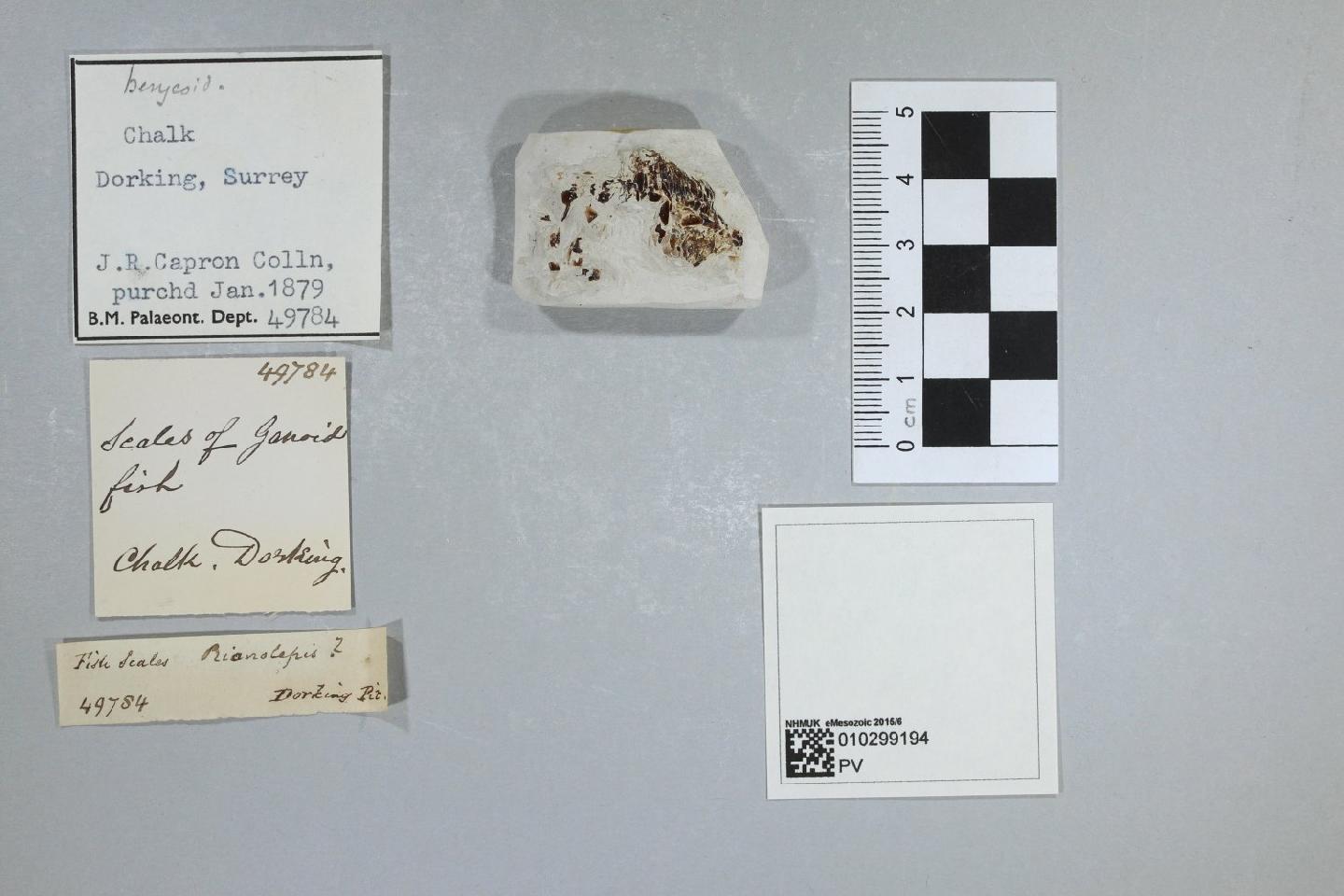
Berycidae is a small family of deep-sea fishes, related to the squirrelfishes. The family includes the alfonsinos and the nannygais.

Galaxiidae
The Galaxiidae are a family of mostly small freshwater fish in the Southern Hemisphere. The majority live in Southern Australia or New Zealand, but some are found in South Africa, southern South America, Lord Howe Island, New Caledonia, and the Falkland Islands. One galaxiid species, the common galaxias (Galaxias maculatus), is probably the most widely naturally distributed freshwater fish in the Southern Hemisphere. They are coolwater species, found in temperate latitudes, with only one species known from subtropical habitats. Many specialise in living in cold, high-altitude upland rivers, st

flashlight fish
Anomalopidae (lanterneye fishes or flashlight fishes) are a family of fish distinguished by bioluminescent organs located underneath their eyes, for which they are named. These light organs contain luminous bacteria and can be "shut off" by the fish using either a dark lid or by being drawn into a pouch. They are used to communicate, attract prey, and evade predators.
Esocidae
Esocidae is a family of ray-finned fish in the order Salmoniformes, which contains pike, pickerel, and mudminnows. While the family traditionally only contained the genus Esox, recent genetic and paleontological research have recovered Novumbra and Dallia as members of the family Esocidae, being closer related to Esox than Umbra. Fossil specimens from the Mesozoic in North America have been assigned as two additional genera in this family, although they may actually be more basal.

Argentinidae
The herring smelts or argentines are a family, Argentinidae, of marine smelts. They are similar in appearance to smelts (family Osmeridae) but have much smaller mouths.
thumb|left|Ontogenic series of a fossil species of the genus Argentina, the Geological Museum, Copenhagen
They are found in oceans throughout the world. They are small fishes, growing up to long, except the greater argentine, Argentina silus, which reaches .

Amblyopsidae
The Amblyopsidae are a fish family commonly referred to as cavefish, blindfish, or swampfish. They are small freshwater fish found in the dark environments of caves (underground lakes, pools, rivers and streams), springs and swamps in the eastern half of the United States. Like other troglobites, most amblyopsids exhibit adaptations to these dark environments, including the lack of functional eyes and the absence of pigmentation. More than 200 species of cavefishes are known, but only six of these are in the family Amblyopsidae. One of these, Forbesichthys agassizii, spends time both undergrou

Sternoptychidae
The marine hatchetfishes or deep-sea hatchetfishes as well as the related bottlelights, pearlsides and constellationfishes are small deep-sea ray-finned fish of the stomiiform family Sternoptychidae. They are not closely related to and should not be confused with the freshwater hatchetfishes, which are teleosts in the characiform family Gasteropelecidae. The Sternoptychidae have 10 genera and about 70 species altogether.

Flabby whalefish
Cetomimidae is a family of small, deep-sea beryciform ray-finned fish. They are among the most deep-living fish known, with some species recorded at depths in excess of . Females are known as flabby whalefishes, Males are known as bignose fishes, while juveniles are known as tapetails and were formerly thought to be in a separate family, dubbed Mirapinnidae. Adults exhibit extreme sexual dimorphism, and the adult males were once thought to be exemplars of still another family, Megalomycteridae.

Monocentridae
thumb|250px|Monocentris japonica

Neoscopelidae
The Neoscopelidae (blackchins or neoscopelids) are a small family of deep-sea fish closely related to the lanternfish. They are found in tropical and subtropical marine waters worldwide.

Microstomatidae
The Microstomatidae (pencil smelts) are a family of marine smelts native to the Atlantic, Indian, and Pacific Oceans. Their bodies are small and slender, with large eyes and a small mouth. The dorsal fin is located behind the midpoint of their body, with pectoral fins on sides of their body, and the lateral line extends over the caudal fin. These fins lack spines. They are inhabitants of the mesopelagic to bathypelagic zone, where they feed on zooplankton.

Salangidae
Salangidae, the icefishes or noodlefishes, are a family of small osmeriform fish, related to the smelts. They are found in Eastern Asia, ranging from the Russian Far East in the north to Vietnam in the south, with the highest species richness in China. Some species are widespread and common, but others have relatively small ranges and are threatened. Depending on species, they inhabit coastal marine, brackish or fresh water habitats, and some are anadromous, only visiting fresh water to spawn.
Retropinnidae
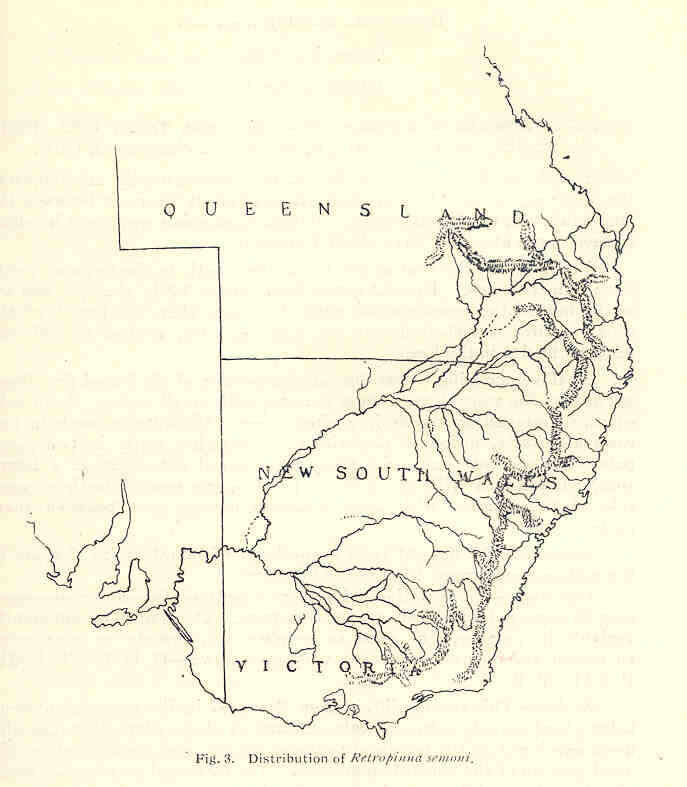
The Retropinnidae are a family of bony fishes that contains the Southern Hemisphere smelts and graylings. They are the only members of the suborder Retropinnoidei. They are closely related to the northern smelts (Osmeroidei), which they greatly resemble, but not to the northern graylings (Thymallus). Species from this family are only found in southeastern Australia and New Zealand, although a fossil otolith suggests that they may have also inhabited southern South America during the Neogene. Although a few species are partly marine, most inhabit fresh or brackish water.
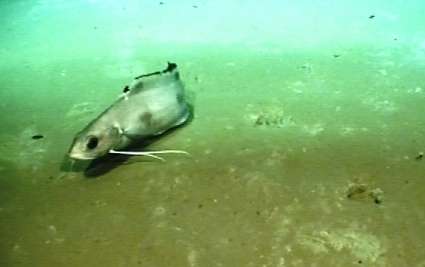
Phycidae
The Phycidae are a family of hakes in the order Gadiformes. They are native to the Atlantic Ocean, but the juveniles of some species enter estuaries.
Sometimes this family is classified as the subfamily Phycinae of the cod family, Gadidae, but ''Eschmeyer's Catalog of Fishes'' currently classifies it as a distinct family within the Gadoidei.

Phosichthyidae
Lightfishes are small stomiiform fishes in the family Phosichthyidae They are bioluminescent fishes, possessing rows of photophores along their sides, with which they hunt planktonic invertebrates, especially krill, copepods, and planktonic amphipods.
Oreosomatidae
Oreosomatidae, the oreos, are a family of marine fish. Most species are found in the Southern Hemisphere, inhabiting continental slopes down to about deep. Most of them are 43 cm at most, with the largest species reaching a length of 60 cm. Though they are small, they often have incredibly elongated lifespans, probable result of living in the deep sea (a trait shared with other unrelated fishes like the orange roughy). The warty oreo is able to live for up to 210 years, which puts it at one of the longest living vertebrates on Earth. They borrow their name from the Greek oreos (mount
Muraenolepididae
The Muraenolepididae is a family of cod-like fish, known as eel cods, found in southern oceans.

Stephanoberycidae
Stephanoberycidae, the pricklefishes are a family of fishes in the order Beryciformes.

Veliferidae
Sailfin moonfishes are a small family, Veliferidae, of lampriform fishes found in the Indian and western Pacific Oceans. Unlike other lampriforms, they live in shallow, coastal waters, of less than depth, rather than in the deep ocean. They are also much smaller than most of their relatives, up to in length, and have deep, rather than elongated, bodies. They are characterised by their ability to retract the anterior rays of their dorsal and anal fins into a sheath.
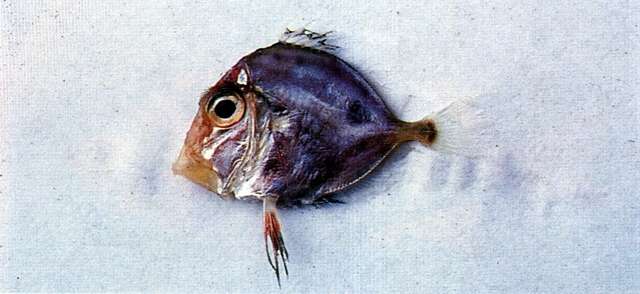
Parazenidae
Parazenidae is a family of zeiform fishes found in the Atlantic and Pacific Oceans.

Percopsidae
thumb|Amphiplaga brachyptera
Anoplogastridae
REDIRECT Fangtooth
Macrourinae
subfamily of fishes
Macruronidae
REDIRECT Macruronus
Zeniontidae
Zeniontidae is a family of large, showy, deep-bodied zeiform marine fish. Found in the Atlantic, Indian, and Pacific Ocean, the family contains just seven species in three genera.
Diplophidae
The Diplophidae or portholefishes are a family of mesopelagic marine stomiiform fish found in deep waters worldwide.
Hispidoberycidae
REDIRECT Hispidoberyx
Trachyrincinae
Trachyrincidae is a family of gadiform fish. The subfamily contains four genera found in Atlantic, Indian and Pacific Ocean. These species live in deep-water. These fishes have a long, narrow and sharply pointed snout. The chin barbel is present. Two genera (Macrouroides and Squalogadus) have a huge and rounded head with the consistency of a water-filled balloon. The eyes are tiny. The chin barbel is absent.