Category
page 1Evolutionary developmental biology
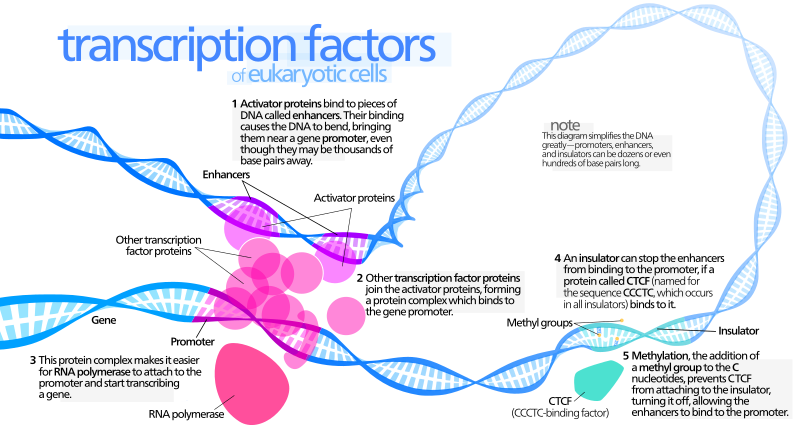
transcription factor
protein that binds to DNA and regulates gene expression by promoting or suppressing transcription

recapitulation theory
biological hypothesis

morphogenesis
Morphogenesis (from the Greek morphê shape and genesis creation, literally "the generation of form") is the biological process that causes a cell, tissue, or organism to develop its shape. It is one of three fundamental aspects of developmental biology, along with the control of tissue growth and the patterning of cellular differentiation.

pleiotropy
thumb|Simple genotype–phenotype map that only shows additive pleiotropy effects. G1, G2, and G3 are different genes that contribute to phenotypic traits P1, P2, and P3.
sequence alignment
process in bioinformatics that aligns (identifies equivalent sites within) molecular sequences
regulation of gene expression
process that modulates frequency, rate or extent of gene expression
evolutionary developmental biology
field of biology

homeobox
A homeobox is a DNA sequence, around 180 base pairs long, that regulates large-scale anatomical features in the early stages of embryonic development. Mutations in a homeobox may change large-scale anatomical features of the full-grown organism.
Hox gene
class of homeobox genes
Wnt signaling pathway
series of molecular signals initiated by binding of a Wnt protein to a frizzled family receptor

heterochrony
thumb|upright=1.3|Giraffes acquired their long necks through heterochrony, extending the development period of the seven neck [[vertebrae's growth in the embryo to add length to the bones, not by adding more bones.]]
conserved sequence
similar DNA, RNA or protein sequences within genomes or among species
gene regulatory network
collection of molecular regulators that interact with each other and with other substances in the cell to govern the gene expression levels of mRNA and proteins
sequence homology
biological homology between protein or DNA sequences resulting from shared evolutionary ancestry

smoothened signaling pathway
series of molecular signals generated as a consequence of activation of the transmembrane protein Smoothened
deep homology
control of growth and differentiation by deeply conserved genetic mechanisms
Heterotopy
Heterotopy is an evolutionary change in the spatial arrangement of an organism's embryonic development, complementary to heterochrony, a change to the rate or timing of a development process. It was first identified by Ernst Haeckel in 1866 and has remained less well studied than heterochrony.