Category
page 1Exonyms

Moors
thumb|Depiction of Muslim army in Iberia, from Cantigas de Santa Maria|The Cantigas de Santa Maria
The term Moor is an exonym used in European languages to designate primarily the Muslim populations of North Africa (the Maghreb) and the Iberian Peninsula (particularly al-Andalus) during the Middle Ages.

barbarian
thumb|237px|19th-century portrayal of the Huns as barbarians

Wallachia
Wallachia is a geographical region of modern-day Romania, as well as one of the two historical Romanian principalities that laid the foundation for the establishment of the modern Romanian state. It is situated north of the Lower Danube and south of the Southern Carpathians. Wallachia was traditionally divided into two sections, Muntenia (Greater Wallachia) and Oltenia (Lesser Wallachia). Dobruja could sometimes be considered a third section due to its proximity and brief rule over it. Wallachia as a whole is sometimes referred to as Muntenia through identification with the larger of the two t

Iroquois
The Iroquois ( ), also known as the Haudenosaunee Confederacy ( ; ), are an Iroquoian-speaking confederacy of Native Americans and First Nations peoples in northeast North America. They were known by the French during the colonial years as the Iroquois League, and later as the Iroquois Confederacy. They have also been called the Six Nations (Five Nations before 1722).

Saracen
right|thumb|Depiction of Saracens (Muslims) by Dutch artist [[Erhard Reuwich, 1486]]
The word "Saracen" ( ) was commonly used in medieval Europe to refer to a person who lived in or near what the ancient Romans knew as Arabia Petraea and Arabia Deserta. Its original meaning in Greek and Latin is not known with certainty. By the early medieval period, it had come to be associated with the Arabian tribes. Following the rise of Islam, which occurred in Arabia, the word's definition evolved to refer not only to Arabs, but to Muslims taken generally as well. It eventually became the standard adject
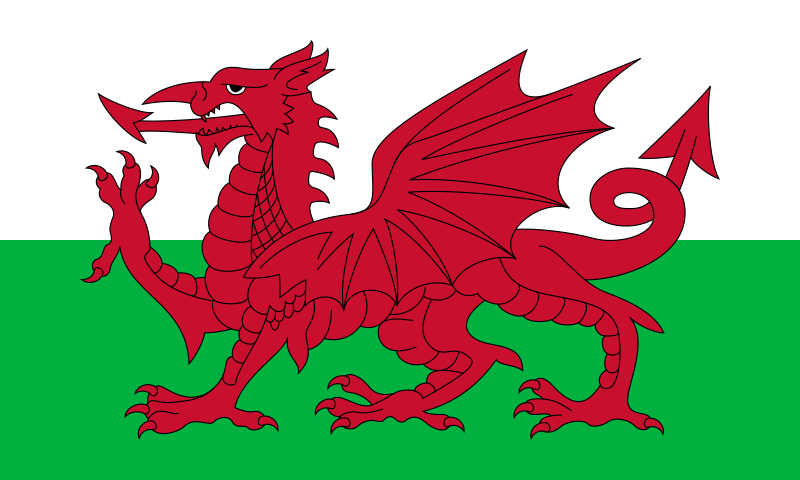
Welsh people
nation and ethnic group native to Wales

Sioux
The Sioux or Oceti Sakowin ( ; Dakota/Lakota: ) are groups of Native American tribes and First Nations people from the Great Plains of North America. The Sioux have two major linguistic divisions: the Dakota and Lakota peoples (translation: referring to the alliances between the bands). Collectively, they are the , or . The term Sioux, an exonym from a French transcription () of the Ojibwe term , can refer to any ethnic group within the Great Sioux Nation or to any of the nation's many language dialects.

Arahuacos (Arawak)
The Arawak are a group of Indigenous peoples of northern South America and the Caribbean. The term "Arawak" has been applied at various times to different Indigenous groups, from the Lokono of South America to the Taíno (Island Arawaks), who lived in the Greater Antilles and northern Lesser Antilles in the Caribbean. All these groups spoke related Arawakan languages.

Tartary
thumb|300px| Cary's Map of independent Tartary (in yellow) and Chinese Tartary (in violet), in 1808.
Tartary (Latin: Tartaria; ; ; ) or Tatary () was a blanket term used in Western European literature and cartography for a vast part of Asia bounded by the Caspian Sea, the Ural Mountains, the Pacific Ocean, and the northern borders of China, India, and Persia, at a time when this region was largely unknown to European geographers.

Vlachs
300px|thumb|Théodore Valerio, 1852: Pâtre valaque de Zabalcz ("Wallachian Shepherd from [[Zăbalț")]]
Vlach ( ), also Wallachian and many other variants, is a term and exonym used from the Middle Ages until the Modern Era to designate speakers of Eastern Romance languages living in Southeast Europe—south of the Danube (the Balkan peninsula) and north of the Danube.

goy
Goy (pl: goyim or goys) is a term for a gentile, a non-Jew, sometimes in a pejorative sense. The word, of Hebrew origin, was adopted into English from Yiddish. It carries a similar meaning in Modern Hebrew.

Ruthenia
thumb|Rus' land/Ruthenia in yellow, Kievan Rus' under Oleg the Wise in gray, 862–912
thumb|The area of Red Ruthenia against the background of the administrative division of the [[Second Polish Republic in 1939, prior to the outbreak of World War II.]]
Ruthenia is an exonym, originally used in Medieval Latin, as one of several terms for Rus'. The ethnonym Ruthenians was used to refer to the East Slavic and Eastern Orthodox people of the Grand Duchy of Lithuania and the Kingdom of Poland, and later the Polish–Lithuanian Commonwealth and Austria-Hungary, mainly to Ukrainians and sometimes Belarus

Ruthenians
Ruthenian and Ruthene are exonyms of Latin origin, formerly used in Eastern and Central Europe as common ethnonyms for East Slavs, particularly during the late medieval and early modern periods. The Latin term was used in medieval sources to describe all Eastern Slavs of the Grand Duchy of Lithuania, as an exonym for people of the former Rus', thus including ancestors of the modern Belarusians, Russians and Ukrainians. The use of Ruthenian and related exonyms continued through the early modern period, developing several distinctive meanings, both in terms of their regional scopes and additiona
Blackfoot
indigenous language of the northwestern Great Plains of North America
Nez Perce
Native American tribe

Afghans
Afghans are the citizens and nationals of Afghanistan. They are composed of various ethnic groups, of which Pashtuns, Tajiks, Hazaras, and Uzbeks are the largest.
Orang Asli
Indigenous ethnic group of Malaysia

gringo
Gringo (, , ) (masculine) or gringa (feminine) is a term in Spanish and Portuguese for a foreigner. In Spanish, the term usually refers to English-speaking Anglo-Americans. There are differences in meaning depending on region and country. The term can be considered derogatory,English dictionaries:
Spanish dictionaries:
.png)
Chud
thumb|Kievan Rus 1030–1113. The lands of the Chuds are shown in the north.
Chud or Chude (, , ) is a term historically applied in the early East Slavic annals to several Baltic Finnic peoples in the area of what is now Estonia, Karelia and Northwestern Russia. It has also been used to refer to other Finno-Ugric peoples.

Zanj
thumb|upright=1.1|right|The Swahili coast
thumb|The Bantu people|Bantu inhabited areas
endonym and exonym
linguistic terms
.png)
Helluland
Helluland () is one of the three lands, the others being Vinland and Markland, seen by Bjarni Herjólfsson, encountered by Leif Erikson and further explored by Thorfinn Karlsefni Thórdarson around AD 1000 on the North Atlantic coast of North America. As some writers refer to all land beyond Greenland as Vinland, Helluland is sometimes considered a part of Vinland.

Ajam
thumb|A letter sent into Qajar Iran|Iran from the [[Ottoman Empire in 1839, with Keshvâr-e ʿAjam () referring to Iranian lands.]]
neurotypicality
REDIRECT Neurodiversity#Neurodivergent and neurotypical/neuroconforming

Farang
thumb|Depiction of farang as a stone guard at Wat Pho in [[Bangkok; circa 1824–1851]]
Names of Georgia
etymology of the nation of Georgia

giaour
thumb|Théodore Géricault: The Giaour (1820, lithograph; [[Metropolitan Museum of Art, New York)]]
thumb|Eugène Delacroix: The Combat of the Giaour and Hassan (1826, oil on canvas; [[Art Institute of Chicago), inspired by Lord Byron's The Giaour]]
names of Japan
overview of names for the Asian island state

gadjo
In Romani culture, a gorja, gadjo (masculine), or gadji (feminine) is a person who has no Romanipen. This usually corresponds to not being an ethnic Romani, but it can also refer to an ethnic Romani who does not live within Romani society. The term is often used by Romanis to address or denote outsider neighbors living within or very near their community.
Coeur d'Alene people
native American people of Idaho and Washington state

Walhaz
200px|thumb|Brass replica of the Tjurkö bracteates|Tjurkö bracteate showing the word ᚹᚨᛚᚺᚨᚲᚢᚱᚾᛖ walhakurne ('Roman grain', i.e. gold coin)
200px|thumb|Map of Walhaz-derived exonym variants for Romance speakers
'*Walhaz''''' is a reconstructed Proto-Germanic word meaning 'foreigner', or more specifically 'Roman', 'Romance-speaker' or '(romanised) Celt', and survives in the English words of 'Wales/Welsh' and 'Cornwall'. The term was used by the ancient Germanic peoples to describe inhabitants of the former Roman Empire, who were largely romanised and spoke Latin languages ( in Old Norse). The ad

Saulteaux
The Saulteaux (pronounced , or in imitation of the French pronunciation , also written Salteaux, Saulteau and other variants), otherwise known as the Plains Ojibwe, are a First Nations band government in Ontario, Manitoba, Saskatchewan, Alberta and British Columbia, Canada. They are a branch of the Ojibwe who pushed west. They formed a mixed culture of woodlands and plains Indigenous customs and traditions.
list of countries and dependencies and their capitals in native languages
Wikimedia list article
.jpg)
Ostyak
thumb|Illustration of an "Ostyak" stoat-hunter (1793)
thumb|18th century view of Beryozovo, Khanty-Mansi Autonomous Okrug|Beryozovo, including "Ostiac" [[canoes.]]
Ostyak () is a name formerly used to refer to several Indigenous peoples and languages in Siberia, Russia. Both the Khanty people and the Ket people were formerly called Ostyaks, whereas the Selkup people were referred to as Ostyak-Samoyed.
Lyuli
Etnic group from Central Asia
Frangistan
Frangistan () was a term used by Easterners and Persians in particular, during the Middle Ages and later historical periods to refer to Western or Latin Europe.
Aniran
Anērān (Middle Persian, ) or Anīrân (Modern Persian, ) is an ethno-linguistic term that signifies "non-Iranian" or "non-Iran" (non-Aryan). Thus, in a general sense, 'Aniran' signifies lands where Iranian languages are not spoken. In a pejorative sense, it denotes "a political and religious enemy of Iran and Zoroastrianism."
Hunaland
Hunaland and its people are mentioned several times in the Poetic Edda, in the legendary sagas, and in chivalric sagas.
Latins
Medieval demonym among the followers of the Latin Church of Western Christianity
Guiri
thumb|Cafe in Madrid with the name EL GUiRi
thumb|Graffiti in Palma, Mallorca. "Eat the "
Shanqella
thumb|Ethiopian painting depicting a battle between the "Amhara people|Amhara and the Shanqella"
Albania
list of placenames for the word "Albania"
Juan dela Cruz
national personification of the Philippines
Goralenvolk
Goralenvolk was a geopolitical term invented by the German Nazis in World War II in reference to the Goral highlander population of Podhale region in the south of Poland near the Slovak border. The Germans postulated a separate nationality for people of that region in an effort to extract them from the Polish citizenry during their occupation of Poland's highlands. The term Goralenvolk was a neologism derived from the Polish word Górale (the Highlanders) commonly referring to the ethnic group living in the Beskid and Tatra mountains. In an attempt to make the Gorals collaborate with the S
list of names of European cities in different languages
Wikimedia list article
mixobarbaroi
Mixobarbaroi (, , "semi-/mixed/half barbarians") was an ethnographical term first used in Classical Greece by authors to denote people who lived in the frontiers of the oikoumene, and had qualities of both the civilized peoples and the barbarians, as seen in the works of Euripides, Plato and Xenophon. It would later come to describe mixed Greeks or other people mixed with "barbarians" in the Greek lands of cultural plurality.