Category
page 1Extant Campanian first appearances

Orchid
Orchids are plants that belong to the family Orchidaceae (), a diverse and widespread group of flowering plants with blooms that are often colourful and fragrant. Orchids are cosmopolitan plants, living in diverse habitats on every continent except Antarctica. The world's richest diversity of orchid genera and species is in the tropics. Many species are epiphytes, living on trees. The flowers and their pollination mechanisms are highly specialized, attracting insect pollinators by colour, pattern, scent, pheromones, and sometimes by mimicking female insects. Orchids have very small seeds, rely

Q14080
The Arecaceae () are a family of perennial, flowering plants in the monocot order Arecales. Their growth form can be climbers, shrubs, tree-like and stemless plants, all commonly known as palms. Those having a tree-like form are colloquially called palm trees. Currently, 181 genera with around 2,600 species are known, most of which are restricted to tropical and subtropical climates. Most palms are distinguished by their large, compound, evergreen leaves, known as fronds, arranged at the top of an unbranched stem, except for the Hyphaene genus, which has branched palms. However, palms exhibit

Crocodilia
Crocodilia () is an order of semiaquatic, predatory reptiles that are known as crocodilians. They appeared 83.5 million years ago in the Late Cretaceous period (Campanian stage) and are the closest living relatives of birds, as the two groups are the only known survivors of the Archosauria. Members of the crocodilian total group, the clade Pseudosuchia, appeared about 250 million years ago in the Early Triassic period, and diversified during the Mesozoic era. The order includes the true crocodiles (family Crocodylidae), the alligators and caimans (family Alligatoridae), and the gharial and fal

Asteraceae
Asteraceae () is a large family of flowering plants that consists of over 32,000 known species in over 1,900 genera within the order Asterales. The number of species in Asteraceae is rivaled only by the Orchidaceae, and which is the larger family is unclear as the number of extant species in each family is unknown. The Asteraceae were first described in the year 1740 and given the original name Compositae. The family is commonly known as the aster, daisy, composite, or sunflower family.

Moraceae
Moraceae is a family of flowering plants comprising about 48 genera and over 1100 species, and is commonly known as the mulberry or fig family. Most are widespread in tropical and subtropical regions, less so in temperate climates; however, their distribution is cosmopolitan overall. The only common characteristics within the family are the presence of latex-producing glands in the leaves and stems, and milky sap in the soft tissues; but generally useful field characters include two carpels sometimes with one reduced, compound inconspicuous flowers, and compound fruits. The family includes wel

Salmonidae
Salmonidae (, ) is a family of ray-finned fish, the only extant member of the suborder Salmonoidei, consisting of 11 extant genera and over 200 species collectively known as "salmonids" or "salmonoids". The family includes salmon (both Atlantic and Pacific species), trout (both ocean-going and landlocked), char, graylings, freshwater whitefishes, taimens and lenoks, all coldwater mid-level predatory fish that inhabit the subarctic and cool temperate waters of the Northern Hemisphere. The Atlantic salmon (Salmo salar), whose Latin name became that of its genus Salmo, is also the eponym of the f

Zingiberales
The Zingiberales are flowering plants forming one of four orders in the commelinids clade of monocots, together with its sister order, Commelinales. The order includes 68 genera and 2,600 species. Zingiberales are a unique though morphologically diverse order that has been widely recognised as such over a long period of time. They are usually large herbaceous plants with rhizomatous root systems and lacking an aerial stem except when flowering. Flowers are usually large and showy, and the stamens are often modified (staminodes) to also form colourful petal-like structures that attract pollinat

Cornus
right|thumb|In species such as this Cornus × unalaschkensis, the tiny four-petaled flowers are clustered in a tightly packed, flattened cyme at the center of four showy white petal-like [[bracts.]]
right|thumb|Cornus mas
right|thumb|Cornus florida in spring
right|thumb|Cornus drummondii in flower
right|thumb|Mature and immature flowers of Cornus canadensis, [[Bonnechere Provincial Park, Ontario]]
right|thumb|Cornus canadensis fruit
thumb|Spring budding
Cornus is a genus of about 30–60 species of woody plants in the family Cornaceae, commonly known as dogwoods or cornels, which can generally be

Anguidae
Anguidae refers to a large and diverse family of lizards native to the Northern Hemisphere. It contains 9 genera and 89 extant species. Common characteristics of this group include a reduced supratemporal arch, striations on the medial faces of tooth crowns, osteoderms, and a lateral fold in the skin of most taxa. The group is divided into two living subfamilies, the legless Anguinae, which contains slow worms and glass lizards, among others, found across the Northern Hemisphere, and Gerrhonotinae, which contains the alligator lizards, native to North and Central America. The family Diplogloss

alligators and caimans
The family Alligatoridae of crocodilians includes alligators, caimans and their extinct relatives.

Varanidae
The Varanidae are a family of lizards in the superfamily Varanoidea and order Anguimorpha. The family, a group of carnivorous and frugivorous lizards, includes the living genus Varanus and a number of extinct genera more closely related to Varanus than to the earless monitor lizard (Lanthanotus). Varanus includes the Komodo dragon (the largest living lizard), crocodile monitor, savannah monitor, the goannas of Australia and Southeast Asia, and various other species with a similarly distinctive appearance. Their closest living relatives are the earless monitor lizard and Chinese crocodile lizar

Acipenser
Acipenser is a genus of sturgeons, containing three species native to freshwater and estuarine systems of eastern North America and Europe. It is the type genus of the family Acipenseridae and the order Acipenseriformes.

Nothofagus
thumb|Shoots, leaves, and calybium and cupule|cupules of N. obliqua

Arecales
Arecales is an order of flowering plants. The order has been widely named as such only for the past few decades; until then, the accepted name for the order including these plants was Principes. The order includes palms and relatives.

Commelinales
Commelinales is an order of flowering plants. It comprises five families: Commelinaceae, Haemodoraceae, Hanguanaceae, Philydraceae, and Pontederiaceae. All the families combined contain over 885 species in about 70 genera; the majority of species are in the Commelinaceae. Plants in the order share a number of synapomorphies that tie them together, such as a lack of mycorrhizal associations and tapetal raphides. Estimates differ as to when the Commelinales evolved, but most suggest an origin and diversification sometime during the mid- to late Cretaceous. Depending on the methods used, studies
%20AB.jpg)
Congridae
thumb|Spotted garden eel (Heteroconger hassi)
The Congridae are the family of conger and garden eels. Congers are valuable and often large food fishes, while garden eels live in colonies, all protruding from the sea floor after the manner of plants in a garden (thus the name). The family includes over 220 species in 32 genera.

Esociformes
The Esocoidei () is a small suborder of freshwater ray-finned fish, one of two suborders in the order Salmoniformes. It contains two families, Umbridae and Esocidae. The pikes of genus Esox give the order its name.

Neoaves
Neoaves is a clade that consists of all modern birds (Neornithes or Aves) with the exception of Palaeognathae (ratites and kin) and Galloanserae (ducks, chickens and kin). This group is defined in the PhyloCode by George Sangster and colleagues in 2022 as "the most inclusive crown clade containing Passer domesticus, but not Gallus gallus". Almost 95% of the roughly 10,000 known species of extant birds belong to the Neoaves.

Lampriformes
Lampriformes () is an order of ray-finned fishes. Members are commonly known as lampriforms, and include such open-ocean and partially deep-sea Teleostei as the opahs, sailfin velifer, crestfishes, ribbonfishes and oarfishes. A synonym for this order is Allotriognathi, while an often-seen spelling variant is Lampridiformes. They contain seven extant families which are generally small but highly distinct, and a mere 12 lampriform genera with some 20 species altogether are recognized. They are the only extant members of the superorder Lamprimorpha, which was formerly diverse throughout much of t

Osteoglossidae
Osteoglossidae is a family of large-sized freshwater fish, which includes the arowanas. They are commonly known as bonytongues. The family has been regarded as containing two extant subfamilies Arapaiminae and Osteoglossinae, with a total of five living genera, but these are regarded as valid families in ''Eschmeyer's Catalog of Fishes'' The extinct Phareodontinae are known from worldwide during the Late Cretaceous and Paleogene; they are generally considered to be crown group osteoglossids that are more closely related to one of the extant osteoglossid subfamilies than the other, though their

Ariidae
The Ariidae or ariid catfish are a family of catfish that mainly live in marine waters with many freshwater and brackish water species. They are found worldwide in tropical to warm temperate zones. The family includes about 143 species.
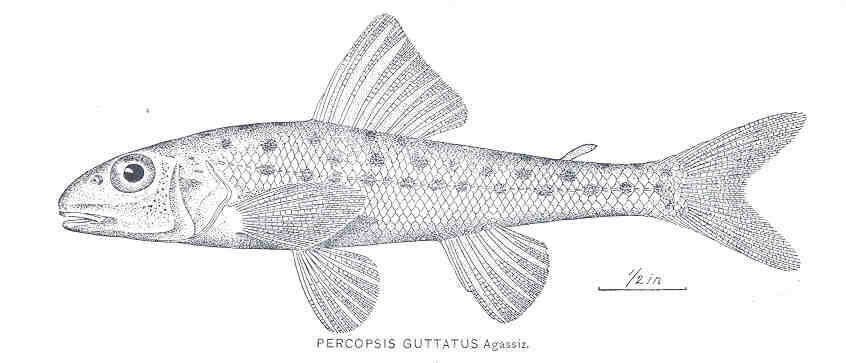
Percopsiformes
The Percopsiformes are a small order of freshwater teleost fishes measuring less than in length, comprising the trout-perch and its allies. It contains just ten extant species, grouped into seven genera and three families. Five of these genera are monotypic.
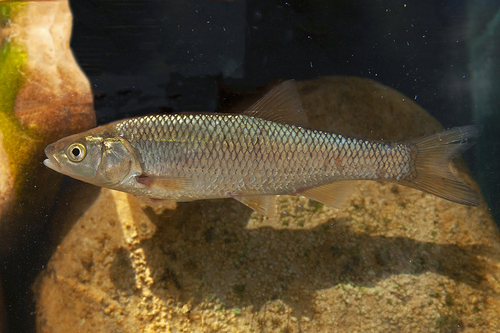
Squalus
Squalus is a genus of dogfish sharks in the family Squalidae. Commonly known as spurdogs, these sharks are characterized by smooth dorsal fin spines, teeth in upper and lower jaws similar in size, caudal peduncle with lateral keels; upper precaudal pit usually present, and caudal fin without subterminal notch. In spurdogs, the hyomandibula (the bone connecting the braincase to the jaws) is oriented at a right angle to the neurocranium, while in other sharks, the hyomandibula runs more parallel to the body. This led some to think that the upper jaw of Squalus would not be as protractile as the
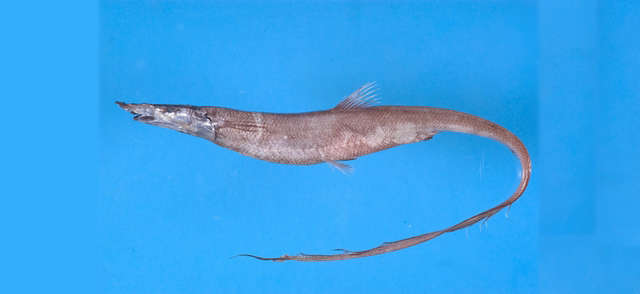
Halosaur
Halosaurs are eel-shaped fishes found only at great ocean depths. As the family Halosauridae, halosaurs are one of two families within the order Notacanthiformes; the other being the deep-sea spiny eels, Notacanthidae. Halosaurs are thought to have a worldwide distribution, with some 17 species in three genera represented. Only a handful of specimens have been observed alive, all in chance encounters with remotely operated underwater vehicles.

Chlamydoselachus
Chlamydoselachus is a genus of sharks and the sole extant member of the family Chlamydoselachidae, in the order Hexanchiformes. It contains two extant and four extinct species. The most widely known species still surviving is the frilled shark (Chlamydoselachus anguineus). It is known as a living fossil, along with Chlamydoselachus africana, also known as the southern African frilled shark, which is only found along coastal areas of South Africa. The only two extant species of this genus are deep-sea creatures which are typically weakened in areas closer to the surface. While the two extant sp

Coryphoideae
The Coryphoideae is one of five subfamilies in the palm family, Arecaceae. It contains all of the genera with palmate leaves, excepting Mauritia, Mauritiella and Lepidocaryum, all of subfamily Calamoideae, tribe Lepidocaryeae, subtribe Mauritiinae. The subfamily comprises approximately 46 genera and more than 400 species, with members occurring across tropical, subtropical, and warm temperate regions worldwide, best known for their palmateor costapalmate (“fan”) leaves. Historically, this leaf form played a disproportionate role in palm classification, leading to the long-standing assumption t
Diplomystidae
REDIRECT Diplomystes

Osmundastrum cinnamomeum
species of plant

Geodia
Geodia is a genus of sea sponge belonging to the family Geodiidae. It is the type genus of its taxonomic family.

Crocodyloidea
Crocodyloidea is one of three superfamilies of crocodilians, the other two being Alligatoroidea and Gavialoidea, and it includes the crocodiles. Crocodyloidea may also include the extinct Mekosuchinae, native to Australasia from the Eocene to the Holocene, although this is disputed.

Munidopsis
Munidopsis is a genus of squat lobster. It is the second largest of all the genera of squat lobsters, after Munida, with over 200 species. Its members are mainly found on continental slopes and on abyssal plains. A few fossil species are also known, including specimens from the Campanian (Cretaceous).

Platynota
Platynota is a polyphyletic group of anguimorph lizards and thus belongs to the order Squamata of the class Reptilia. Since it was named in 1839, it has included several groups, including monitor lizards, snakes, mosasaurs, and helodermatids. Its taxonomic use still varies, as it is sometimes considered equivalent to the group Varanoidea and other times viewed as a distinct group. It is phylogenetically defined as a clade containing Varanidae (the monitor lizards). It also includes many extinct species.
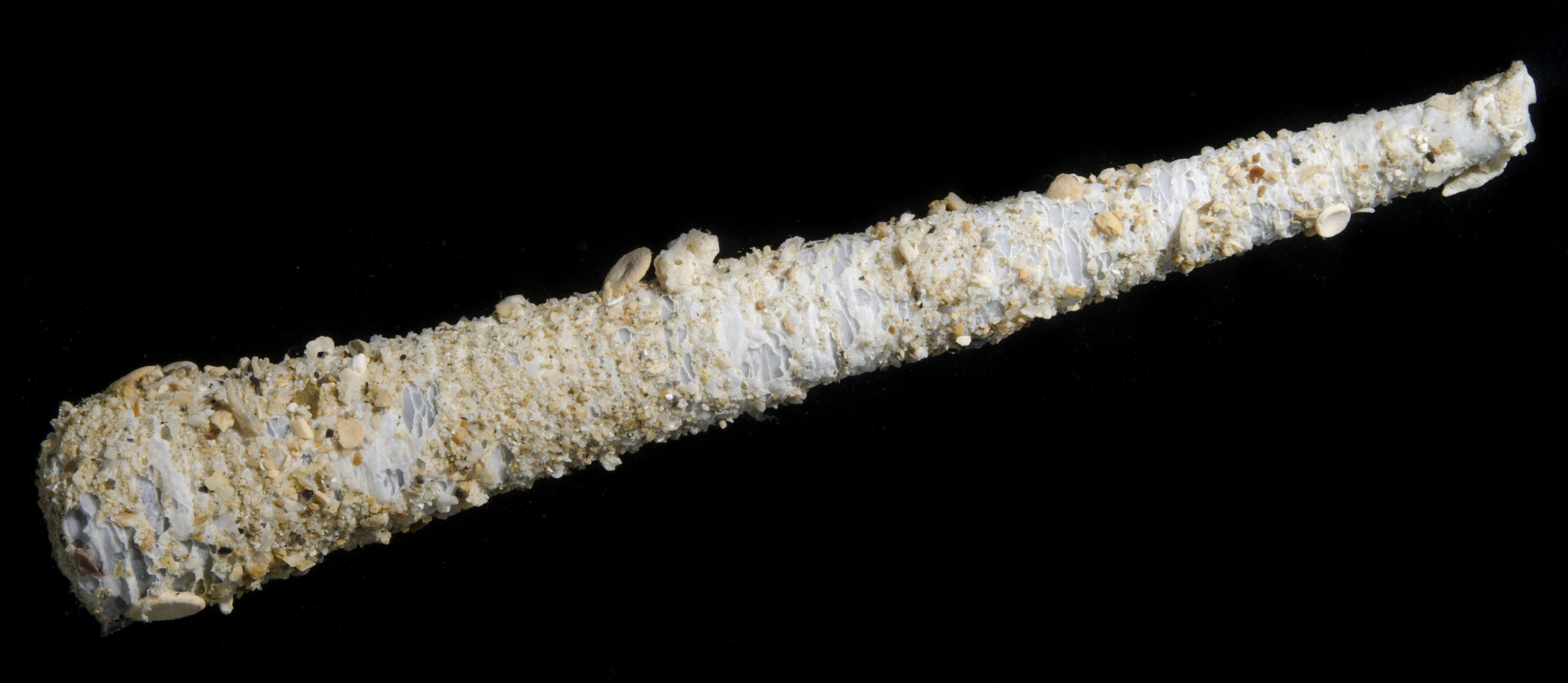
Clavagellidae
Clavagellidae is a family of very unusual marine bivalves of the order Anomalodesmata.
Gruimorphae
Gruimorphae is a taxon of birds that contains the orders Charadriiformes (plovers, gulls, and allies) and Gruiformes (cranes and rails) identified by molecular analysis. This grouping has had historical support, as various charadriiform families such as the families Pedionomidae and Turnicidae were classified as gruiforms. It may also have support from the fossil record since the discovery of Nahmavis from the Early Eocene of North America.
Pterasteridae
Pterasteridae is a family of sea stars in the order Velatida, consisting of eight genera.
Globidonta
Globidonta is a clade of alligatoroids that includes alligators, caimans, and closely related extinct forms. It is defined as a stem-based clade including Alligator mississippiensis (the American Alligator) and all forms more closely related to it than to Diplocynodon. The group's fossil range extends back into the Campanian stage of the Late Cretaceous with early alligatoroids such as Albertochampsa and Brachychampsa. Extinct globidontans were particularly common in North America and Eurasia, and their modern range also includes South America.
Gruae
Gruae is a taxon of birds that contains the order Opisthocomiformes (hoatzin) and Gruimorphae (shorebirds and rails) identified in 2014 by genome analysis. Previous studies have placed the Hoatzin in different parts of the bird family tree; however, despite its unusual and primitive morphology, genetic studies have shown the hoatzin is not as primitive or as ancient as once thought, and that it could be a very derived bird that reverted to or retains some plesiomorphic traits.