Category
page 1Extant Jurassic first appearances

Mosquito
Mosquitoes, the Culicidae, are a family of small flies consisting of 3,600 species. The word mosquito (formed by mosca and diminutive -ito) is Spanish and Portuguese for little fly. Mosquitoes have a slender, segmented body, one pair of wings, three pairs of long hair-like legs, and specialized, highly elongated, piercing-sucking mouthparts. All mosquitoes drink nectar from flowers; females of many species have adapted to also drink blood. The group diversified during the Cretaceous period. Evolutionary biologists view mosquitoes as micropredators, small animals that parasitise larger ones by
.jpg)
Brachyura
thumb|Gecarcinus quadratus, a [[land crab from Central America]]

wasps
A wasp is any insect of the narrow-waisted suborder Apocrita of the order Hymenoptera which is neither a bee nor an ant; this excludes the broad-waisted sawflies (Symphyta), which look somewhat like wasps, but are in a separate suborder. The wasps do not constitute a clade, a complete natural group with a single ancestor, as bees and ants are deeply nested within the wasps, having evolved from wasp ancestors. Wasps that are members of the clade Aculeata can sting their prey.

Tettigoniidae
Insects in the family Tettigoniidae are commonly called katydids (especially in North America) or bush crickets. They have previously been known as "long-horned grasshoppers". More than 8,000 species are known. Part of the suborder Ensifera, the Tettigoniidae are the only extant (living) family in the superfamily Tettigonioidea.

Embioptera
The order Embioptera, commonly known as webspinners or footspinners, are a small group of mostly tropical and subtropical insects, classified under the subclass Pterygota. The order has also been called Embiodea or Embiidina. More than 400 species in 11 families have been described, the oldest known fossils of the group being from the mid-Jurassic. Species are very similar in appearance, having long, flexible bodies, short legs, and only males having wings.

Mytilus
genus of edible saltwater mussels
.jpg)
Holostei
Holostei is a group of ray-finned bony fish. It is divided into two major clades, the Halecomorphi, represented by the single living genus, Amia with two species, the bowfins (Amia calva and Amia ocellicauda), as well as the Ginglymodi, the sole living representatives being the gars (Lepisosteidae), represented by seven living species in two genera (Atractosteus, Lepisosteus). The earliest members of the clade, which are putative "semionotiforms" such as Acentrophorus and Archaeolepidotus, are known from the Middle to Late Permian and are among the earliest known neopterygians.

Sequoia
genus of plants

Ginkgoaceae
The Ginkgoaceae are a family of gymnosperms which appeared during the Mesozoic Era, of which the only extant representative is Ginkgo biloba, which is for this reason sometimes regarded as a living fossil. Formerly, however, there were several other genera, and forests of ginkgo existed. Because leaves can take such diverse forms within a single species, these are a poor measure of diversity, although differing structures of wood point to the existence of diverse ginkgo forests in ancient times.
%20W%20IMG%202806.jpg)
golden silk orb-weaver
Nephila is a genus of araneomorph spiders noted for the impressive webs they weave. Nephila consists of numerous species found in warmer regions around the world, although some species formerly included in the genus have been moved to Trichonephila. They are commonly called golden silk orb-weavers, golden orb-weavers, giant wood spiders, or banana spiders.
.jpg)
Hemerobiidae
thumb|Campodeiform larva of Micromus

Dicksonia
Dicksonia is a genus of tree ferns in the order Cyatheales. It is regarded as related to Cyathea, but is considered to retain more primitive traits, dating back at least to the Jurassic and Cretaceous periods. The fossil record includes stems, pinnules, and spores.
Myrmecophilidae
family of orthopterans

Sabellidae
thumb|Sabellidae tubes at Bremerhaven
Sabellidae, or feather duster worms, are a family of marine polychaete tube worms characterized by protruding feathery branchiae. Sabellids build tubes out of a tough, parchment-like exudate, strengthened with sand and bits of shell. Unlike the other sabellids, the genus Glomerula secretes a tube of calcium carbonate instead. Sabellidae can be found in subtidal habitats around the world. Their oldest fossils are known from the Early Jurassic.

Goniasteridae
Goniasteridae (the biscuit stars) constitute the largest family of sea stars, included in the order Valvatida. They are mostly deep-dwelling species, but the family also include several colorful shallow tropical species.

Amiidae
The Amiidae are a family of basal ray-finned fishes. The bowfin and the eyespot bowfin (Amia ocellicauda) are the only two species to survive today, although additional species in all four subfamilies of Amiidae are known from Jurassic, Cretaceous, and Eocene fossils.
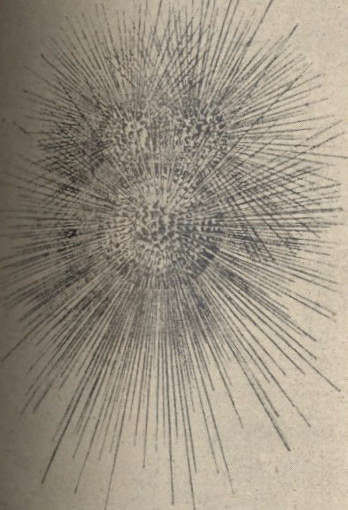
Globigerina
Globigerina () is a genus of planktonic Foraminifera, in the order of Rotaliida. It has populated the world's oceans since the Middle Jurassic.

Mogoplistidae
Mogoplistidae is a family of scaly crickets and allies within the superfamily Grylloidea. Considered to be monophyletic, a sister taxon to the Gryllidae crickets. This family consists of more than 370 species worldwide; 20 species in 4 genera occur in North America and this family includes the scaly crickets of Europe.
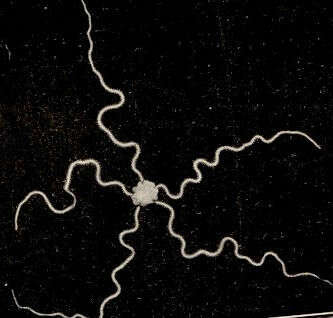
Amphiuridae
Amphiuridae (commonly called long-armed burrowing brittle stars or burrowing brittle stars) are a large family of brittle stars of the suborder Gnathophiurina. Some species are used to study echinoderm development (e.g. Amphipholis kochii and Amphioplus abditus) and bioluminescence (the dwarf brittle star, Amphipholis squamata).

Lima
genus of molluscs

Alvinocarididae
Alvinocarididae is a family of shrimp, originally described by M. L. Christoffersen in 1986 from samples collected by DSV Alvin, from which they derive their name. Shrimp of the family Alvinocarididae generally inhabit deep sea hydrothermal vent regions, and hydrocarbon cold seep environments. Carotenoid pigment has been found in their bodies. The family Alvinocarididae comprises 7 extant genera.
Dromiacea
Dromiacea is a group of crabs, ranked as a section. It contains 240 extant and nearly 300 extinct species. Dromiacea is the most basal grouping of Brachyura crabs, diverging the earliest in the evolutionary history, around the Late Triassic or Early Jurassic. Below is a cladogram showing Dromiacea's placement within Brachyura:
Cytherellidae
Cytherellidae is the only living family of the ostracod order Platycopida. Eyes are absent. It contains 11 genera:
†Abursus Loranger, 1954
†Alveus Hamilton, 1942
†Ankumia Veen, 1932
Cytherella Jones, 1849
Cytherelloidea Alexander, 1929
†Geelongella McKenzie, Reyment & Reyment, 1991
Grammcythella Swanson et al., 2005
Inversacytherella Swanson et al., 2005
Keijcyoidea Malz, 1981
Platella Coryell & Fields, 1937
†Staringia Veen, 1936

Barbatia
Barbatia is a genus of "bearded" ark clams, marine bivalve mollusks in the family Arcidae, the ark clams.

Anaxyelidae
Anaxyelidae is a family of incense cedar wood wasps in the order Hymenoptera. It contains only one living genus, Syntexis, which has only a single species, native to Western North America. Fossils of the family extend back to the Middle Jurassic, belonging to over a dozen extinct genera, with a particularly high diversity during the Early Cretaceous. Syntexis lay eggs in the sapwood of conifers, preferring recently burnt wood.

Terebratellidae
Terebratellidae is an extant family of brachiopods with a fossil record dating back to the Jurassic.

Limopsis
Limopsis is a genus of bivalves belonging to the family Limopsidae.

Neritopsis
Neritopsis is a genus of sea snails in the subfamily Neritopsinae of the family Neritopsidae.