Category
page 1Fern genera

Equisetum
Equisetum (; horsetail) is the only living genus in Equisetaceae, a family of vascular plants that reproduce by spores rather than seeds.

Adiantum
Adiantum (), the maidenhair fern (not to be confused with the similar-looking maidenhair spleenwort fern), is a genus of about 250 species of ferns in the subfamily Vittarioideae of the family Pteridaceae, though some researchers place it in its own family, Adiantaceae. The genus name comes from Greek, meaning "unwetted", referring to the fronds' ability to shed water without becoming wet.

Asplenium
Asplenium is a genus of about 700 species of ferns, often treated as the only genus in the family Aspleniaceae, though other authors consider Hymenasplenium separate, based on molecular phylogenetic analysis of DNA sequences, a different chromosome count, and structural differences in the rhizomes. The type species for the genus is Asplenium marinum.
Azolla
Azolla (commonly called mosquito fern, water fern, and fairy moss) is a genus of seven species of aquatic ferns in the family Salviniaceae. They are extremely reduced in form and specialized, having a significantly different appearance to other ferns and more resembling some mosses or even duckweeds. Azolla filiculoides is one of two fern species for which a reference genome has been published. It is believed that this genus grew so prolifically during the Eocene (and thus absorbed such a large amount of carbon) that it triggered a global cooling event that has lasted to the present.

Polypodium
Polypodium is a genus of ferns in the family Polypodiaceae, subfamily Polypodioideae, according to the Pteridophyte Phylogeny Group classification of 2016 (PPG I). The genus is widely distributed throughout the world, with the highest species diversity in the tropics. The name is derived from Ancient Greek poly ("many") + podion ("little foot"), on account of the foot-like appearance of the rhizome and its branches. They are commonly called polypodies or rockcap ferns, but for many species unique vernacular names exist.

Dryopteris
The moth genus Dryopteris is now considered a junior synonym of Oreta.
Ophioglossum
Ophioglossum, the '''adder's-tongue ferns', is a genus of about 50 species of ferns in the family Ophioglossaceae. The genus name comes from Ancient Greek ὄφις (óphis), meaning "snake", and γλῶσσα (glôssa''), meaning "tongue". Their cosmopolitan distribution is mainly in tropical and subtropical habitats.

Botrychium
Botrychium is a genus of ferns, seedless vascular plants in the family Ophioglossaceae. Botrychium species are known as moonworts. They are small, with fleshy roots, and reproduce by spores shed into the air. One part of the leaf, the trophophore, is sterile and fernlike; the other, the sporophore, is fertile and carries the clusters of sporangia or spore cases. Some species only occasionally emerge above ground and gain most of their nourishment from an association with mycorrhizal fungi.
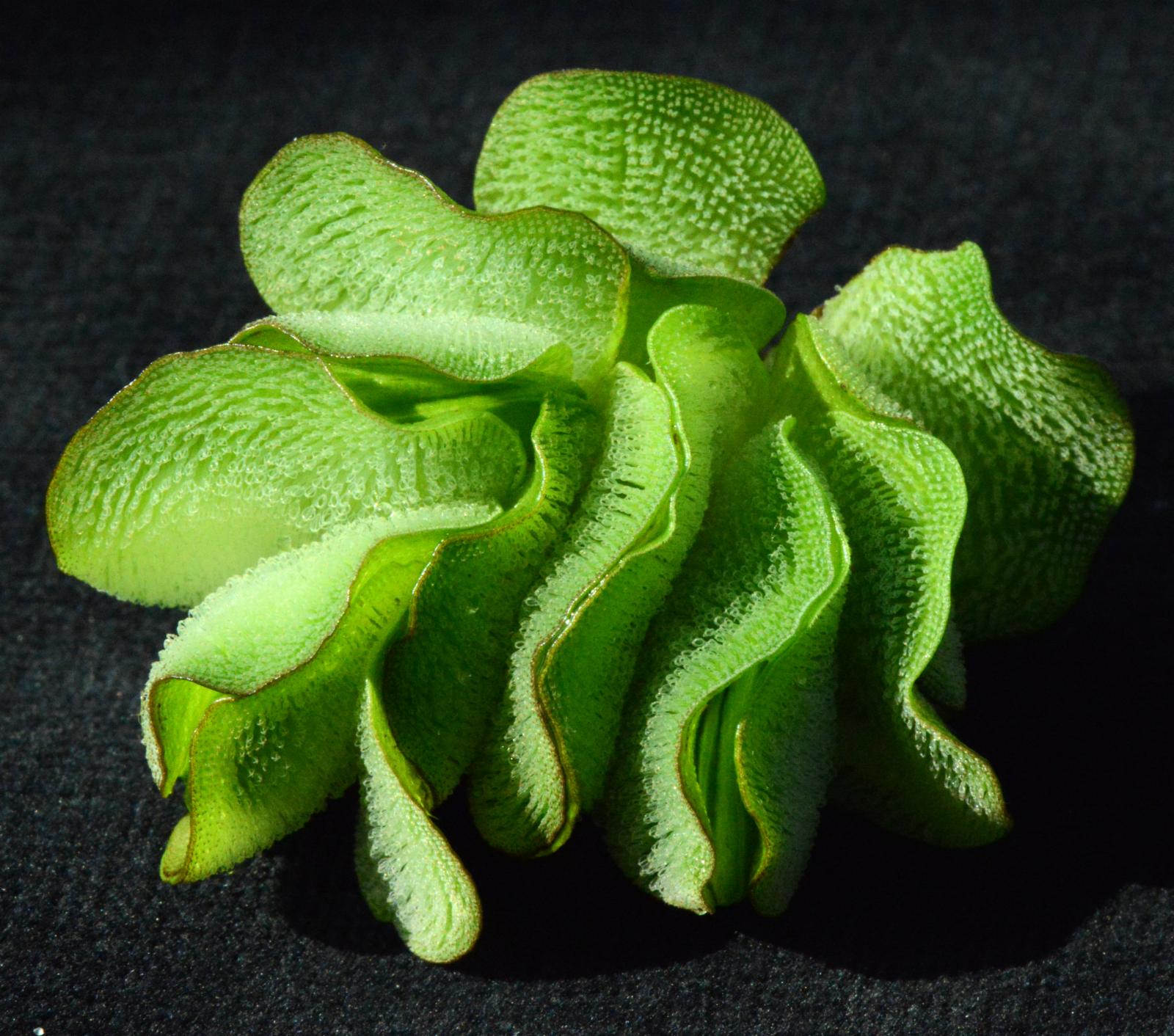
Salvinia
Salvinia or watermosses is a genus of free-floating aquatic ferns in the family Salviniaceae. The genus is named in honor of 17th-century Italian naturalist Anton Maria Salvini, and the generic name was first published in 1754 by French botanist Jean-François Séguier in Plantae Veronenses, a description of the plants found around Verona. Twelve species are recognized, at least three of which (S. molesta, S. herzogii, and S. minima) are believed to be hybrids in part because their sporangia are found to be empty.

Cyathea
Cyathea is a genus of tree ferns, the type genus of the fern order Cyatheales.
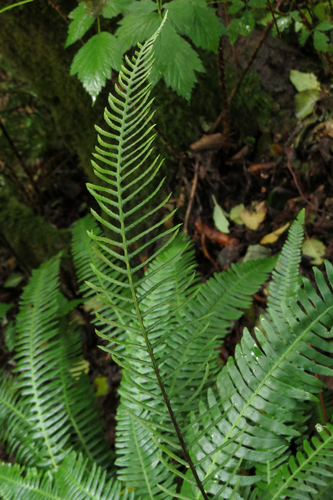
Blechnum
Blechnum, known as hard fern, is a genus of ferns in the family Blechnaceae, subfamily Blechnoideae, according to the Pteridophyte Phylogeny Group classification of 2016 (PPG I). Two very different circumscriptions of the genus are used by different authors. In the PPG I system, based on Gasper et al. (2016), Blechnum is one of 18 genera in the subfamily Blechnoideae, and has about 30 species. Other sources use a very broadly defined Blechnum s.l., including accepting only two other genera in the subfamily. The genus then has about 250 species. In the PPG I circumscription, the genus is mostly

Platycerium
Platycerium is a genus of about 18 fern species in the polypod family, Polypodiaceae. Ferns in this genus are widely known as staghorn or elkhorn ferns due to their uniquely shaped fronds. This genus is epiphytic and is native to tropical and temperate areas of South America, Africa, Southeast Asia, Australia, and New Guinea.

Athyrium
thumb|19th-century illustration of A. filix-femina

Marsilea
Marsilea is a genus of approximately 65 species of aquatic ferns of the family Marsileaceae. The name honours Italian naturalist Luigi Ferdinando Marsili (1656–1730).

Osmunda
thumb|right|upright|Young plant

Polystichum
Polystichum is a genus of ferns in the family Dryopteridaceae, subfamily Dryopteridoideae, according to the Pteridophyte Phylogeny Group classification of 2016 (PPG I). The genus has about 500 species and has a cosmopolitan distribution. The highest diversity is in eastern Asia, with about 208 species in China alone; the region from Mexico to Brazil has at least 100 additional species; Africa (at least 17 species), North America (at least 18 species), and Europe (at least 5 species) have much lower diversity. Polystichum species are terrestrial or rock-dwelling ferns of warm-temperate and mont
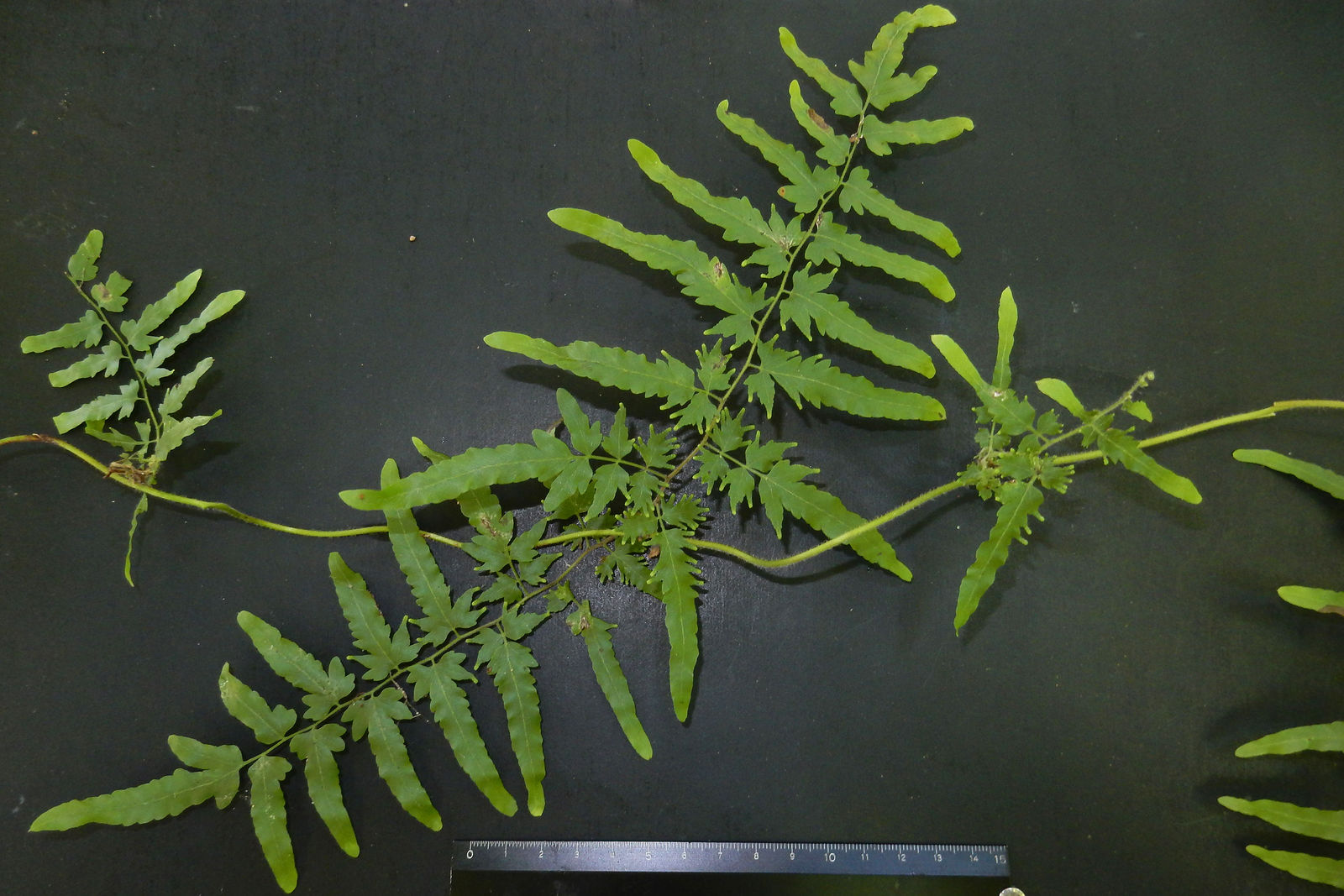
Lygodium
Lygodium (climbing fern) is a genus of about 40 species of ferns, native to tropical regions across the world, with a few temperate species in eastern Asia and eastern North America. It is the sole genus in the family Lygodiaceae in the Pteridophyte Phylogeny Group classification of 2016 (PPG I). Alternatively, the genus may be placed as the only genus in the subfamily Lygodioideae of a more broadly defined family Schizaeaceae, the family placement used in Plants of the World Online . Per recent molecular evidence, Lygodiaceae is thought to have diverged relatively early from the other members
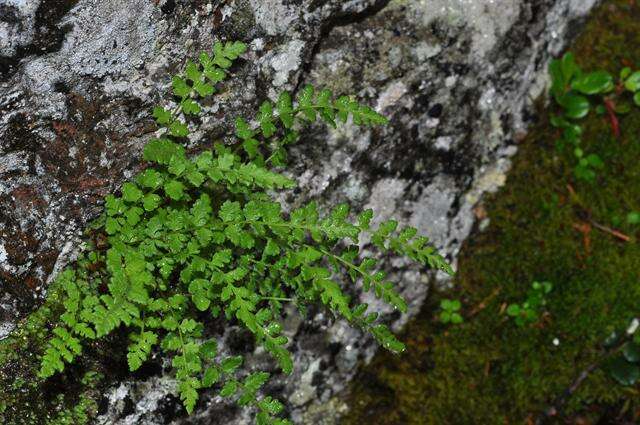
Woodsia
Woodsia is a genus of ferns in the family Woodsiaceae. Species of Woodsia are commonly known as cliff ferns. In the Pteridophyte Phylogeny Group classification of 2016 (PPG I), it was the only genus in the family Woodsiaceae. In 2020, Physematium was split off from Woodsia on the basis of molecular phylogenetic evidence. , Plants of the World Online continued to treat Physematium as a synonym of Woodsia.

Dicksonia
Dicksonia is a genus of tree ferns in the order Cyatheales. It is regarded as related to Cyathea, but is considered to retain more primitive traits, dating back at least to the Jurassic and Cretaceous periods. The fossil record includes stems, pinnules, and spores.
.jpg)
Pteris
Pteris (brake) is a genus of about 300 species of ferns in the subfamily Pteridoideae of the family Pteridaceae. They are native to tropical and subtropical regions, southward to New Zealand, Australia, and South Africa, north to Japan and North America. 78 species (35 endemic) are found in China. Some species of Pteris have considerable economic and ecological value, such as Pteris multifida, Pteris ensiformis, Pteris vittata can be used for ornamental purposes; as a hyperaccumulator, Pteris multifida and Pteris vittata can be used to control soil pollution.
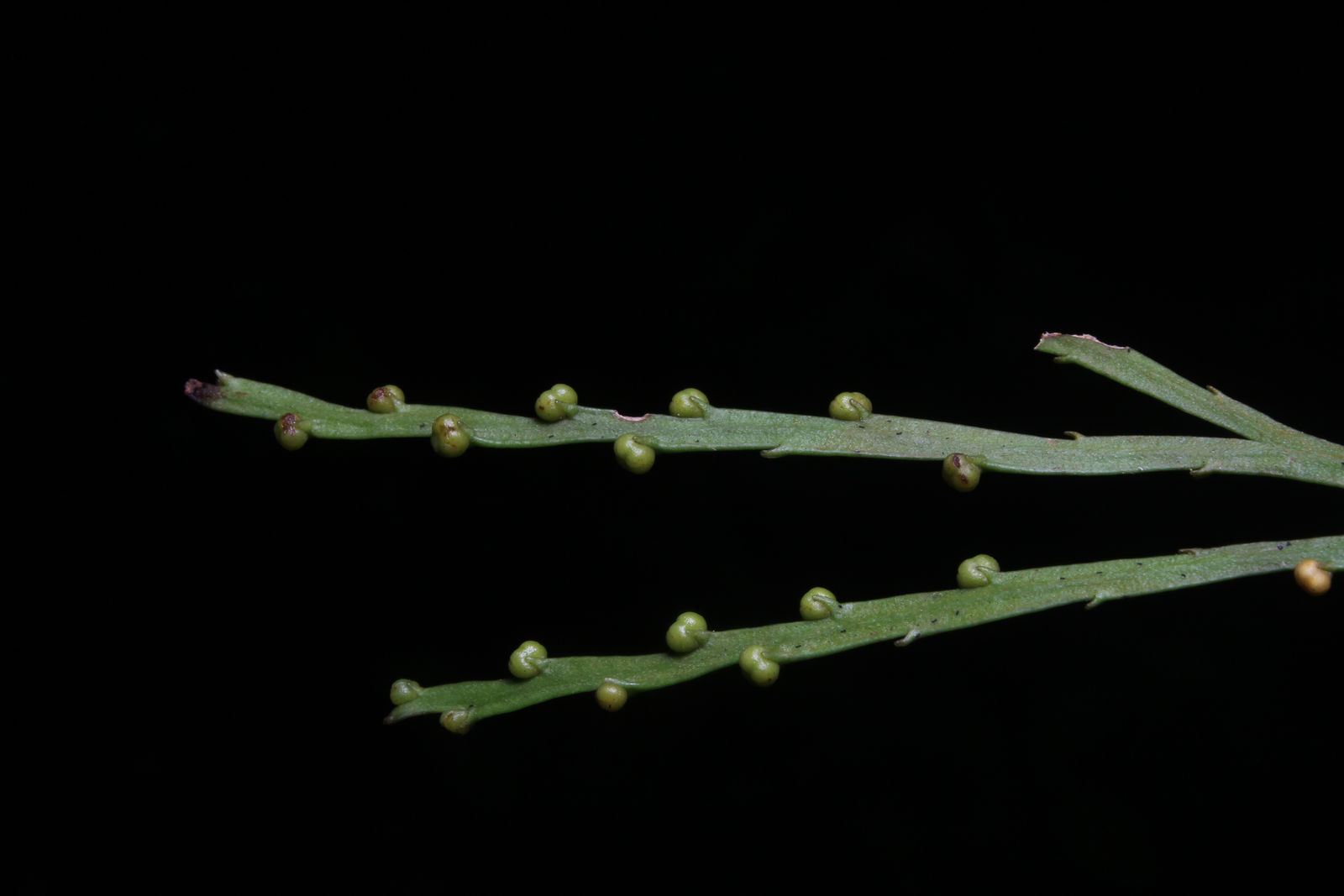
Psilotum
Psilotum is a genus of fern-like vascular plants. It is one of two genera in the family Psilotaceae commonly known as whisk ferns, the other being Tmesipteris. Plants in these two genera were once thought to be descended from the earliest surviving vascular plants, but more recent phylogenies place them as basal ferns, as a sister group to Ophioglossales. They lack true roots, and leaves are very reduced, the stems being the organs containing photosynthetic and conducting tissue. There are only two species in Psilotum and a hybrid between the two. They differ from those in Tmesipteris in havin
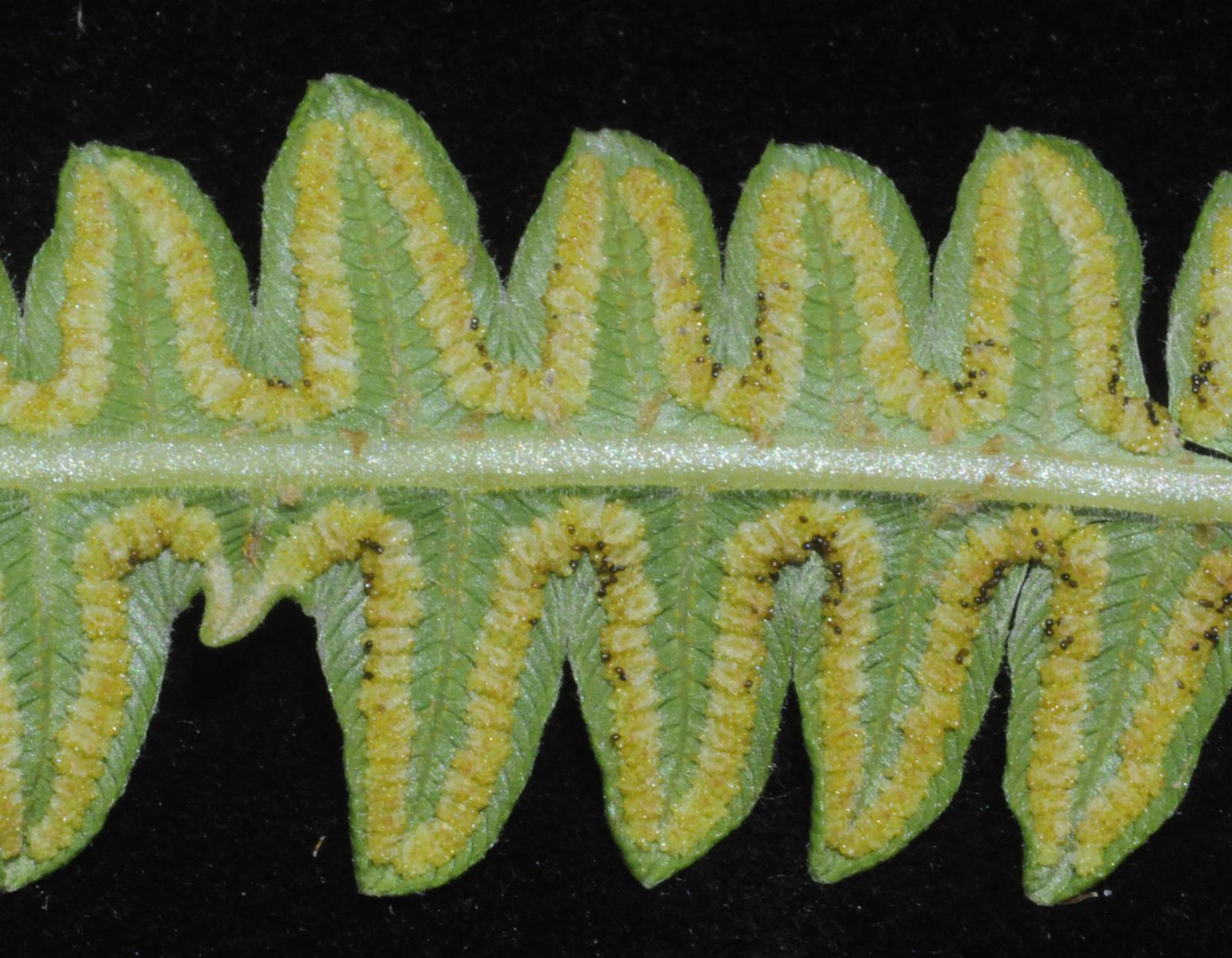
Thelypteris
Thelypteris (maiden ferns) is a genus of ferns in the subfamily Thelypteridoideae, family Thelypteridaceae, order Polypodiales. Two radically different circumscriptions of the genus are in use . In the Pteridophyte Phylogeny Group classification of 2016 (PPG I), the genus is a very small one with about two species. In other approaches, the genus is the only one in the subfamily Thelypteridoideae, and so includes between 875 and 1083 species.

Nephrolepis
Nephrolepis is a genus of about 30 species of ferns. It is the only genus in the family Nephrolepidaceae, placed in the suborder Aspleniineae (eupolypods I) of the order Polypodiales in the Pteridophyte Phylogeny Group classification of 2016 (PPG I). (It is placed in the Dryopteridaceae in some other classifications.) Species in this genus include plants commonly referred to as Boston ferns. The fronds are long and narrow, and once-pinnate, in the case of one Bornean species reaching thirty feet (nine meters) in length.

Cystopteris
Cystopteris is a genus of ferns in the family Cystopteridaceae. These are known generally as bladderferns or fragile ferns. They grow in temperate areas worldwide. This is a very diverse genus and within a species individuals can look quite different, especially in harsh environments where stress stunts their growth. They hybridize easily with each other and identifying an individual can be challenging. In general these are rhizomatous perennials which grow in rocks or soil. Their leaves are multiply pinnate, in that each leaflet is divided into smaller parts. The sori are usually rounded and

Gymnocarpium
Gymnocarpium is a small genus of ferns, called oak ferns. It was once placed with various other groups, including the dryopteroid ferns and the athyrioid ferns. Cladistic analysis has demonstrated that Gymnocarpium and Cystopteris form a natural but relatively primitive clade that is basal to the asplenioid, thelypterioid, and athyrioid ferns comprehensively.

Cibotium
Cibotium (from Greek , kibṓtion, "little chest" or "box"), also known as manfern, is a genus of 11 species of tropical tree ferns. It is the only genus in family Cibotiaceae in the Pteridophyte Phylogeny Group classification of 2016 (PPG I). Alternatively, the family may be treated as the subfamily Cibotioideae of a very broadly defined family Cyatheaceae, the family placement used for the genus in Plants of the World Online .

Pilularia
Pilularia or pillworts is a genus of unusual ferns of family Marsileaceae distributed in North Temperate regions, Ethiopian mountains, and the southern hemisphere in Australia, New Zealand, and western South America.
.jpg)
Ceratopteris
Ceratopteris is the only genus among homosporous ferns that is exclusively aquatic. It is pan-tropical and classified in the Parkerioideae subfamily of the family Pteridaceae.
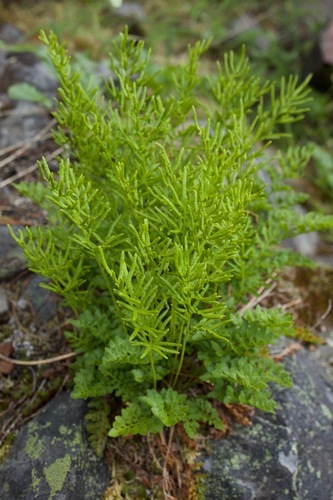
Cryptogramma
Cryptogramma is a genus of ferns known commonly as rockbrakes or parsley ferns. They are one of the three genera in the Cryptogrammoideae subfamily of the Pteridaceae. Cryptogramma ferns can be found in temperate regions on several continents worldwide. These ferns have two kinds of leaves which often look so different that at first glance they appear to belong to different plants. The fertile leaves have long, narrow, bumpy segments with undersides covered thickly in sporangia. The edges of the segments may curl back to cover the sporangia, forming a false indusium. The sterile leaves have th
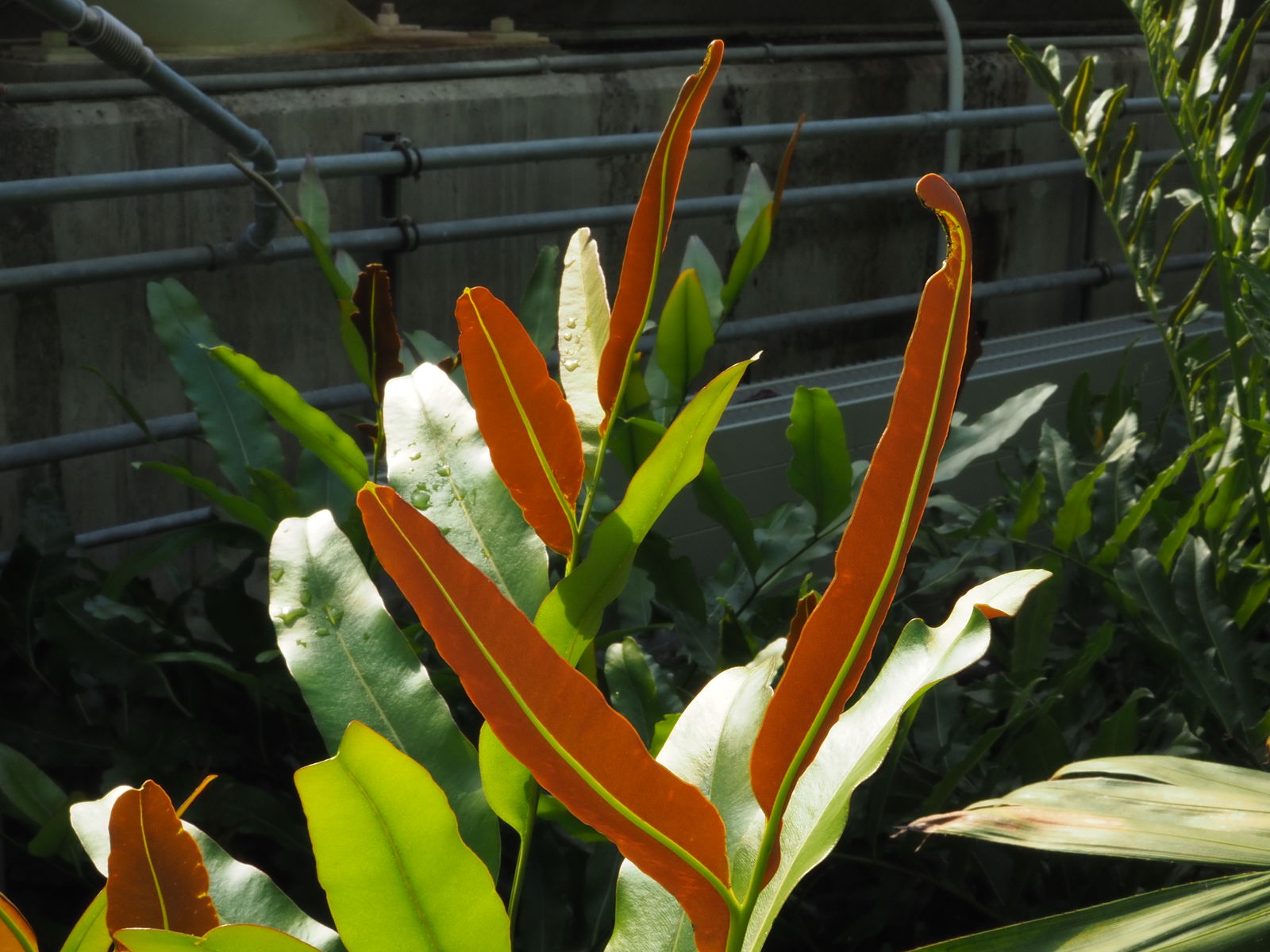
Acrostichum
Acrostichum is a fern genus in the Parkerioideae subfamily of the Pteridaceae. It was one of the original pteridophyte genera delineated by Linnaeus. It was originally drawn very broadly, including all ferns that had sori apparently "acrostichoid", or distributed in a uniform mass across the back of the frond, rather than organized in discrete sori. This led Linnaeus to include such species as Asplenium platyneuron in the genus, because the specimen he received had sori so crowded that it appeared acrostichoid.
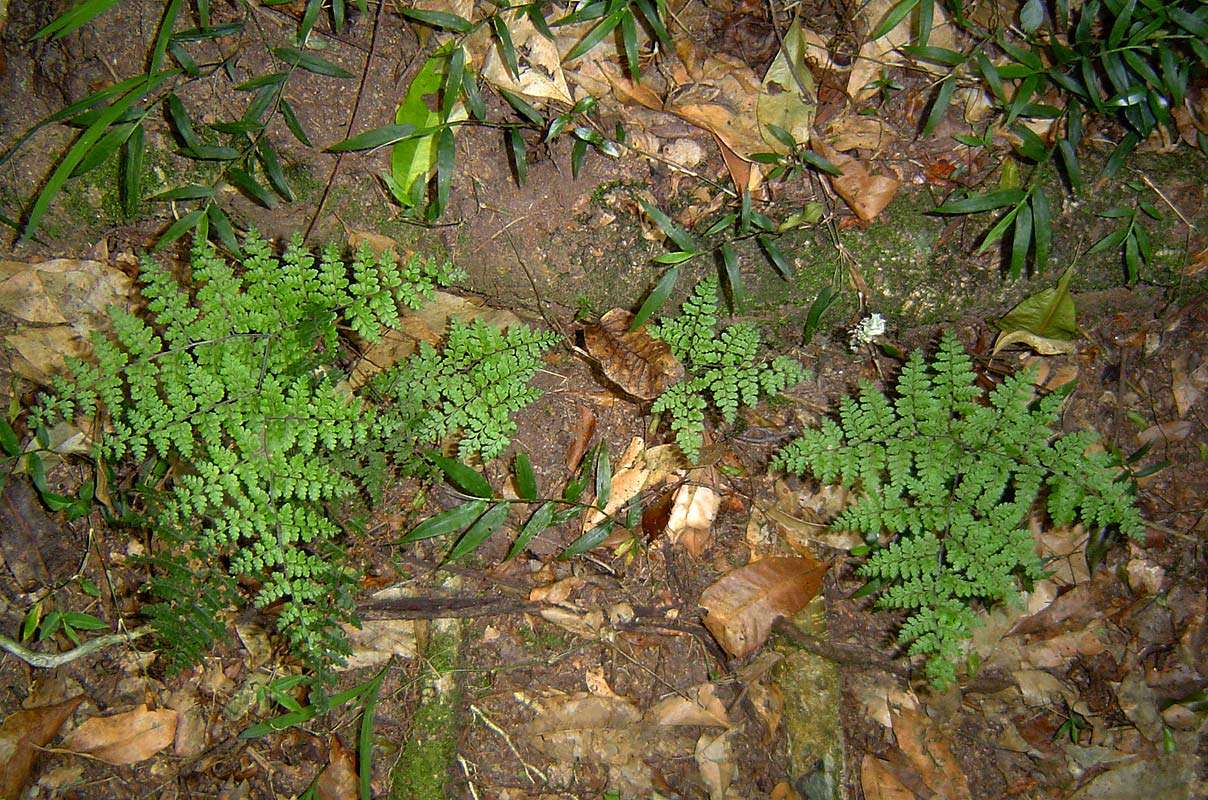
Cheilanthes
Cheilanthes, commonly known as lip ferns, is a genus of about 180 species of rock-dwelling ferns with a cosmopolitan distribution in warm, dry, rocky regions, often growing in small crevices high up on cliffs. Most are small, sturdy and evergreen. The leaves, often densely covered in trichomes, spring directly from the rootstocks. Many of them are desert ferns, curling up during dry times and reviving with the coming of moisture. At the ends of veins sporangia, or spore-bearing structures, are protected by leaf margins, which curl over them.
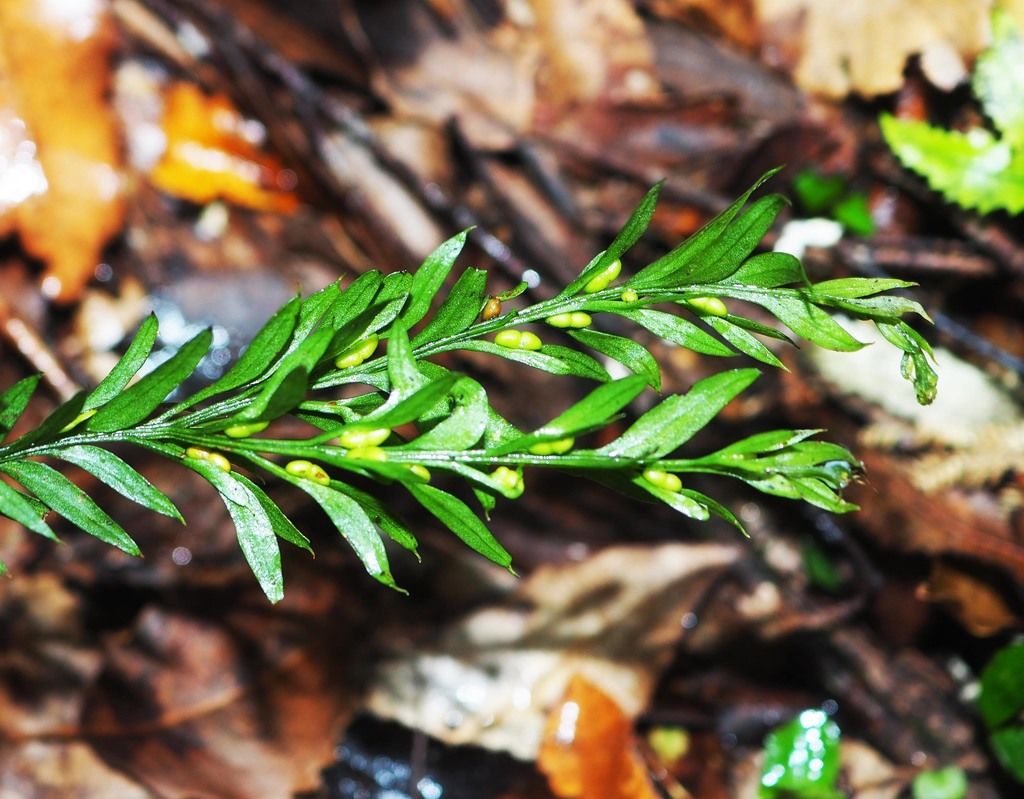
Tmesipteris
Tmesipteris, the hanging fork ferns, is a genus of ferns, one of two genera in the family Psilotaceae, order Psilotales (the other being Psilotum).
Tmesipteris is restricted to certain lands in the Southern Pacific, notably Australia, New Zealand and New Caledonia.
In New Zealand this hanging epiphyte is common in the warm temperate rain forests of both main islands, where it can normally be found as short spiky dark-green fronds (10–15 cm long), often with lighter bag-like sporangia at the bases of some of its "leaves". The plant possesses no true leaves; what appear to be leaves are fla

Phegopteris
Phegopteris is a genus of ferns in the family Thelypteridaceae, subfamily Phegopteridoideae, in the Pteridophyte Phylogeny Group classification of 2016 (PPG I). They are known collectively as the beech ferns. Species are native to Asia, North America and Europe.
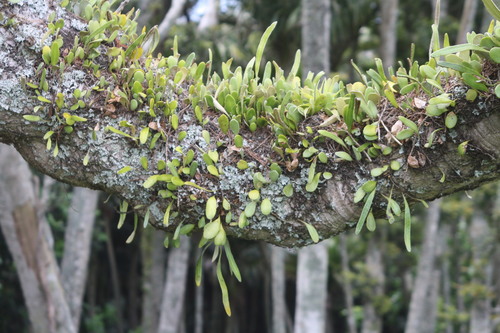
Pyrrosia
Pyrrosia is a genus of about 100 fern species in the polypod family, Polypodiaceae. Like other species in Polypodiaceae, the species of Pyrrosia are generally epiphytic on trees or rocks, a few species are terrestrial. The Latin name of Pyrrosia comes from the Greek pyrrhos (red), which refers to its leaves that are red due to the sporangia.
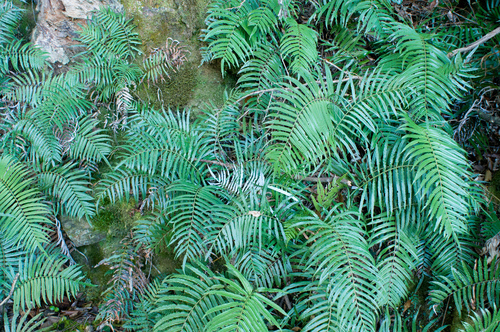
Plagiogyria
Plagiogyria is a genus of ferns, the only genus in family Plagiogyriaceae in the Pteridophyte Phylogeny Group classification of 2016 (PPG I). Alternatively, the family may be treated as the subfamily Plagiogyrioideae of a very broadly defined family Cyatheaceae, the placement used for the genus in Plants of the World Online .

Metaxya
Metaxya is a neotropical genus of ferns in the order Cyatheales. It is the only genus in the family Metaxyaceae in the Pteridophyte Phylogeny Group classification of 2016 (PPG I). Alternatively, the genus may be placed in the subfamily Metaxyoideae of a more broadly defined family Cyatheaceae, the family placement used in Plants of the World Online .

Davallia
thumb|right|245px|Davallia solida var. pyxidata|"Hare's Foot" on sandstone, [[Ku-ring-gai Chase National Park, Australia]]
thumb|245px|Davallia canariensis showing the rhizomes

Oleandra
Oleandra is a genus of ferns. In the Pteridophyte Phylogeny Group classification of 2016 (PPG I), it is the only genus in the family Oleandraceae, which is placed in suborder Polypodiineae, order Polypodiales. Alternatively, the family may be placed in a very broadly defined family Polypodiaceae sensu lato as the subfamily Oleandroideae.
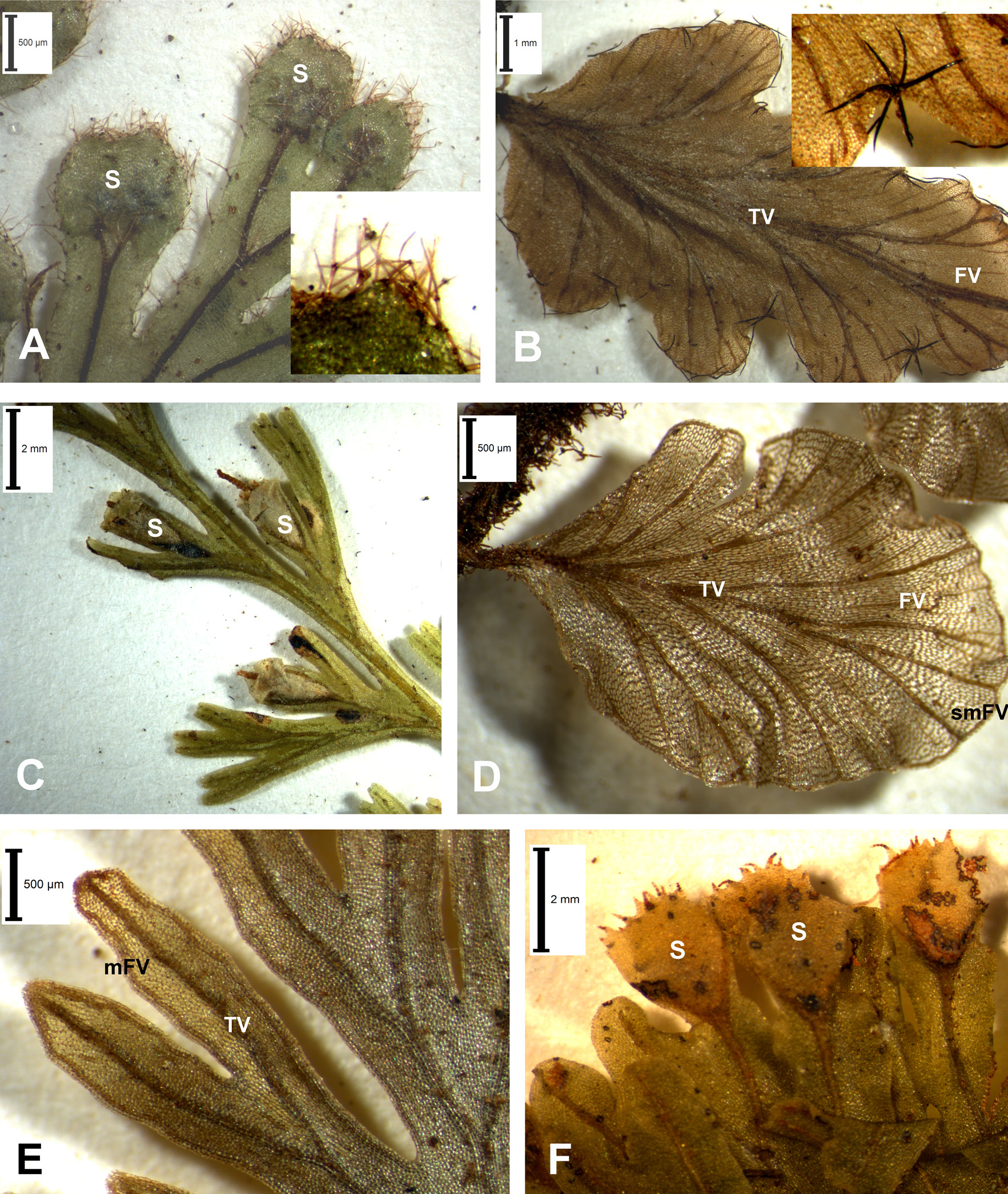
Hymenophyllum
Hymenophyllum is a genus of ferns in the family Hymenophyllaceae. Its name means "membranous leaf", referring to the very thin translucent tissue of the fronds, which gives rise to the common name filmy fern for this and other thin-leaved ferns. The leaves are generally only one cell thick and lack stomata, making them vulnerable to desiccation. Consequently, they are found only in very humid areas, such as in moist forests and among sheltered rocks. They are small and easy to overlook.
.jpg)
Woodwardia
Woodwardia is a genus of ferns in the family Blechnaceae, in the suborder Aspleniineae (eupolypods II) of the order Polypodiales. Species are known as netted-chain ferns. The genus is native to warm temperate and subtropical regions of the Northern Hemisphere. They are large ferns, with fronds growing to 50–300 cm long depending on the species. The fossil record of the genus extends to the Paleocene.
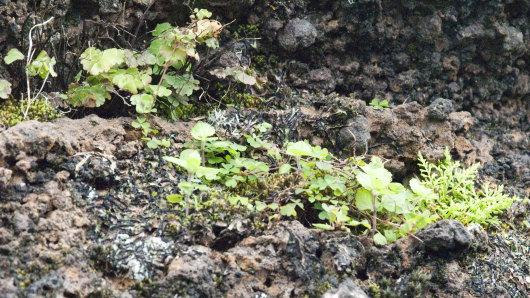
Anogramma
Anogramma is a genus of ferns in the subfamily Pteridoideae of the family Pteridaceae. It contains about ten species, including:
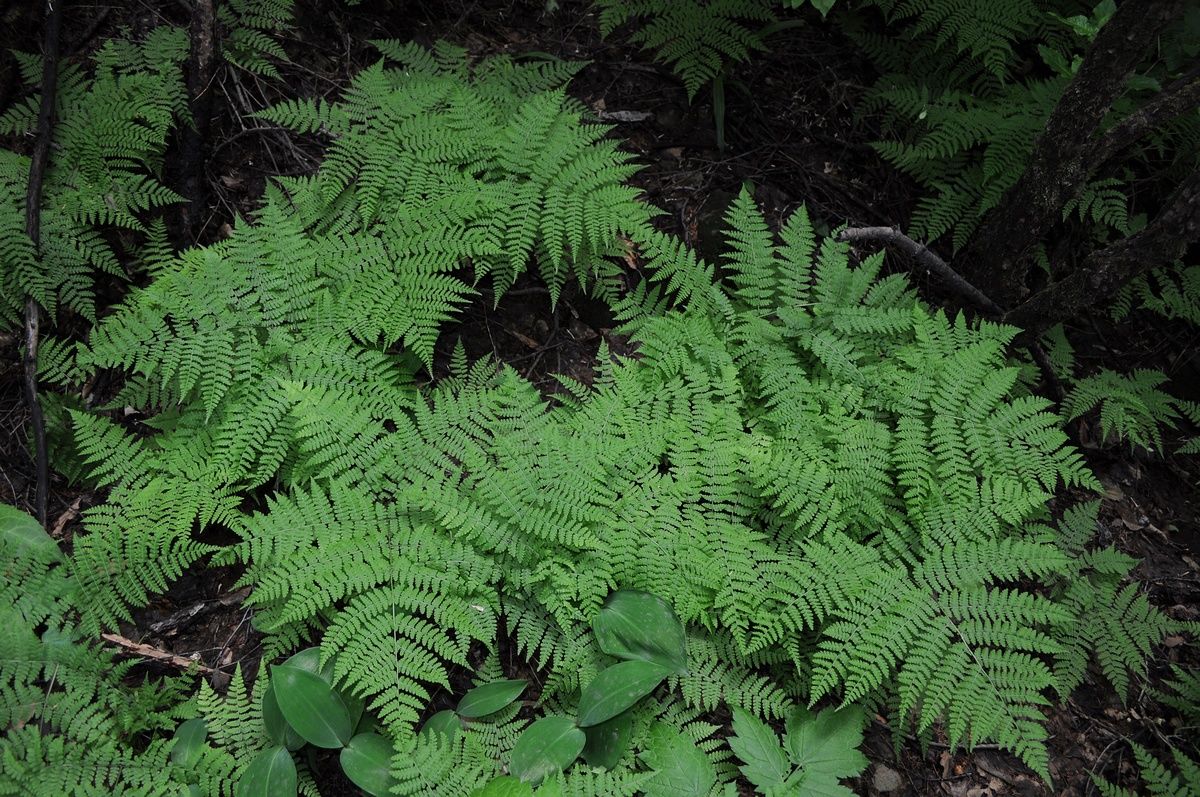
Diplazium
Diplazium is a genus of ferns that specifically includes the approximately 400 known species of twinsorus ferns. The Greek root is diplazein meaning double: the indusia in this genus lie on both sides of the vein. These ferns were earlier considered part of either the Athyriaceae, Dryopteridaceae, Aspleniaceae, or Polypodiaceae families or recognized as belonging to their own taxonomic family. The Pteridophyte Phylogeny Group classification of 2016 (PPG I) places the genus in the Athyriaceae. The taxonomy of the genus is difficult and poorly known, and by 2009 has never been the subject of a c

Drynaria
Drynaria is a genus of ferns in the subfamily Drynarioideae of the family Polypodiaceae. The Pteridophyte Phylogeny Group classification of 2016 (PPG I) refers to it as Aglaomorpha, but that name was subsequently rejected in favor of Drynaria. Species are commonly known as basket ferns. As circumscribed in PPG I, the genus contains around 50 species.
Culcita
genus of plants
Dennstaedtia
Dennstaedtia is a mostly tropical and subtropical group of ferns described as a genus in 1801. Hayscented fern, or cup ferns, are common names for some species in this genus. It includes 58 species native to the tropical Americas, Madagascar, southern and eastern Asia, Australia, New Guinea, and the Pacific Islands.

Trichomanes
Trichomanes is a genus of ferns in the family Hymenophyllaceae, termed bristle ferns. The circumscription of the genus is disputed. All ferns in the genus are filmy ferns, with leaf tissue typically 2 cells thick. This thinness generally necessitates a permanently humid habitat, and makes the fronds somewhat translucent. Because of this membrane-like frond tissue, the plant is prone to drying out. "Filmy ferns" in the taxa Hymenophyllaceae grow in constantly wet environments. Many are found in cloud forests such as "Choco" in Colombia. There are also members of the taxa that can grow submersed
Cyrtomium
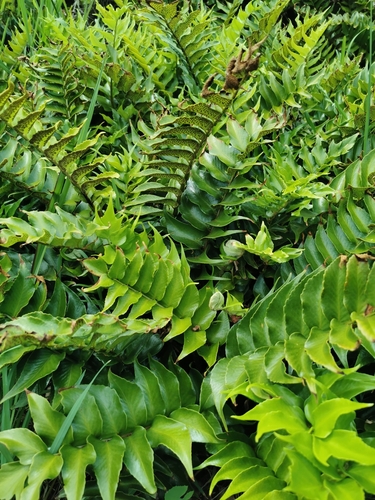
Cyrtomium is a genus of about 35 species of ferns in the family Dryopteridaceae, subfamily Dryopteridoideae, according to the Pteridophyte Phylogeny Group classification of 2016 (PPG I). Species are native to Asia, Africa (including Madagascar), and the Pacific Ocean islands (Hawaii). It is very closely related to the genus Polystichum, with 2016 research suggesting it should be included in a clade sister to Polystichum s.s.

Gaga
genus of plants in the family Pteridaceae
Microsorum
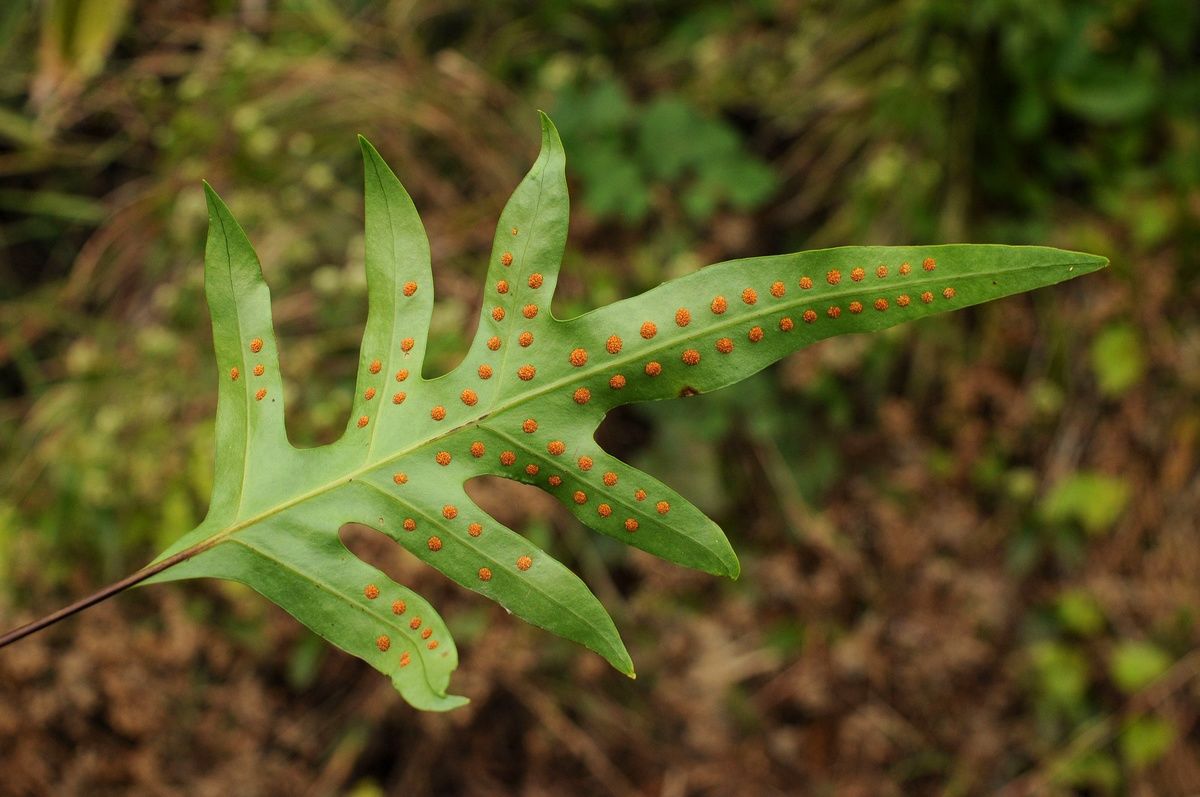
Microsorum is a genus of ferns in the family Polypodiaceae, subfamily Microsoroideae, according to the Pteridophyte Phylogeny Group classification of 2016 (PPG I). The species are tropical. Like most ferns, they grow from rhizomes, rather than roots. The genus name is often misspelled "Microsorium" or "Microsoreum" . It includes some species that are lithophytic rheophytes.

Deparia
Deparia (or the false spleenworts) is a genus of ferns. The Pteridophyte Phylogeny Group classification of 2016 (PPG I) places the genus in the family Athyriaceae, although other sources include it within an expanded Aspleniaceae or Woodsiaceae.

Cyclosorus
Cyclosorus is a genus of ferns in the family Thelypteridaceae, subfamily Thelypteridoideae, in the Pteridophyte Phylogeny Group classification of 2016 (PPG I). Other sources sink Cyclosorus into a very broadly defined genus Thelypteris, or expand the genus to include other genera which PPG I keeps separate. Thus the online Flora of China suggests there are about 250 species compared to the two species suggested in PPG I.

Pellaea
genus of plants
Arachniodes
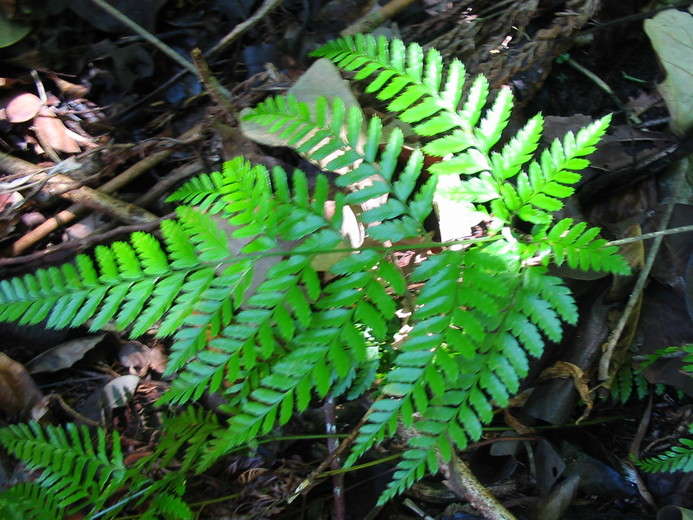
Arachniodes is a fern genus in the family Dryopteridaceae (wood ferns), subfamily Dryopteridoideae, in the Pteridophyte Phylogeny Group classification of 2016 (PPG I). A number of species in this genus are known as "holly ferns".

Notholaena
Notholaena is a genus of ferns known as cloak ferns in the family Pteridaceae. Species of this genus are mostly epipetric (growing on rock) or occurring in coarse, gravelly soils, and are most abundant and diverse in the mountain ranges of warm arid or semiarid regions. They typically have a creeping or erect rhizome and leaves that are pinnatifid to pinnate-pinnatifid with marginal sori protected by a false indusium formed from the reflexed margin of the leaf. Members of the genus Notholaena also has a coating of whitish or yellowish farina (a powdery secretion of lipophilic exudates), primar
Elaphoglossum
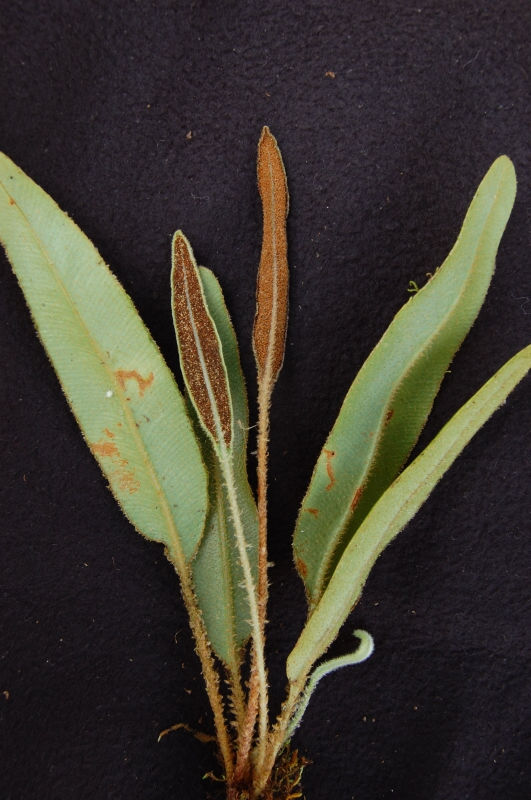
Elaphoglossum is a genus of ferns in the family Dryopteridaceae, subfamily Elaphoglossoideae, in the Pteridophyte Phylogeny Group classification of 2016 (PPG I).

Phlebodium
Phlebodium is a small genus of ferns in the family Polypodiaceae, subfamily Polypodioideae, according to the Pteridophyte Phylogeny Group classification of 2016 (PPG I). It is native to tropical and subtropical regions of the Americas. Its species were formerly included in Polypodium.

Anemia
genus of plants
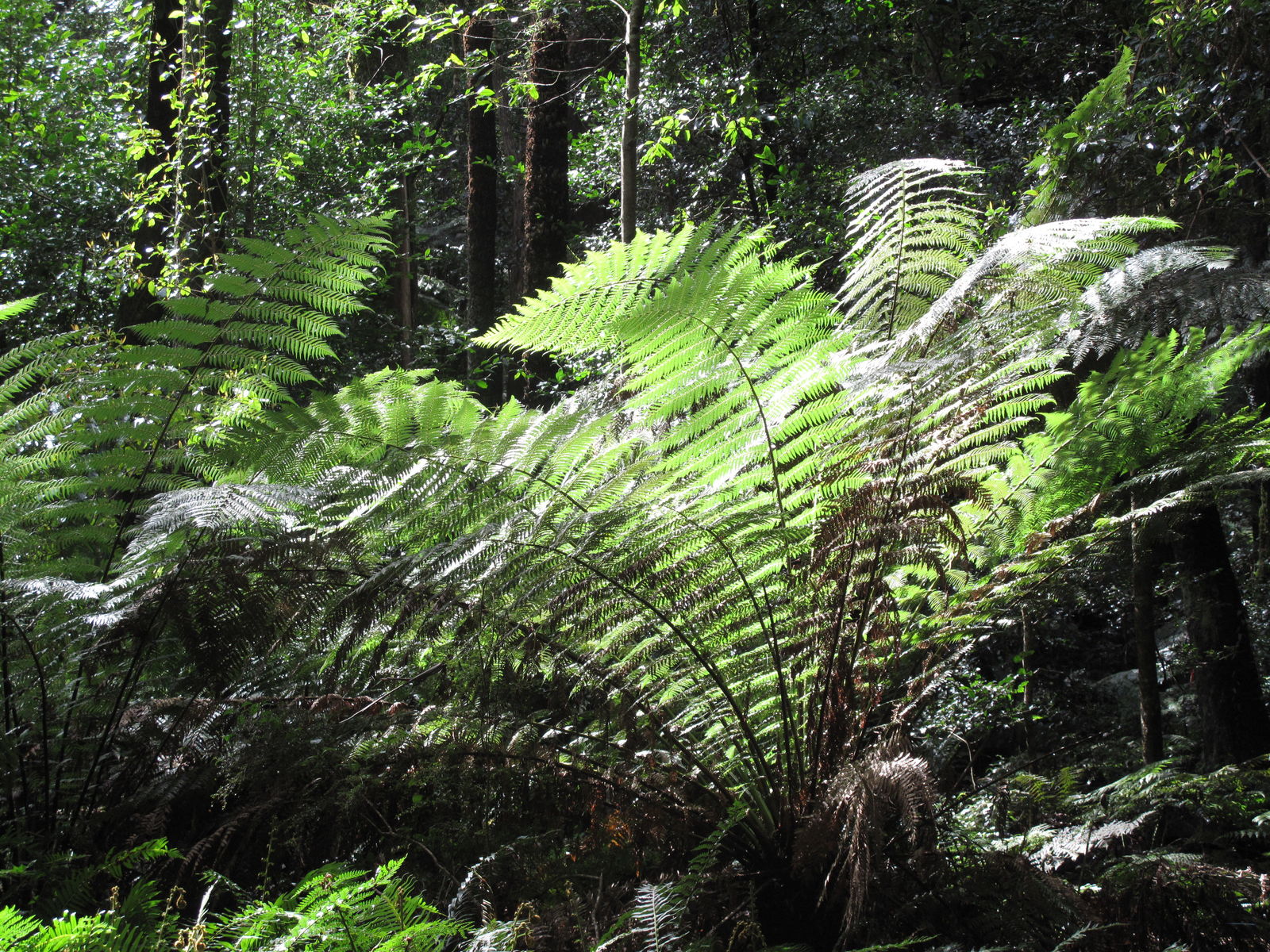
Alsophila
genus of plants
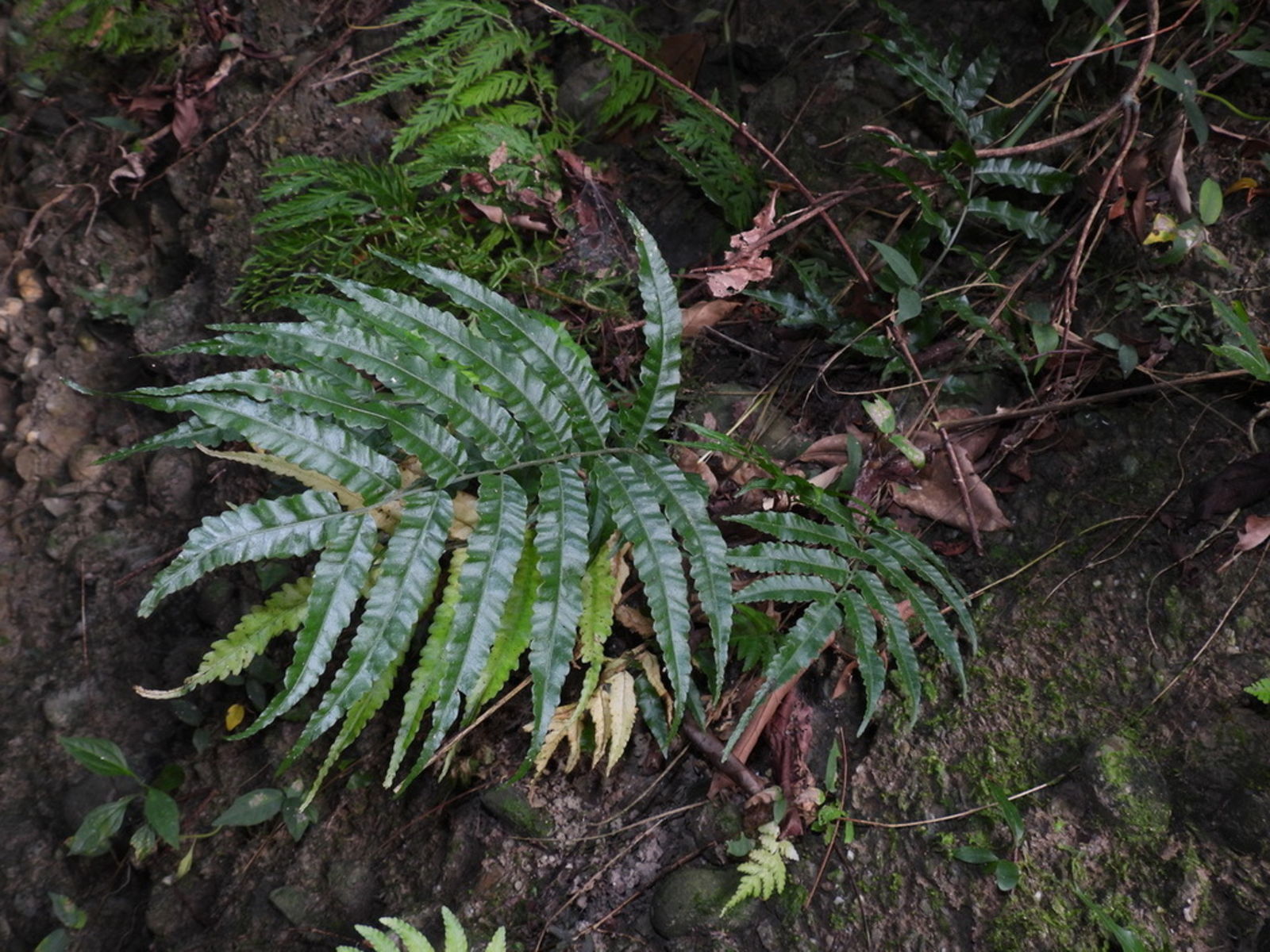
Bolbitis
Bolbitis is a genus of ferns in the family Dryopteridaceae, subfamily Elaphoglossoideae, in the Pteridophyte Phylogeny Group classification of 2016 (PPG I).
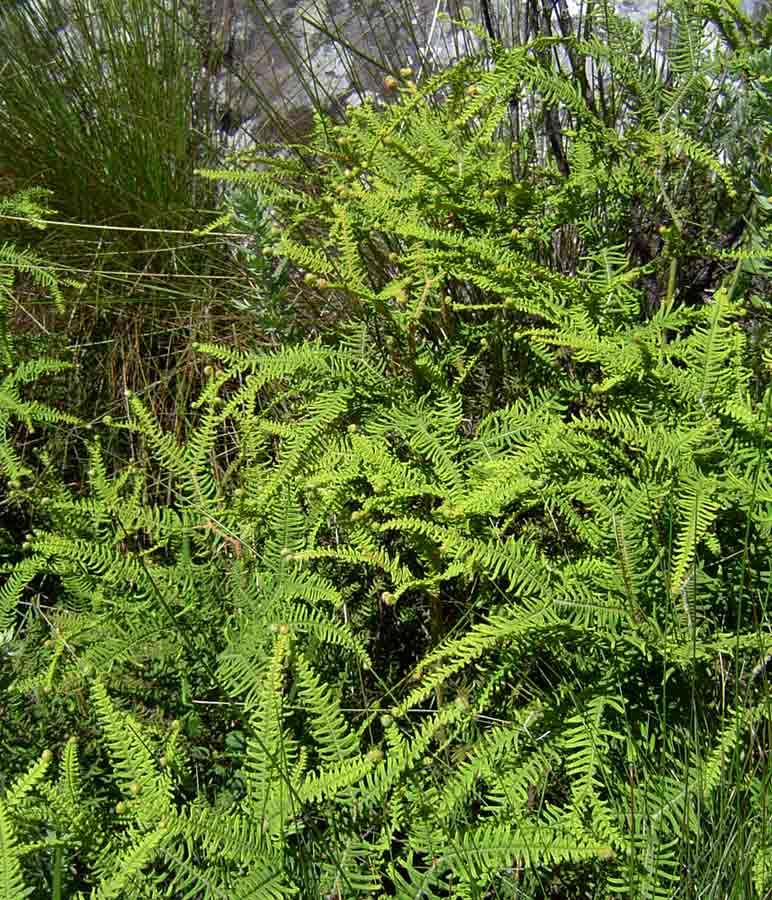
Sticherus
Sticherus is a genus of about 80–90 species of fern.