Category
page 1Film and video technology

animation
Animation is a filmmaking technique whereby pictures are created or manipulated and then played in sequence to create the illusion of moving images. In traditional animation, images are drawn or painted by hand on transparent celluloid sheets to be photographed and exhibited on film. Animation has been recognized as an artistic medium, specifically within the entertainment industry. Many animations are either traditional animations or computer animations made with computer-generated imagery (CGI). Stop motion animation, in particular claymation, is also prominent alongside these other forms, a

cinematography
thumb|Arri Alexa, a digital movie camera
.jpg)
webcam
alt=Small box with a lens inside|thumb|A Logitech-branded webcam attached to a laptop
A webcam is a video camera which is designed to record or stream to a computer or computer network. They are primarily used in video telephony, live streaming and social media, and security. Webcams can be built-in computer hardware, like a laptop, or peripheral devices, and are commonly connected to a device using USB or wireless protocol.

data compression
process of encoding information using fewer bits than the original representation

streaming media
continuous multimedia operated and presented to users by a provider

film editing
creative and technical post-production processing of film

vlog
A vlog, also known as a video blog or video log, is a form of blog for which the medium is video. Vlog entries often combine embedded video (or a video link) with supporting text, images, and other metadata. Entries can be recorded in one take or cut into multiple parts. Like traditional blogging, video blogging (or vlogging) focuses on personal topics centering on the creator. For example, makeup routines, book recommendations, and recipe videos.
.jpeg)
film production
thumb|Film crew and cast members working together during principal photography

IMAX

history of film
aspect of history

sound film
a motion picture with synchronized sound

3D film
stereoscopic film

nitrocellulose
Nitrocellulose (also known as cellulose nitrate, flash paper, flash cotton, guncotton, pyroxylin and flash string, depending on form) is a highly flammable compound formed by nitrating cellulose through exposure to a mixture of nitric acid and sulfuric acid.

movie camera
camera for movie capture on film

celluloid
Celluloids are a class of materials produced by mixing nitrocellulose and camphor, often with added dyes and other agents. Once much more common for its use as photographic film before the advent of safer methods, celluloid's common present-day uses are for manufacturing table tennis balls, musical instruments, combs, office equipment, fountain pen bodies, and guitar picks.
Moving Picture Experts Group
working group of experts
chroma key
compositing technique
bit rate
information transmission rate expressed in bits per second

kinetoscope
thumb|right|Interior view of Kinetoscope with peephole viewer at top of cabinet
film projector
opto-mechanical device for displaying motion picture film by projecting it onto a screen
4K resolution
video or display resolutions with a width of around 4,000 pixels
aspect ratio
width/height proportion of an image
.jpg)
Technicolor
thumb|"Technicolor is natural color" Paul Whiteman stars in an ad for his film [[King of Jazz from The Film Daily, 1930]]
Technicolor is a family of color motion picture processes. The first version, Process 1, was introduced in 1916, and improved versions followed over several decades.
frame rate
measure of frequency of image frames in video

LaserDisc
LaserDisc (LD) is a home video format and the first commercial optical disc storage medium. It was developed by Philips, Pioneer, and the movie studio MCA. The format was initially marketed in the United States in 1978 under the name DiscoVision, a brand used by MCA. As Pioneer took a greater role in its development and promotion, the format was rebranded LaserVision. While the LaserDisc brand originally referred specifically to Pioneer's line of players, the term gradually came to be used generically to refer to the format as a whole, making it a genericized trademark. The discs typically hav
sampling
measurement of a signal at discrete time intervals

post-production
thumb|A studio video editing suite from the early 1990s

videotelephony
thumb|250px|A telepresence system in 2007
visual effects
various processes by which imagery is created

clapperboard
thumb|right|Digital facsimile of a clapperboard

subwoofer
thumb|12-inch (30 cm) subwoofer Speaker driver|driver (loudspeaker). A driver is commonly installed in an enclosure (often a wooden cabinet) to prevent the sound waves coming off the back of the driver diaphragm from canceling out the sound waves being generated from the front of the subwoofer.
thumb|A typical Hi-Fi subwoofer (r.), with the subwoofer loudspeaker built into a cabinet. On the left, a version with transparent cabinet is shown where the large magnet (grayish color) of the speaker driver can be seen in the middle, close to the brown Electrodynamic speaker driver#Components|dam
direct-to-video
Direct-to-video refers to the release of a film or television series on home video formats without an initial theatrical release or television premiere. This distribution strategy was prevalent before streaming platforms came to dominate the TV and movie distribution markets.
content delivery network
layer in the Internet ecosystem addressing bottlenecks
Sora
text-to-video model developed by OpenAI

CinemaScope
thumb|300px|CinemaScope logo from The High and the Mighty (film)|The High and the Mighty (1954)

SCART
SCART (also known as or , especially in France, 21-pin EuroSCART in marketing by Sharp in Asia, Euroconector in Spain, EuroAV or EXT, or EIA Multiport in the United States, as an EIA interface) is a French-originated standard and associated 21-pin connector for connecting audio-visual (AV) equipment. The name SCART comes from , "Radio and Television Receiver Manufacturers' Association", the French organisation that created the connector in the mid-1970s. The related European standard EN 50049 was refined and published in 1978 by CENELEC, calling it péritelevision, but it is commonly called by

rotoscoping
thumb|Patent drawing for [[Max Fleischer's original rotoscope. The artist is drawing on a transparent easel, onto which the film projector at the right is beaming an image of a single film frame.]]

Q769346
OpenShot Video Editor is a free and open-source video editor for Windows, macOS, Linux, and ChromeOS. The project started in August 2008 by Jonathan Thomas, with the objective of providing a stable, free, and friendly to use video editor.

widescreen
thumb|upright|Classic television aspect ratio 4:3, and two wider ratios
Widescreen images are displayed within a set of aspect ratios (relationship of image width to height) used in film, television and computer screens. In film, a widescreen film is any film image with a width-to-height aspect ratio greater than 4:3 (1.33:1).

S-Video
S-Video (also known as separate video, Y/C, and super video) is an analog video signal format that carries standard-definition video, typically at 525 or 625-line resolution. It encodes video luma and chrominance on two separate channels, achieving higher image quality than composite video, which encodes all video information on one channel. It also eliminates several types of visual defects, such as dot crawl, which commonly occur with composite video. Although it is improved over composite video, S-Video has lower color resolution than component video, which is encoded over three channels.
screencast
A screencast is a digital recording of computer screen output, also known as a video screen capture or a screen recording, often containing audio narration. The term screencast compares with the related term screenshot; whereas screenshot generates a single picture of a computer screen, a screencast is essentially a movie of the changes over time that a user sees on a computer screen, that can be enhanced with audio narration and captions.
projection screen
white screen for projecting

Steadicam
Steadicam is a brand of camera stabilizer mounts for motion picture cameras invented by Garrett Brown and introduced in 1975 by Cinema Products Corporation. The Steadicam brand was acquired by Tiffen in 2000. It was designed to isolate the camera from the camera operator's movement, keeping the camera motion separate and controllable by a skilled operator.
television studio
installation in which video productions take place
film theory
academic discipline studying film's relationship to reality, the arts, viewers & society
video editing
editing live television and video production
color motion picture film
unexposed color photographic film in a format suitable for use in a motion picture camera

Akai
Akai (, ) was a Japanese electronics manufacturer, established as Akai Electric Company Ltd in Tokyo in 1929. It was best known outside Japan for its tape recorders during the 1960s and 1970s. The company became bankrupt in 2000 and since then third-party products have been marketed under the Akai brand name, which has since been owned by Grande Holdings of Hong Kong.
35 mm film
motion picture film format
8K resolution
resolutions with approximate width of 8,000 pixels
digital container format
metafile format
video editing software
software used to digitally cut audio and video files in a non-linear editing system
data storage
recording (storing) of information (data) in a storage medium (physical or digital)
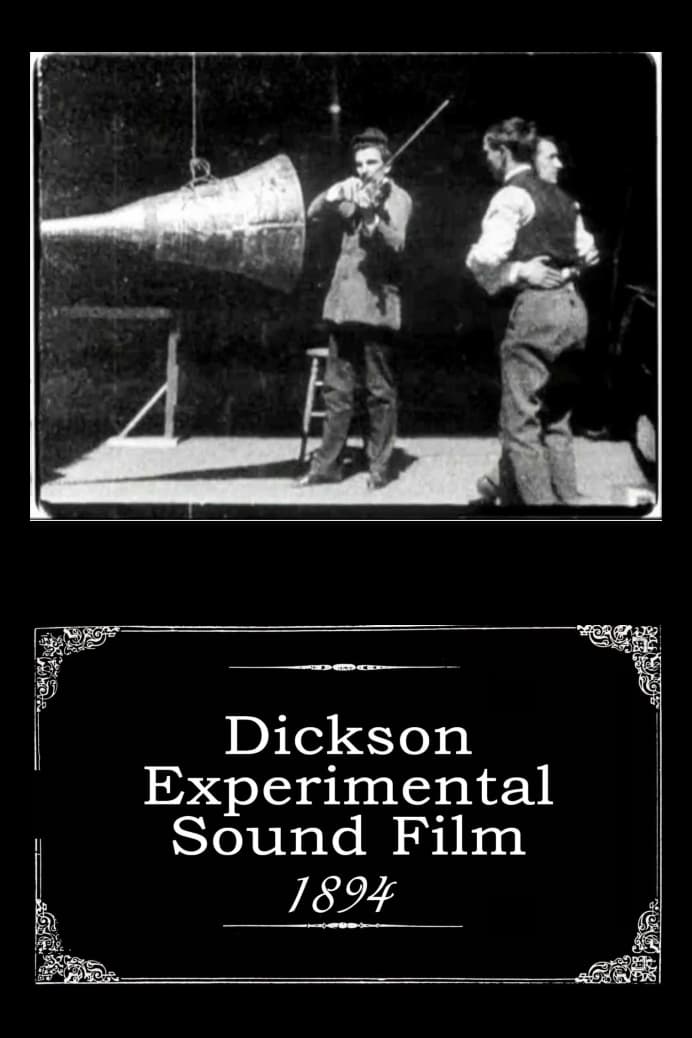
The Dickson Experimental Sound Film
1895 film directed by William K. L. Dickson, created between September 1894 and April 2, 1895

Arri
Arri Group () (stylized as "ARRI") is a German manufacturer of motion picture film equipment. Based in Munich, the company was founded in 1917. It produces professional motion picture cameras, lenses, lighting and post-production equipment. It is cited by Hermann Simon as an example of a "hidden champion". The Arri Alexa camera system was used to shoot several films that won the Academy Award for Best Cinematography, including Hugo (2011), Life of Pi (2012), Gravity (2013), Birdman (2014), The Revenant (2015) and 1917 (2019).

zoopraxiscope
thumb|200px|right|Black-and-white picture of a coloured zoopraxiscope disc, circa 1893 by Eadweard Muybridge and Erwin F. Faber
thumb|200px|right|Black-and-white animation of a colored zoopraxiscope (without distortion, hence the elongated form)
component video
video signal that has been split into two or more component channels

sRGB
sRGB (standard RGB) is a color space, for use on monitors, printers, and the World Wide Web. It was initially proposed by HP and Microsoft in 1996 and became an official standard of the International Electrotechnical Commission (IEC) as IEC 61966-2-1:1999. It is the current standard colorspace for the web, and it is usually the assumed colorspace for images that do not have an embedded color profile.
.jpg)
mutoscope
thumb|An 1899 trade advertisement
thumb|Mutoscope at Herne Bay Museum and Gallery|Herne Bay Museum
thumb|Mutoscope in San Francisco antique arcade
thumb|thumbtime=1.4|Mutoscope: "Mechanical Maniacs" video.
The Mutoscope is an early motion picture device, invented by W. K. L. Dickson and Herman Casler and granted to Herman Casler on November 5, 1895. Like Thomas Edison's Kinetoscope, it does not project on a screen and provides viewing to only one person at a time. Cheaper and simpler than the Kinetoscope, the system, marketed by the American Mutoscope Company (later the American Mutoscope and
RealD Cinema
brand name for technology used in 3D films