Category
page 1Former countries in Europe

Soviet Union
The Union of Soviet Socialist Republics (USSR), also known as the Soviet Union, was a transcontinental country that spanned much of Eurasia from 1922 until its dissolution in 1991. It was the world's third-most populous country, largest by area, and bordered twelve countries. A diverse multinational state, it was organized as a federal union of national republics, the largest and most populous being the Russian Soviet Federative Socialist Republic. In practice, its government and economy were highly centralized. As a one-party state governed by the Communist Party, it was the flagship communist state. Its capital and largest city was Moscow.

Roman Empire
period of ancient Rome following the Republic
Sicily
Sicily (Italian and ), officially the Sicilian Region, is an island in the central Mediterranean Sea and one of the twenty regions of Italy, situated south of the Italian Peninsula in continental Europe. With over 4.7 million inhabitants, including 1.2 million in and around the capital city of Palermo, it is both the largest and most populous island in the Mediterranean Sea.

Byzantine Empire
Roman Empire during Late Antiquity and the Middle Ages

Nazi Germany
Nazi Germany, officially the German Reich and later the Greater German Reich, was the German state between 1933 and 1945, when Adolf Hitler and the Nazi Party controlled the country, transforming it into a totalitarian dictatorship. The Third Reich, meaning "Third Realm" or "Third Empire", referred to the Nazi claim that Nazi Germany was the successor to the Holy Roman Empire (800–1806) and the German Empire (1871–1918). The Third Reich, which the Nazis referred to as the Thousand-Year Reich, ended in May 1945, after 12 years, when the Allies defeated Germany and entered the capital, Berlin, ending World War II in Europe.

German Democratic Republic
1949–1990 country in central Europe, unified into modern Germany

Prussia
Prussia (; ; Old Prussian: ) was a German state centred on the North European Plain. It originated from the 1525 secularization act of the Prussian part of the State of the Teutonic Order. For centuries, the House of Hohenzollern ruled Prussia, expanding its size with the Prussian Army. Prussia, with its capital at Königsberg and then, when it became the Kingdom of Prussia in 1701, Berlin, decisively shaped the history of Germany. Prussia formed the German Empire when it united the German states in 1871. It was de facto dissolved by an emergency decree transferring powers of the Prussian gover

Roman Republic
period of ancient Roman civilization (509 BC–27 BC)

Tver
Tver (, ) is a city and the administrative centre of Tver Oblast, Russia. It is situated at the confluence of the Volga and Tvertsa rivers. Tver is located northwest of Moscow. Population:

Canton of Schwyz
canton of Switzerland
Polish–Lithuanian Commonwealth
historical multinational monarchist state in Eastern Europe (Crown of the Kingdom of Poland and the Grand Duchy of Lithuania)

Kievan Rus'
former federation of East Slavic tribes
Kingdom of Great Britain
constitutional monarchy in Western Europe (1707–1800)
French Third Republic
nation of France from 1870 to 1940

Kingdom of Ireland
kingdom on the island of Ireland between 1542 and 1801
Transcaucasian Socialist Federative Soviet Republic
republic of the Soviet Union (1922 – 1936)

Crown of Aragon
composite monarchy which existed between 1162–1716
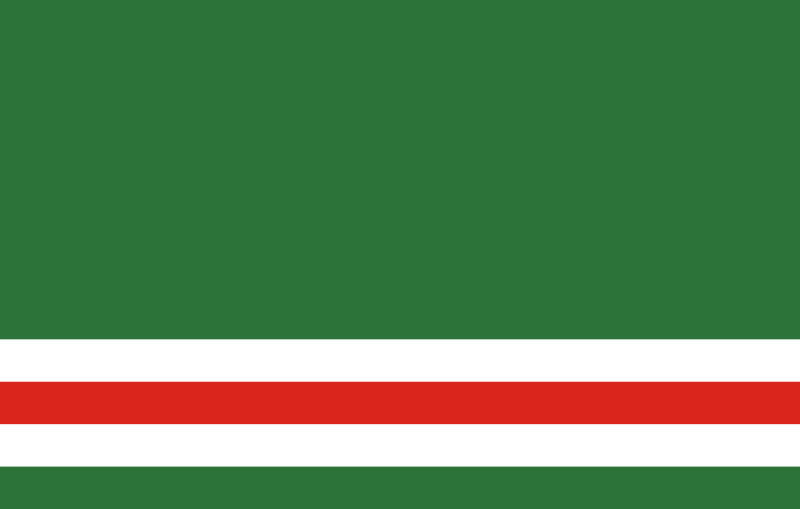
Chechen Republic of Ichkeria
government in exile of Chechnya since 2000. Based in London

Kingdom of Leon
independent medieval kingdom in the northwest of the Iberian Peninsula (910–1230), capital León

Batavian Republic
republic of the Netherlands in Western Europe between 1795–1806
French Second Republic
government of France between 1848-1852

Kingdom of Iberia
ancient Georgian kingdom of Kartli
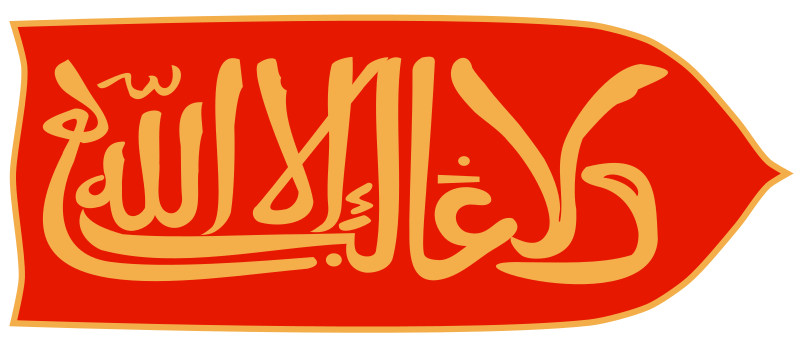
Emirate of Granada
historic Iberian state (1238–1492)

Colchis
In classical antiquity and Greco-Roman geography, Colchis (; ) was an exonym for the Georgian polity of Egrisi () located on the eastern coast of the Black Sea, centered in present-day western Georgia also including the region of Abkhazia.

Grand Duchy of Finland
predecessor state of modern Finland

Kingdom of Northumbria
Northumbria was an early medieval English kingdom, existing between 654 and 1066 AD, spanning modern-day Northern England and Southern Scotland.
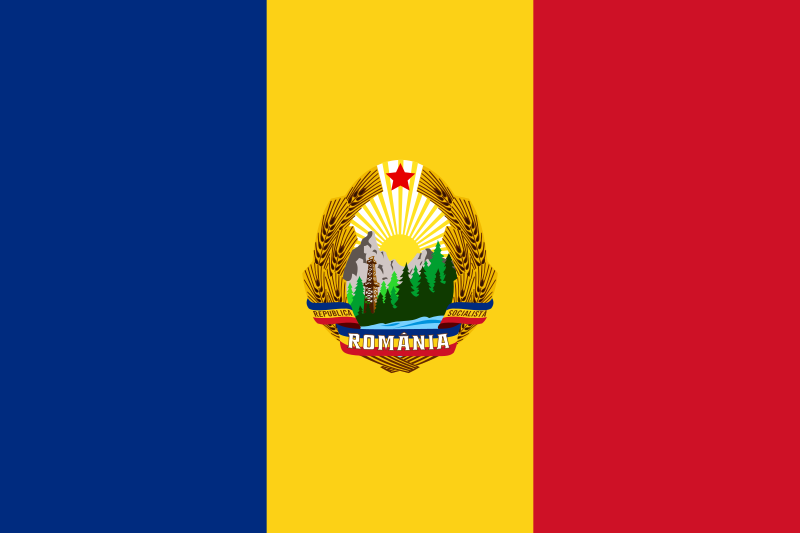
Socialist Republic of Romania
1965–1989 republic in Southeastern Europe

Icaria
Ikaria, also spelled Icaria (; ), is a Greek island in the Aegean Sea, 10 nautical miles (19 km) southwest of Samos. Administratively, Ikaria forms a separate municipality within the Ikaria regional unit, which is part of the North Aegean administrative region.

Austrasia
Austrasia was a historical region and the northeastern realm within the core of the Frankish State during the Early Middle Ages, centering on the regions between Meuse, Moselle, Middle Rhine and the Main rivers. It included the original Frankish-ruled territories within what had been the northernmost part of Roman Gaul and parts of Roman Germania. It also stretched beyond the old Roman borders on the Rhine into Frankish areas which had never been formally under Roman rule. It came into being as a part of the Frankish Kingdom, founded by the Merovingian king Clovis I (r. 481–511), who expanded

Russian Provisional Government
government before Soviet Takeover, July 1917-October 1917
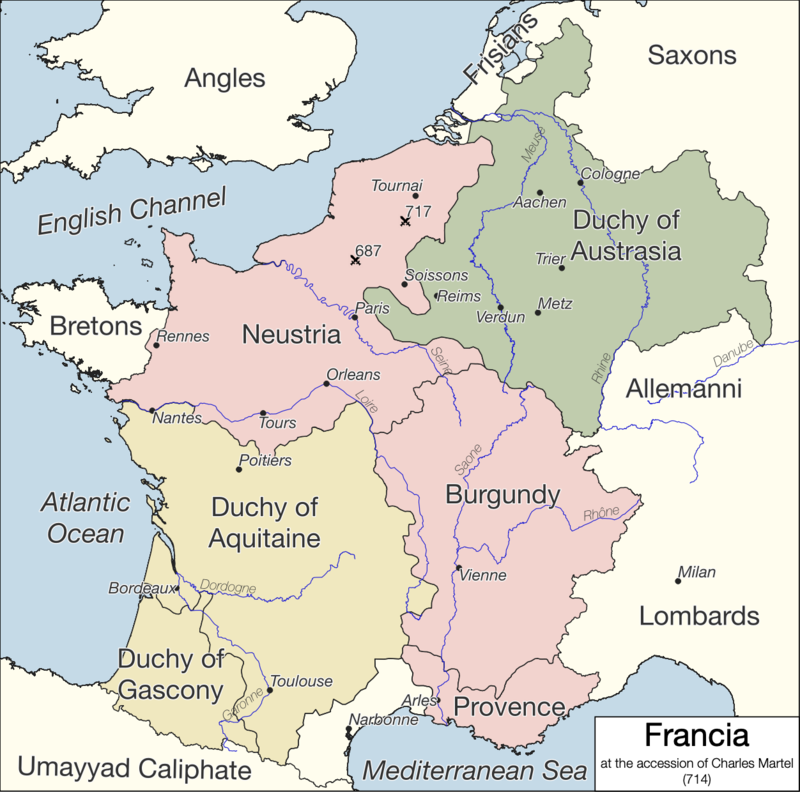
Neustria
Neustria was the western part of the Kingdom of the Franks during the Early Middle Ages, in contrast to the eastern Frankish sub-kingdom, Austrasia. It initially included land between the Loire and the Silva Carbonaria, in the north of present-day France, with Paris, Orléans, Tours, Soissons as its main cities.

Alsace–Lorraine
Alsace–Lorraine (German: Elsaß–Lothringen), officially the Imperial Territory of Alsace–Lorraine (), was a territory of the German Empire which is now part of France. It was established in 1871 by the German Empire after it had occupied the region during the Franco-Prussian War. The region was officially ceded to the German Empire in the Treaty of Frankfurt. French resentment about the loss of the territory was one of the contributing factors to World War I. Alsace–Lorraine was annexed in practice by France at the war's end following Germany's defeat in 1918, but only formally ceded back in 19

Caucasian Albania
historical state in the Caucasus region

East Francia
country in Western Europe from 843 to 962; predecessor to the Kingdom of Germany

Circassia
thumb|Princes of East Circassia
thumb|Presidents of the Circassian Confederation
Circassia ( ), also known as Zichia, was a country and a historical region in . It spanned the western coastal portions of the North Caucasus, along the northeastern shore of the Black Sea. Circassia was conquered by the Russian Empire during the Russo-Circassian War (1763–1864), after which approximately 80–97% of the Circassian people were either exiled or massacred in the Circassian genocide.

Kingdom of Saxony
former German state (1806-1918)

Hungarian Soviet Republic
1919 socialist state in Central Europe

Helvetic Republic
former Swiss polity under Napoleonic domination

Bavarian Soviet Republic
short-lived unrecognised socialist state in Bavaria during the German Revolution of 1918–19

Transcaucasian Democratic Federative Republic
short-lived South Caucasian state (1918)

Dál Riata
Gaelic overkingdom that included parts of western Scotland and northeastern Ulster in Ireland

Vandal Kingdom
Germanic Kingdom (435-534)

Crown of Castile
former country

Principality of Transylvania
semi-independent principality in Eastern Europe between 1570 and 1711
Kingdom of Valencia
kingdom at the Iberian Peninsula existing between 1238-1707
Ostrogothic Kingdom
kingdom established by the Ostrogoths in Italy and neighbouring areas (493-553 CE)

Carantania
Carantania, also known as Carentania (, , in Old Slavic ''''), was a Slavic principality that emerged in the second half of the 7th century, in the territory of present-day southern Austria and north-eastern Slovenia. Since the middle of the 8th century, it was allied with Bavaria against the Avars, and consequently became a vassal state of the Frankish Empire. In the same time, Christianisation of Carantanian Slavs was initiated, mainly through missionary activities of the Archdiocese of Salzburg. By 828, internal autonomy of the principality was abolished, and the entire Carantanian territor
.jpg)
Alania
Alania was a medieval kingdom of the Alans that flourished between the 9th and 13th centuries in the Northern Caucasus area, inhabited by the Iranian-speaking Alans and various native north Caucasian ethnic groups. With its capital known as Maghas, the location of which is still disputed, it became independent from the Khazars and in the late 9th century. The state was Christianized by a Byzantine missionary sent by Constantinople soon after, in the early 10th century.
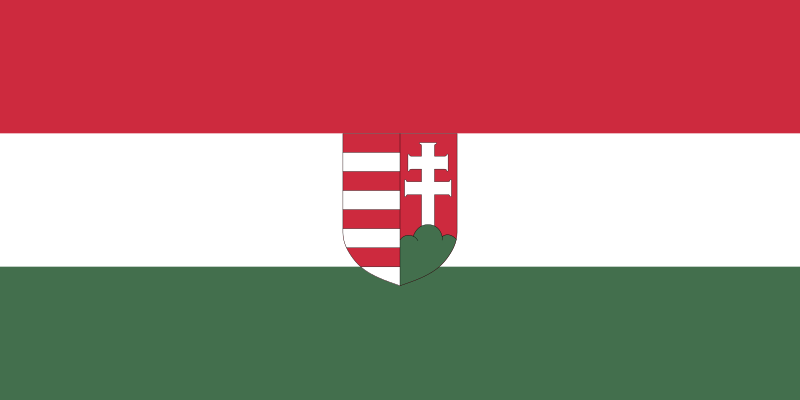
First Hungarian Republic
former country (1918–1919)

Ligurian Republic
former nation in Europe

Principality of Catalonia
state in the northeastern Iberian Peninsula (1173-1714)
Kingdom of Croatia
(925–1102) a medieval kingdom comprising most of what is today Croatia as well as, periodically, parts of Bosnia and Herzegovina

Kingdom of Majorca
constitutional monarchy which existed between 1229–1715

Mountainous Republic of the Northern Caucasus
former country

Lithuanian–Byelorussian Soviet Socialist Republic
former country
Klettgau
Klettgau (; High Alemannic: Chleggau) is a municipality in the district of Waldshut in Baden-Württemberg, Germany. It is the center of the Klettgau historical region stretching across the Swiss border into the cantons of Aargau, Schaffhausen, and Zürich.
Republic of Central Lithuania
former country, recognized only by Poland (1920-1922)
Kingdom of the Suebi
Germanic kingdom in what is today Galicia, Spain, that was established by the Suebi about 410, and existed until 585
Treaty of Meerssen
treaty
Great Horde
remnant of the Golden Horde from about 1466 until 1502