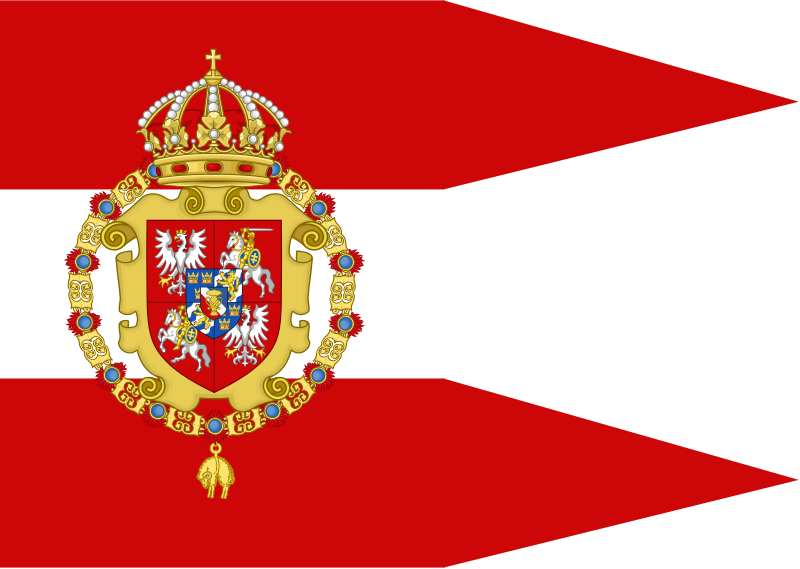
Polish–Lithuanian Commonwealth
Also known as Republic of Both Nations, Commonwealth of Poland, First Republic of Poland, Poland, Poland–Lithuania, Polish-Lithuanian Commonwealth, Poland-Lithuania
historical multinational monarchist state in Eastern Europe (Crown of the Kingdom of Poland and the Grand Duchy of Lithuania)
AI overview
The Polish–Lithuanian Commonwealth was a large, multi-ethnic monarchy in Eastern Europe formed by the union of Poland and Lithuania, lasting from the 16th to 18th centuries. It matters historically because it was one of Europe's major powers during this period and shaped the political and cultural development of Eastern Europe in lasting ways.
AI-generated from the Wikipedia summary — may contain errors.
Wikidata facts
- Image
- Great Chorąży of the Polish Crown.jpg
Show 1 more fact
Article
The Polish–Lithuanian Commonwealth, also referred to as Poland–Lithuania or the First Polish Republic (Polish: I Rzeczpospolita), was a federative real union between the Kingdom of Poland and the Grand Duchy of Lithuania, existing from 1569 to 1795. This state was among the largest, most populated countries of 16th- to 18th-century Europe. At its peak in the early 17th century, the Commonwealth spanned approximately 1,000,000 km (390,000 sq mi) and supported a multi-ethnic population of around 12 million as of 1618. The official languages of the Commonwealth were Polish and Latin, with Catholicism as the state religion.
The Union of Lublin established the Commonwealth as a single entity on 1 July 1569. The two nations had previously been in a personal union since the Krewo Agreement of 1385 (Polish–Lithuanian union) and the subsequent marriage of Queen Jadwiga of Poland to Grand Duke Jogaila of Lithuania, who was crowned as Władysław II Jagiełło, jure uxoris King of Poland. Their descendant, Sigismund II Augustus, enforced the merger to strengthen frontiers of his dominion and maintain unity. As he remained childless, his death in 1572 marked the end of the Jagiellonian dynasty. It introduced an elective monarchy, whereupon members of domestic noble families or external dynasties were elected to the throne for life.
Gallery (12)
On the map
Connections
Categories
1569 establishments in Lithuania1569 establishments in Poland1569 establishments in the Polish–Lithuanian Commonwealth16th century in Belarus16th century in Lithuania16th century in Poland16th century in Ukraine1795 disestablishments in Lithuania1795 disestablishments in Poland1795 disestablishments in the Polish–Lithuanian Commonwealth17th century in Belarus