Category
page 1Former kingdoms

Maldives
Maldives, officially the Republic of Maldives, and historically known as the Maldive Islands, is an archipelagic country in South Asia, located in the eastern Arabian Sea, within the northern Indian Ocean. Maldives is southwest of Sri Lanka and India, about from the Asian continent's mainland. Maldives' chain of 26 atolls stretches across the equator from Ihavandhippolhu Atoll in the north to Addu Atoll in the south.
.svg)
Cornwall

Troy
Troy (; /; ) or Ilion (; ) was an ancient city located in present-day Çanakkale, Turkey. It is best known as the setting for the Greek myth of the Trojan War. The archaeological site is open to the public as a tourist destination, and was added to the UNESCO World Heritage list in 1998.

Tyre
city in the South Governorate of Lebanon, also an ancient Phoenician city and the legendary birthplace of Europa and Elissa (Dido)

Şanlıurfa

Hittites
right|thumb|Sphinx Gate entrance to the city
thumb|The Great Temple in the inner city of Hattusa

Ephesus
Ephesus ( ; ; ; may ultimately derive from ) was an ancient Greek city on the coast of Ionia, in present-day Selçuk in İzmir Province, Turkey. It was built in the 10th century BC on the site of Apasa, a city-state that was also the capital of Arzawa, by Attic and Ionian Greek colonists. During the Classical Greek era, it was one of twelve cities that were members of the Ionian League. The city came under the control of the Roman Republic in 129 BC.
Kingdom of Italy
kingdom in Southern Europe from 1861 to 1946

Kingdom of England
historic kingdom on the British Isles (927–1649; 1660–1707)

Sidon
Sidon ( ), or Saida ( ; ), is the third-largest city in Lebanon. It is located on the Mediterranean coast in the South Governorate, of which it is the capital. Tyre, to the south, and the Lebanese capital of Beirut, to the north, are each about away. Sidon has a population of about 80,000 within the city limits, while its metropolitan area has more than a quarter-million inhabitants.
.jpg)
Mycenae
Mycenae ( ; or , Mykē̂nai or Mykḗnē) is an archaeological site near Mykines in Argolis, north-eastern Peloponnese, Greece. It is located about south-west of Athens; north of Argos; and south of Corinth. The site is inland from the Saronic Gulf and built upon a hill rising above sea level.
Kingdom of Great Britain
constitutional monarchy in Western Europe (1707–1800)

Kingdom of Prussia
former European state (1701–1918), part of the German Empire after 1871

Kingdom of France
kingdom in Western Europe (987–1792; 1815–1848)

Bali
Bali (English: ; ; Balinese: ) is an Indonesian island and province and the westernmost of the Lesser Sunda Islands. East of Java and west of Lombok, the province includes the island of Bali and a few smaller offshore islands, notably Nusa Penida, Nusa Lembongan, and Nusa Ceningan to the southeast. The provincial capital, Denpasar, is the most populous city in the Lesser Sunda Islands and the second-largest, after Makassar, in Eastern Indonesia. The Denpasar metropolitan area is the extended metropolitan area around Denpasar. The upland town of Ubud in Greater Denpasar is considered as Bali's

Kingdom of Judah
Israelite Kingdom, whose capital was Jerusalem and Hebron, c. 930–586 BCE

Byblos
Byblos ( ; ), also known as Jbail, Jebeil, Jbeil or Jubayl (, locally ), is an ancient city in the Keserwan-Jbeil Governorate of Lebanon. The area is believed to have been first settled between 8800 and 7000BC and continuously inhabited since 5000BC. During its history, Byblos was part of numerous cultures including Egyptian, Phoenician, Assyrian, Persian, Hellenistic, Roman, Genoese, Mamluk and Ottoman. Urbanisation is thought to have begun during the third millennium BC when it developed into a city, making it one of the oldest cities in the world, if not the oldest. It is a UNESCO World Her

Three Kingdoms
period of Chinese history (220–280 AD) dominated by the Wei, Shu-Han, and Wu kingdoms

United Kingdom of Great Britain and Ireland
historical sovereign state (1801–1922)

Kingdom of Naples
Italian state (1282–1816)

Assur
Aššur, also known as Ashur and '''Qal'at Sherqat''', was the capital of the Middle Assyrian Empire for a time, of the Neo-Assyrian Empire (911–609 BC) and a semi-independent state during the Parthian Empire between the 2nd century BC and mid 3rd century AD. The remains of the city lie on the western bank of the Tigris River, north of the confluence with its tributary, the Little Zab, in what is now Iraq, more precisely in the al-Shirqat District of the Saladin Governorate. Assur lies south of the site of Kalhu (the biblical Calah, Nimrud) and 100 km (60 mi) south of Nineveh.

Phrygia
In classical antiquity, Phrygia ( ; , Phrygía) was a kingdom in the west-central part of Anatolia, in what is now Asian Turkey, centered on the Sangarios River.

Kingdom of Jerusalem
medieval Christian kingdom in the Middle East

Three Kingdoms of Korea
period of Korean history (1st century BCE – 7th century CE), where three kingdoms (Goguryeo, Baekje, and Silla) coexisted on the Korean peninsula

Kingdom of Scotland
historic sovereign kingdom on the British Isles from the 9th century and up to 1707

Kingdom of Aksum
trading nation in the area of Eritrea and Northern Ethiopia

Kingdom of Wessex
The Kingdom of the West Saxons, also known as the Kingdom of Wessex, was an Anglo-Saxon kingdom in the south of Great Britain, from around 519 until Alfred the Great declared himself as King of the Anglo-Saxons in 886.

Kingdom of Numidia
Numidia () was the ancient kingdom of the Numidians in northwest Africa, initially comprising the northern part of what is now Algeria,Tunisia and Libya. The polity was originally divided between the Massylii state in the east, with its capital at Cirta, and the Masaesyli state in the west, with its capital at Siga. During the Second Punic War (218–201 BC), Masinissa, king of the Massylii, defeated Syphax of the Masaesyli to unify Numidia into the first unified Berber state for Numidians in North Africa. Initially a sovereign state and an ally of Rome, the kingdom later alternated between bein

Kingdom of Hungary
Central European monarchy (1000–1946)
Uruk
Uruk, the archeological site known today as Warka, was an ancient city in the Near East or West Asia, located east of the current bed of the Euphrates River, on an ancient, now-dried channel of the river in Muthanna Governorate, Iraq. The site lies 93 kilometers (58 miles) northwest of ancient Ur, 108 kilometers (67 miles) southeast of ancient Nippur, and 24 kilometers (15 miles) northwest of ancient Larsa.
%20-%20Turkey%20-%2010%20(5747249729).jpg)
Pergamon
Pergamon or Pergamum ( or ; ), also referred to by its modern Greek form Pergamos (), was a rich and powerful ancient Greek city in Aeolis. It is located from the modern coastline of the Aegean Sea on a promontory on the north side of the river Caicus (modern-day Bakırçay) and northwest of the modern city of Bergama, Turkey.

Kingdom of Aragon
medieval and early modern kingdom in the Iberian Peninsula (1035-1707)

Magadha

Visigothic Kingdom
Period of Germanic rule on the Iberian Peninsula (418–720) as a successor state to the Western Roman Empire.
Kingdom of Castile
European sovereign state (1065–1230)

Kingdom of Asturias
former kingdom on the Iberian Peninsula

Kingdom of Leon
independent medieval kingdom in the northwest of the Iberian Peninsula (910–1230), capital León

Kingdom of Bohemia
monarchy in Central Europe, predecessor of modern Czech Republic

Kingdom of Navarre
Basque medieval kingdom that occupied lands on either side of the western Pyrenees, alongside the Atlantic Ocean (1162–1512)
Kingdom of Romania
kingdom in Southeastern Europe between 1881 and 1947

Kingdom of Iberia
ancient Georgian kingdom of Kartli

Indo-Greek Kingdoms
Hellenistic-era Greek kingdom in northwestern South Asia (200 BCE–10 CE)

Kingdom of Kush
c. 1070 BCE – c. CE 350 / kingdom in Nubia (modern-day Sudan), northeast Africa
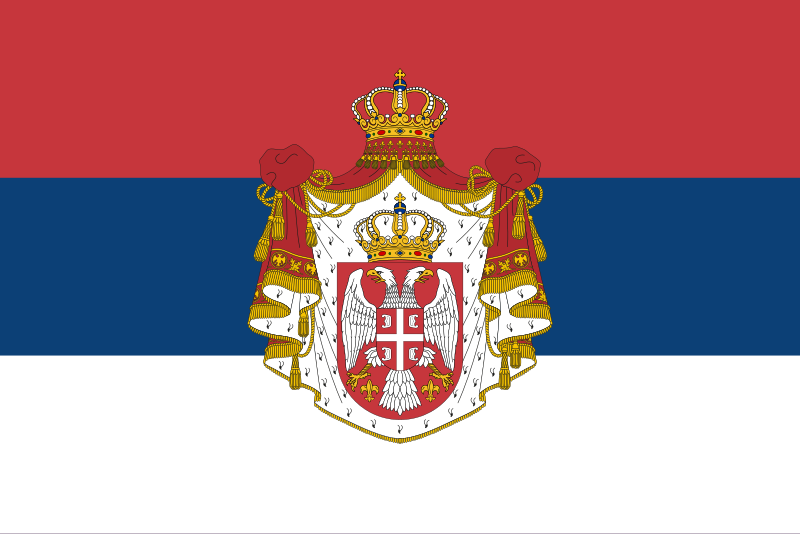
Kingdom of Serbia
1882–1918 kingdom in Southeastern Europe

Kingdom of Greece
period of Greek statehood from 1832 to 1924 and 1935 to 1973

Crusader states
Christian states in the Levant, 1098–1291

West Francia
former kingdom (843–987)

Kingdom of Bavaria
kingdom in Central Europe between 1806 and 1918, from January 1871 part of the German Empire

Kingdom of Northumbria
Northumbria was an early medieval English kingdom, existing between 654 and 1066 AD, spanning modern-day Northern England and Southern Scotland.

Congress Poland
territory in Eastern Europe in Russian empire (1815–1915)

Dahomey
The Kingdom of Dahomey (, ) was a West African kingdom located within the present-day Republic of Benin that existed from approximately 1600 until 1904. It developed on the Abomey Plateau among the Fon people in the early 17th century and became a regional power in the 18th century by expanding south to conquer key cities like Whydah belonging to the Kingdom of Whydah on the Atlantic coast, which granted it unhindered access to the Atlantic Slave Trade.
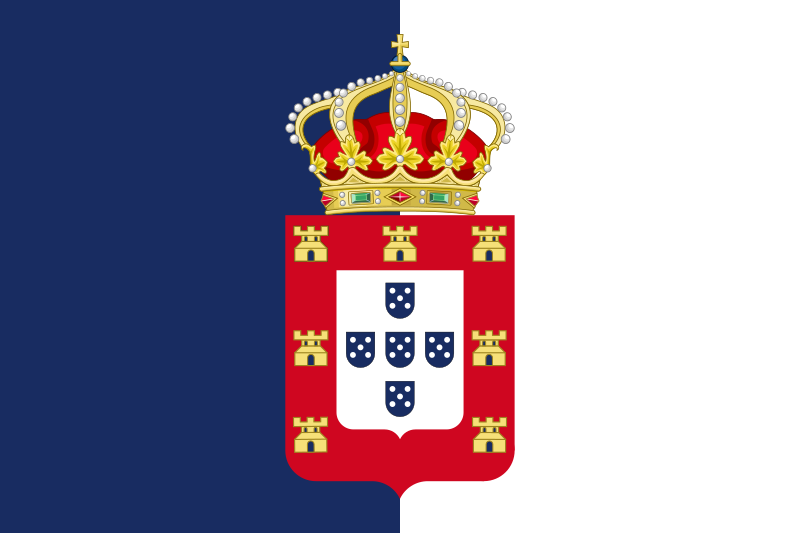
Kingdom of Portugal
kingdom in Southwestern Europe (1139–1910)

Goryeo
Goryeo (; ) was a Korean state founded in 918, during a time of national division called the Later Three Kingdoms period, that unified and ruled the Korean Peninsula until the establishment of Joseon in 1392. Goryeo achieved what has been called a "true national unification" by Korean historians as it not only unified the Later Three Kingdoms but also incorporated much of the ruling class of the northern kingdom of Balhae, who had origins in Goguryeo of the earlier Three Kingdoms of Korea. According to Korean historians, it was during the Goryeo period that the individual identities of Gogurye

Samaria
Samaria (), the Hellenized form of the Hebrew name Shomron (), is used as a historical and biblical name for the central region of the Land of Israel. It is bordered by Judea to the south, Galilee to the north, the Jordan River to the east, and the Mediterranean Sea to the west. The region is known in Arabic under two names, Samirah (, as-Sāmira), and Mount Nablus (جَبَل نَابُلُس, Jabal Nābulus).

Kingdom of Israel
possible Israelite kingdom of Israel and Judah (c. 1047–930 BCE)

Lagash
Lagash (; cuneiform: LAGAŠKI; Sumerian: Lagaš) was an ancient city-state located northwest of the junction of the Euphrates and Tigris rivers and east of Uruk, about east of the modern town of Al-Shatrah, Iraq. Lagash (modern Al-Hiba in Dhi Qar Governorate) was one of the oldest cities of the Ancient Near East, and the Lagash state incorporated the cities of Lagash, Girsu, and Nina. Girsu (modern Telloh), about northwest of Lagash, was the religious center of the Lagash state, with its main temple, the E-ninnu, dedicated to the god Ningirsu. The ancient site of Nina (Tell Zurghul), around away
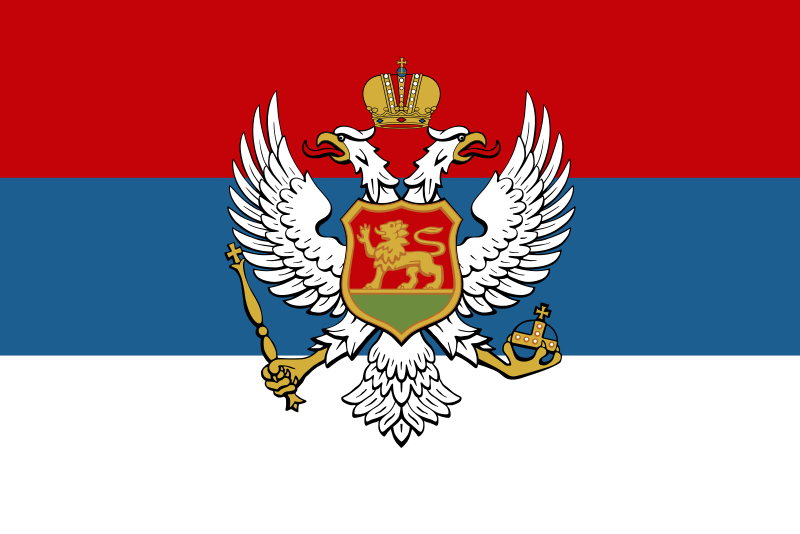
Kingdom of Montenegro
1910–1918 kingdom in Southeastern Europe

Chaldea
thumb|350px|The Chaldean tribes in Babylonia during the 1st millennium BC.

Edom
Edom (; ; ; ; Ancient Egyptian: jdwmꜥ) was an ancient kingdom that stretched across areas in the south of present-day Jordan, Palestine and Israel. Edom and the Edomites appear in several written sources relating to the late Bronze Age and to the Iron Age in the Levant, including the list of the Egyptian pharaoh Seti I from c. 1215 BC as well as in the chronicle of a campaign by Ramesses III (r. 1186–1155 BC), and the Hebrew Bible.

Kish
Ancient Sumerian city