Category
page 1Free radicals

radical
atom, molecule, or ion that has an unpaired valence electron; typically highly reactive
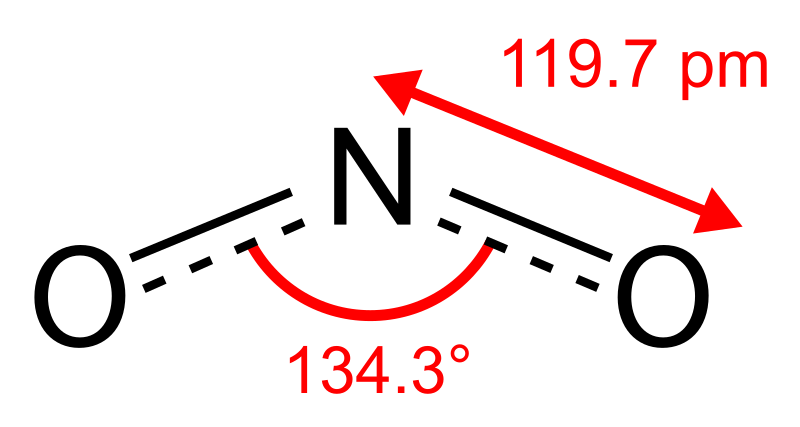
nitrogen dioxide
chemical compound

nitric oxide
chemical compound
chlorine dioxide
chemical compound
superoxide
In chemistry, a superoxide is a compound that contains the superoxide ion, which has the chemical formula . The systematic name of the anion is dioxide(1−). The reactive oxygen ion superoxide is particularly important as the product of the one-electron reduction of dioxygen , which occurs widely in nature. Molecular oxygen (dioxygen) is a diradical containing two unpaired electrons, and superoxide results from the addition of an electron which fills one of the two degenerate molecular orbitals, leaving a charged ionic species with a single unpaired electron and a net negative charge of −
reactive oxygen species
highly reactive chemicals formed from oxygen
hydroxyl radical
radical composed by one atom of oxygen and one atom of hydrogen
butylated hydroxytoluene
antioxidant and food additive

ozonide(1-)
Ozonide is the polyatomic anion with the formula . Cyclic organic compounds formed by the addition of ozone () to an alkene are also called ozonides.
Fenton's reagent
Strongly oxidizing solution of hydrogen peroxide mixed with dissolved iron as catalyst
chlorine monoxide
chemical compound
hydroperoxyl
The hydroperoxyl radical, also known as the hydrogen superoxide, is the protonated form of superoxide with the chemical formula HO2, also written HOO•. This species plays an important role in the atmosphere and as a reactive oxygen species in cell biology.

nitrene
thumb|115px|right|The generic structure of a nitrene group

TEMPO
(2,2,6,6-Tetramethylpiperidin-1-yl)oxyl or (2,2,6,6-tetramethylpiperidin-1-yl)oxidanyl, commonly known as TEMPO, is a chemical compound with the formula . This heterocyclic compound is a red-orange, sublimable solid. As a stable aminoxyl radical, it has applications in chemistry and biochemistry. TEMPO is used as a radical marker, as a structural probe for biological systems in conjunction with electron spin resonance spectroscopy, as a reagent in organic synthesis, and as a mediator in controlled radical polymerization.
methylene
chemical compound CH₂(2•), the simplest carbene
sodium naphthalenide
chemical compound

semiquinone
thumb|right|350px|Resonance (chemistry)|Resonance structures of a semiquinone
Semiquinones (or ubisemiquinones, if their origin is ubiquinone) are free radicals resulting from the removal of one hydrogen atom with its electron during the process of dehydrogenation of a hydroquinone, such as hydroquinone itself or catechol, to a quinone or alternatively the addition of a single hydrogen atom with its electron to a quinone. Semiquinones are highly unstable.
methylidyne radical
chemical compound

DPPH
DPPH (2,2-diphenyl-1-picrylhydrazyl) is an organic chemical compound. It is a dark-colored crystalline powder composed of stable free radical molecules. DPPH has two major applications, both in laboratory research: one is a monitor of chemical reactions involving radicals, most notably it is a common antioxidant assay, and another is a standard of the position and intensity of electron paramagnetic resonance signals.
triphenylmethyl radical
chemical compound
potassium nitrosyldisulfonate
chemical compound hosting a long-lived free radical
carbynes
In organic chemistry, a carbyne is a general term for any compound whose structure consists of an electrically neutral carbon atom connected by a single covalent bond and has three non-bonded electrons. The carbon atom has either one or three unpaired electrons, depending on its excitation state; making it a radical. The chemical formula can be written or (also written as ), or just CH.
dihydroxymethylidene
Dihydroxymethylidene or carbonous acid is a chemical compound with formula . It is an unstable tautomer of formic acid. There is no evidence that this compound exists in solution, but the molecule has been detected in the gas phase. Many related carbenes are known, although they are often transient.
reactive nitrogen species
family of antimicrobial molecules
aminyl
chemical compound

free-radical theory of aging
theory that claims that organisms age because cells accumulate free radical damage over time

silylene
Silylene is a chemical compound with the formula SiR2 (R = H). It is the silicon analog of carbene. Silylenes decomposes rapidly when condensed.
sulfidonitrogen(.)
chemical compound

4-hydroxy-TEMPO
4-Hydroxy-TEMPO or TEMPOL, formally 4-hydroxy-2,2,6,6-tetramethylpiperidin-1-oxyl, is a heterocyclic compound. Like the related TEMPO, it is used as a catalyst and chemical oxidant by virtue of being a stable aminoxyl radical. Its major appeal over TEMPO is that it is less expensive, being produced from triacetone amine, which is itself made via the condensation of acetone and ammonia. This makes it economically viable on an industrial scale.
azanediyl (triplet)
Imidogen is an inorganic compound with the chemical formula NH. Like other simple radicals, it is highly reactive and consequently short-lived except as a dilute gas. Its behavior depends on its spin multiplicity.

ketyl
right|thumb|Before: Toluene is refluxed with sodium-benzophenone to dry and deoxygenate it.
right|thumb|After: The deep blue coloration of the benzophenone ketyl radical shows that the toluene to be distilled is dry and oxygen-free.
A ketyl group in organic chemistry is an anion radical that contains a group R2C−O•. It is the product of the 1-electron reduction of a ketone.
cyanyl
radical chemical compound
Hexatriynyl radical
chemical compound
octatetraynyl radical
chemical compound
phosphoryl
chemical compound
Criegee biradical
class of chemical compounds
ethynyl radical
chemical compound
methyl
radical
fluoromethylidyne
Fluoromethylidyne is not a stable chemical species but a metastable radical containing one highly reactive carbon atom bound to one fluorine atom with the formula CF. The carbon atom has a lone-pair and a single unpaired (radical) electron in the ground state.
nitrate radical
chemical compound
trimethylenemethane
Trimethylenemethane (often abbreviated TMM) is a chemical compound with formula . It is a neutral free molecule with two unsatisfied valence bonds, and is therefore a highly reactive free radical. Formally, it can be viewed as an isobutylene molecule with two hydrogen atoms removed from the terminal methyl groups.
fluoridooxygen(.)
chemical compound
Nitryl
right|thumb|Nitrogen dioxide
oxidobromine(.)
chemical compound
Disposable soma theory
theory of aging
lithium naphthalenide
chemical compound
triangulene
Triangulene (also known as Clar's hydrocarbon) is the smallest triplet-ground-state polybenzenoid. It exists as a biradical with the chemical formula . It was first hypothesized by Czech chemist Erich Clar in 1953. Its first confirmed synthesis was published in a February 2017 issue of Nature Nanotechnology, in a project led by researchers David Fox and Anish Mistry at the University of Warwick in collaboration with IBM. Other attempts by Japanese researchers have been successful only in making substituted triangulene derivatives.
5-Dehydro-m-xylylene
'5-Dehydro-m-xylylene' (DMX) is an aromatic organic triradical and the first known organic molecule to violate Hund's Rule.
nitrogen difluoride
chemical compound
radical clock
chemical compound
Non-Kekulé molecule
spin label
molecule with an unpaired electron spin that can be bonded to another molecule
iodine monooxide
chemical compound