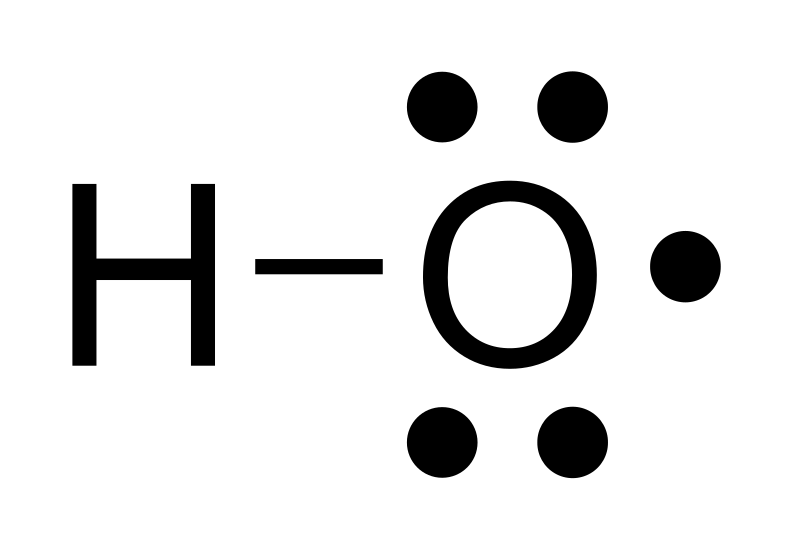
File:Hydroxyl_radical.svg · Wikimedia Commons · See Wikimedia Commons
radical
Sign in to saveAlso known as free radical, free radicals
atom, molecule, or ion that has an unpaired valence electron; typically highly reactive
A radical is an atom, molecule, or ion with an unpaired electron in its outer shell, which makes it unusually reactive and eager to bond with other substances. This matters because radicals drive many important chemical reactions in nature and industry, from the rusting of metals to processes in our cells, and understanding them helps scientists predict and control how substances behave.
AI-generated from the Wikipedia summary — may contain errors.
Research
378,959 papers- Radical SAM-dependent formation of a nitrogenase cofactor core on NifB.ReviewJournal of inorganic biochemistry · 2022Liu YA, Quechol R, Solomon JB et al.DOI: 10.1016/j.jinorgbio.2022.111837
- Radical philicity and its role in selective organic transformations.ReviewNature reviews. Chemistry · 2021Parsaee F, Senarathna MC, Kannangara PB et al.DOI: 10.1038/s41570-021-00284-3
- Radical S-adenosylmethionine enzymes.ReviewChemical reviews · 2014Broderick JB, Duffus BR, Duschene KS et al.DOI: 10.1021/cr4004709
- Mechanism of Radical Initiation in the Radical SAM Enzyme Superfamily.ReviewAnnual review of biochemistry · 2023Hoffman BM, Broderick WE, Broderick JBDOI: 10.1146/annurev-biochem-052621-090638
- Radical SAM Enzymes and Metallocofactor Assembly: A Structural Point of View.ReviewACS bio & med chem Au · 2022Nicolet Y, Cherrier MV, Amara PDOI: 10.1021/acsbiomedchemau.1c00044
- Radical SAM-mediated methylation reactions.ReviewCurrent opinion in chemical biology · 2013Fujimori DGDOI: 10.1016/j.cbpa.2013.05.032
- Structure and Catalytic Mechanism of Radical SAM Methylases.ReviewLife (Basel, Switzerland) · 2022Nguyen TQ, Nicolet YDOI: 10.3390/life12111732
- Activation modes in biocatalytic radical cyclization reactions.ReviewJournal of industrial microbiology & biotechnology · 2021Ye Y, Fu H, Hyster TKDOI: 10.1093/jimb/kuab021
via PubMed
Wikidata facts
- Subclass of
- reactive intermediate
- Has part
- unpaired electron
- Participant in
- free-radical reaction
- Image
- Hydroxyl radical.svg
Show 6 more facts
- has characteristic
- reactivity
- used by
- free-radical addition
- Commons category
- Radicals
- topic's main category
- Category:Free radicals
- different from
- functional group
- on focus list of Wikimedia project
- Wikipedia:Vital articles/Level/4
Sources (8)
via Wikidata · CC0
~25 min read
Encyclopedic overview
The hydroxyl radical, Lewis structure shown, contains one unpaired electron. Lewis dot structure of a hydroxide ion compared to a hydroxyl radical In chemistry, a radical, also known as a free radical, is an atom, molecule, or ion that has at least one unpaired valence electron. With some exceptions, these unpaired electrons make radicals highly chemically reactive. Radicals consisting of main group elements are often very reactive and undergo uncontrollable reactions, notably dimerization and polymerization. Most organic radicals have short lifetimes.
A notable example of a radical is the hydroxyl radical (HO·), a molecule that has one unpaired electron on the oxygen atom. Two other examples are triplet oxygen and triplet carbene (꞉CH 2) which have two unpaired electrons.
Excerpted from Wikipedia’s “radical” article, available under the CC BY-SA 4.0 licence.
Gallery (12)
Available in 69 languages
- Español
- Français
- Deutsch
- 中文
- 日本語
- Русский
- Português
- Italiano
- العربية
- हिन्दी
- Afrikaans
- Albanian
- Armenian
- Azerbaijani
- Bahasa Indonesia
- Bangla
- Basque
- Belarusian
Show 50 more
- Bosnian
- Bulgarian
- Catalan
- Chuvash
- Croatian
- Czech
- Danish
- Esperanto
- Estonian
- Finnish
- Galician
- Georgian
- Greek
- Hebrew
- Hungarian
- Icelandic
- Irish
- Latin
- Latvian
- Lithuanian
- Macedonian
- Malay
- Mongolian
- Nederlands
- Nepali
- Norwegian
- Norwegian Nynorsk
- Ossetic
- Polski
- Romanian
- Rusyn
- Scots
- Serbian
- Serbian (Latin)
- simple
- Slovak
- Slovenian
- Sundanese
- Svenska
- Tamil
- Tatar
- Tiếng Việt
- Türkçe
- Ukrainian
- Uzbek
- Wu Chinese
- zh_yue
- فارسی
- ไทย
- 한국어
via Wikidata sitelinks · CC0