Category
page 1French West Africa

Burkina Faso
Burkina Faso is a landlocked country in West Africa. It is bordered by Mali to the northwest, Niger to the northeast, Benin to the southeast, Togo and Ghana to the south, and Ivory Coast to the southwest. It covers an area of 274,223 km2. In 2024, the country had an estimated population of approximately 23,286,000. After independence it was called the Republic of Upper Volta from 1958 to 1984. It was renamed Burkina Faso by then-president Thomas Sankara. Its citizens are known as Burkinabes, and its capital and largest city is Ouagadougou.

Ouagadougou
Ouagadougou or Wagadugu (; , ; ; , ) is the capital and largest city of Burkina Faso, and the administrative, communications, cultural and economic centre of the nation. It has a population of 2,415,266 in 2019. The city's name is often shortened to Ouaga. The inhabitants are called ouagalais. The spelling of the name Ouagadougou is derived from the French orthography common in former French African colonies.
Gao
Gao (or Gawgaw/Kawkaw) is a city in Mali and the capital of the Gao Region. The city is located on the River Niger, east-southeast of Timbuktu on the left bank at the junction with the Tilemsi valley.

Dahomey
The Kingdom of Dahomey (, ) was a West African kingdom located within the present-day Republic of Benin that existed from approximately 1600 until 1904. It developed on the Abomey Plateau among the Fon people in the early 17th century and became a regional power in the 18th century by expanding south to conquer key cities like Whydah belonging to the Kingdom of Whydah on the Atlantic coast, which granted it unhindered access to the Atlantic Slave Trade.
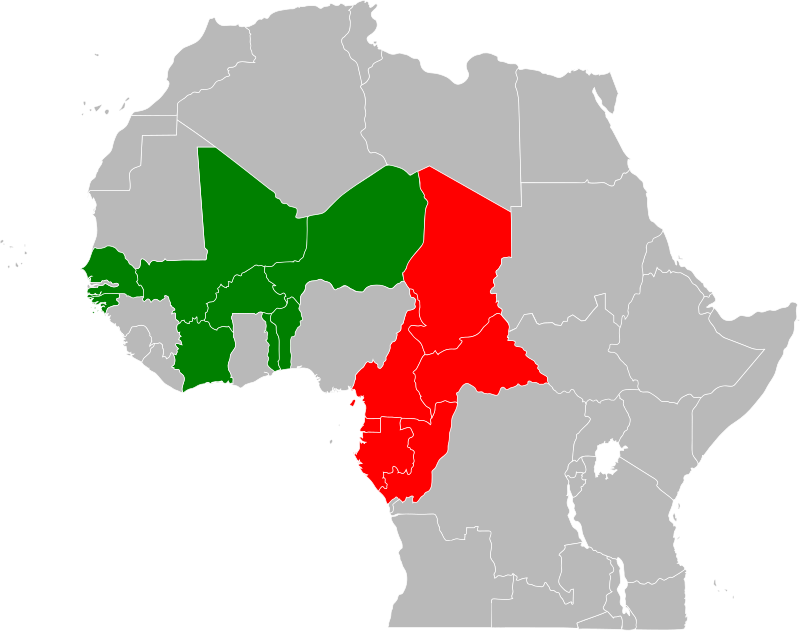
CFA franc
two common currencies of 14 African countries

Ségou
Ségou (; , ) is a town and an urban commune in south-central Mali that lies northeast of Bamako on the right bank of the River Niger. The town is the capital of the Ségou Cercle and the Ségou Region. With 130,690 inhabitants in 2009, it is the fifth-largest town in Mali.
French West Africa
French colonial federation in west Africa from 1895 to 1958

Mopti
Mopti (Fulfulde: Mobti) is a town and an urban commune in the Inner Niger Delta region of Mali. The town is the capital of the Mopti Cercle and the Mopti Region. Situated 630 km northeast of Bamako, the town lies at the confluence of the Niger and the Bani Rivers and is linked by an elevated causeway to the town of Sévaré. The urban commune, which includes both Mopti and Sévaré, had a population of 114,296 in the 2009 census.

Kayes
Kayes (; ; ) is a city in western Mali on the Sénégal River with a population of 127,368 at the 2009 census. Kayes is the capital of the administrative region of the same name. The city is located northwest of the capital Bamako.

Republic of Upper Volta
former country (1958–1984) in West Africa

Kunta Kinteh Island
island in Gambia
Kayes Region
region in Mali

French Sudan
French colonial territory in West Africa from 1880 to 1960, now Mali

Grand-Bassam
Grand-Bassam () is a town in southeastern Ivory Coast, lying east of Abidjan. It is a sub-prefecture of and the seat of Grand-Bassam Department; it is also a commune. During the late 19th century, Grand-Bassam was briefly the French colonial capital of Ivory Coast. Because of its outstanding examples of colonial architecture and town-planning, and the juxtaposition of the colonial town with a traditional Nzema village, the historic center of Grand-Bassam was designated a UNESCO World Heritage Site in 2012.
Fouta Djallon
region in the Republic of Guinea, West Africa
Benin Empire
West African kingdom (1180–1897)
Ségou Region
region of Mali

Kindia
Kindia (N’ko: ߞߌ߲ߘߌߦߊ߫) is the fourth largest city in Guinea, located about northeast of the nation's capital, Conakry. Its estimated population in 2008 was 181,126. Kindia serves as the capital and largest city of Kindia Prefecture and Kindia Region. It also functions as a sub-prefecture of Guinea.
Mossi people
ethnic group in Burkina Faso and Togo
Royal Palaces of Abomey
group of palaces in Africa
Dahomey Amazons
Fon all-female military regiment of the historical Kingdom of Dahomey
Republic of Dahomey
former country
Négritude
Négritude (from French "nègre" and "-itude" to denote a condition that can be translated as "Blackness"; ) is a framework of critique and literary theory, mainly developed by francophone intellectuals, writers, politicians, and visual artists in the African diaspora during the 1930s, aimed at raising and cultivating "black consciousness" across Africa and its diaspora. The progenitors of Négritude included the Martinican poet Aimé Césaire, Abdoulaye Sadji, Léopold Sédar Senghor (the first President of Senegal), and Léon Damas of French Guiana. Négritude intellectuals disavowed colonialism, rac
French Union
1946–1958 political entity replacing the French colonial system

marabout
In the Muslim world, the marabout () is a descendant of Muhammad (Arabic: سـيّد, romanized: sayyid and sidi in the Maghreb) and a Muslim religious leader and teacher who historically had the function of a chaplain serving as a part of an Islamic army, notably in North Africa and the Sahara region, in West Africa, and historically in the Maghreb.
French Upper Volta
former colony of French West Africa
French Togoland
former French colonial mandate
French Guinea
French colony in West Africa (1891-1958); now the country of Guinea
French Dahomey
former French colony
history of Senegal
aspect of history

Bougouni
thumb|Geological map of [[Birimian outcrops in Mali, at Bougouni and Kenieba]]
French Community
International political association

Bondoukou
Bondoukou (var. Bonduku, Bontuku) is a city in northeastern Ivory Coast, 420 km northeast of Abidjan. It is the seat of both Zanzan District and Gontougo Region. It is also a commune and the seat of and a sub-prefecture of Bondoukou Department.
history of Ivory Coast
aspect of history
Inner Niger Delta
Inland delta of the Niger River
history of Mauritania
aspect of history
Upper Senegal and Niger
former French colony
Bafing River
river
history of Niger
aspect of history
history of Guinea
aspect of history
Jolof Empire
former country

Tijaniyyah
The Tijjani order () is a Sufi order of Sunni Islam named after Ahmad al-Tijani. It originated in Algeria but is now more widespread in the Maghreb and West Africa, particularly in Senegal, Gambia, Mauritania, Mali, Guinea, Niger, Chad, Ghana, Northern and Southwestern Nigeria and some parts of Sudan. The Tijāniyyah order is also present in the states of Kerala, Tamil Nadu and Karnataka in India. Its adherents are called Tijānī (spelled Tijaan or Tiijaan in Wolof, Tidiane or Tidjane in French). Tijānīs place great importance on culture and education and emphasize the individual adhesion of the
Battle of Dakar
1940 WWII battle
Sara people
ethnic group in Chad, Sudan and Central African Republic
Empire Peul
former country
Massina Empire
former country
history of Benin
aspect of history
Samorian state
short-lived (1878–1898) empire of West Africa
Senegambia and Niger
former territory of French West Africa
Kaarta
Kaarta, (Also known as '''Ka'arta or the Massassi State''') was a Bambara kingdom that arose after the fall of the Songhai Empire in what is today the western half of Mali and lasted until its destruction by Umar Tall in the 1850s.

Bafoulabé
Bafoulabé is a town and rural commune in south-western Mali. It is located in the Region of Kayes at the confluence of the Bafing and Bakoy rivers which join to become the Sénégal River. Bafoulabé is the capital of the Cercle of Bafoulabé, which in 1887 was the first Cercle to be created in Mali.
Colony of Niger
French colonial possession

Baol
Baol or Bawol was a kingdom in what is now central Senegal. Founded in the 11th century, it was a vassal of the Jolof Empire before becoming independent in the mid-16th century. The ruler bore the title of Teigne (or Teeň) and reigned from the capital in Lambaye. The kingdom encompassed a strip of land extending east from the ocean and included the towns of Touba, Diourbel, and Mbacke. It was directly south of the Kingdom of Cayor and north of the Kingdom of Sine.

Mouride
The Mouride brotherhood (, aṭ-Ṭarīqat al-Murīdiyyah or simply , al-Murīdiyyah) is a large tariqa (Sufi order) most prominent in Senegal and The Gambia with headquarters in the city of Touba, which is a holy city for the order. Adherents are called Mourides, from the Arabic word murīd (literally "one who desires"), a term used generally in Sufism to designate a disciple of a spiritual guide. The beliefs and practices of the Mourides constitute Mouridism. Mouride disciples call themselves taalibé in Wolof and must undergo a ritual of allegiance called njebbel, as it is considered highly importan
Waalo
Waalo () was a kingdom on the lower Senegal River in West Africa, in what is now Senegal and Mauritania. It included parts of the valley proper and areas north and south, extending to the Atlantic Ocean. To the north were Moorish emirates; to the south was the kingdom of Cayor; to the east was Jolof.
Imamate of Futa Jallon
theocratic kingdom of present day Guinea
Senegalese Tirailleurs
colonial infantry in the French Army
Kénédougou Kingdom
Kénédougou Kingdom

Wassoulou
thumb|right|200px|The Wassoulou region of West Africa
French West Africa in World War II
French colonial territories in West Africa during the Second World War