Category
page 2Fungicides
ziram
chemical compound
maneb
Maneb (manganese ethylene-bis-dithiocarbamate) is a fungicide and a polymeric complex of manganese with the ethylene bis (dithiocarbamate) anionic ligand.
fenamidone
Fenamidone is a foliar fungicide used on grapes, ornamentals, potatoes, tobacco, and vegetables such as tomatoes. It exerts its fungicidal effects by acting as a Qo inhibitor.
2,4,5-trichlorophenol
2,4,5-Trichlorophenol (TCP) is an organochloride with the molecular formula C6H3Cl3O. It has been used as a fungicide and herbicide. Precursor chemical used in the production of 2,4,5-Trichlorophenoxyacetic acid (2,4,5-T) and hexachlorophene involves the intermediate production of 2,4,5-trichlorophenol (TCP) and the formation of 2,3,7,8-Tetrachlorodibenzodioxin (TCDD, commonly referred to simply as dioxin) as an unwanted by-product. In the course of purifying the hexachlorophene, still bottom wastes were created with concentrated levels of TCP and dioxin.
fuberidazole
Fuberidazole (chemical formula: C11H8N2O) is a chemical compound used in fungicides.
lactofen
Lactofen is a complex ester of acifluorfen and is a nitrophenyl ether selective herbicide and fungicide. It is used in postemergence applications to certain crops which are resistant to its action. The name "Lactofen" is approved by the American National Standards Institute and the Weed Science Society of America, and is also approved in China (乳氟禾草灵).
fenpropimorph
Fenpropimorph is a morpholine-derived fungicide used in agriculture, primarily on cereal crops such as wheat. It has been reported to disrupt eukaryotic sterol biosynthesis pathways, notably by inhibiting fungal Δ14 reductases. It has also been reported to inhibit mammalian sterol biosynthesis by affecting lanosterol demethylation. Although used in agriculture for pest management purposes, it has been reported to have a strong adverse effect on sterol biosynthesis in higher-plants by inhibiting the cycloeucalenol-obtusifoliol isomerase. This inhibition was shown to not only alter the lipid com
thiophanate-methyl
Thiophanate-methyl is an organic compound with the formula C6H4(NHC(S)NH(CO)OCH3)2. The compound is a colorless or white solid, although commercial samples are generally tan-colored. It is prepared from o-phenylenediamine. It is a widely used fungicide used on tree, vine, and root crops. In Europe it is applied to tomato, wine grapes, beans, wheat, and aubergine.
pencycuron
Pencycuron is a phenylurea fungicide developed by Bayer Crop Science and marketed under the brand name Monceren. It has specific activity against the plant pathogen Rhizoctonia solani for which it was developed.
Hexachlorocyclohexa-2,5-dien-1-one
Hexachlorocyclohexa-2,5-dien-1-one, sometimes informally called hexachlorophenol (HCP), is an organochlorine compound. It can be prepared from phenol. Despite the informal name, the compound is not a phenol but is a ketone. The informal name is derived from its method of preparation which includes phenol as a reagent.
2,3,5,6-tetrachloro-4-(methylsulfonyl)pyridine
Davicil is a chlorinated pyridine derivative with antimicrobial properties, which is used as a fungicide. It can be allergenic in humans and produce contact dermatitis.
validamycin A
Validamycin is an antibiotic and fungicide produced by Streptomyces hygroscopicus. An inhibitor of trehalase, validamycin is used for the control of sheath blight of rice and damping-off of cucumbers.
fludioxonil
Fludioxonil is a synthetic phenylpyrrole chemical introduced by Ciba-Geigy (now Syngenta) in 1993 for use as a non-systemic fungicide. It is a structural analog of the natural fungicide pyrrolnitrin.
pyrazophos
Pyrazophos is an organic compound used as a fungicide and an insecticide.
cyproconazole
Cyproconazole is an agricultural fungicide of the class of azoles, used on cereal crops, coffee, sugar beet, fruit trees and grapes, and peanuts, on sod farms and golf course turf and on wood as a preservative. It has been used against powdery mildew, rust on cereals and apple scab, and applied by air or on the ground or by chemigation.
fenarimol
Fenarimol, sold under the tradenames Bloc, Rimidin and Rubigan, is a fungicide which acts against rusts, blackspot and mildew fungi. It is used on ornamental plants, trees, lawns, tomatoes, peppers, eggplants, cucumbers and melons. It is mainly used to control powdery mildew. It works by inhibiting the fungus's biosynthesis of important steroid molecules (via blockade of the CYP51 enzyme).
boscalid
Boscalid is a broad spectrum fungicide used in agriculture to protect crops from fungal diseases. It was first marketed by BASF in 2002 using their brand name Endura. The compound is an biphenyl amide derived inhibitor of succinate dehydrogenase.
(3R,8S)-Falcarindiol
Falcarindiol is a polyyne found in carrot roots which has antifungal activity. Falcarindiol is the main compound responsible for bitterness in carrots. Falcarindiol and other falcarindiol-type polyacetylenes are also found in many other plants of the family Apiaceae, including some commonly used seasonings such as dill and parsley.
dichlofluanid
Dichlofluanid ('''N-dichlorofluoromethylthio-', '-dimethyl-N-phenylsulfamide') is a fungicide used to protect strawberries, grapes, berries, apples, pears and other fruit, vegetables and ornamental plants from diseases such as apple scab (Venturia inaequalis), black spot, leather rot, gray mold, downy mildew and others caused by the fungi Botrytis, Alternaria, Sclerotinia, and Monilinia.'' It is also used to protect against diseases of fruit during storage, and as a wood preservative, often as part of a paint undercoat.
chromated copper arsenate
wood preservative
Burgundy mixture
fungicidal spray
thujaplicin
Thujaplicin (isopropyl cycloheptatrienolone) is any of three isomeric tropolone-related natural products that have been isolated from the softwoods of the trees of Cupressaceae family. These compounds are known for their antibacterial, antifungal, and antioxidant properties. They were the first natural tropolones to be made synthetically.
dimethomorph
Dimethomorph is a fungicide with systemic function. It is used for treating mildew and root rot caused by fungi such as those in the genera Pythium and Phytophthora.
diethofencarb
Diethofencarb is a carbamate fungicide which is used to control Botrytis infections on a variety of fruit and vegetable crops.
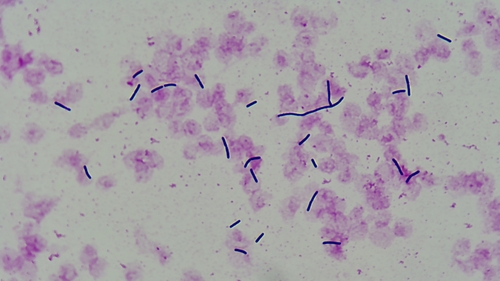
Bacillus pumilus
species of bacterium
ferbam
chemical compound
2-nitro-1-phenylethylene
β-Nitrostyrene is an aromatic compound and a nitroalkene used in the synthesis of the slimicide .
fluopyram
Fluopyram is a synthetic fungicide and nematicide used in agriculture. It is used to control fungal diseases such as gray mold (Botrytis cinerea), powdery mildew, apple scab, Alternaria, Sclerotinia, and Monilinia. It is an inhibitor of succinate dehydrogenase (SDHI fungicide).
2,5-dimethoxy-p-cymene
'2,5-Dimethoxy-p-cymene, or thymohydroquinone dimethyl ether', is a phytochemical found in the essential oils of plants within the family Asteraceae. These essential oils, which contain the compound as a major component of the oil, have antifungal, antibacterial, and insecticidal properties.
zinc borate
borate of zinc
prothioconazole
Prothioconazole is a synthetic chemical produced primarily for its fungicidal properties. It is a member of the class of compounds triazoles, and possesses a unique toxophore in this class of fungicides. Its effective fungicidal properties can be attributed to its ability to inhibit CYP51A1. This enzyme is required to biosynthesize ergosterol, a key component in the cell membrane of fungi.
dichlone
Dichlone (trade names Phygon and Quintar) is a fungicide and algicide of the quinone class. It is a general use fungicide applied to fruits, vegetables, field crops, ornamentals, and residential and commercial outdoor areas. It is also used to control blue algae.
triadimefon
Triadimefon is a fungicide used in agriculture to control various fungal diseases. As a seed treatment, it is used on barley, corn, cotton, oats, rye, sorghum, and wheat. In fruit it is used on pineapple and banana. Non-food uses include pine seedlings, Christmas trees, turf, ornamental plants, and landscaping.
==Pharmacology==
Estrogenic effect, inhibition of aromatase activity, decrease of estrogens production and increase androgens availability.
tetraiodoethylene
Tetraiodoethylene, TIE or diiodoform, is an organoiodine compound with the chemical formula . Its structure is . It is an odourless yellow crystalline solid that is soluble in benzene and chloroform, and insoluble in water. It has been used as an antiseptic and a component in pesticide and fungicide formulations. It is the periodinated analogue of ethylene. It is a decomposition product of carbon tetraiodide and diiodoacetylene.
fluazinam
Fluazinam is a broad-spectrum fungicide used in agriculture. It is classed as a diarylamine and more specifically an arylaminopyridine. Its chemical name is '3-chloro-N-(3-chloro-2,6-dinitro-4-trifluoromethylphenyl)-5-trifluoromethyl-2-pyridinamine'.
tolylfluanid
Tolylfluanid is an organic chemical compound that is used as an active ingredient in fungicides and wood preservatives.
prochloraz
Prochloraz, brand name Sportak, is an imidazole fungicide that was introduced in 1978 and is widely used in Europe, Australia, Asia, and South America within gardening and agriculture to control the growth of fungi. It is not registered for use in the United States.
pterulone
Pterulone is a fungal metabolite. It was initially isolated from the mycelium and liquid cultures of wood-decay fungus in the genus Pterula. The compound inhibits eukaryotic respiration by targeting the mitochondrial NADH:ubiquinone oxidoreductase.
(2E)-2-hexenal
'''trans-2-Hexenal' is an organic unsaturated aldehyde with a six-carbon chain. This clear, pale yellow liquid has a green, leafy, herbal fruit smell. It occurs naturally in a wide variety of plants, fruits, vegetables, and spices, and appears to be an important mediating and signalling chemical in plant-fungus and plant-insect interactions, such as the symbiosis between acacia ants and Acacias''.