Category
page 1Gaseous signaling molecules

hydrogen
Hydrogen is a chemical element; it has the symbolH and atomic number1. It is the lightest and most abundant chemical element in the universe, constituting about 75% of all normal matter. Under standard conditions, hydrogen is a gas of diatomic molecules with the formula, called dihydrogen, or sometimes hydrogen gas, molecular hydrogen, or simply hydrogen. Dihydrogen is colorless, odorless, non-toxic, and highly combustible. Stars, including the Sun, mainly consist of hydrogen in a plasma state, while on Earth, hydrogen is found as the gas (dihydrogen) and in molecules, such as in water and org

carbon dioxide
chemical compound

methane
Methane ( , ) is a chemical compound that has the chemical formula (one carbon atom bonded to four hydrogen atoms). It is a group-14 hydride, the simplest alkane, and the main constituent of natural gas. The abundance of methane on Earth makes it an economically attractive fuel, although capturing and storing it is difficult because it is a gas at standard temperature and pressure. In the Earth's atmosphere methane is transparent to visible light but absorbs infrared radiation, acting as a greenhouse gas. Methane is an organic hydrocarbon, and among the simplest of organic compounds.

ammonia

carbon monoxide
chemical compound

sulfur dioxide
chemical compound

hydrogen sulfide
chemical compound

hydrogen cyanide
chemical compound
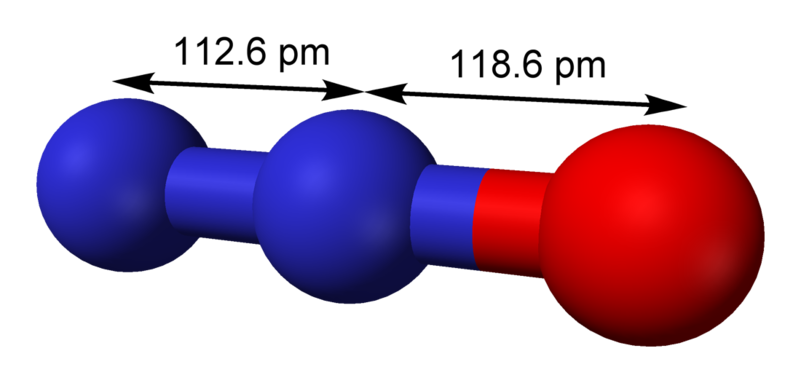
nitrous oxide
chemical compound

nitric oxide
chemical compound

ethylene oxide
chemical compound
carbon suboxide
chemical compound
gaseous signaling molecule
molecular gases which transmit information within organisms, for example NO, CO, H2S, SO2
Ethylene as a plant hormone
Alkene gas naturally regulating the plant growth
Biological functions of nitric oxide
Functions of nitric oxide in organisms