Category
page 1Gauge theories
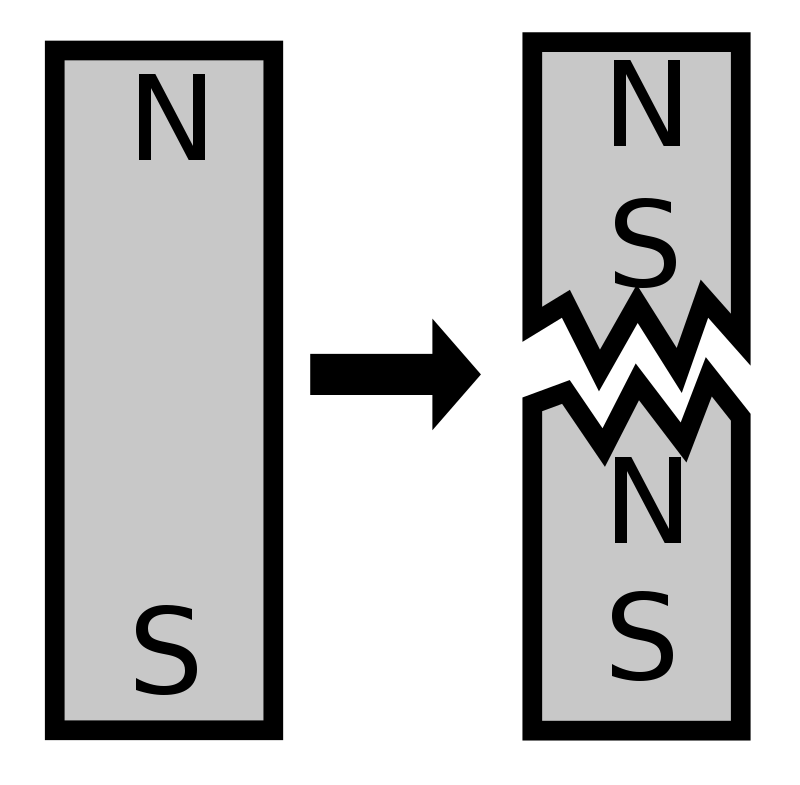
magnetic monopole
hypothetical particle with one magnetic pole
gauge theory
physical theory having a gauge symmetry
Yukawa potential
screened Coulomb potential that exponentially decays
asymptotic freedom
phenomenon in certain quantum systems in which the coupling constant becomes small at high energy scales
Higgs field
scalar field whose vacuum expectation value spontaneously breaks electroweak gauge symmetry
vacuum polarization
virtual anti-particle pair production giving self-energy to the electromagnetic field
Yang–Mills theory
nonabelian generalization of electrodynamics, which can be used to describe electroweak and strong nuclear interactions
Faddeev–Popov ghost
type of unphysical field in quantum field theory which provides mathematical consistency
vector boson
boson with the spin equal to 1

instanton
An instanton (or pseudoparticle) is a notion appearing in theoretical and mathematical physics. An instanton is a classical solution to equations of motion with a finite, non-zero action, either in quantum mechanics or in quantum field theory. More precisely, it is a solution to the equations of motion of the classical field theory on a Euclidean spacetime.

S-duality
In theoretical physics, S-duality (short for strong–weak duality, or Sen duality) is an equivalence of two physical theories, which may be either quantum field theories or string theories. S-duality is useful for doing calculations in theoretical physics because it relates a theory in which calculations are difficult to a theory in which they are easier.
Proca action
action of a massive abelain gauge field
Wilson loop
gauge-invariant observable obtained from the holonomy of the gauge connection around a given loop
Yang–Mills existence and mass gap
Millennium Prize Problem
Ward–Takahashi identity
identity in abelian gauge theories due to gauge invariance
gluon field
four-vector field characterizing the propagation of gluons in the strong interaction between quarks
amplituhedron
thumb|Notional amplituhedron visualization
In mathematics and theoretical physics (especially twistor string theory), an amplituhedron is a geometric structure introduced in 2013 by Nima Arkani-Hamed and Jaroslav Trnka. It enables simplified calculation of particle interactions in some quantum field theories. In planar N = 4 supersymmetric Yang–Mills theory, also equivalent to the perturbative topological B model string theory in twistor space, an amplituhedron is defined as a mathematical space known as the positive Grassmannian.
dyon
In physics, a dyon is a hypothetical particle in 4-dimensional theories with both electric and magnetic charges. A dyon with a zero electric charge is usually referred to as a magnetic monopole. Many Grand Unified Theories predict the existence of both magnetic monopoles and dyons.

gauge fixing
procedure of coping with redundant degrees of freedom in physical field theories
Floer homology
symplectic topology tool
BRST quantization
formulation to quantize gauge field theories in physics
supersymmetric gauge theory
quantum field theory involving both gauge symmetry and supersymmetry
gauge group
group of gauge symmetries in a gauge theory
path-ordering
In theoretical physics, path-ordering is the procedure (or a meta-operator \mathcal P) that orders a product of operators according to the value of a chosen parameter:
gauge theory gravity
theory of gravitation cast in the mathematical language of geometric algebra
minimal coupling
field theory coupling of charge but not higher moments
Seiberg–Witten gauge theory
analytic solution for N=2 supersymmetric gauge theories
gauge symmetry
differential operator acting on vector bundles
gluon field strength tensor
second order tensor field characterizing the gluon interaction between quarks