Category
page 1Gelsemiaceae

Gelsemiaceae
Gelsemiaceae is a family of flowering plants, belonging to the order Gentianales. The family contains only three genera: Gelsemium, Mostuea and Pteleocarpa. Gelsemium has three species, one native to Southeast Asia and southern China and two native to Central America, Mexico, and the southeastern United States. The eight species of Mostuea are native to tropical areas of South America, Africa, and Madagascar. The two genera were formerly classified in the family Loganiaceae.
Pteleocarpa was originally placed in Boraginaceae or in its own family Pteleocarpaceae, but it is most closely related t

Gelsemium
Gelsemium is an Asian and North American genus of flowering plants belonging to family Gelsemiaceae. The genus contains three species of shrubs to straggling or twining climbers. Two species are native to North America, and one to China and Southeast Asia.

Gelsemium sempervirens
species of plant

Gelsemium elegans
species of plant

Gelsemium rankinii
species of plant
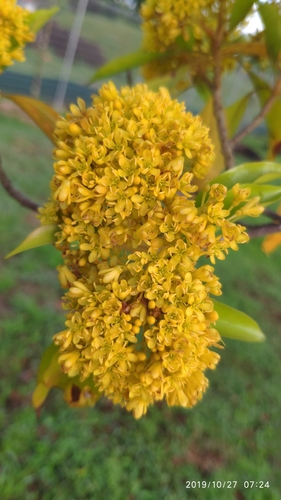
Pteleocarpa lamponga
Pteleocarpa is a genus of flowering plants. The only member of the genus is the western Malesian tree Pteleocarpa lamponga. It has had a varied systematic history and has been placed in the families Icacinaceae, Cardiopteridaceae, Boraginaceae, and others. It has long been regarded as enigmatic. For example, its winged fruit is quite odd within the family Boraginaceae, where it was usually placed in the 2000s. The family name Pteleocarpaceae had been used, but was not validly published until 2011, when the required description was published in Kew Bulletin. A morphological study of Pteleocarpa
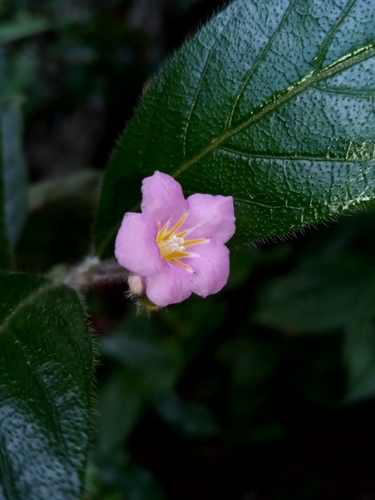
Mostuea
Mostuea is one of only three genera of flowering plants belonging to the small family Gelsemiaceae (the other two being Gelsemium and Pteleocarpa). Mostuea and Gelsemium were formerly placed in the family Loganiaceae, while Pteleocarpa was placed variously in the families Icacinaceae, Cardiopteridaceae, Boraginaceae, and others, before the description of the Gelsemiaceae was altered formally to accommodate it in 2014. Mostuea is native to Africa and South America. Anecdotal evidence suggests that the roots of certain Mostuea species are used as ritual aphrodisiacs and entheogens in West Tropic