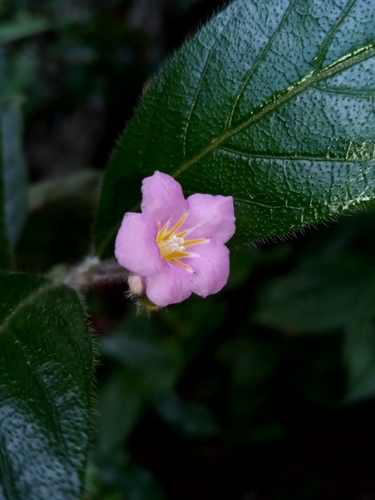
(c) David Rabehevitra, some rights reserved (CC BY-NC), uploaded by David Rabehevitra · cc-by-nc
Mostuea
Sign in to saveMostuea is one of only three genera of flowering plants belonging to the small family Gelsemiaceae (the other two being Gelsemium and Pteleocarpa). Mostuea and Gelsemium were formerly placed in the family Loganiaceae, while Pteleocarpa was placed variously in the families Icacinaceae, Cardiopteridaceae, Boraginaceae, and others, before the description of the Gelsemiaceae was altered formally to accommodate it in 2014. Mostuea is native to Africa and South America. Anecdotal evidence suggests that the roots of certain Mostuea species are used as ritual aphrodisiacs and entheogens in West Tropic
Species
GENUS
- KingdomPlantae
- PhylumTracheophyta
- ClassMagnoliopsida
- OrderGentianales
- FamilyGelsemiaceae
via GBIF · Kew POWO
Museum specimens
- Specimen records
- 187
- With media
- 180
- Family
- Gelsemiaceae
- Collections
- NY, INSTITUTO NACIONAL DE PESQUISAS DA AMAZÔNIA (INPA), MNHN, UT
- Recorded in
- Tanzania, Brasil, Gabon, RéPublique DéMocratique Du Congo, Cameroon, Congo (Kinshasa), Equatorial Guinea, Zimbabwe
Wikidata facts
- Instance of
- taxon
- Parent taxon
- Gelsemiaceae
Show 5 more facts
- taxon name
- Mostuea
- taxon rank
- genus
- topic's main category
- Category:Mostuea
- Commons category
- Mostuea
Sources (1)
via Wikidata · CC0
~13 min read
Encyclopedic overview
9 sectionsContents
- Taxonomy
- Description
- Species
- Toxicity and use in traditional medicine
- Hallucinogen
- Parallels with hallucinogen-like effects of Gelsemium
- In the wider context of entheogens used in indigenous Gabonese religions
- Chemistry
- References
Mostuea is one of only three genera of flowering plants belonging to the small family Gelsemiaceae (the other two being Gelsemium and Pteleocarpa). Mostuea and Gelsemium were formerly placed in the family Loganiaceae, while Pteleocarpa was placed variously in the families Icacinaceae, Cardiopteridaceae, Boraginaceae, and others, before the description of the Gelsemiaceae was altered formally to accommodate it in 2014. Mostuea is native to Africa and South America. Anecdotal evidence suggests that the roots of certain Mostuea species are used as ritual aphrodisiacs and entheogens in West Tropical Africa.
==Taxonomy== thumb|upright|right|Danish botanist and physicist Didrik Ferdinand Didrichsen, publisher of the genus Mostuea. The genus was described by Didrik Ferdinand Didrichsen and published in Denmark in Videnskabelige Meddelelser fra Dansk Naturhistorisk Forening i Kjøbenhavn (translation: Scientific Announcements from the Danish Society for Natural History in Copenhagen) 1853: 86. 1853.2. It is named in honour of the Danish botanist Jens Laurentius (Lorenz) Moestue Vahl (1796–1854), son of the botanist Martin Vahl. The type species is Mostuea brunonis Didr.
Excerpted from Wikipedia’s “Mostuea” article, available under the CC BY-SA 4.0 licence.