Category
page 1Greek-language commentators on Plato
%20-%20Veloso%20Salgado.png)
Galen
Aelius Galenus or Claudius Galenus (; September 129 – CE), often anglicized as Galen () or Galen of Pergamon, was a Roman and Greek physician, surgeon, and philosopher. Considered to be one of the most accomplished of all medical researchers of antiquity, Galen influenced the development of various scientific disciplines, including anatomy, physiology, pathology, pharmacology, and neurology, as well as philosophy and logic.

Plotinus
Plotinus (; , Plōtînos; – 270 CE) was a Hellenistic Greek philosopher, born and raised in Roman Egypt. Plotinus is regarded by modern scholarship as the founder of Neoplatonism.

Porphyry
3rd-century Greek Neoplatonist philosopher

Proclus
Proclus Lycius (; 8 February 412 – 17 April 485), called Proclus the Successor (, ), was a Greek Neoplatonist philosopher, one of the last major classical philosophers of late antiquity. He set forth one of the most elaborate and fully developed systems of Neoplatonism and, through later interpreters and translators, exerted an influence on Byzantine philosophy, early Islamic philosophy, scholastic philosophy, and German idealism, especially G. W. F. Hegel, who called Proclus's Platonic Theology "the true turning point or transition from ancient to modern times, from ancient philosophy to
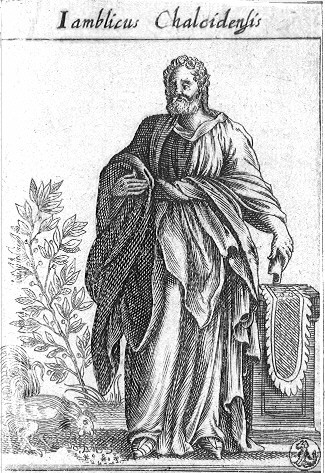
Iamblichus
Iamblichus ( ; ; ; ) was a Syrian Arab Neoplatonist philosopher who determined a direction later taken by Neoplatonism. Iamblichus was also the biographer of the Greek mystic, philosopher, and mathematician Pythagoras. In addition to his philosophical contributions, his is important for the study of the sophists because it preserved about ten pages of an otherwise unknown sophist known as the Anonymus Iamblichi.

Gemistus Pletho
15th-century Byzantine Greek philosopher
.jpg)
Damascius
Damascius (; ; 462 – after 538), known as "the last of the Athenian Neoplatonists", was the last scholarch of the neoplatonic Athenian school. He was one of the neoplatonic philosophers who left Athens after laws confirmed by emperor Justinian I forced the closure of the Athenian school in c. 529 AD. After he left Athens, he may have sought refuge in the court of the Persian King Chrosroes, before being allowed back into the Byzantine Empire. His surviving works consist of three commentaries on the works of Plato, and a metaphysical text entitled Difficulties and Solutions of First Princ
Georgios Pachymeres
Byzantine scholar (1242–1310)
Ammonius Hermiae
5th-century Greek philosopher
Cassius Longinus
Syrian/Egyptian Neoplatonist philosopher (c.213–273)
Crantor
Crantor of Soli (, gen.: Κράντορος; died 276/5 BC) was an Ancient Greek philosopher and member of the Old Academy who was the first philosopher to write commentaries on the works of Plato.
Syrianus
Syrianus (, Syrianos; died c. 437 A.D.) was a Greek Neoplatonist philosopher, and head of Plato's Academy in Athens, succeeding his teacher Plutarch of Athens in 431/432 A.D. He is important as the teacher of Proclus, and, like Plutarch and Proclus, as a commentator on Plato and Aristotle. His best-known extant work is a commentary on the Metaphysics of Aristotle. He is said to have written also on the De Caelo and the De Interpretatione of Aristotle and on Plato's Timaeus.

Ploutarchos of Athens
Greek philosopher (c. 350 – 430 AD)
Arethas of Caesarea
Byzantine theologian
Olympiodorus the Younger
Neoplatonist philosopher (c.495–570)
Hermias
Greek philosopher
Eudorus of Alexandria
1st century BC Greco-Egyptian philosopher
Clearchus of Soli
4th-century BC Greek philosopher
Adrastus of Aphrodisias
ancient Greek philosopher
Onasander
Onasander or Onosander ( Onesandros or Ὀνόσανδρος Onosandros; fl. 1st century AD) was a Greek philosopher. He was the author of a commentary on the Republic of Plato, which is lost; as well as of the Strategikos () - a short but comprehensive work on the duties of a general, which was dedicated to Quintus Veranius. The Strategikos was the main source used for the military writings of emperors Maurice and Leo VI, as well as of Maurice of Saxony, who consulted it in a French translation and expressed a high opinion of it.
Aspasius
Aspasius (; ; c. 80 – c. 150 AD) was a Peripatetic philosopher. Boethius, who frequently referred to his works, said he wrote commentaries on most of the works of Aristotle.
Asclepiodotus of Alexandria
Roman philosopher
Atticus
2nd century Greek philosopher
Theodorus of Asine
Roman philosopher
Harpocration of Argos
ancient Greek philosopher
Potamo of Alexandria
eclectic philosopher
Lucius Calbenus Taurus
2nd century Greek philosopher of the Middle Platonist school