Category
page 1Group theory

number
thumb|Set inclusions between the [[natural numbers ]]
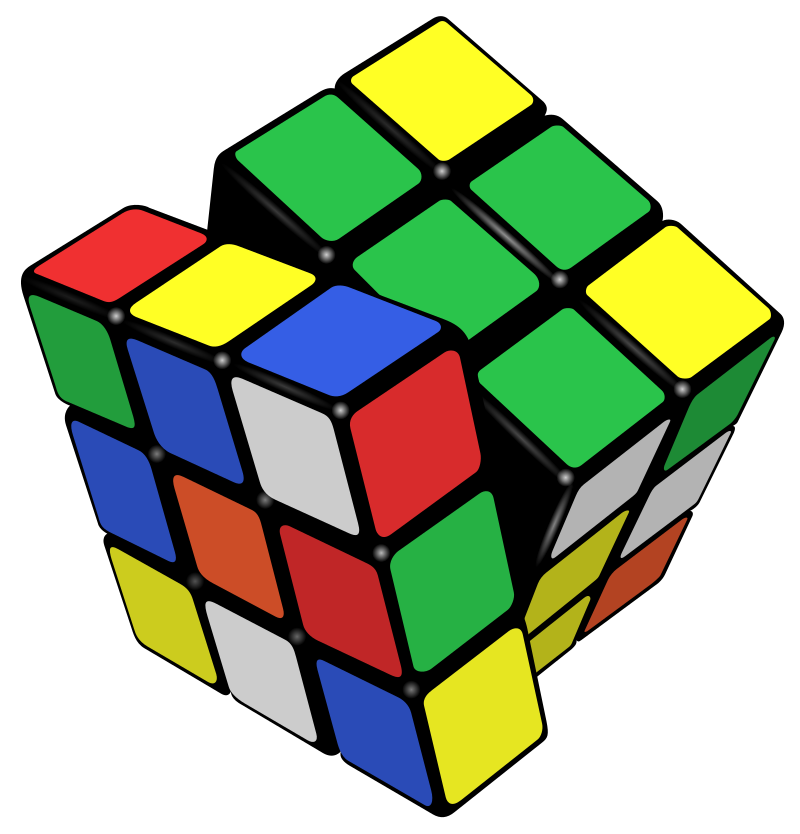
group
algebraic set with an invertible, associative internal operation admitting a neutral element
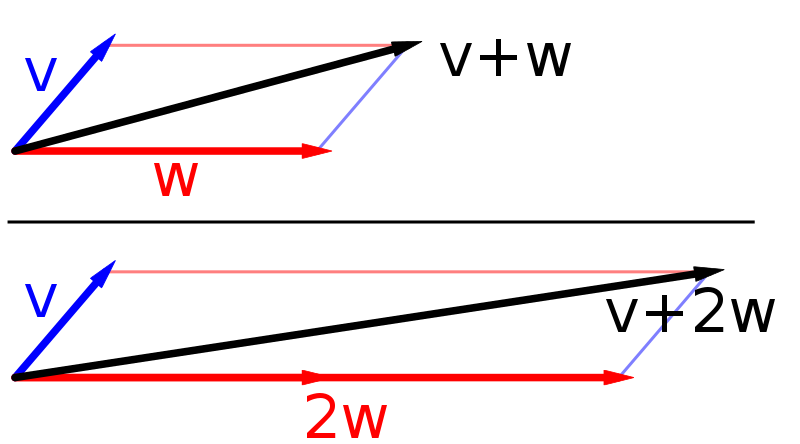
vector space
the basic algebraic structure of linear algebra; a module over a field, such that its elements can be added together or scaled by elements of the field

group theory
branch of mathematics that studies the algebraic properties of groups

Caesar cipher
simple and widely known encryption technique
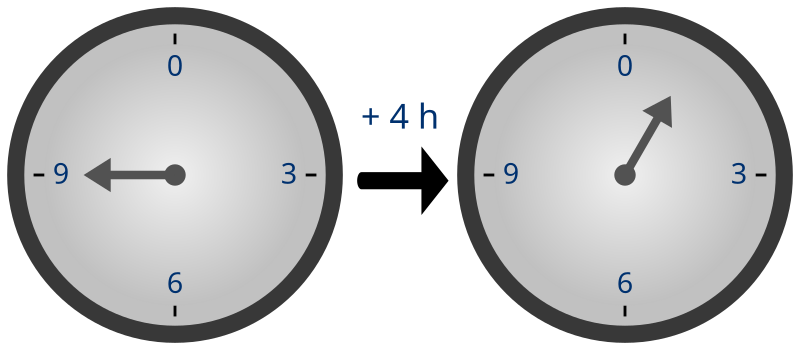
modular arithmetic
system of algebraic operations defined for remainders under division by a fixed positive integer; system of arithmetic for integers, where numbers "wrap around" upon reaching a certain value—the modulus

subgroup
In group theory, a branch of mathematics, a subset of a group G is a subgroup of G if the members of that subset form a group with respect to the group operation in G.

elliptic curve
a smooth projective curve of genus 1 equipped with a rational basepoint
group homomorphism
function between groups that preserves multiplication structure
Banach–Tarski paradox
theorem that there exists a decomposition of a unit solid ball into a finite number of disjoint subsets, which can be put back together in a different way to yield two identical copies of the unit sphere
group representation
group homomorphism into the general linear group over a vector space
quotient group
group obtained by aggregating similar elements of a larger group
group action
operation of the elements of a group as transformations or automorphisms (mathematics)
coset
thumb| is the group \mathbb{Z}/8\mathbb{Z}, the Integers modulo n|integers mod 8 under addition. The subgroup contains only 0 and 4. There are four left cosets of : itself, , , and (written using additive notation since this is the [[additive group). Together they partition the entire group into equal-size, non-overlapping sets. The index is 4.]]
symmetry group
group of transformations under which the object is invariant
classification of finite simple groups
theorem
discrete logarithm
problem of inverting exponentiation in finite groups

quasigroup
In mathematics, especially in abstract algebra, a quasigroup is an algebraic structure that resembles a group in the sense that "division" is always possible. Quasigroups differ from groups mainly in that the associative and identity element properties are optional. In fact, a nonempty associative quasigroup is a group.
conjugacy class
set of group elements of the form g⁻¹hg for fixed h and ranging over all g
center
the set of elements that commute with every element of a group
Erlangen program
research program on the symmetries of geometry
commutator
In mathematics, the commutator gives an indication of the extent to which a certain binary operation fails to be commutative. There are different definitions used in group theory and ring theory.
unit
in mathematics, an invertible element or a unit in a ring R
Cayley graph
graph whose vertices and edges represent the elements of a group and their products with the generators of the group
Lorentz group
Lie group of Lorentz transformations
group isomorphism
bijective group homomorphism
order
Wikimedia article covering multiple topics
additive identity
an element which, when added to any element x in the set, yields x
generating set of a group
subset of a group such that all group elements can be expressed by finitely many group operations on its elements
point group
group of geometric symmetries (isometries) that keep at least one point fixed
quaternion group
finite group with 8 elements, whose elements can be represented by multiplication of unit quaternions {±1, ±i, ±j, ±k}
commutator subgroup
smallest normal subgroup by which the quotient is commutative
parity of a permutation
group homomorphism from the symmetric group over a finite set to the two-element group {±1}
geometric group theory
area in mathematics devoted to the study of finitely generated groups
inner automorphism
automorphism of a group defined by conjugation of one of its elements
centralizer
subgroup of a group G that each leaves invariant each element of a given subset of a G-set
Heisenberg group
Lie group of 3×3 upper triangular matrices under matrix multiplication
Newton's identities
relations between power sums and elementary symmetric functions
index of a subgroup
measure of the relative magnitude to an overall mathematical group
María Wonenburger
Spanish mathematician
group extension
group for which a given group is a normal subgroup
Frattini subgroup
intersection of all maximal proper subgroups
irreducible representation
type of linear representation
category of groups
category of groups and group homomorphisms
modular group
orientation-preserving mapping class group of the torus
monstrous moonshine
connection between representation theory of the monster group and the modular j-invariant
group of Lie type
in mathematics, a family of finite groups
history of group theory
aspect of history
additive group
group of which the group operation is to be thought of as addition
Dedekind group
group such that every its subgroup is normal
glossary of group theory
Wikimedia glossary list article
point groups in three dimensions
groups of point isometries in 3 dimensions

SL2(R)
In mathematics, the special linear group SL(2, R) or SL2(R) is the group of 2 × 2 real matrices with determinant one:
\mbox{SL}(2,\mathbf{R}) = \left\{ \begin{pmatrix}
a & b \\
c & d
\end{pmatrix} \colon a,b,c,d \in \mathbf{R}\mbox{ and }ad-bc=1\right\}.
absolutely convex set
convex and balanced set
Landau's function
function which returns the largest least common multiple of any partition of its input
baby-step giant-step
algorithm for solving the discrete logarithm problem
character table
two-dimensional group theory table
multiplicative group
several notions
cycle graph
graph, constructed for a group
affine group
Group of all affine transformations of an affine space