Category
page 1Habitats

forest
thumb|upright=1.4|The Amazon rainforest alongside the [[Solimões River, a tropical rainforest. These forests are the most biodiverse and productive ecosystems in the world.]]
thumb|upright=1.4|Proportion and distribution of global forest area by climatic domain, 2020

biome
thumb|upright=1.654|One way of mapping terrestrial biomes around the world (excluding Tundra#Antarctic|Antarctic tundra)
.JPG)
habitat
thumb|This coral reef in the [[Phoenix Islands Protected Area provides habitat for numerous marine species.]]
thumb|Few creatures make the ice shelf|ice shelves of [[Antarctica their habitat, but water beneath the ice can provide habitat for multiple species. Animals such as penguins have adapted to live in very cold conditions.]]
thumb| Ibex in an alpine habitat

pond
thumb|Pond at Koarnjum|Cornjum, Netherlands
thumb|A man made pond at sunset in Montgomery County, Ohio.
thumb|[[Stereoscope|Stereoscopic image of a pond in Central City Park, Macon, GA, . This pond is collectively formed by digging up a large earth

puddle
thumb|Reflection (physics)|Reflections in a forest puddle

littoral zone
part of a sea, lake or river that is close to the shore

biocoenosis
thumb|
.jpeg)
heath
thumb|upright=1.5|Flowering heath on Amrum, Germany
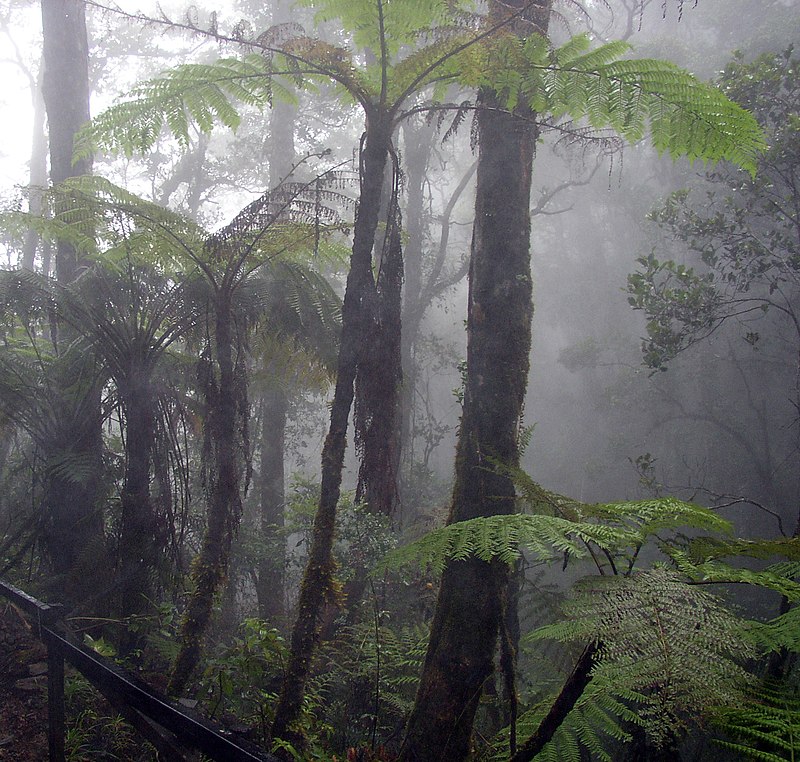
cloud forest
rainforest occuring at higher elevations and topographic positions, often characterized by fog
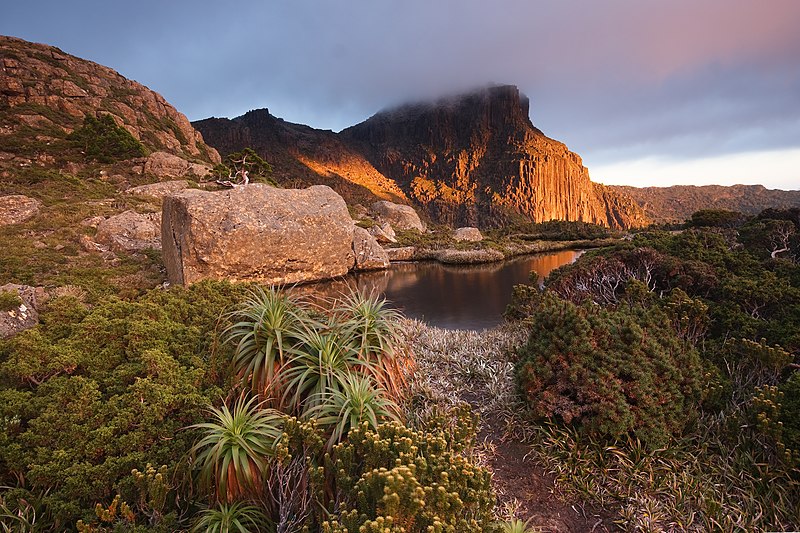
plant community
collection or association of plant species within a designated geographical unit

ecotone
thumb|Reed beds are a common form of lakeside ecotone. The beds tend to accumulate organic matter which is then colonised by trees, forcing the reeds further into the lake.
An ecotone is a transitional area between two plant communities, where these meet and integrate. Examples include areas between grassland and forest, estuary and lagoon, and freshwater and sea water. An ecotone may be narrow or wide, and it may be local (the zone between a field and forest) or regional (the transition between forest and grassland ecosystems). An ecotone may appear on the ground as a gradual blending of the
temperate rainforest
forest in the temperate zone with heavy rainfall

woodland
thumb|upright=1.35|An open woodland in North Lanarkshire, ScotlandA woodland () is, in the broad sense, land covered with woody plants (trees and shrubs), or in a narrow sense, synonymous with wood (or in the U.S., the plurale tantum woods), a low-density forest forming open habitats with plenty of sunlight and limited shade (see differences between British, American and Australian English explained below). Some savannas may also be woodlands, such as savanna woodland, where trees and shrubs form a light canopy.
intertidal zone
area between tide marks
habitat fragmentation
discontinuities in an organism's environment causing population fragmentation and ecosystem decay
habitat destruction
state when natural environment becomes unable to support its native species due to human activity
wildlife corridor
protected pathway for animals connecting wild territories
phytosociology
Phytosociology, also known as phytocoenology or simply plant sociology, is the study of groups of species of plant that are usually found together. Phytosociology aims to empirically describe the vegetative environment of a given territory. A specific community of plants is considered a social unit, the product of definite conditions, present and past, and can exist only when such conditions are met. In phyto-sociology, such a unit is known as a phytocoenosis (or phytocoenose). A phytocoenosis is more commonly known as a plant community, and consists of the sum of all plants in a given area. I
gallery forest
type of riparian forest in dry regions
riparian forest
forested or wooded area of land adjacent to a body of water

moorland
thumb|upright=1.4|Extensive moorland in the Desert of Wales
riparian zone
interface between land and a river or stream
tropical and subtropical grasslands, savannas, and shrublands
terrestrial habitat type defined by the World Wide Fund for Nature
natural landscape
original landscape formed by nature
restoration ecology
scientific study of renewing and restoring ecosystems
edge effects
changes in population or community structures that occur at the boundary of two or more habitats
%202.jpg)
thicket
thumb|upright=1.5|A thicket of silver birch Betula pendula in [[Saratov Oblast, Russia]]
A thicket is a very dense stand of trees or tall shrubs, often dominated by only one or a few species, to the exclusion of all others. They may be formed by species that shed large numbers of highly viable seeds that are able to germinate in the shelter of the maternal plants.
wildlife garden
environment created by a gardener that serves as a sustainable haven for surrounding wildlife
dominance
degree to which a taxon is more numerous than its competitors in an ecological community, or makes up more of the biomass
marine habitat
habitat that supports marine life
evergreen forest
forest consisting entirely or mainly of evergreen trees which do not shed their leaves or needles seasonally

fossorial
thumb|230px|Cape ground squirrel

alvar
thumb|upright=1.3|Alvar in Estonia near the town of [[Keila]]
thumb|Alvar at Kinnekulle, [[Sweden. Most plants are confined to the numerous cracks in the limestone.]]
Emerald network
protected area network in contracting states of the Bern Convention

vernal pool
temporary pools of water that provide habitat for distinctive plants and animals

Fog desert
type of desert

mud-puddling
insects seeking out nutrients in certain moist substances such as rotting plant matter

Hemiboreal
thumb|Hemiboreal deciduous forest in Latvia. Latvia, like other hemiboreal areas, also has extensive lush coniferous forests.
Hemiboreal means halfway between the temperate and subarctic (or boreal) zones. The term is most frequently used in the context of climates and ecosystems.
calcareous grassland
ecosystem associated with a thin basic soil
bird bath
artificial puddle or small shallow pond where birds bathe
buffer strip
Land use and runoff management technique
Tiny Forest
small, dense urban forest
desert ecology
ecology of deserts
anthropogenic biome
type of biome
conservation grazing
use of grazing animals to restore and maintain threatened biotopes and cultural heritage landscapes
stem cell niche
location in the body containing stem cells
habitat conservation
management of habitat
wooded meadow
a sparse natural stand with a regularly mown herbaceous layer, an ecosystem in temperate forest regions
grassed waterway
Body of surface water in a channel with surrounding undeveloped land dominated by grasses
Riparian buffer
Largely undeveloped or wild land, usually forested, surrounding a river or stream