Category
page 1Home video game consoles
%20(cropped%202).jpg)
Wii

Q48263
Microsoft's seventh-generation and second home video game console

PlayStation 4
Sony's fourth home video game console, part of the eighth generation of consoles

PlayStation 3
video game console developed Sony Interactive Entertainment

Q10680
Sony's second home video game console, part of the sixth generation of consoles

Q13361286
home video game console developed by Microsoft

Q10677
1994 5th generation video game console by Sony Interactive Entertainment

Q19610114
hybrid video game console
Nintendo Entertainment System
home video game console

Q132020
video game console by Microsoft

PlayStation 5
Sony's ninth-generation and fifth home video game console

Nintendo GameCube
The is a home video game console developed and marketed by Nintendo. It was released in Japan on September 14, 2001, in North America on November 18, 2001, and in Europe on May 3, 2002. It is Nintendo's fourth major home console, succeeding the Nintendo 64, and competed with Sony's PlayStation 2, Sega’s Dreamcast, and Microsoft's Xbox in the sixth generation of game consoles.

Nintendo 64
fifth-generation home video game console by Nintendo

Super Nintendo Entertainment System
fourth-generation home video game console by Nintendo

Wii U
eighth-generation home video game console by Nintendo
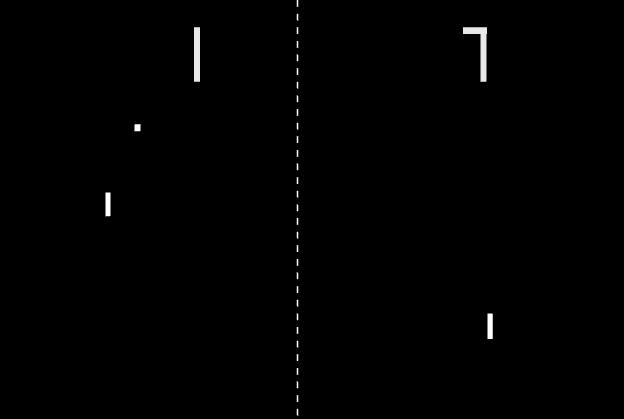
Pong
Pong is a 1972 sports video game developed and published by Atari, Inc. for arcades. It was created by Allan Alcorn as a training exercise assigned to him by Atari co-founder Nolan Bushnell. Bushnell and Atari co-founder Ted Dabney were so surprised by the quality of Alcorn's work that they decided to manufacture the game. Bushnell based the game's concept on an electronic ping-pong game included on the Magnavox Odyssey, the first home video game console; in response, Magnavox later sued Atari for patent infringement.

Sega Genesis
fourth-generation home video game console developed by Sega

Q184198
thumb|130px|Alternative Dreamcast logo used in PAL territories

Q200912
home video game console

Atari 2600
home video game console by Atari

Commodore Amiga

Q209868
third-generation home video game console developed by Sega

Xbox Series X and Series S
home video game consoles developed by Microsoft

Q1323662
is a video gaming brand owned and produced by Sony Interactive Entertainment (SIE), a subsidiary of Japanese conglomerate Sony. Its flagship products consist of a series of home video game consoles produced under the brand; it also consists of handhelds, online services, magazines, and other forms of media.

Odyssey
first commercial home video game console
.svg)
Q15281614
Xbox is a video gaming brand that consists of four main home video game console lines, as well as applications (video games), the streaming service Xbox Cloud Gaming, and online services such as the Xbox network and Xbox Game Pass. The brand is owned by Microsoft Gaming, a division of Microsoft.
Q122761124
video game console developed by Nintendo
Atari Jaguar
Fifth-generation home video game console by Atari
Atari 5200
home video game console
Atari 7800
home video game console

3DO
3DO is a video gaming hardware format developed by The 3DO Company and conceived by Electronic Arts founder Trip Hawkins. The specifications were originally designed by Dave Needle and RJ Mical of New Technology Group, and were licensed by third parties; most hardware were packaged as home video game consoles under the name Interactive Multiplayer, and Panasonic produced the first models in 1993 with further renditions released afterwards by manufacturers GoldStar, Sanyo, Creative Labs, and Samsung Electronics.
Amiga CD32
home video game console developed by Commodore

SG-1000
The is a home video game console manufactured by Sega. It was Sega's first entry into the home video game hardware business. Developed in response to a downturn in arcades starting in 1982, the SG-1000 was created on the advice of Hayao Nakayama, president of Sega's Japanese arm, and was released on July 15, 1983, the same day that Nintendo released the Family Computer in Japan. It also had a limited release in Australia and New Zealand.

Intellivision
The Intellivision (a portmanteau of "intelligent television") is a home video game console released by Mattel Electronics in 1979. It distinguished itself from competitors with more realistic sports and strategic games. By 1981, Mattel Electronics had close to 20% of the domestic video game market, selling more than 3.75 million consoles and 20 million cartridges through 1983. At its peak, Mattel Electronics had about 1,800 employees in several countries, including 110 videogame developers. In 1984, Mattel sold its video game assets to a former Mattel Electronics executive and investors, event

TurboGrafx-16
The TurboGrafx-16, known as the outside North America, is a home video game console developed by Hudson Soft and manufactured by NEC. It was released in Japan in 1987 and in North America in 1989. The first console of the fourth generation, it launched in Japan to compete with Nintendo's Family Computer, but its delayed U.S. debut placed it against the more advanced Sega Genesis and later the Super NES.
Color TV-Game
series of five dedicated home video game consoles created by Nintendo and released in Japan only

ColecoVision
The ColecoVision is a second-generation home video game console developed by Coleco and launched in North America in August 1982. It was released later in July 1983 in Europe by CBS Electronics as the CBS ColecoVision.
Neo Geo
cartridge-based arcade system board and home video game console developed by SNK
Apple Pippin
multimedia electronics platform by Apple
.svg)
Vectrex
The Vectrex is a vector display-based home video game console, the only one ever designed and released for the home market, that was developed by Smith Engineering and manufactured and sold by General Consumer Electronics. It was first released for the North American market in October 1982 and then Europe and Japan in 1983. Originally produced by General Consumer Electronics, it was later licensed to Milton Bradley after they acquired the company. Bandai released the system in Japan under the name , meaning Lightspeed Ship.

CDTV
The CDTV (from Commodore Dynamic Total Vision, later treated as a backronym for Compact Disc Television) is a home multimedia entertainment and video game console – convertible into a full-fledged personal computer by the addition of optional peripherals – developed by Commodore International and launched in April 1991.

Philips CD-i
The Compact Disc-Interactive (CD-I, later CD-i) is a digital optical disc data storage format as well as a hardware platform, co-developed and marketed by Dutch company Philips and Japanese company Sony. It was created as an extension of CDDA and CD-ROM and specified in the Green Book specifications, co-developed by Philips and Sony, to combine audio, text and graphics. The two companies initially expected to impact the education/training, point of sale, and home entertainment industries, but the CD-i is largely remembered today for its video games.
Fairchild Channel F
second-generation home video game console; first console that uses programmable cartridges
BBC Micro
series of microcomputers by Acorn

NEC PC-9800 series
The , commonly shortened to PC-98 or simply , is a lineup of Japanese 16-bit and 32-bit personal computers manufactured by NEC from 1982 to 2003. While based on standard x86-16 and x86-32 processors, it uses an in-house architecture making it incompatible with IBM clones; some PC-98 computers used NEC's own V30 processor. The platform established NEC's dominance in the Japanese personal computer market, and, by 1999, more than 18 million units had been sold. While NEC did not market these specific machines in the West, it sold the NEC APC series, which had similar hardware to early PC-98 model

PC-FX
The is a 32-bit home video game console co-developed by NEC and Hudson Soft. Released in December 1994, it is based on the NEC V810 CPU and CD-ROM, and was intended as the successor to the PC Engine (known overseas as the TurboGrafx-16). Unlike its predecessor, the PC-FX was only released in Japan.

Sinclair ZX80
The Sinclair ZX80 is a home computer launched on 29 January 1980 by Science of Cambridge Ltd. (later to be better known as Sinclair Research). It was one of the first computers available in the United Kingdom for less than a hundred pounds. It was available in kit form for £79.95, where purchasers had to assemble and solder it together, and as a ready-built version at £99.95.
Arcadia 2001
second-generation home video game console
Coleco Telstar series
series of dedicated first-generation home video game consoles
Magnavox Odyssey 2
home video game console developed by Philips
Q56668812
dedicated video game console

Playdia
The (developed under the codename "BA-X") is a fifth-generation home video game console released exclusively in Japan in 1994 at the initial price of ¥24,800. It was intended for a young audience and, like many consoles of the era (such as the LaserActive and the 3DO Interactive Multiplayer), was marketed more as a multimedia home entertainment system than as a dedicated gaming console, with anime quiz software and edutainment making up most of the game library. The Playdia uses a single infrared joypad with simple controls. Bandai, the Playdia's manufacturer, was the only software publisher t

Zeebo
The Zeebo is a discontinued home entertainment and education system from Zeebo Inc. It enabled users to play video games, and also connect to the Internet using its 3G modem, communicate online and run educational applications. The Zeebo was targeted at developing markets such as Brazil and Mexico.

Amstrad GX4000
The GX4000 is a home video game console developed and marketed by Amstrad. It was released exclusively in Europe in September 1990, and was the company's only attempt at entering the console market. As part of the third generation of consoles, it was the first British-manufactured programmable games console.
Casio Loopy
home video game console
FM Towns Marty
home video game console
RCA Studio II
home video game console made by RCA

PV-1000
thumb|Casio PV-1000 joystick
The is a third-generation home video game console manufactured by Casio and released in Japan in 1983. It was discontinued less than a year after release.

Sharp X68000
thumb|Main processor board of original 1987 CZ-600C model
thumb|Video board of original 1987 CZ-600C model
thumb|upright|Cynthia sprite chip in the original 1987 CZ-600C model
thumb|upright|VSOP Video processing chip in the original 1987 CZ-600C model
NEC PC-8800 series
series of computers sold in Japan by NEC