Category
page 1Human evolution

Charles Darwin
English naturalist and biologist (1809-1882)

Hominidae
The Hominidae (; hominids ), whose members are known as the great apes, are a taxonomic family of primates that includes eight extant species in four genera: Pongo (the Bornean, Sumatran and Tapanuli orangutan); Gorilla (the eastern and western gorilla); Pan (the chimpanzee and the bonobo); and Homo, of which only modern humans (Homo sapiens) remain.

human evolution
evolutionary process leading up to the appearance of anatomically modern humans

nudity
thumb|right|Naturists in a river, 2014
Nudity is the state of being in which a human is without clothing. While estimates vary, for the first 90,000 years of pre-history, anatomically modern humans were naked, having lost their body hair, living in hospitable climates, and not having developed the crafts needed to make clothing.

Homo
Homo () is a genus of great ape (family Hominidae) that emerged from the early homininian genus Australopithecus, encompassing a single extant species, Homo sapiens (modern humans), along with a number of extinct species (e.g. Homo erectus and Homo neanderthalensis) classified as either ancestral or closely related to modern humans, collectively called archaic humans. Homo, together with the genus Paranthropus, is probably most closely related to the species Australopithecus africanus within Australopithecus.'' The closest living relatives of Homo are of the hominin genus Pan (chimpanzees and

hunter-gatherer
thumb|upright=1.1|African Pygmies|Central African foragers in the [[Congo Basin in August 2014]]
A hunter-gatherer, or forager, is a human living in a community, or according to an ancestrally derived lifestyle, in which most or all food is obtained by foraging, that is, by gathering food from local naturally occurring sources or by hunting game. This is a common practice among most vertebrates that are omnivores. Hunter-gatherer groups, usually a few dozen people, were and are nomadic or semi-nomadic. Hunter-gatherer societies are contrasted with more sedentary agricultural societies, which r

progress
thumb|Woman's Progress, May 1895|200px
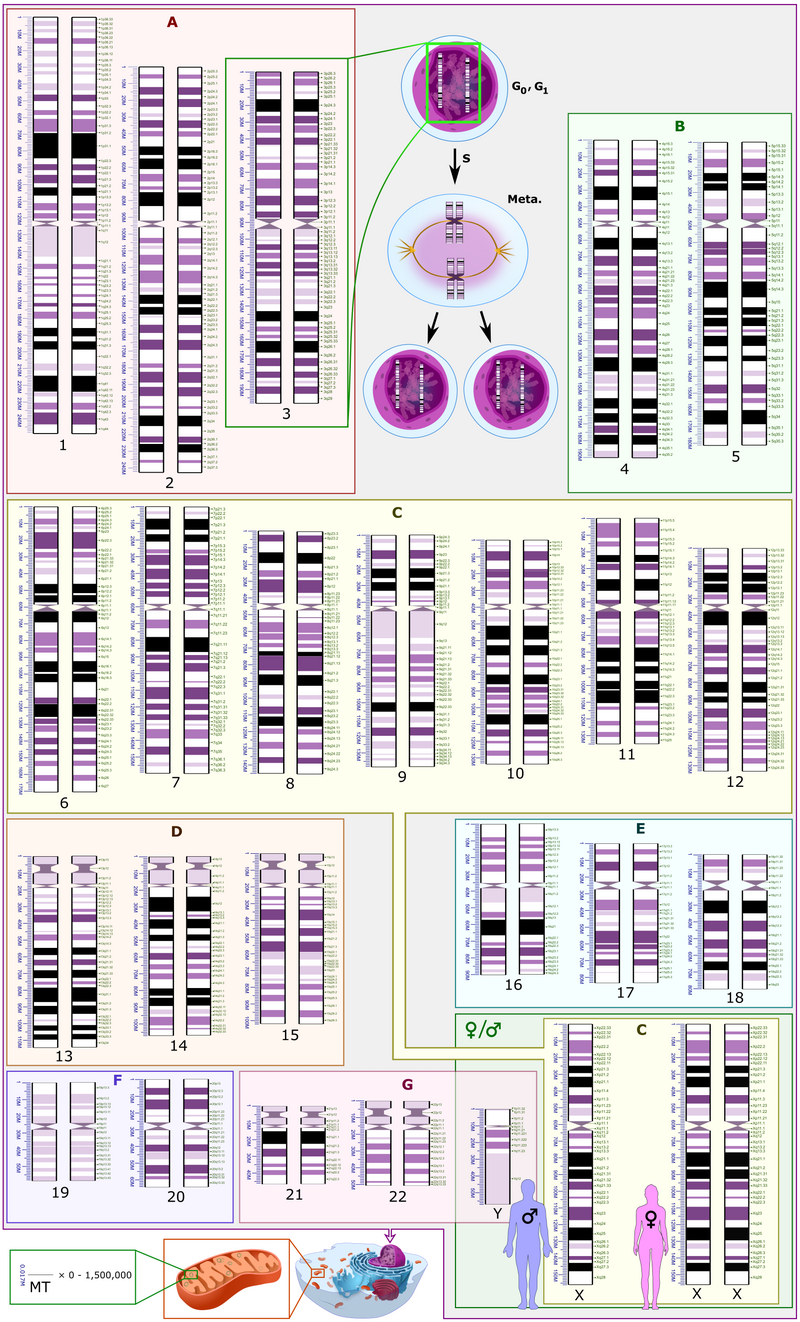
human genome
complete set of nucleic acid sequence for humans

Hominini
The Hominini (hominins) form a taxonomic tribe of the subfamily Homininae (hominines). They comprise two extant genera: Homo (humans) and Pan (chimpanzees and bonobos), and in standard usage exclude the genus Gorilla (gorillas), which is grouped separately within the subfamily Homininae.

haplogroup
A haplotype is a group of alleles in an organism that are inherited together from a single parent, and a haplogroup (haploid from the , haploûs, "onefold, simple" and ) is a group of similar haplotypes that share a common ancestor with a single-nucleotide polymorphism mutation. More specifically, a haplotype is a combination of alleles at different chromosomal regions that are closely linked and tend to be inherited together. As a haplogroup consists of similar haplotypes, it is usually possible to predict a haplogroup from haplotypes. Haplogroups pertain to a single line of descent. Such as t
early human migrations
spread of the human species from Africa through the world
human chromosome 2
human chromosome
recent African origin of modern humans
dominant model of the geographic origin and early migration of anatomically modern humans, according to which Homo sapiens developed in the Horn of Africa 300–200 kya and dispersed to the rest of the world in multiple events
control of fire by early humans
aspect of human history
origin of language
first formation of language
population bottleneck
event that reduces size and genetic variation of a population, followed by a size recovery
archaic humans
extinct relative of modern humans (Homo) from the past half million years (such as Neanderthals)
Jebel Irhoud
archaeological site in Morocco
Dunbar's number
value important in sociology and anthropology
Australopithecine
The australopithecines (), formally Australopithecina or Hominina, are generally any species in the related genera of Australopithecus and Paranthropus. It may also include members of Kenyanthropus, Ardipithecus, and Praeanthropus. The term comes from a former classification as members of a distinct subfamily, the Australopithecinae. They are classified within the Australopithecina subtribe of the Hominini tribe. These related species are sometimes collectively termed australopithecines, australopiths, or homininians. They are the extinct, close relatives of modern humans and, together with th
behavioral modernity
transition of human species to anthropologically modern behavior
list of human evolution fossils
Wikimedia list article
aquatic ape hypothesis
hypothesis about human evolution
Harbin cranium
hominin cranium found in China and assigned to Denisovans
exercise physiology
study devoted to understanding the acute and chronic responses to physical activity
Chimpanzee–human last common ancestor
species or population that gave birth to panins and hominins
multiregional origin of modern humans
multi-location related human origins
language development
process starting early in human life
timeline of human evolution
chronological outline of major events in the development of the human species
evolutionary origin of religion
emergence of religious behavior discussed in terms of natural evolution
posthuman
Posthuman or post-human is a concept originating in the fields of science fiction, futurology, contemporary art, and philosophy that means a person or entity that exists in a state beyond being human. The concept aims at addressing a variety of questions, including ethics and justice, language and trans-species communication, social systems, and the intellectual aspirations of interdisciplinarity.

phylogeography
Phylogeography is the study of the historical processes that may be responsible for the past to present geographic distributions of genealogical lineages. This is accomplished by considering the geographic distribution of individuals in light of genetics, particularly population genetics.
copy-number variation
phenomenon in which sections of a genome are repeated and the number of repeats in the genome varies between individuals
Dual inheritance theory
explanation of human behaviour in terms of genetic and cultural evolution
persistence hunting
hunting technique
human enhancement
enhancement
grandmother hypothesis
biology theory on the evolutionary origin of menopause
Neanderthal genome project
effort to sequence the Neanderthal genome
Youngest Toba eruption
volcanic supereruption 74,000 years ago in Indonesia
human evolutionary genetics
study of the differences between human genomes, how these differences came about, and their effects
Klasies River Caves
cave in Eastern Cape, South Africa
evolution of human intelligence
development of intelligence in humans and association with evolution of the brain and the origin of language
Haplogroup J1
human Y-chromosome DNA haplogroup
social effect of evolutionary theory
effects on human societies of the scientific explanation of life's diversity
monogenism
Monogenism or sometimes monogenesis is the theory of human origins which posits a common descent for all humans. The negation of monogenism is polygenism. This issue was hotly debated in the Western world in the nineteenth century, as the assumptions of scientific racism came under scrutiny both from religious groups and in the light of developments in the life sciences and human science. It was integral to the early conceptions of ethnology.
human vestigiality
human traits which lost their original function through evolution
missing link
non-scientific term typically referring to transitional fossils in human evolution

evolutionary anthropology
interdisciplinary study of the evolution of human physiology and human behaviour
MCPH1
Microcephalin (MCPH1) is a gene that is expressed during fetal brain development. Certain mutations in MCPH1, when homozygous, cause primary microcephaly—a severely diminished brain. Hence, it has been assumed that variants have a role in brain development. However, in normal individuals no effect on mental ability or behavior has yet been demonstrated in either this or another similarly studied microcephaly gene, ASPM. However, an association has been established between normal variation in brain structure, as measured with MRI (i.e., primarily cortical surface area and total brain volume) bu

Coastal migration
model of early human migration
human genetic variation
genetic differences in human populations
molecular anthropology
field within anthropology

The Ascent of Man
1973 BBC TWO documentary television series
hunting hypothesis
hypothesis that human evolution was influenced by hunting
superhuman
Superhumans are humans, humanoids or other beings with abilities and other qualities that exceed those naturally found in humans. These qualities may be acquired through natural ability, self-actualization or technological aids. The related concept of a super race refers to an entire category of beings with the same or varying superhuman characteristics, created from present-day human beings by deploying various means such as eugenics, euthenics, genetic engineering, nanotechnology, and/or brain–computer interfacing to accelerate the process of human evolution.
evolutionary aesthetics
evolutionary psychology theories in which the basic aesthetic preferences of Homo sapiens are argued to have evolved in order to enhance survival and reproductive success
sexual selection in human evolution
evolutionary effects of sexual selection on humans
killer ape theory
theory that war and interpersonal aggression was the driving force behind human evolution
Manot Cave
Archaeological site in Israel
human accelerated region
name of some human genes