Category
page 1Human migration

citizenship
Citizenship is a membership and allegiance to a sovereign state. Though citizenship is often conflated with nationality in today's English-speaking world, international law does not usually use the term citizenship to refer to nationality; these two notions are conceptually different dimensions of collective membership.

human migration
movement of people for resettlement
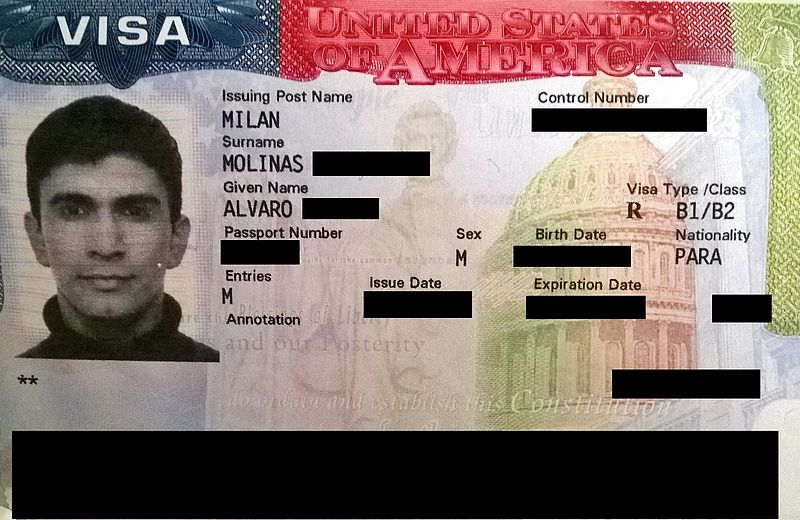
visa
authorization document

urbanization
alt=Global urbanization map|thumb|upright=1.35|Global urbanization map showing the percentage of urbanization and the biggest global population centres per country in 2018, based on UN estimates.

nationality
Nationality is the legal status of belonging to a particular nation, defined as a group of people organized in one country, under one legal jurisdiction, or a group of people who are united by a common culture, history, traditions, and awareness of a common origin.

emigration
thumb|Japanese government poster in the early 20th century promoting emigration to South America, with Japanese Brazilians| Brazil highlighted

foreigner
person not having citizenship in a country

internationalism
movement which advocates a greater economic and political cooperation among nations

human capital flight
emigration of highly skilled or well-educated individuals
trans-cultural diffusion
archaeological theory
Aapravasi Ghat
building complex in Port Louis, on the Indian Ocean island of Mauritius

settler
thumb|upright=1.3|A depiction of the first medieval settlers arriving in Iceland, 1850
migrant worker
person who migrates to pursue work
rural flight
population shift from rural to urban areas
Counter urbanization
Counterurbanization, ruralization, or deurbanization is a demographic and social process in which people move from urban areas to rural areas. It, as suburbanization, is inversely related to urbanization, and first occurs as a reaction to inner-city deprivation. Recent research has documented the social and political drivers of counterurbanization and its impacts in China and other developing countries which are undergoing a process of mass urbanization. Counterurbanization is one of the causes that can lead to shrinking cities.
permanent residency
status of a person in a country
plantations of Ireland
history of British colonization of Ireland
relocation
process of vacating a fixed location (such as a residence or business) and settling in a different one
place of birth
place where a person is born
Global Compact on Migration
intergovernmental agreement on migration
border barrier
wall or barrier at national boundaries
white flight
term for the mass exodus of middle-class whites from large cities in the mid-20th century to smaller communities and suburbs
foreign worker
person working in a country other than one of which they are a citizen
emigrant
An émigré () is a person who has emigrated, often with a connotation of political or social exile or self-exile. The word is the past participle of the French verb émigrer meaning "to emigrate".
Pontifical Council for the Pastoral Care of Migrants and Itinerants

Yaylak
thumb|A contemporary yayla at Aladaglar, Turkey
thumb|Another modern yayla at Song Kol Lake, Kyrgyzstan
Yaylak ( or ; ; ; ; ; ; ) is a summer highland pasture associated with transhumance pastoralism in several Central and West Asian Turkic communities. There are different variants of yaylak pastoralism forms of alpine transhumance, some of which are similar to seminomadic pastoralism, although most are similar to herdsman husbandry (such as in mountainous areas of Europe and the Caucasus). However, in the Eurasian steppes, the Middle East and North Africa, yaylak pastoralism often coexists wi
list of sovereign states by net migration rate
Wikimedia list article
best interests
child rights principle
transculturation
Transculturation is a term coined by Cuban anthropologist Fernando Ortiz in 1940 to describe the phenomenon of merging and converging cultures. Transculturation encompasses more than transition from one culture to another; it does not consist merely of acquiring another culture (acculturation) or of losing or uprooting a previous culture (deculturation). Rather, it merges these concepts and instead carries the idea of the consequent creation of new cultural phenomena (neoculturation) in which the blending of cultures is understood as producing something entirely new.
European Migration Network
European Migration Network Information Exchange System
internal migration
human migration within one geopolitical entity
Albania–Montenegro border
separates the state territories of the two States
inner emigration
world view

Global Compact on Refugees
compact on refugees by the UN
mail-order bride
woman who advertises for marriage
option of nationality
concept in international law
European Convention on Nationality
1997 Council of Europe treaty
migration policy of the European Union
internal policy of the European Union for the effective management of migration flows
illegal emigration
person moving across national borders in a way that violates emigration laws
Haplogroup I2
human Y-chromosome DNA haplogroup
free migration
View that people may live in any country
Armenians in India
Armenian community in India
Okie
An Okie is a person identified with the state of Oklahoma, or their descendants. This connection may be residential, historical or cultural. For most Okies, several (or all) of these connections exist and are collectively the source of their being Oklahoman. While not an official demographic used or recognized by the United States Census Bureau, Okies, due to various factors, have developed their own distinct culture within larger social groupings both akin to and separate from Midwestern and Southern influences. Included are their own dialect, music, and Indigenous-derived folklore.
separation barrier
type of wall separating peoples, administrative units or cultures
international migration
migration between countries
net migration rate
difference between the number of immigrants and emigrants per time and divided by population
attacks on Palestinians evacuating Gaza City
Attacks on fleeing Palestinians
Basque diaspora
ethnic diaspora
Hinduism in Armenia
Practice of Hinduism in Armenia
Right of abode
legal term

Nova Barcelona
former human settlement in the Banat
refugee health
health effects experienced by people who have been displaced
International Centre for Migration Policy Development
international organisation
Harris–Todaro model
economic model
allochtoon
'''''' (plural: ) is a Dutch word (from , from and ), literally meaning "emerging from another soil". It is the opposite of the word (in English "autochthonous" or "autochthon"; from Greek , from and again ), literally meaning "emerging from this soil".
history of human migration
movement by people from one place to another over the course of history
geographic mobility
measure of how populations and goods move over time
Replacement migration
migration to avoid lowering population
return migration
individual or family decision of a migrant to leave a host country and to return permanently to the country of origin
Cimade
The Cimade is a French NGO founded at the beginning of the World War II by French Protestant student groups, in particular the Christian activist and member of the French Resistance Madeleine Barot, to give assistance and support to people uprooted by war, in the first instance those who were evacuated from the French provinces of Alsace and Lorraine located on the border with Germany. Under German occupation, the Cimade continued its operations, working with refugees, many of whom were Jewish, who, having fled from Germany and other war affected European countries, were interned in Southern F