Category
page 1Humour

humour
Humour (Commonwealth English) or humor (American English) is the tendency of experiences to provoke laughter and provide amusement. The term derives from the humoral medicine of the ancient Greeks, which taught that the balance of fluids in the human body, known as "humours" (Latin: '''', "body fluid"), controlled human health and emotion.

satire

joke
thumbnail|upright=1.25|Boris Yeltsin and [[Bill Clinton enjoying a joke]]
A joke is a display of humour in which words are used within a specific and well-defined narrative structure to make people laugh and is usually not meant to be interpreted literally. It usually takes the form of a story, often with dialogue, and ends in a punch line, whereby the humorous element of the story is revealed; this can be done using a pun or other type of word play, irony or sarcasm, logical incompatibility, hyperbole, or other means. Linguist Robert Hetzron offers the definition:

irony

oxymoron
An oxymoron (plurals: oxymorons and oxymora) is a figure of speech that juxtaposes concepts with opposite meanings within a word or in a phrase that is a self-contradiction. Examples would be "bittersweet" or "cruel kindness". As a rhetorical device, an oxymoron illustrates a point to communicate and reveal a paradox. A general meaning of "contradiction in terms" is recorded by the 1902 edition of the Oxford English Dictionary.

black comedy
comic work that employs black humor or gallows humor
.jpg)
sarcasm
alt=Written on a wooden desk, "You will die someday" a response is next to it.|thumb|A sarcastic response written on a table that reads "Wow, you are SO deep!"
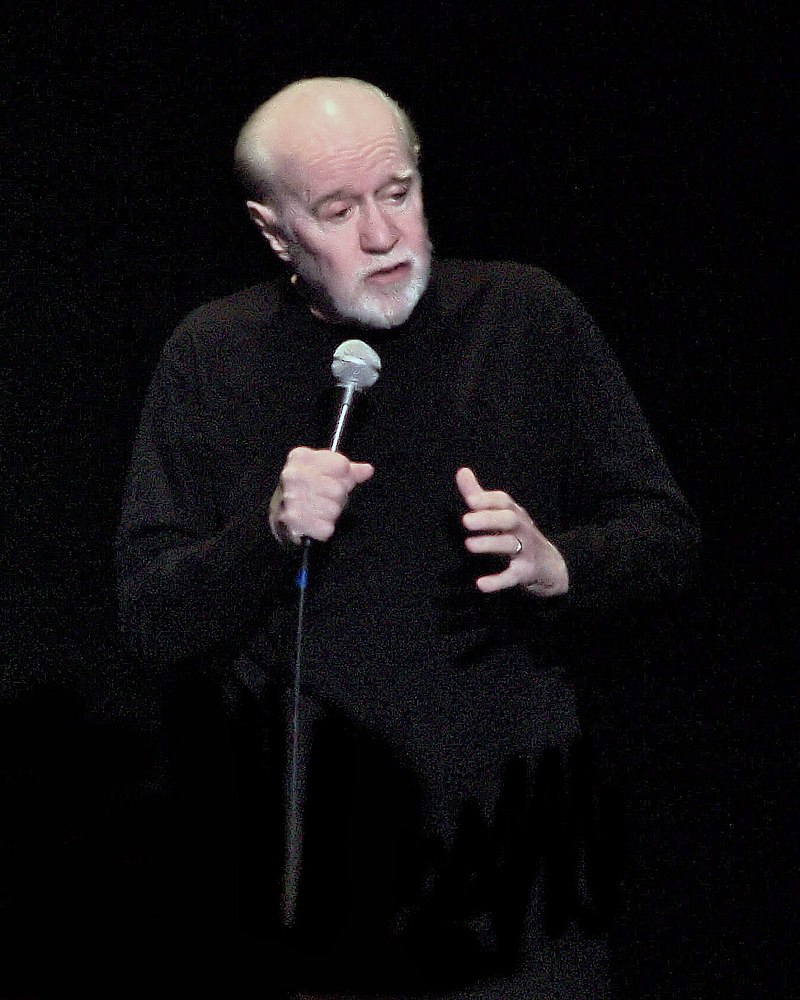
stand-up comedy
comedy style where the performer addresses the audience directly

pun
thumb|upright=1.25|Punch (magazine)|Punch, 25 February 1914. The cartoon is a pun on the word "Jamaica", which pronunciation is a [[homonym to the clipped form of "Did you make her?"
]]

spoonerism
thumb|An example of spoonerism on a protest placard in London: "Buck Frexit" instead of "Fuck [[Brexit"]]
A spoonerism is an occurrence of speech in which corresponding consonants, vowels, or morphemes are switched (see metathesis) between two words of a phrase. These are named after the Oxford don and priest William Archibald Spooner, who reportedly commonly spoke in this way.
buttered cat paradox
joke

amusement
Amusement is the state of experiencing humorous and entertaining events or situations while the person or animal actively maintains the experience, and is associated with enjoyment, happiness, laughter and pleasure. It is an emotion with positive valence and high physiological arousal.

wit
thumb|
mondegreen
A mondegreen () is a mishearing or misinterpretation of a phrase in a way that gives it a new meaning. Mondegreens are most often created by a person listening to a poem or a song; the listener, being unable to hear a lyric clearly, substitutes words that sound similar and make some kind of sense. The American writer Sylvia Wright coined the term in 1954, recalling a childhood memory of her mother reading the Scottish ballad "The Bonnie Earl o' Moray", and mishearing the words "laid him on the green" as "Lady Mondegreen".
surreal humour
form of humour
Visual gag
humor through visualization rather than sound or words

wellerism
thumb|upright|Sam Weller, from a watercolor by 'Joseph Clayton Clarke|Kyd'
Wellerisms, named after sayings of Sam Weller in Charles Dickens's novel The Pickwick Papers, make fun of established clichés and proverbs by showing that they are wrong in certain situations, often when taken literally. In this sense, Wellerisms that include proverbs are a type of anti-proverb. Typically a Wellerism consists of three parts: a proverb or saying, a speaker, and an often humorously literal explanation.
toilet humour
type of off-colour humour dealing with defecation, urination and flatulence

deadpan
Deadpan, dry humour, or dry-wit humour is the deliberate display of emotional neutrality or no emotion, commonly as a form of comedic delivery to contrast with the ridiculousness or absurdity of the subject matter. The delivery is meant to be blunt, ironic, laconic, or apparently unintentional.

humorist
thumb|upright|Samuel Clemens, American humorist who wrote under the pen name Mark Twain.

akanbe
alt=Akanbē is a Japanese facial gesture performed by pulling down the lower eyelid to reveal the reddish underside of the eye, often accompanied by sticking out the tongue|thumb|233x233px|A man making the gesture
seriousness
Seriousness (noun; adjective: serious) is an attitude of gravity, solemnity, persistence, and earnestness toward something considered to be of importance. Some notable philosophers and commentators have criticised excessive seriousness, while others have praised it. Seriousness is often contrasted with comedy, as in the seriocomedy. In the theory of humor, one must have a sense of humor and a sense of seriousness to distinguish what is supposed to be taken literally or not, or of being important or not. Otherwise, it may also be contrasted with a sense of play. How children learn a sense of se

self-deprecation
thumb|200px|''Don't Buy This'' is a video game, released in Britain where self-deprecation is considered virtuous, that openly markets itself as containing "the worst games ever".
Self-deprecation is the act of reprimanding oneself by belittling, undervaluing, disparaging oneself, or being excessively modest. It can be used as a way to make complaints, express modesty, invoke optimal reactions or add humour. It may also be used as a way for individuals to appear more likable and agreeable.
cacography
Cacography is bad spelling or bad handwriting. The term in the sense of "poor spelling, accentuation, and punctuation" is a semantic antonym to orthography, and in the sense of "poor handwriting" it is an etymological antonym to the word calligraphy: cacography is from Greek κακός (kakos "bad") and γραφή (graphe "writing").
sardonicism
Sardonicism is form of wit or humour with a degree of cynicism or disdainfulness. It is more biting and negative than sarcasm, yet not entirely malicious. A sardonic person might participate in funny yet scornful mocking, or express uncomfortable truth in a clever way. The style of expression can be both spoken and written, and is featured in a literary genre.
fart lighting
the practice of igniting the gases produced by human flatulence
evil laughter
stock manic laughter by a villain in fiction
anti-humor
Anti-humor or anti-comedy is a type of alternative humor that is based on the surprise factor of absence of an expected joke or of a punch line in a narration that is set up as a joke, which in turn can have a humorous effect to some. This kind of anticlimax is similar to that of the shaggy dog story. In fact, some researchers see the "shaggy dog story" as a type of anti-joke. Anti-humor is described as a form of irony or reversal of expectations that may provoke an emotion opposite to humor, such as fear, pain, embarrassment, disgust, awkwardness, or discomfort.

trash-talk
form of boast or insult commonly heard in competitive situations
cringe comedy
genre of comedy that derives humor from social awkwardness
dad joke
type of short joke
détournement
thumb|A Marlboro cigarette advertisement on a billboard détourned by the group [[BUGAUP, by defacing the cowboy image and modifying the text to read "It's a bore."]]
shaggy dog story
intentionally-long joke ending in an anticlimax
Hāsya
Hāsya (Sanskrit: हास्य) is a Sanskrit word for one of the nine rasas or bhava (mood) of Indian aesthetics, usually translated as humour or comedy. The colour associated with hasya is white and deity, Pramatha, and leads to exultation of the mind.
bathos
In literature and the arts, bathos ( ; , "depth") is the use of a lofty, elegant, or elevated style to present silly, vulgar, or trivial subject-matter, or a sudden transition from the former to the latter, thereby creating a ludicrous or comedic effect. Nowadays, bathos can refer to such usage occurring either accidentally (through artistic ineptitude) or intentionally as a rhetorical device (usually for the sake of comedy). Originally, it referred to an amusingly failed attempt at presenting artistic greatness and was first used in this sense in Alexander Pope's 1727 essay "Peri Bathou
off-color humor
humor of a vulgar nature
metahumor
type of joke, where humor is alluding to on-self or the subject displaying the humor
Lapalissade
thumb|La Palice's epitaph, which lead to this figure of speech.
A lapalissade is an obvious truth—i.e. a truism or tautology—which produces a comical effect. It is derived from the name Jacques de la Palice, and the word is used in several languages.

tongue-in-cheek
thumb |upright=1.5 | A newspaper clipping from 1833, in which a tailor whose coat was stolen from a bowling alley advertises an offer to alter the coat to fit the thief.
Tongue-in-cheek is an idiom that describes a humorous or sarcastic statement expressed in a serious manner.
office humor
comedy genre
Witzelsucht
Witzelsucht ( "joking addiction") is a set of rare neurological symptoms characterized by a tendency to make puns, or tell inappropriate jokes or pointless stories in socially inappropriate situations. It makes one unable to read sarcasm.
apples and oranges
when two items or groups of items are compared that cannot be practically compared
joke chess problem
chess puzzle that uses humor
ribaldry
thumb|A urinal in [[Thailand with a ribald depiction]]
Ribaldry, also known as blue comedy in performing arts, is a humorous genre of entertainment that ranges from bordering on indelicacy to indecency, with the humorous elements based on amusingly coarse and morally incorrect or irreverent talk and behavior. Blue comedy is also referred to as "bawdiness" or being "bawdy". Like any humour, ribaldry may be read as conventional or subversive. Ribaldry typically depends on a shared background of sexual conventions and values, and its comedy generally depends on seeing those conventions broken.
Slapping the Table in Amazement
collection of short stories
anti-proverb
thumb|A fishing pun on the proverb "Good things come to those who wait."
thumb|Graphic spoof on the proverbial concept of "big fish eat little fish", from Spanish context. (The text translates as "Don't panic, organize!")
non-sequitur
conversational literary device
Extravaganza
theatrical genre
ridiculous
To be ridiculous is to be something highly incongruous or inferior, sometimes deliberately so to make people laugh or get their attention, and sometimes unintendedly so as to be considered laughable and earn or provoke ridicule and derision. It comes from the 1540s Latin "ridiculosus" meaning "laughable", from "ridiculus" meaning "that which excites laughter", and from "ridere" meaning "to laugh". "Ridiculous" is an adjective describing "the ridiculous".
Kuso
Kuso is a term used in East Asia for the internet culture that generally includes all types of camp and parody. In Japanese, is a word that is commonly translated to English as curse words such as fuck, shit, damn, and bullshit (both kuso and shit refer to feces), and is often said as an interjection. It is also used to describe outrageous matters and objects of poor quality. This usage of kuso was brought into Taiwan around 2000 by young people who frequently visited Japanese websites and quickly became an internet phenomenon, spreading to Taiwan and Hong Kong and subsequently to mainland Chi
Neoism
Neoism is a parodistic -ism. It refers both to a specific subcultural network of artistic performance and media experimentalists, and, more generally, to a practical underground philosophy. It operates with collectively shared pseudonyms and identities, pranks, paradoxes, plagiarism and fakes, and has created multiple contradicting definitions of itself in order to defy categorization and historization.