File:Jamaica_her_own_idea.png · Wikimedia Commons · See Wikimedia Commons
Also known as paronomasia, Jinas, Tajnis
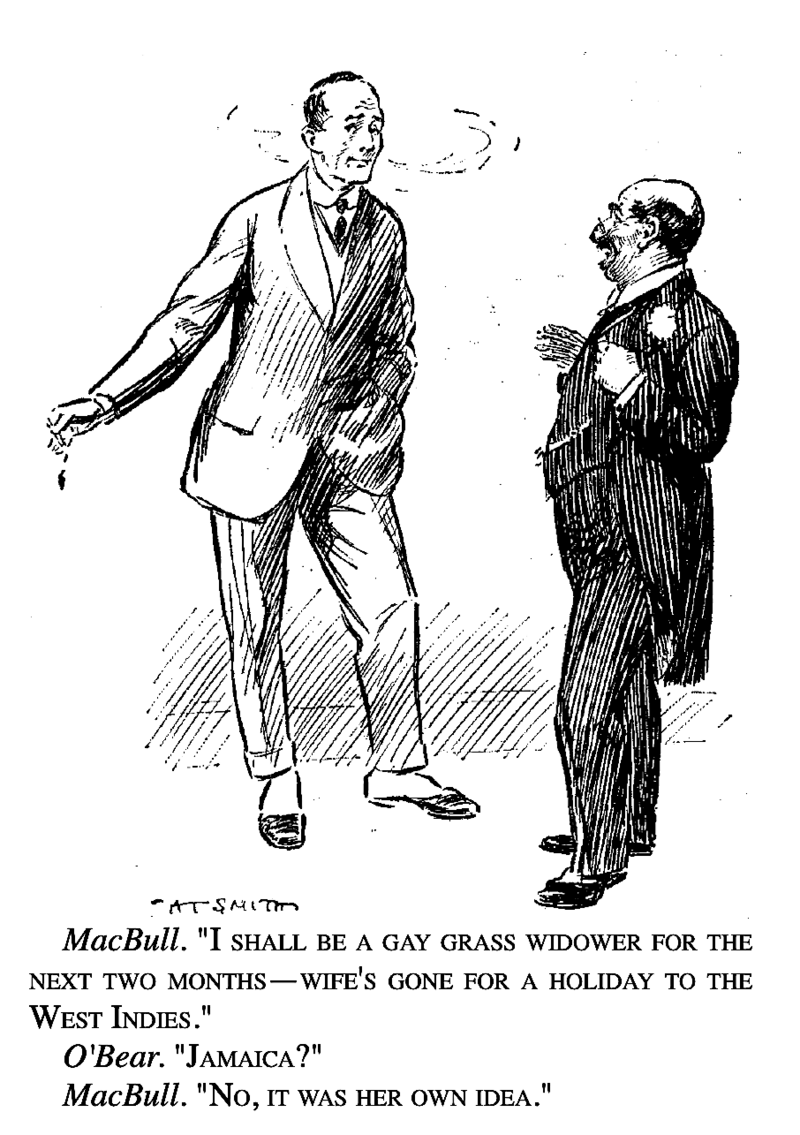
thumb|upright=1.25|Punch (magazine)|Punch, 25 February 1914. The cartoon is a pun on the word "Jamaica", which pronunciation is a [[homonym to the clipped form of "Did you make her?" ]]
A pun is a joke that plays on words by using multiple meanings of the same word or words that sound alike. Puns matter because they're a common form of wordplay and humor that can appear in cartoons, magazines, and everyday conversation.
AI-generated from the Wikipedia summary — may contain errors.
Wikidata facts
- Instance of
- stylistic device
- Subclass of
- word play
- Image
- Kalambur in Polish - solution.png
- Said to be same as
- paronomasia
- Has use
- humour
Show 3 more facts
- Commons category
- Puns
- name in kana
- だじゃれ
- P8168
- Frances Cuka
Sources (7)
via Wikidata · CC0
~23 min read
Encyclopedic overview
26 sectionsContents
- Types of puns
- Homophonic
- Homographic
- Homonymic
- Compounded
- Recursive
- Visual
- Paronomastic
- Metonymic
- Sylleptic/heteronymic
- Antanaclasistic
- Other
- Use
- Comedy and jokes
- Books never written
- Literature
- Shakespeare
- Rhetoric
- Design
- In the media
- Confusion and alternative uses
- History and global usage
- See also
- Notes
- References
- External links
thumb|upright=1.25|Punch (magazine)|Punch, 25 February 1914. The cartoon is a pun on the word "Jamaica", which pronunciation is a [[homonym to the clipped form of "Did you make her?" ]]
A pun, also known as a paronomasia in the context of linguistics, is a form of word play that exploits multiple meanings of a term, or of similar-sounding words, for an intended humorous or rhetorical effect. These ambiguities can arise from the intentional use of homophonic, homographic, metonymic, or figurative language.
Excerpted from Wikipedia’s “pun” article, available under the CC BY-SA 4.0 licence.