Category
page 1Imperialism

Vietnam War
The Vietnam War was an armed conflict in Vietnam, Laos, and Cambodia fought between North Vietnam and South Vietnam and their allies. North Vietnam was supported by the Soviet Union and China, while South Vietnam was supported by the United States and other anti-communist nations. The conflict was the second of the Indochina wars and a proxy war of the Cold War between the Soviet Union and US. The Vietnam War was one of the postcolonial wars of national liberation, a theater in the Cold War, and a civil war, with civil warfare a defining feature from the outset. Direct US military involvement escalated from 1965 until US forces were withdrawn in 1973. The fighting spilled into the Laotian and Cambodian civil wars, which ended with all three countries becoming communist in 1975.
British Empire
overseas possessions of England and later the United Kingdom (1607–1997)

imperialism
thumb|The Rhodes Colossus|Political cartoon satirising the [[Cape to Cairo Railway, a symbol of British imperialism during the Scramble for Africa]]
Warsaw Pact
European Eastern Military Alliance (1954 – 1991)

Iraq War
The Iraq War, also referred to as the Second Gulf War, was a protracted armed conflict in Iraq from 2003 to 2011. It began with the invasion by a United States–led coalition, which resulted in the overthrow of the Ba'athist government of Saddam Hussein. During the US occupation of Iraq, the conflict persisted as an insurgency that arose against coalition forces and the newly established Iraqi government. US forces were officially withdrawn in 2011. In 2014, the US became re-engaged in Iraq, leading a new coalition under Combined Joint Task Force – Operation Inherent Resolve, as the conflict evolved into the ongoing Islamic State insurgency.

Cecil John Rhodes
British businessman, mining magnate and politician in South Africa (1853-1902)

Berlin Conference
international conference that regulated the distribution of European colonization and trade in Africa

annexation
Annexation, in international law, is the forcible acquisition and assertion of legal title over one state's territory by another state, usually following military occupation of the territory. In current international law, it is generally held to be an illegal act. It is distinct from the concepts of conquest, which describes the gaining of physical control, and cession, in which territory is given or sold through treaty.

Sykes–Picot Agreement
secret agreement signed in 1916 between France and the United Kingdom providing for the division of the Middle East at the end of the First World War
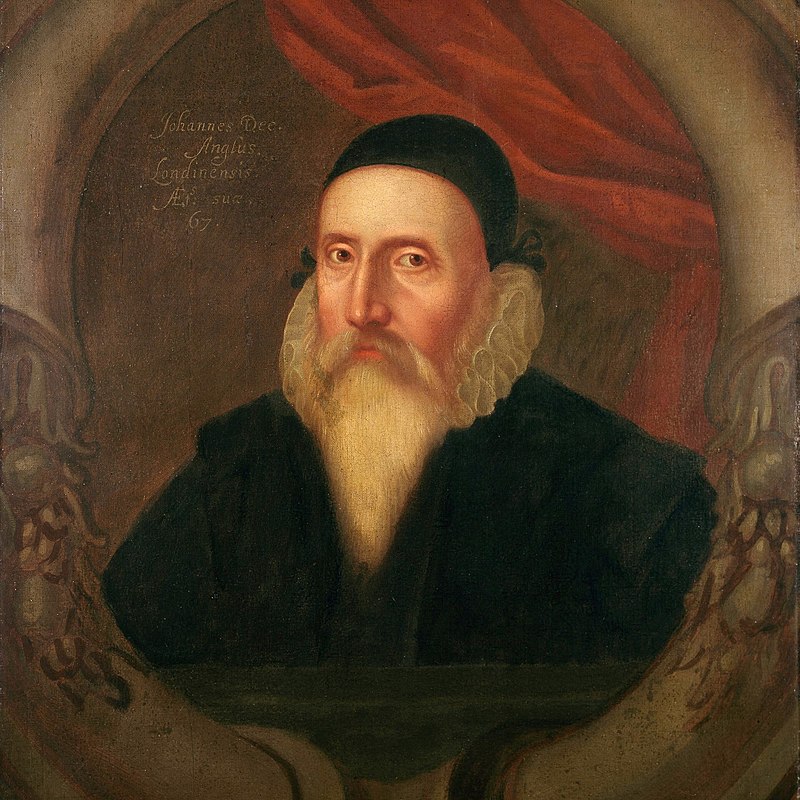
John Dee
16th-century English mathematician, astrologer, and alchemist
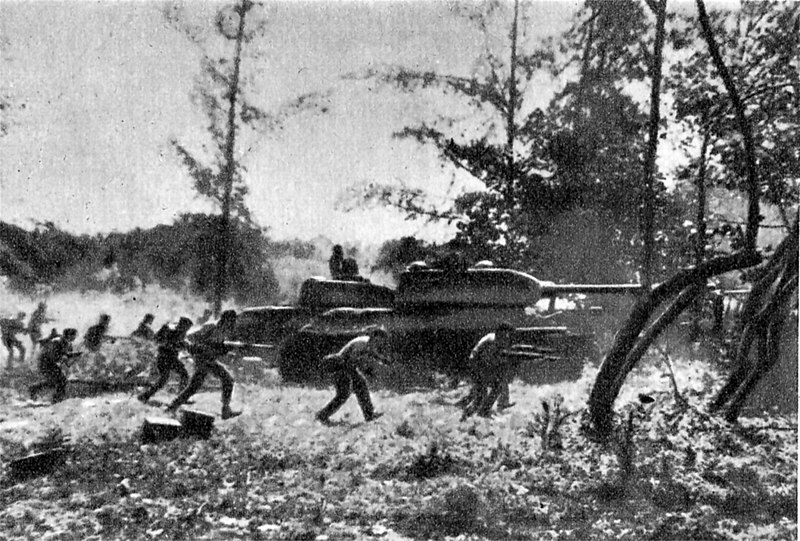
Bay of Pigs invasion
failed landing operation of Cuba in 1961
satellite state

Westernization
Westernization (or Westernisation, see spelling differences), also Europeanisation or occidentalization (from the Occident), is a process whereby societies come under or adopt what is considered to be Western culture, in areas such as industry, technology, science, education, politics, economics, lifestyle, law, norms, mores, customs, traditions, values, mentality, perceptions, diet, clothing, language, writing system, religion, and philosophy. During colonialism it often involved the spread of Christianity. A related concept is Northernization, which is the consolidation or influence of the G

United States invasion of Panama
The United States invasion of Panama began in mid-December 1989 during the presidency of George H. W. Bush. The purpose of the invasion was to depose the de facto ruler of Panama, General Manuel Noriega, who was wanted by U.S. authorities for racketeering and drug trafficking. The operation, codenamed Operation Just Cause, concluded in late January 1990 with the surrender of Noriega. The Panama Defense Forces (PDF) were dissolved, and president-elect Guillermo Endara was sworn into office.
Belgian Empire
overseas possessions of Belgium (1841–1962)

cultural imperialism
cultural dominance in imperialism
Washington Consensus
broad set of economic policies commonly prescribed by institutions based in Washington D.C. such as the International Monetary Fund (IMF) and World Bank
American imperialism
US government policies aimed at extending American political, economic, and cultural control
Century of Humiliation
Historiographical concept for a period of intervention and subjugation of China by foreign powers
linguistic imperialism
transfer of a dominant language to other people, as a demonstration of military of economic power, along with other aspects of the dominant culture

neo-Ottomanism
thumb|The fez (hat)|fez, which entered public life in the Ottoman Empire as part of [[Mahmud II's Westernization reforms, became a symbol of Islamist anti-Kemalism in Turkey.]]
thumb|The extent of the Ottoman Empire in 1683
Neo-Ottomanism ( or ) is a reactionary, revisionist, monarchist, conservative and Islamist political ideology in Turkey that discredits the Turkish secular nationalist republic and its reforms, and glorifies the Ottoman dynasty and its traditionalist establishments like the caliphate. It is also an irredentist and imperialist ideology that, in its broadest sense, advocates
supranational union
political and government system, where several sovereign states give up and share part of their sovereignty for their common governance

The White Man's Burden
poem by the English poet Rudyard Kipling
gunboat diplomacy
pursuit of foreign policy objectives with the aid of conspicuous displays of naval power
Price revolution
series of economic events
Big Stick ideology
refers to U.S. President Theodore Roosevelt’s foreign policy: "speak softly, and carry a big stick, you will go far!"

Sovietization
thumb|300px|Latvian National Theatre decorated with Soviet symbols ([[hammer and sickle, red star, red flags and a double portrait of Vladimir Lenin and Joseph Stalin) after the Soviet occupation in 1940. The text on top reads "Long live the USSR!"]]
Sovietization ( ) is the adoption of a political system based on the model of soviets (workers' councils) or the adoption of a way of life, mentality, and culture modeled after the Soviet Union.
Roosevelt Corollary
addition to the Monroe Doctrine articulated by U.S. President Theodore Roosevelt
the empire on which the sun never sets
phrase describing a large empire
Omani Empire
Omani maritime empire (1696–1856)
labor aristocracy
in Marxism and anarchism, a segment of the working class with relatively better wages and working conditions who tend to align with the bourgeoisie to maintain capitalism
discovery doctrine
concept of public international law
Morocco–Congo Treaty
1911 treaty between France and Germany
Herero Wars
series of German colonial wars in South West Africa
imperial boomerang
thesis that governments that develop repressive techniques to control colonial territories will eventually deploy those same techniques domestically against their own citizens, the concept originates with Aimé Césaire
Chinese imperialism
expansion of China's political, economic, military, and cultural influence
concessions and leases in international relations
green imperialism
political phenomenon
spazio vitale
Italian Fascist expansionist political project
media imperialism
influence of the United States media on an international level
America's Backyard
Political science and international relations concept
French conquest of Vietnam
19th century French conquest of Vietnam, Laos and Cambodia
pluricontinentalism
thumb|United Kingdom of Portugal, Brazil, and the Algarves and its colonies, 1800.
Pluricontinentalism () was a geopolitical concept framing Portugal as a transcontinental country and a unitary nation-state made up of both continental Portugal and its overseas provinces. Tracing its roots to as early as the 14th century, pluricontinentalism was later promoted under the Estado Novo regime as a last attempt to justify retaining its remaining colonies. It presented Portugal not as a colonial empire but as a single nation-state spanning multiple continents, giving rise to the term.
English-medium education
medium of instruction

British Empire in World War II

Liberal Imperialists
British Liberal Party faction
international relations (1648–1814)
relations between countries from 1648 to 1814
Empire of Liberty
a foreign policy created by Thomas Jefferson of spreading liberty across the planet.
Sazonov–Paléologue Agreement
1916 agreement between Russia and France
ecological imperialism
concept of foreign species aiding colonization by disrupting local ecology

Béchir Sfar
Tunisian militant, administrator and reformer (1856-1917)
Consolidation of the Cuban Revolution
period of Cuban history (1959–1970)