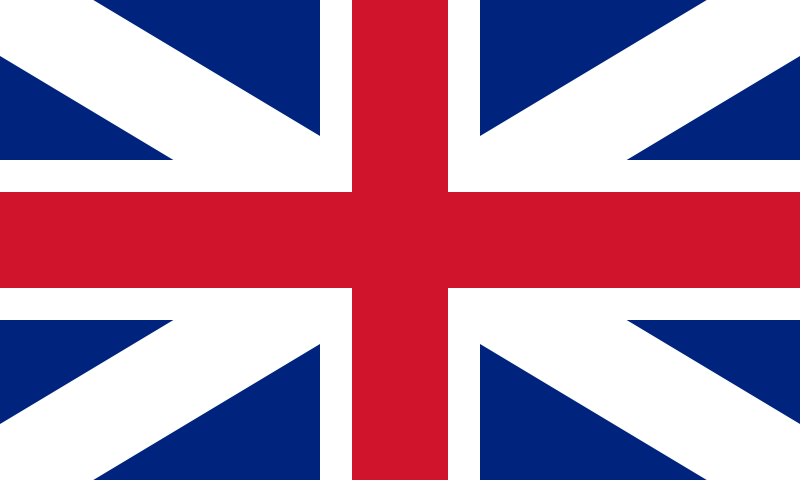
File:Flag_of_Great_Britain_(1707-1800).svg · Wikimedia Commons · See Wikimedia Commons
British Empire
Sign in to saveoverseas possessions of England and later the United Kingdom (1607–1997)
The British Empire was a collection of overseas territories controlled by England and later the United Kingdom from 1607 to 1997, making it one of history's largest and longest-lasting empires. It matters because it shaped the modern world through its influence on global politics, economics, culture, and language, while also leaving a complex legacy of colonialism that continues to affect international relations today.
AI-generated from the Wikipedia summary — may contain errors.
Wikidata facts
- Instance of
- colonial empire
- Participant in
- Second Boer War
- Country
- Kingdom of England
- Continent
- Africa
- Capital
- London
- Official language
- English language
- Currency
- pound sterling
- Population
- 680000000
- Area
- 37200000
- Form of government
- constitutional monarchy
- Anthem
- God Save the King
- Shares border with
- Russian Empire
- Flag
- Union Jack
- Coat of arms
- royal coat of arms of the United Kingdom
Show 11 more facts
- category of associated people
- Category:People from the British Empire
- Commons category
- British Empire
- topic's main category
- Category:British Empire
- on focus list of Wikimedia project
- Wikipedia:Vital articles/Level/4
- inception
- 1583-00-00
- replaces
- English overseas possession
- native label
- British Empire
- language used
- English language
- dissolved, abolished or demolished date
- 1997-00-00
- different from
- Britannic Empire
- topic's main Wikimedia portal
- Portal:British Empire
via Wikidata · CC0
~40 min read
Encyclopedic overview
The British Empire comprised the dominions, colonies, protectorates, mandates, and other territories ruled or administered by the United Kingdom and its predecessor states. It began with the overseas possessions and trading posts established by England in the late 16th and early 17th centuries, and colonisation attempts by Scotland during the 17th century. At its height in the 19th and early 20th centuries, it was the largest empire in history and, for a century, was the foremost global power. By 1913, the British Empire held sway over 412 million people, 23 per cent of the world population at the time, and by 1920, it covered 35.5 million km (13.7 million sq mi), 24 per cent of the Earth's total land area. As a result, its constitutional, legal, linguistic, and cultural legacy is widespread. It was described as "the empire on which the sun never sets", as the sun was always shining on at least one of its territories.
During the Age of Discovery in the 15th and 16th centuries, Portugal and Spain pioneered European exploration of the world, and in the process established large overseas empires. Motivated by the great wealth these empires generated, England, France, and the Netherlands began to establish colonies and trade networks in the Americas and Asia. A series of wars in the 17th and 18th centuries with the Netherlands and France left Britain the dominant colonial power in North America. Britain became a major power in the Indian subcontinent after the East India Company's conquest of Mughal Bengal at the Battle of Plassey in 1757.
Excerpted from Wikipedia’s “British Empire” article, available under the CC BY-SA 4.0 licence.
Gallery (12)
Available in 152 languages
- Español
- Français
- Deutsch
- 中文
- 日本語
- Русский
- Português
- Italiano
- العربية
- हिन्दी
- abstract
- Afrikaans
- Albanian
- Albanian
- Amharic
- Aragonese
- Armenian
- Assamese
Show 133 more
- Asturian
- Avaric
- azb
- Azerbaijani
- Bahasa Indonesia
- Bangla
- Bashkir
- Basque
- bat_smg
- be_x_old
- Belarusian
- Bhojpuri
- Bikol
- blk
- Bosnian
- Breton
- Bulgarian
- Buriat
- Burmese
- Catalan
- Central Kurdish
- Chechen
- Chuvash
- Cornish
- Crimean Tatar
- Croatian
- Czech
- Danish
- Egyptian Arabic
- Esperanto
- Estonian
- Fiji Hindi
- Filipino
- Finnish
- fiu_vro
- Galician
- gcr
- Georgian
- Greek
- Guarani
- Hakka Chinese
- Hausa
- Hebrew
- Hungarian
- Icelandic
- Ido
- Iloko
- Interlingua
- Irish
- Jamaican Creole English
- Javanese
- Kannada
- Kanuri
- Kara-Kalpak
- Karachay-Balkar
- Kazakh
- Kurdish
- Kyrgyz
- Lao
- Latin
- Latvian
- Lezghian
- Lingua Franca Nova
- Lithuanian
- Low German
- Macedonian
- Madurese
- Malay
- Malayalam
- Maltese
- Manx
- Marathi
- Minangkabau
- Mingrelian
- Mirandese
- Mongolian
- Nederlands
- Nepali
- Newari
- Northern Frisian
- Norwegian
- Norwegian Nynorsk
- Novial
- Occitan
- Odia
- Old English
- Ossetic
- Pashto
- Piedmontese
- Polski
- Punjabi
- Romanian
- Rusyn
- Sardinian
- Scots
- Scottish Gaelic
- Serbian
- Serbian (Latin)
- simple
- Sindhi
- Sinhala
- Slovak
- Slovenian
- Svenska
- Swahili
- Tajik
- Tamil
- Tatar
- Telugu
- Tiếng Việt
- Toki Pona
- Türkçe
- Turkmen
- Ukrainian
- Urdu
- Uyghur
- Uzbek
- Venetian
- Veps
- Waray
- Welsh
- Western Frisian
- Western Panjabi
- Wu Chinese
- Xhosa
- Yakut
- Yiddish
- Yoruba
- zh_min_nan
- zh_yue
- فارسی
- ไทย
- 한국어
via Wikidata sitelinks · CC0