Category
page 1Indian inventions

sugar
thumb|Sugars (clockwise from top-left): white refined, unrefined, brown sugar|brown, unprocessed cane sugar

zero
integer number zero; neutral element for the addition

yoga
thumb |upright=1.2 |Statue of Shiva performing yoga in the [[lotus position ]]

button
thumb|Brass buttons from the uniform of a Danish World War I artillery lieutenant
thumb|Modern buttons made from vegetable ivory

stupa
In Buddhism, a stupa (, ) is a domed hemispherical structure containing several types of sacred relics, including images, statues, metals, and śarīra—the remains of Buddhist monks or nuns. It is used as a place of pilgrimage and meditation.

shampoo
thumb|right|upright=1.3|Shampoo lather in hair
thumb|right|upright=1.3|Bottles of shampoo and lotions manufactured in the early 20th century by the C.L. Hamilton Co. of [[Washington, D.C., United States]]

spinning wheel
device for spinning thread, yarn, or silk from natural or synthetic fibers

hookah
thumb|A Rajput man smoking through a hookah, [[Rajasthan, India.]]

tile
Tiles are usually thin, square or rectangular coverings manufactured from hard-wearing material such as ceramic, stone, metal, baked clay, or even glass. They are generally fixed in place in an array to cover roofs, floors, walls, edges, or other objects such as tabletops. Alternatively, tile can sometimes refer to similar units made from lightweight materials such as perlite, wood, and mineral wool, typically used for wall and ceiling applications. In another sense, a tile is a construction tile or similar object, such as rectangular counters used in playing games (see tile-based game). The w

Hindu calendar
collection of traditional lunisolar calendars of the Hindus
sitar
The sitar ( or ; ) is a plucked stringed instrument, originating from the Indian subcontinent, used in Hindustani classical music. The instrument was invented in the 18th century, and arrived at its present form in 19th-century India. Khusrau Khan, an 18th-century figure of the Mughal Empire, has been identified by modern scholarship as the inventor of the sitar. According to most historians, he developed the sitar from the setar, an Iranian instrument of Abbasid or Safavid origin.

kabaddi
Kabaddi (, ) is a contact team sport played between two teams of seven players. It is one of the traditional games of South Asia. In the game, a raider enters the opposing half of the court to tag the defenders and attempt to return within 30 seconds without being tackled. Points are awarded for successful tags, while defenders earn a point for tackling the raider. Tagged or tackled players are temporarily out but can re-enter when their team scores. Raids alternate between teams throughout the game.

shipyard
thumb|Constanța Shipyard, Romania
thumb|Turku Repair Yard, Finland
thumb|Dubai Maritime City, [[Dubai, UAE]]

chaturanga
thumb|Chess set from Rajasthan, India
Chaturanga (, , ) is an ancient Indian strategy board game. It is first known from India around the seventh century AD.
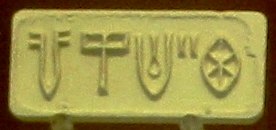
Indus script
script, short strings of symbols associated with the Indus Valley Civilization
Indian classical music
ancient music and music theories from the Indian subcontinent

India ink
simple black or colored ink
veena
The veena, also spelled vina ( IAST: vīṇā), is any of various chordophone instruments from the Indian subcontinent. Ancient musical instruments evolved into many variations, such as lutes, zithers and arched harps. The many regional designs have different names such as the Rudra veena, the Saraswati veena, the Vichitra veena and others.
snakes and ladders
board game
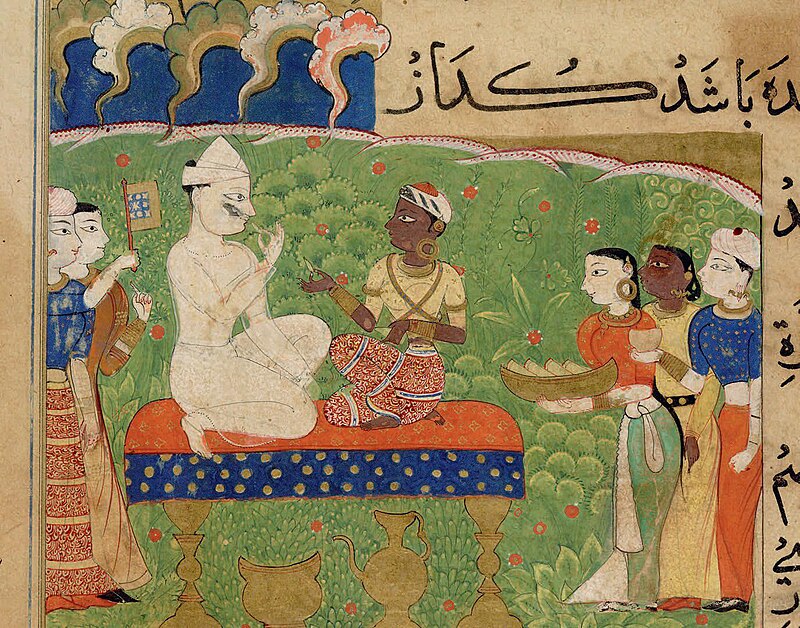
Paan
Hindi word for betel used for a stimulating and psychoactive preparation combined with areca nut and/or cured tobacco

Carrom
thumb|Tibetans playing carrom in Delhi

shawl
thumb|right|A young girl wearing a shawl as a head covering
thumb|right|Maxida Märak wearing a traditional Saami wool shawl onstage at [[Riddu Riđđu 2019]]

shatranj
thumb|Two shatranj players in a detail from a Persian miniature painting of Bayasanghori Shahname made in 1430
.jpg)
shilajit
thumb|Shilajit or mumijo, Mohave lava tube, 2018
cotton gin
machine that separates cotton fibers from seeds
Hindu-Arabic numeral system
most common system for writing numbers

carding
thumb|upright=1.35|Dyed wool being carded with a 1949 Tatham carding machine at Jamieson Mill, Sandness, [[Shetland, Scotland]]
thumb|Cotton carder (known as dhunuri or lep wallah) in [[Howrah, Kolkata, India]]
thumb|William Tatham Breaker carder.
In textile production, carding is a mechanical process that disentangles, cleans and intermixes fibres to produce a continuous web or sliver suitable for subsequent processing. This is achieved by passing the fibres between differentially moving surfaces covered with "card clothing", a firm flexible material embedded with metal pins. It breaks up loc
Hippodamian Plan
type of city plan in which streets run at right angles to each other, forming a grid

Ludo
Ludo (; ) is a strategy-based board game for two to four players, in which the players race their four from start to finish according to the rolls of a single die. Ludo shares characteristics with other cross-and-circle games from around the world; these types of games include the pre-Columbian Mesoamerican game Patolli, and the Indian game Pachisi. The game and its variations are popular in many countries and under various names.

calico
thumb|The weave of calico sample from a shopping bag shown against a [[centimetre scale]]
Calico (; in British usage since 1505) is a heavy plain-woven textile made from unbleached, and often not fully processed, cotton. It may also contain unseparated husk parts. The fabric is coarser than muslin, but less coarse and thick than canvas or denim. It is still very cheap owing to its unfinished and undyed appearance.

chakram
The chakram (; ) is a throwing weapon from the Indian subcontinent. It is circular with a sharpened outer edge and a diameter of . It is also known as chalikar meaning "circle", and was sometimes referred to in English writings as a "war-quoit". The chakram is primarily a throwing weapon, but can also be used hand-to-hand. A smaller variant called chakri is worn on the wrist. A related weapon is the chakri dong, a bamboo staff with a chakri attached at one end.
touchstone
small tablet of dark stone used for assaying precious metal alloys
.jpg)
stepwell
thumb|Chand Baori, in the village of [[Abhaneri near Bandikui, Rajasthan is one of the deepest and largest stepwells in India]]
thumb|right|The Rani ki Vav, Patan, Gujarat
thumb|upright|A multi-storey stepwell in Mahimapur Village, Amravati District, Maharashtra
Stepwells (also known as vav or baori) are wells, cisterns or ponds with a long corridor of steps that descend to the water level. Stepwells played a significant role in defining subterranean architecture in western India from the 7th to the 19th century. Some stepwells are multi-storeyed and can be accessed by a Persian wheel which is

Beedi
right|thumb|Packs of beedies.
thumb|Beedi making process, rare handicrafts in Akkaraipattu, Sri Lanka. Bidi leaf (Bauhinia racemosa) and shredded tobacco are prepared and finalized with thread binding.
A beedi (also spelled bidi or biri) is a thin cigarette or mini-cigar filled with tobacco flake and commonly wrapped in a tendu (Diospyros melanoxylon) or Piliostigma racemosum leaf tied with a string or adhesive at one end. It originates from the Indian subcontinent. The name is derived from the Marwari word beeda—a mixture of betel nuts, herbs, and spices wrapped in a leaf. It is a traditional

dhol
Dhol () can refer to any one of a number of similar types of double-headed drum widely used, with regional variations, throughout the Indian subcontinent. Its range of distribution in Indian subcontinent primarily includes northern areas such as the Jammu, Himachal, Punjab, Haryana, Delhi, Kashmir, Sindh, Assam Valley, Uttarakhand, West Bengal, Odisha, Gujarat, Maharashtra, Konkan, Goa, Karnataka, Rajasthan, Bihar, Jharkhand and Uttar Pradesh. A related instrument is the dholak or dholki. Dhols are amongst other events used in Indian wedding ceremony processions such as Baraat or Varyatra.
Kaprekar number
non-negative integer, the representation of whose square in that base can be split into two parts that add up to the original number again
HF-24 Marut
1961 fighter aircraft family by Hindustan Aircraft Limited

chintz
thumb|Chintz jacket and neckerchief with glazed printed cotton petticoat. 1770–1800. MoMu, Antwerp.
Chintz () is a woodblock printed, painted, stained or glazed calico textile that originated in Golconda (present day Hyderabad, India) in the 16th century. The cloth is printed with designs featuring flowers and other patterns in different colours, typically on a light, plain background.
Mahalanobis distance
distance measure
crucible steel
type of steel

Sakia
thumb|The Saqiyah, c. 1905
thumb|alt=taken at Sikandra, India c1917 and titled near the time as 'A Punjabi Wheel'; from photo album of Robert Victor Soper, Private, Hampshire Regiment, in India 1916-19|'Punjab Wheel', India c.1917
A sāqiyah or saqiya (), also spelled sakia or saqia) is a mechanical water lifting device. It is also called a Persian wheel, tablia, rehat, and in Latin tympanum. It is similar in function to a scoop wheel, which uses buckets, jars, or scoops fastened either directly to a vertical wheel, or to an endless belt activated by such a wheel. The vertical wheel is itself a

Pehlwani
Pehlwani, also known as Kushti, is a form of wrestling practiced in the Indian subcontinent. It was developed in the Mughal Empire by combining Persian Koshti pahlevani with influences from native Indian Malla-yuddha. The words pehlwani and kushti derive from the Persian terms pahlavani (heroic) and koshti (wrestling, lit. killing) respectively, meaning "heroic wrestling". A practitioner of this sport is referred to as a pehlwan (Persian for hero) while teachers are known as ustad (Persian for teacher or master) or guru.
horn antenna
type of antenna shaped like a horn and also called "horn"
AKS primality test
primality test
Zoho Office Suite
email, cloud storage, collaboration tools, hardware, administration, social media and other business apps
pata
type of sword
sarinda
musical instrument
Unified Payments Interface
digital payment system for inter-bank transfer in India
Small Satellite Launch Vehicle
Indian small-lift launch vehicle
Wootz steel
old type of high carbon steel from India

Simputer
The Simputer is a self-contained, open hardware Linux-based handheld computer that was first released in 2002, developed in, and primarily distributed within India. The product was envisioned as a low-cost alternative to personal computers. The Simputer project had the initial goal of selling 50,000 units, but only sold about 4,000 units by 2005, and has been called a failure by news sources.
khanda
type of sword common in Indian martial arts
Siddha traditional medicinal Procedure
system of traditional medicine originating in South India

mallakhamb
Mallakhamba, or Mallakhamb or Mallarkambam is a traditional sport, originating from the Indian subcontinent, in which a group of gymnasts perform aerial yoga and gymnastic postures using wrestling grips in concert with a stationary vertical pole. The word mallakhamba also refers to the pole used in the sport. The pole is usually made from shisham (Indian rosewood) polished with castor oil. Other popular versions of mallakhamba are practiced using a cane or a rope instead of a pole. The origins of pole dancing can be traced back to the sport of mallakhamba.
seven stones
Indian ball game
Mysorean rockets
World's first rocket missile ammunition, developed by Tipu Sultan, an emperor of India

Gutka
right|thumb|upright=1.1|Gutka street vendor in Himachal Pradesh, India
Sieve of Sundaram
algorithm for generating prime numbers
InScript keyboard
standard keyboard layout for Indian scripts
Indian club
type of exercise equipment